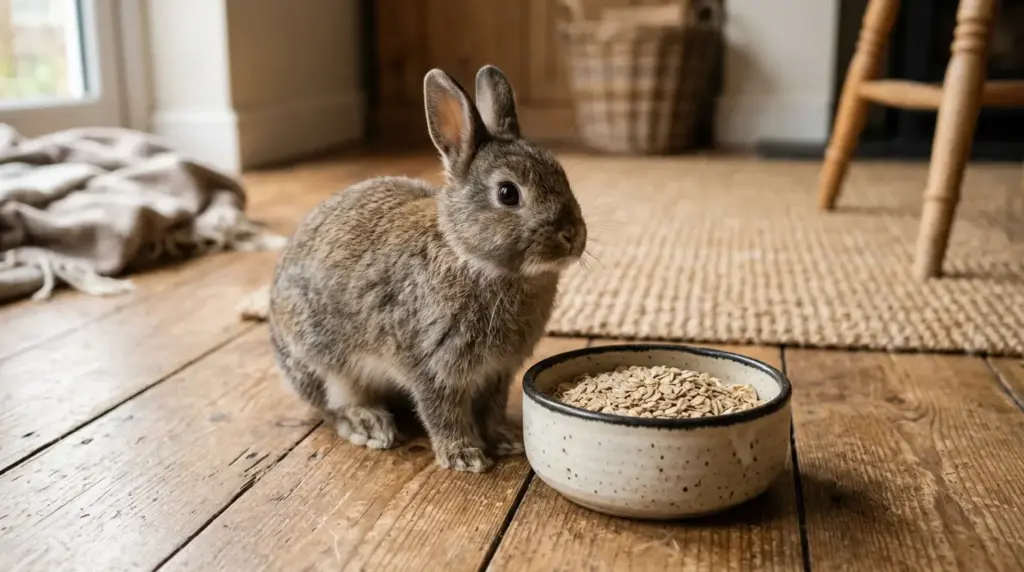
That tiny scoop of oats in the kitchen can spark a big question for rabbit owners.
Oats look harmless, familiar, and even healthy, which is why many people wonder if sharing a little with a rabbit is a good idea or a risky move.
The confusion grows because oats are often praised in human diets, yet rabbits follow very different nutritional rules.
What works for people does not always work for small herbivores with sensitive digestive systems. Making the wrong choice, even with a small treat, can lead to discomfort or ongoing health concerns.
This blog clears up the uncertainty around feeding oats to rabbits by explaining what happens when rabbits eat grains, when oats may be tolerated, and when they should be avoided.
With clear facts and practical guidance, informed feeding decisions become easier and safer for long-term rabbit care.
It also covers the important difference between grain oats and oat hay, since these two are often confused but affect a rabbit’s health very differently.
Can Rabbits Eat Oats?
Yes, rabbits can eat plain oats in very small amounts as an occasional treat.
Oats are not toxic, but they are high in starch and carbohydrates, which makes them unsuitable for regular feeding. Hay must always remain the foundation of a rabbit’s diet.
A rabbit’s digestive system is designed to process fiber from hay and leafy greens, not grains. When oats are given too often or in large portions, they can upset digestion and contribute to weight gain.
Because of this, oats should be treated strictly as an occasional treat rather than a food staple.
Hay should always remain the main component of a rabbit’s daily intake, supported by fresh greens and a small portion of quality pellets.
Oats do not provide essential benefits that rabbits cannot already get from a proper diet, so moderation is key when deciding to offer them at all.
Can Rabbits Digest Oats Safely?
Rabbits have a highly sensitive digestive system built to process large amounts of fiber throughout the day.
The gut relies on constant movement, supported mainly by hay, to keep food passing smoothly and maintain healthy bacteria in the intestines.
This balance allows nutrients to be absorbed properly while waste passes through without slowing.
This internal ecosystem includes beneficial bacteria and the production of cecotropes, soft droppings that rabbits re ingest directly from the source to absorb essential nutrients. Disrupting gut flora affects this process too.
Grains like oats work very differently inside the body.
Oats are dense in starch and carbohydrates, which can disrupt the natural balance of gut bacteria when introduced too often or in large amounts.
This disruption may slow digestion, lead to gas buildup, or cause soft stools.
According to VCA Animal Hospitals, excess carbohydrates in a rabbit’s diet favor the growth of gas-producing bacteria in the GI tract.
When these bacteria proliferate, they produce painful gas and may even release toxins that, if untreated, can lead to serious illness.
This condition is known as GI stasis and is one of the leading causes of death in domestic rabbits. Unlike fibrous plants, grains do not provide the roughage needed to support steady gut movement.
Because of this, oats are harder for rabbits to handle and can cause digestive stress if fed incorrectly.
As a pet nutritionist, one of the most common dietary mistakes I see rabbit owners make is treating oats the way they would treat a carrot or a leafy herb.
The starch load is simply not comparable, and even a small daily habit can quietly shift gut chemistry over time.
Do Oats Provide Any Nutritional Benefits for Rabbits?
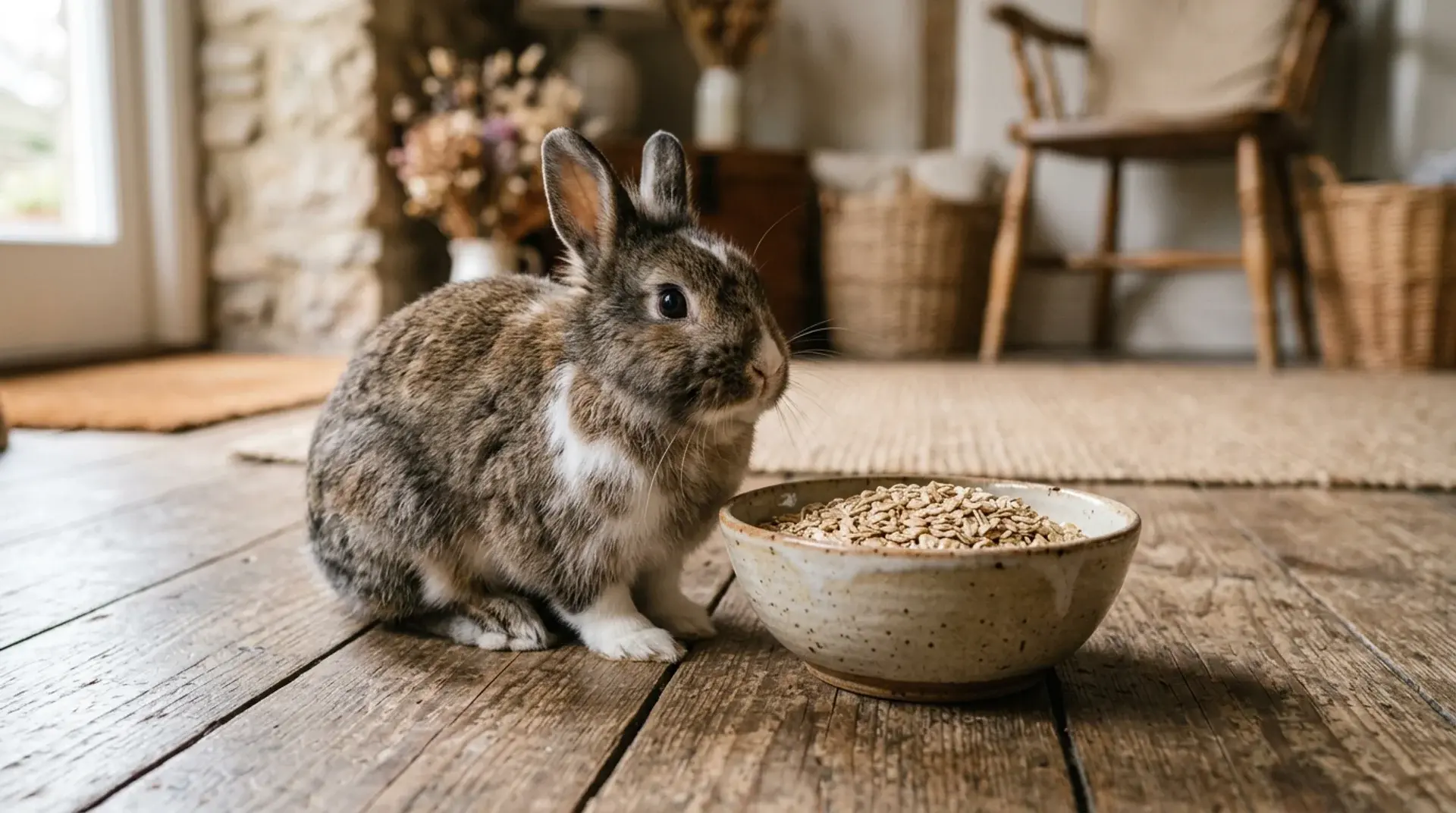
Oats contain carbohydrates, small amounts of protein, and limited vitamins and minerals. For humans, these nutrients can be useful, but for rabbits, the value is far less meaningful.
A rabbit’s diet does not require concentrated energy sources, and excess carbohydrates can do more harm than good.
That said, oats do contain small amounts of magnesium, calcium, potassium, and B vitamins. In healthy rabbits eating a balanced diet, these nutrients are already covered by hay and fresh greens.
However, in specific situations, such as an underweight rabbit, a recovering rabbit, or one with reduced appetite, the caloric density of oats can provide a short-term energy boost under veterinary guidance.
Hay and leafy greens provide what rabbits truly need. Hay supplies high levels of fiber that support digestion, dental wear, and gut movement.
Oats lack the fiber density needed to support digestive health and do not offer nutrients that rabbits cannot already receive from hay and fresh greens.
While oats are not harmful in tiny portions, they do not improve a rabbit’s diet and should never replace core food sources.
Oat Hay vs. Grain Oats: An Important Distinction
Many rabbit owners are surprised to learn that oat hay and grain oats are very different things, and the difference matters significantly for rabbit health.
Oat hay is harvested from the oat plant before the grain fully matures. It is a fibrous, grass-like hay that is high in fiber and gentle on digestion.
Many rabbits enjoy it as a flavorful alternative to timothy hay, and it can be offered freely as part of a hay rotation. It is an excellent source of fiber and a good preventive measure against GI stasis.
Grain oats (rolled, steel-cut, or instant) are the processed seed kernels of the oat plant.
These are starch-dense and should only be given in very small amounts as an infrequent treat.
If a rabbit enjoys the taste of oats, oat hay is a far safer and more diet-appropriate way to satisfy that preference. It delivers fiber instead of starch, supports gut motility, and aids dental wear from chewing.
Understanding Oat Types Before Feeding Rabbits
Different types of grain oats vary in processing and digestibility, which directly affects how safe or risky they can be for a rabbit’s digestive system.
| Oat Type | Description | Safe for Rabbits? |
|---|---|---|
| Rolled Oats | Steamed and flattened for quicker cooking. Plain and uncooked rolled oats are the least harsh grain option. | In very small amounts only |
| Steel Cut Oats | Chopped whole oat groats with a firm, dense texture. Harder to digest and more likely to cause stomach discomfort. | Not recommended |
| Instant Oats | Highly processed. Release starch quickly and can more easily disrupt gut bacteria balance. | Avoid |
| Flavored or Sweetened Oats | Contain added sugar, dried fruit, salt, or additives. No safe amount exists for rabbits. | Never feed |
| Oat Hay | Fibrous grass hay harvested before the grain matures. High in fiber, gentle on digestion, safe for regular feeding. | Yes, freely offered |
How Much Oats Can Rabbits Eat Safely?
If oats are offered to a rabbit, the portion should be extremely small and given only rarely.
A safe amount is no more than one teaspoon of plain rolled oats for an adult rabbit, and this should not be given more than once or twice a month.
Larger portions or frequent feeding can quickly disrupt digestion due to the high starch content. Oats should never appear in a rabbit’s daily or weekly feeding routine.
Always introduce oats for the first time in a very small amount, just a few flakes, and monitor droppings and behavior for 24 to 48 hours before offering again.
Any change in stool consistency or reduced hay intake is a signal to stop.
Hay must always remain the main food source, with fresh leafy greens supporting overall nutrition. Treat foods like oats as a last resort, so they do not replace fiber-rich options or alter eating habits.
Occasional oat consumption helps reduce the risk of digestive upset, weight gain, and long-term diet imbalance.
When Oats Become Unsafe For Rabbits?
Oats may become unsafe for rabbits when portion size and feeding frequency are not carefully controlled. Even small amounts given too often can place stress on the digestive system.
Overfeeding oats may also lead to weight gain, especially in indoor rabbits with limited activity.
Excess weight can increase the risk of joint strain, reduced mobility, and related health concerns over time. Oats are also unsafe when used as a hay substitute or as a daily snack.
Feeding oats too frequently diverts attention from fiber-rich foods, increasing the risk of digestive upset and long-term dietary imbalance.
Oats should also be avoided entirely for rabbits with a history of GI issues, obesity, dental problems, or those that are already eating less hay than recommended.
In these cases, even a small grain treat can tip an already fragile gut balance in the wrong direction.
Signs a Rabbit is Not Tolerating Oats
These signs may appear within hours or days after feeding oats and should be taken seriously, especially if symptoms persist or worsen.
Monitoring your rabbit’s feeding and health closely after introducing any new food is always the safest approach.
- Appetite Changes: A noticeable decrease in interest in food, which may include a refusal to eat hay or other types of feed.
- Droppings Issues: The presence of soft stools or significant changes in the size and shape of droppings can be important indicators of digestive health. Cecotropes left uneaten or an unusually high number of them may also indicate digestive imbalance.
- Low Energy: A marked drop in energy levels may be observed as unusual lethargy, including reduced movement or a reluctance to engage in normal activities.
- Pain Signals: Signs of pain, such as consistent teeth grinding or visible discomfort in the abdomen, should not be ignored.
- Stomach Bloating: The development of a firm or swollen abdomen can be a serious concern. Bloating may indicate gastrointestinal distress.
- Water Intake: Drinking significantly less water than usual can lead to dehydration and other health problems.
If a rabbit stops eating or producing droppings for 12 hours or more after a dietary change, treat it as an emergency and contact a veterinarian immediately.
Better Food Alternatives to Oats for Rabbits
Rabbits benefit most from treats that stay close to their natural, fiber-focused diet. These options are gentler on the digestive system and support long-term health without adding unnecessary starch.
Pairing a varied diet with good enrichment ideas for rabbits keeps both mind and body in balance.
- Oat Hay: The safest oat-related option. High in fiber, freely offered, and enjoyed by most rabbits. A far better choice than grain oats for rabbits that seem drawn to the taste of oats.
- Fresh Leafy Greens: Romaine lettuce, cilantro, basil, and parsley provide nutrients and hydration without stressing digestion.
- Hay-Based Treats: Timothy hay cubes or compressed hay sticks satisfy chewing needs while supporting gut movement.
- Fresh Vegetables: Small portions of bell peppers, zucchini, or cucumber add variety without excess sugar.
- Herbs: Mint, dill, and fennel offer flavor while remaining easy on the stomach.
- Safe Fruits: Tiny pieces of apple without seeds or a small slice of banana can be given occasionally due to natural sugar content.
- Oat Grass (Oat Sprouts): Fresh oat sprouts are safe, high in fiber, and nutritionally closer to greens than grain. A good option for rabbits that enjoy foraging textures.
In my experience advising rabbit owners, the best treats are the ones that double as enrichment, something to forage for, chew on, or explore. Hay-based treats and fresh herbs hit that mark far better than any grain.
Insights from Rabbit Owners on Reddit
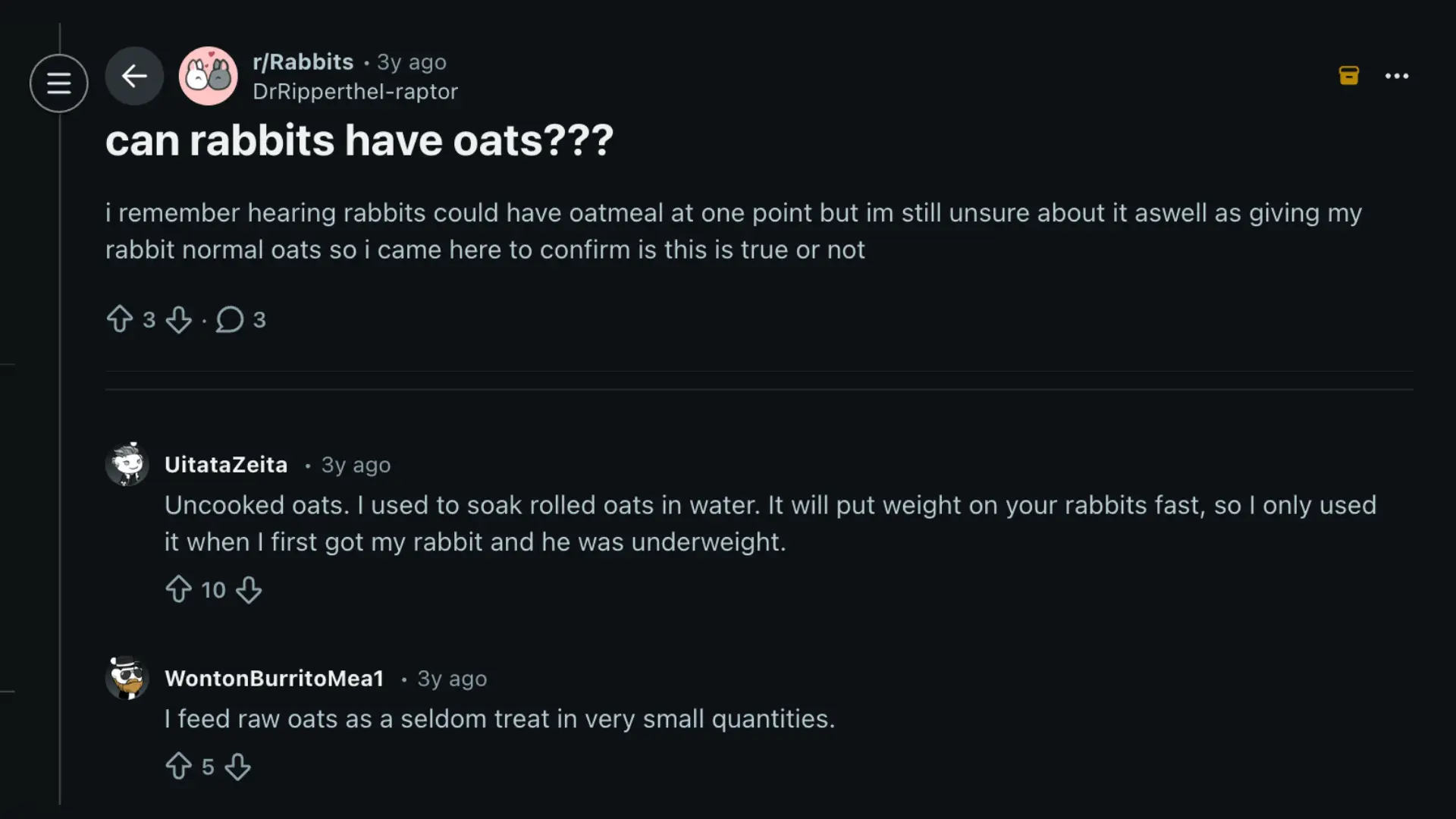
This section highlights real discussions from rabbit owners on Reddit who shared personal experiences with feeding oats.
Most comments agree that plain, uncooked rolled oats may be offered only in very small amounts and only on rare occasions.
Several users mentioned using oats temporarily to help underweight or recovering rabbits gain weight, not as a regular food.
This mirrors the approach some rabbit-savvy vets take, where oats serve as a short-term caloric aid during illness or recovery rather than an ongoing treat.
Others stressed that processed oats are highly fattening and can cause health issues if overfed.
The discussion also points out that oat hay and seed heads are safer choices compared to grain-based oats, especially for long-term feeding.
Some users noted that their rabbits rejected oats entirely after a taste or two, which is not unusual. Every rabbit has individual sensitivities, and a lack of interest in oats is actually a healthy sign.
Conclusion
Feeding oats to rabbits comes down to moderation and understanding dietary needs.
When asking if rabbits can eat oats, it is important to know that oats are not toxic, but they are not a natural or necessary part of a rabbit’s diet.
High-fiber foods like hay should always remain the foundation, supported by leafy greens and limited use of pellets.
Oats, if offered at all, should stay rare, plain, and carefully portioned to avoid digestive upset or weight gain.
The more important takeaway is the distinction between grain oats and oat hay. If a rabbit enjoys the flavor, oat hay delivers the same appeal without the starch risk, making it the smarter long-term choice.
Paying attention to how a rabbit responds after trying new foods is just as important as choosing the food itself.
Every rabbit is different, and what seems harmless can cause issues when given too often. Sticking to simple, fiber-rich options supports digestion, dental health, and long-term comfort.
Thoughtful feeding choices lead to healthier, happier rabbits
Do you have questions or personal experiences with feeding oats to rabbits? Drop a comment and join the conversation.
Frequently Asked Questions
Can Baby Rabbits Eat Oats?
Baby rabbits should not be given oats. Young rabbits have very sensitive digestive systems and should focus on mother’s milk, hay, and age-appropriate pellets.
Grains can upset digestion and are best avoided during early growth stages.
Can Rabbits Eat Cooked Oatmeal?
Cooked oatmeal is not suitable for rabbits. Soft, sticky foods can disturb digestion and may stick to teeth. Rabbits handle dry, fiber-rich foods much better than cooked grains.
Can Rabbits Eat Oats With Fruits or Flavoring
Rabbits should not eat oats mixed with fruits, sugar, honey, or flavoring. These additions increase sugar content and can upset digestion. Plain foods are always safer for rabbits than sweetened or processed mixtures.
Is Oat Hay the Same as Feeding Oats?
No. Oat hay is a fibrous grass hay harvested before the grain matures and is safe for daily feeding. Grain oats are the processed seed kernels of the oat plant and should only be given rarely and in tiny amounts. The two are nutritionally very different.
Can Oats Help a Rabbit Gain Weight?
In some cases, plain rolled oats may be used short-term to support weight gain in underweight or recovering rabbits, but only under veterinary guidance. This is a specific use case, not a general feeding recommendation.