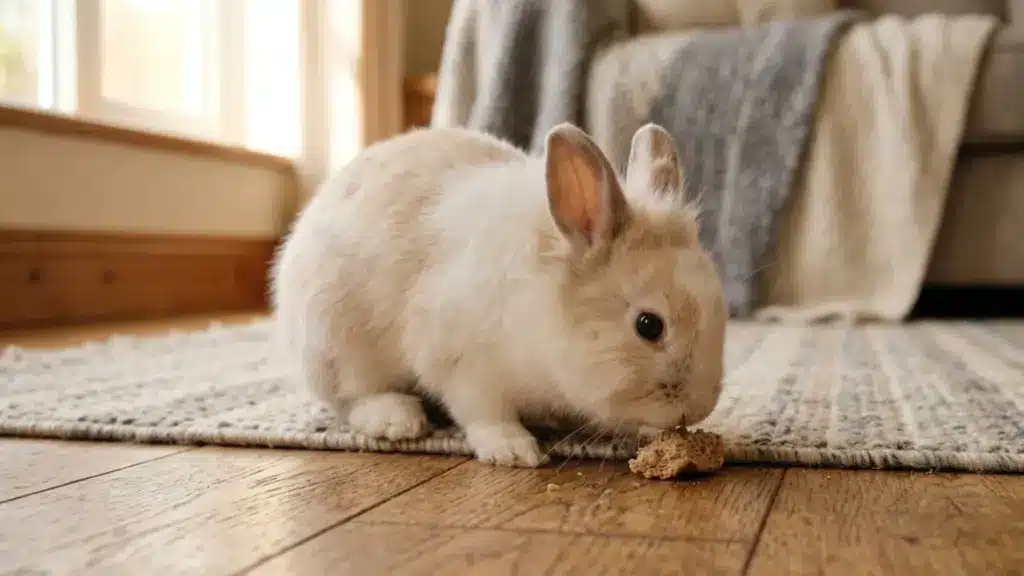
It’s probably late, your bunny is right there, and you just caught them sniffing or nibbling on a piece of bread.
Now the question hits fast: can bunnies eat bread, or did something just go wrong?
That moment can feel a little stressful, especially when rabbits seem so eager to try anything within reach. It is completely normal to worry about what that bite might mean for their health.
Rabbits have delicate systems, and even small food choices can matter more than expected. If this situation feels familiar, you are not alone.
Many rabbit owners have been in the same spot, trying to figure out what is safe and what is not, while keeping their furry companion comfortable and healthy.
In my work advising pet parents on small animal diets, bread is one of the most common accidental foods I hear about, usually because it seems so harmless.
Understanding what goes into their bowl matters more than it seems.
Can Bunnies Eat Bread?
No, bread is not recommended for rabbits under any circumstances, not even as an occasional treat, and not even in small amounts on a regular basis.
Rabbits have a very delicate digestive system that is built to process high fiber foods like hay, not processed or starchy items like bread.
When a rabbit eats bread, it does not get any real nutrition, and instead, the food can sit in the gut and disturb normal digestion.
If a rabbit happens to take a very small bite of bread once, it is unlikely to be fatal, but that does not mean it is safe or should be repeated.
Even small amounts can begin to upset the balance of bacteria in the gut, which is essential for a rabbit’s health.
Understanding the health effects of treats on rabbits is important because not all foods that seem harmless to humans are suitable for them.
Why Bread is Not Safe for Rabbits?
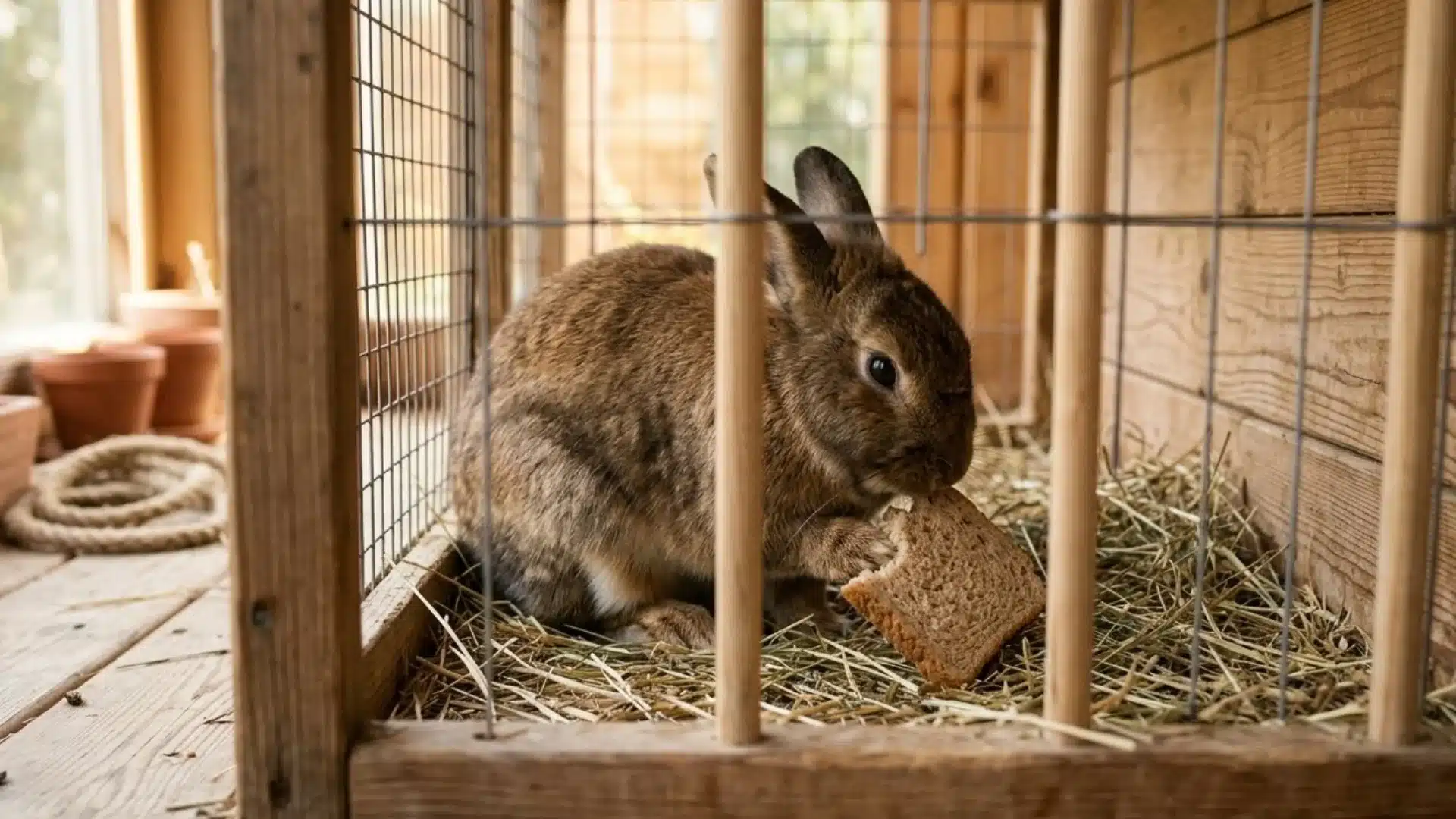
Bread may seem like a harmless snack, but it can actually create several health problems for rabbits. Their bodies are built to process natural, fiber-rich foods, not processed human items.
1. Rabbit Digestive System
Rabbits are strict herbivores, which means their digestive system is designed to handle high-fiber foods. Fiber keeps the gut moving properly and supports healthy digestion throughout the day.
Inside the digestive tract, rabbits produce something called cecotropes, soft, nutrient-rich droppings they re-ingest directly from their hindquarters.
This process depends entirely on a stable population of beneficial gut bacteria.
When low-fiber foods like bread are introduced, this balance is disrupted, and cecotrope production can be affected, meaning the rabbit misses out on a critical source of vitamins and protein.
2. Bread Lacks Nutritional Value for Rabbits
Bread does not provide any meaningful nutrition for rabbits. It is high in carbohydrates and very low in fiber, which is the exact opposite of what rabbits need.
Bread also contains ingredients that are not appropriate for herbivores at all; eggs, milk solids, and, in some cases, cheese are present in enriched or specialty breads.
Rabbits lack the digestive enzymes to process animal proteins, making these hidden ingredients an additional concern beyond the starch and carbohydrate issue.
Feeding bread instead of proper food can lead to poor nutrition over time, making it a risky and unnecessary addition to a rabbit’s diet.
3. Risk of Gastrointestinal (GI) Stasis
Gastrointestinal stasis, often called GI stasis, is a serious and life-threatening condition in rabbits where the digestive system slows down or stops completely.
This can happen when rabbits eat foods that are low in fiber, like bread.
Without enough fiber, the gut does not move as it should, causing food to sit and create discomfort.
Early signs include reduced appetite, smaller droppings, and low energy. If not treated quickly, it can become dangerous.
4. Obesity and Dental Problems
Bread can also lead to weight gain in rabbits because it contains excess carbohydrates and calories.
Over time, this can cause obesity, which puts extra strain on a rabbit’s body and reduces activity levels. In addition, rabbits need to chew constantly to keep their teeth from overgrowing.
Foods like hay help wear down their teeth naturally. Soft foods like bread do not provide this benefit, which can lead to dental issues such as overgrown teeth and discomfort.
A proper diet supports both a healthy weight and strong dental health.
5. Extra Risk for Baby Rabbits
If you have a young rabbit under 6 months, the risk from bread is significantly higher.
Baby rabbits have digestive systems that are still developing and stabilizing. Even foods that cause mild discomfort in adult rabbits can cause serious harm in kits.
Introducing bread during this vulnerable stage can permanently disrupt their gut development.
If you have a young bunny, keep all processed human food entirely out of reach.
What Happens if a Bunny Eats Bread?
If a bunny eats bread, the outcome depends on how much was consumed.
A small accidental bite is usually a mild risk and may not cause immediate harm, especially if the rabbit continues eating normally and shows no changes in behavior.
However, even small amounts are not ideal and should not become a habit.
On the other hand, eating a larger quantity of bread can quickly lead to digestive problems because the rabbit’s system is not built to process low-fiber, starchy foods.
This can slow down digestion, upset gut balance, and increase the risk of more serious health issues.
Symptoms to Watch After Eating Bread
- Loss of appetite
- Reduced droppings
- Lethargy
- Bloating or discomfort
- Gurgling sounds from the stomach
- Teeth grinding (bruxism), a sign of pain
- Hunched posture or reluctance to move
When to Contact a Vet?
If a rabbit has eaten bread, close monitoring becomes very important within the next 12 to 24 hours.
Rabbits should be eating regularly and producing normal droppings throughout the day, and any disruption in this pattern can signal a serious issue.
If a bunny stops eating or does not defecate for 12 to 24 hours, this is a strong warning sign that the digestive system may be slowing down or stopping, which can quickly become dangerous.
Immediate veterinary attention is also needed if emergency symptoms appear, such as severe lethargy, bloating, signs of pain like teeth grinding, or a complete lack of movement.
These signs may point to gastrointestinal stasis or blockage, both of which require urgent care.
Acting early can make a major difference in recovery and prevent complications.
Real User Experience When Bunny Ate Bread
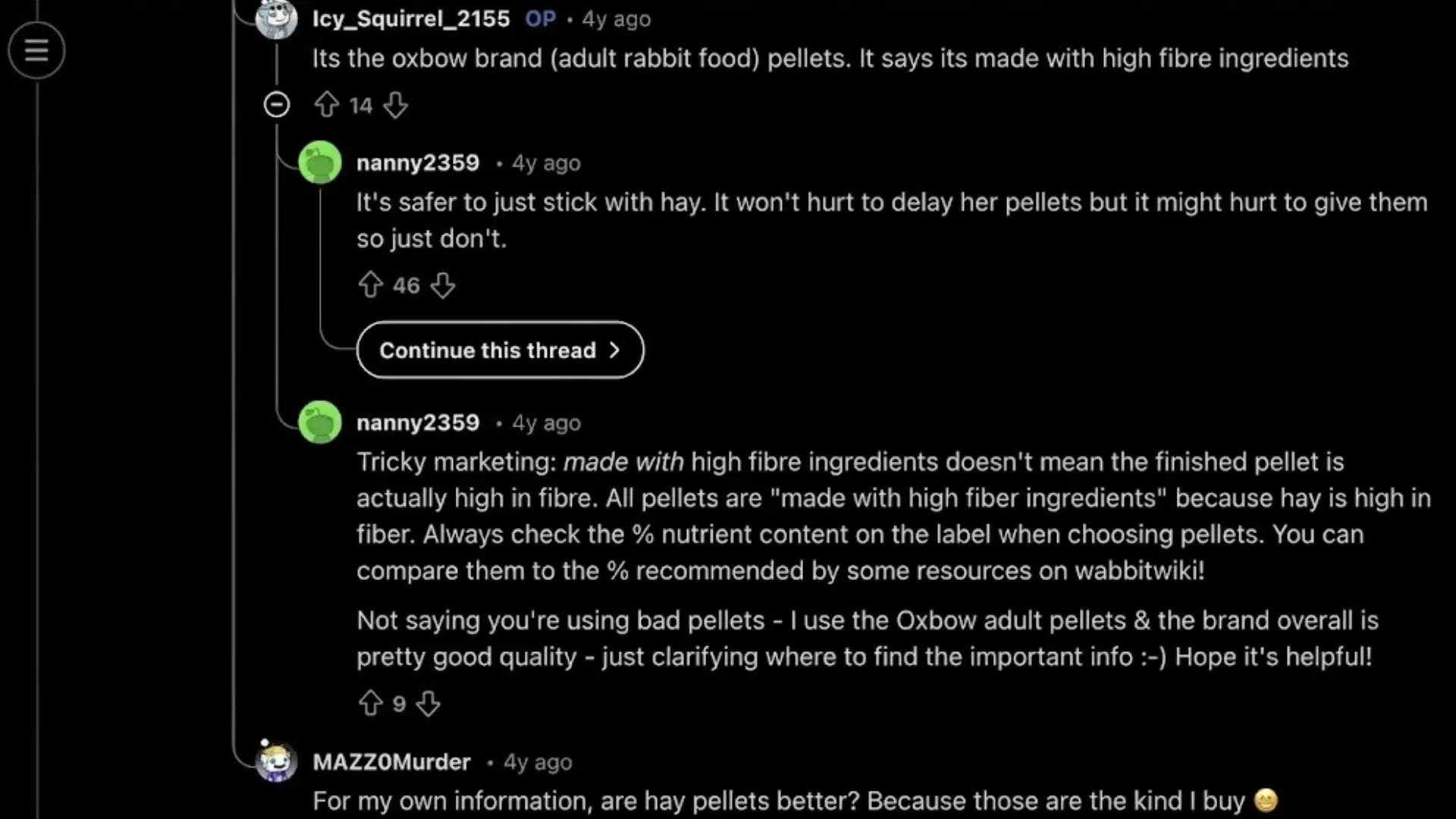
A worried rabbit owner on Reddit shared concern after their bunny ate a noticeable amount of white bread, sparking a mix of serious advice and light humor in the replies.
Most users agreed there is no immediate danger if the rabbit is active, eating hay, and producing normal droppings.
The key advice focused on increasing fiber intake to help digestion and avoiding extra treats for a few hours. Some suggested gentle belly massages to support gut movement.
Others shared similar experiences where rabbits ate unusual foods and remained fine, calling it more of a sugar concern than a critical issue.
Overall, the tone leaned reassuring but cautious towards bunny eating bread.
The takeaway is simple: monitor behavior closely, prioritize hay, and watch for any change in appetite or stool before considering further action.
What Should Rabbits Eat Instead?
A healthy rabbit diet is simple, natural, and focused on fiber-rich foods that support digestion and overall well-being.
According to the Rabbit.org, rabbits should follow a balanced feeding structure where about 80–90% of their diet comes from hay, around 10% from fresh vegetables, and 5% portion from pellets and treats, and less than 5% from fruits.
1. Hay as the Foundation of a Rabbit’s Diet
Hay should make up about a maximum of a rabbit’s daily diet because it is essential for proper digestion and overall health.
Rabbits need constant fiber intake to keep their digestive system moving smoothly throughout the day.
Timothy hay and orchard grass are two of the most recommended types because they provide the right balance of nutrients and fiber.
Chewing hay also helps wear down a rabbit’s continuously growing teeth, preventing dental problems. The explains that unlimited access to fresh hay is the most important part of keeping a rabbit healthy.
2. Pellets and Occasional Treats
Pellets and treats should only make up a very small portion of a rabbit’s diet.
High-quality pellets can provide additional nutrients, but should be given in limited amounts to avoid overfeeding.
Treats, such as small pieces of fruit like grapes, should be offered occasionally and in very small portions due to their sugar content. Too many pellets or treats can lead to weight gain and digestive issues.
The recommends keeping these extras minimal so that hay remains the primary food source for proper health.
3. Fresh Vegetables Rabbits Can Safely Eat
Fresh vegetables should make up about 10% of a rabbit’s diet and provide important vitamins and hydration.
Safe leafy greens include romaine lettuce, cilantro, parsley, cabbage, and similar options that are rich in nutrients.
These vegetables should be introduced gradually and served in small, controlled portions to avoid upsetting the digestive system.
A mix of different greens is often recommended to provide a variety of nutrients.
Foods Rabbits Should Avoid Completely
Feeding the wrong foods can quickly harm a rabbit’s health because their digestive system is very sensitive and depends on the right balance of fiber.
According to the PETA, many common human foods and even some items marketed as treats can disrupt digestion or even be toxic.
- Bread and processed baked foods: They are high in carbohydrates and sugar, which can upset digestion and lead to serious gut issues.
- Yogurt drops and dairy-based treats: They can cause a harmful bacterial imbalance in the gut, increasing the risk of dangerous digestive conditions.
- Avocado: It contains a toxic compound called persin, which can be harmful and even deadly for rabbits if consumed.
- Cereal and grain-based foods: They can lead to dental problems and digestive upset due to their processed and low-fiber nature.
- Silverbeet and similar greens: They can cause bloating and discomfort, making them unsafe despite being vegetables.
- Cookies and sugary snacks: They are highly processed and can quickly disrupt the digestive system, leading to serious health risks.
- Pasta and crackers: They are starchy foods that offer no nutritional value and can interfere with proper gut movement.
- Onions, garlic, and leeks: These can damage a rabbit’s red blood cells and lead to serious illness even in small amounts.
- Nuts and seeds: Very high in fat, which rabbits cannot properly digest. Also, a potential choking hazard.
- Chocolate: Contains theobromine, which is toxic to rabbits and can cause rapid heart rate, seizures, and death.
- Rhubarb: Even small amounts can be fatal to rabbits, as it contains oxalic acid, which can interfere with calcium absorption and lead to severe toxicity and kidney damage.
Conclusion
A rabbit thrives on a natural, fiber-rich diet that supports gut health and daily activity.
When asking, can bunnies eat bread, it becomes confusing that this type of food does or does not bring any real value to a rabbit’s diet.
Bread may look harmless, but it lacks the fiber and nutrients rabbits truly need while increasing the risk of digestive issues, weight gain, and long-term health problems.
There is simply more risk than reward when it comes to feeding bread.
Trust what the droppings tell you; any slowdown is a reason to call a vet sooner rather than later.
Choosing better options like hay and fresh greens keeps things simple and safe. When unsure about any food, it is always smarter to stick with what supports their health.
Have you ever faced a similar situation with your rabbit? Share your experience in the comments below.
Frequently Asked Question
Can Bunnies Eat Cheese?
No, rabbits cannot digest dairy products like cheese. Dairy can upset the digestive system and lead to serious gut issues. A fiber-rich diet with hay and vegetables remains the safest choice.
Can Rabbits Eat Bread Crusts?
No, bread crusts are not suitable for rabbits. Bread lacks fiber and may cause digestive discomfort or bloating. Regular feeding of bread products can disturb gut balance and should be avoided.
Can Bunnies Eat Broccoli?
Yes, broccoli is safe in small portions as it provides nutrients, but it may cause gas in some rabbits. Introduce gradually and monitor digestion to ensure no signs of discomfort or bloating appear.
Is Whole Wheat or Sourdough Bread Safer for Rabbits Than White Bread?
No, whole wheat or sourdough bread is not safer for rabbits. All types of bread are low in fiber and can disrupt digestion and gut health.