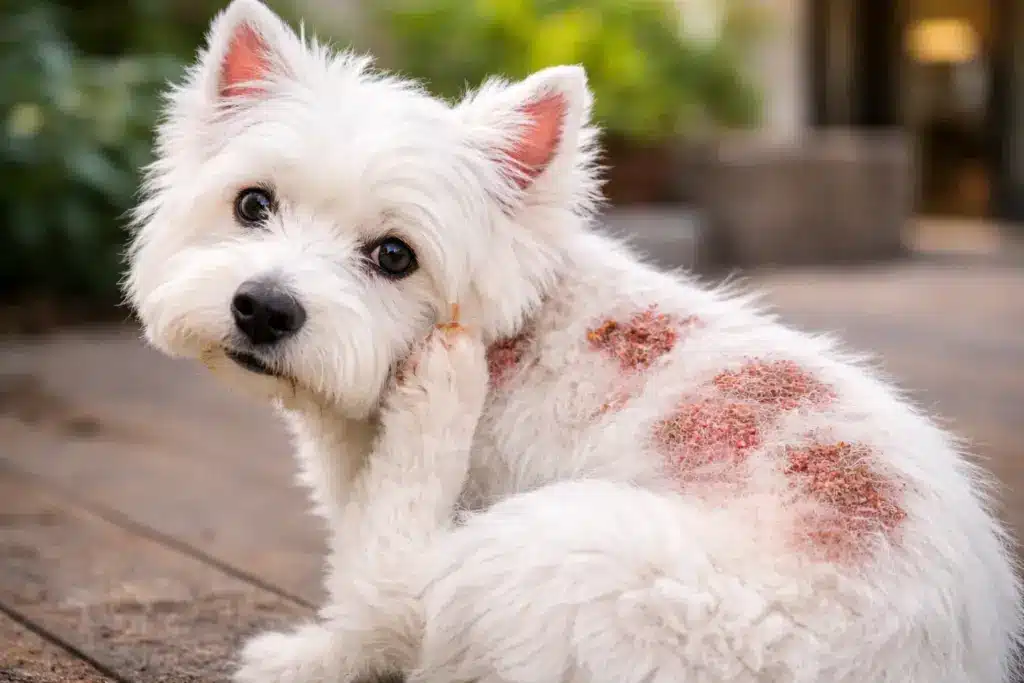
Your dog keeps scratching the same spots, rubbing against the couch, and licking at their paws.
The skin looks red, and in some areas, it’s turning flaky and crusty.
There’s also a smell that won’t go away. It’s tempting to blame dry skin or seasonal allergies, but the real cause might be something more specific.
Yeast infection and crusty dog skin conditions are among the most common and most misunderstood issues dog owners deal with.
They start small, often seem like general irritation, and slowly worsen. By the time the crusting and odor become obvious, the infection has usually been building for a while.
I’ve seen this pattern consistently in clinical practice.
Owners come in thinking it’s a simple allergy, but a quick cytology tells a different story. The earlier you know what you’re dealing with, the better the outcome for your dog.
I put together this article to help you understand exactly what a dog yeast infection is, what triggers it, and what the symptoms look like at each stage.
What Is a Dog Yeast Infection?
A dog yeast infection is a skin condition caused by the overgrowth of the fungus Malassezia pachydermatis, which normally lives harmlessly on healthy skin.
It becomes a problem when the skin’s balance changes.
When the skin’s natural ecosystem is disrupted by factors like a weak immune system, excess oil, or a compromised barrier, Malassezia can rapidly multiply.
That overgrowth leads to inflammation, irritation, and visible changes on the skin.
Yeast infections and crusty dog skin conditions are often secondary issues stemming from an underlying health problem. Known as Malassezia dermatitis, this condition affects the skin, paws, and ear canals.
According to VCA Animal Hospitals, this type of infection is not contagious. Your dog did not get it from another animal.
What Causes a Yeast Infection in Dogs?
Yeast is normally present on a dog’s skin, but overgrowth occurs due to excess oil, allergies, hormonal imbalances, and warm, humid conditions.
- Atopic dermatitis: A chronic allergic skin disorder that weakens the skin barrier and makes yeast infections far more likely to develop and recur
- Seborrhea oleosa: A condition that causes the skin to produce excess oil, creating a greasy surface environment where yeast multiplies quickly
- Natural flea and tick spray for dogs: Repeated scratching from flea reactions breaks down the skin barrier, leaving it open to secondary infections.
- Flea allergy dermatitis: Repeated scratching from flea reactions breaks down the skin barrier, leaving it open to secondary infections.
- Hypothyroidism or Cushing’s disease: Both alter skin health and suppress immune function, increasing vulnerability to opportunistic yeast growth
- Long-term steroid use: Steroids suppress the immune system and can lead to yeast overgrowth as a side effect with extended use
- Seasonal humidity: Hot, humid summer months create warm, moist skin surface conditions, particularly in dogs with thick coats or skin folds, that significantly raise the risk of Malassezia overgrowth
Yeast Infection Crusty Dog Skin Conditions: Key Symptoms
Early signs of a dog’s yeast infection often start with scratching, redness, and an unusual odor coming from the skin or ears.
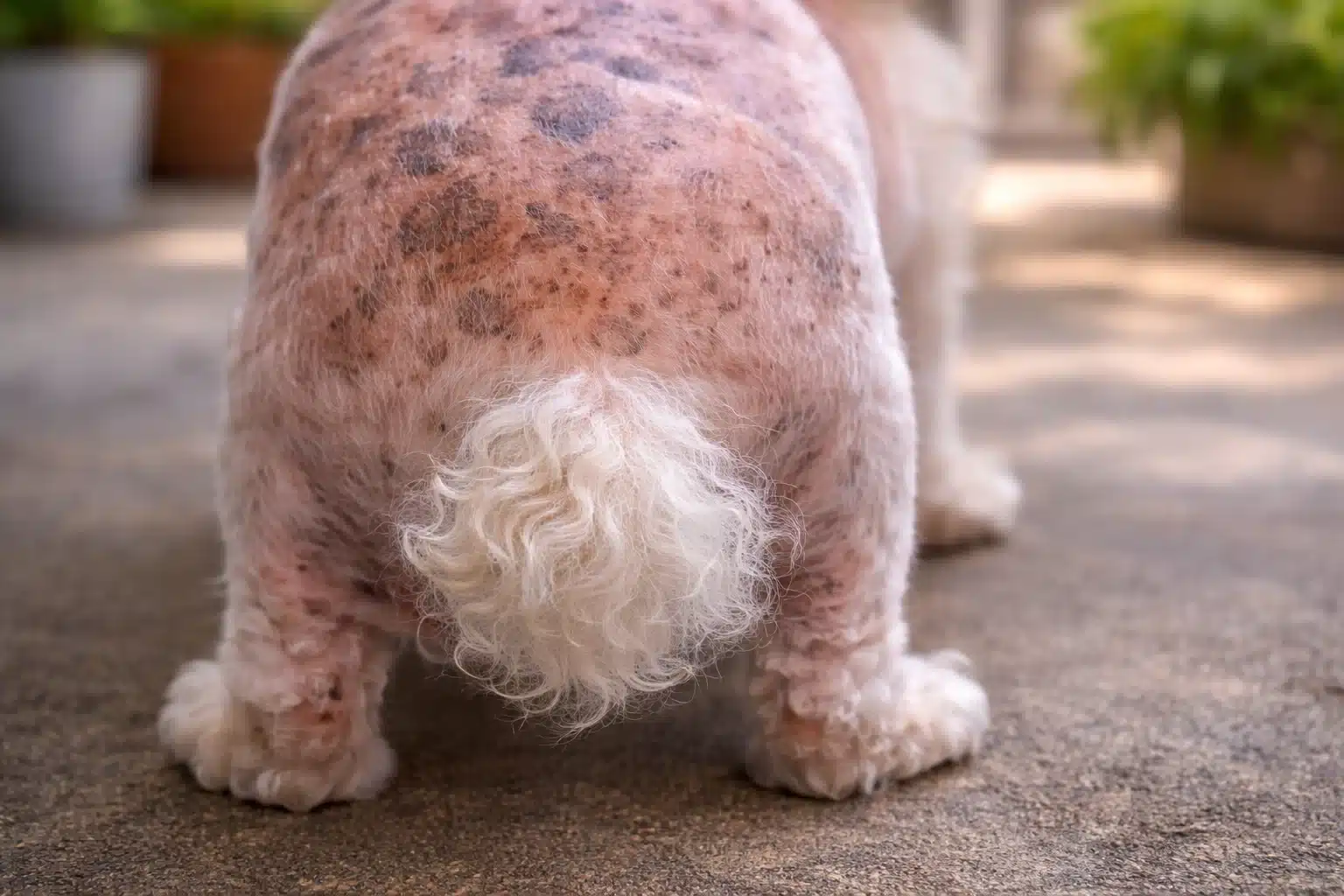
As the infection progresses, the skin may become greasy, flaky, or irritated, and crusty patches can begin to appear.
Many dogs develop intense and persistent itching, often scratching or licking the same area repeatedly without relief.
The affected skin may look red, swollen, or sore, especially in warm, moist areas such as the ears, paws, belly, or skin folds.
A strong musty odor is another common sign and may become more noticeable as the infection worsens.
Over time, the skin can develop flaky, yellowish, or grayish scales, and the surface may feel greasy or sticky, particularly in areas where moisture collects.
One pattern worth noting is that dogs with yeast infections often show a reddish-brown discoloration on the fur near their paws from repeated licking.
That color change is due to saliva staining, and in many cases, it’s one of the first things that brings a concerned owner into the clinic.
What Crusty Skin From a Yeast Infection Actually Looks Like?
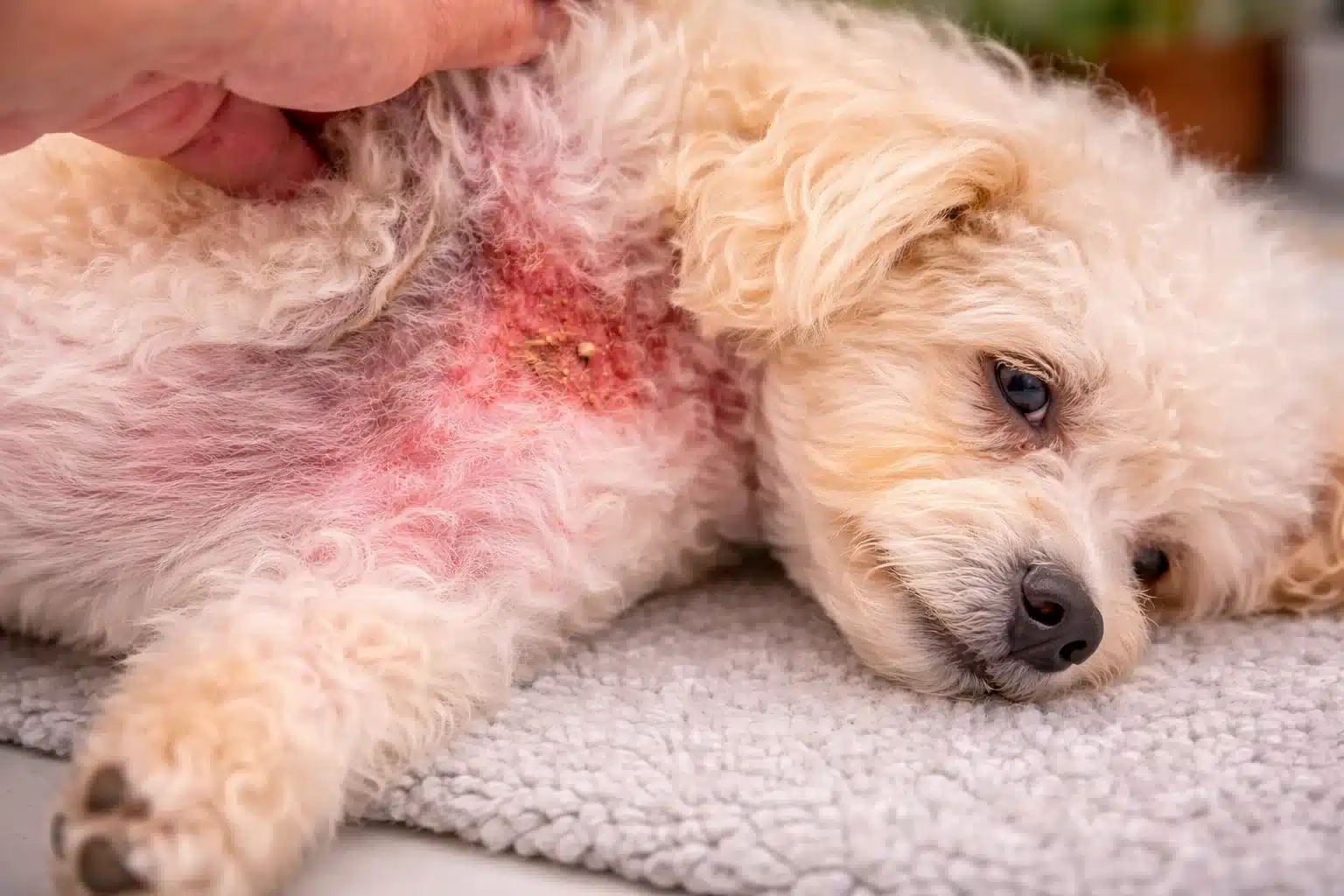
Not all flaking skin indicates a yeast infection; dry skin can produce fine, powdery flakes with minimal irritation.
Yeast infections and crusty skin conditions differ in appearance and feel. Crusts are typically thicker, yellow or gray, and form on inflamed, sore skin.
In advanced cases, the skin may appear leathery or develop rough, dark patches, indicating a prolonged infection. The skin may also feel greasy or leave a residue when touched.
Where Do Yeast Infections Appear on a Dog’s Body?
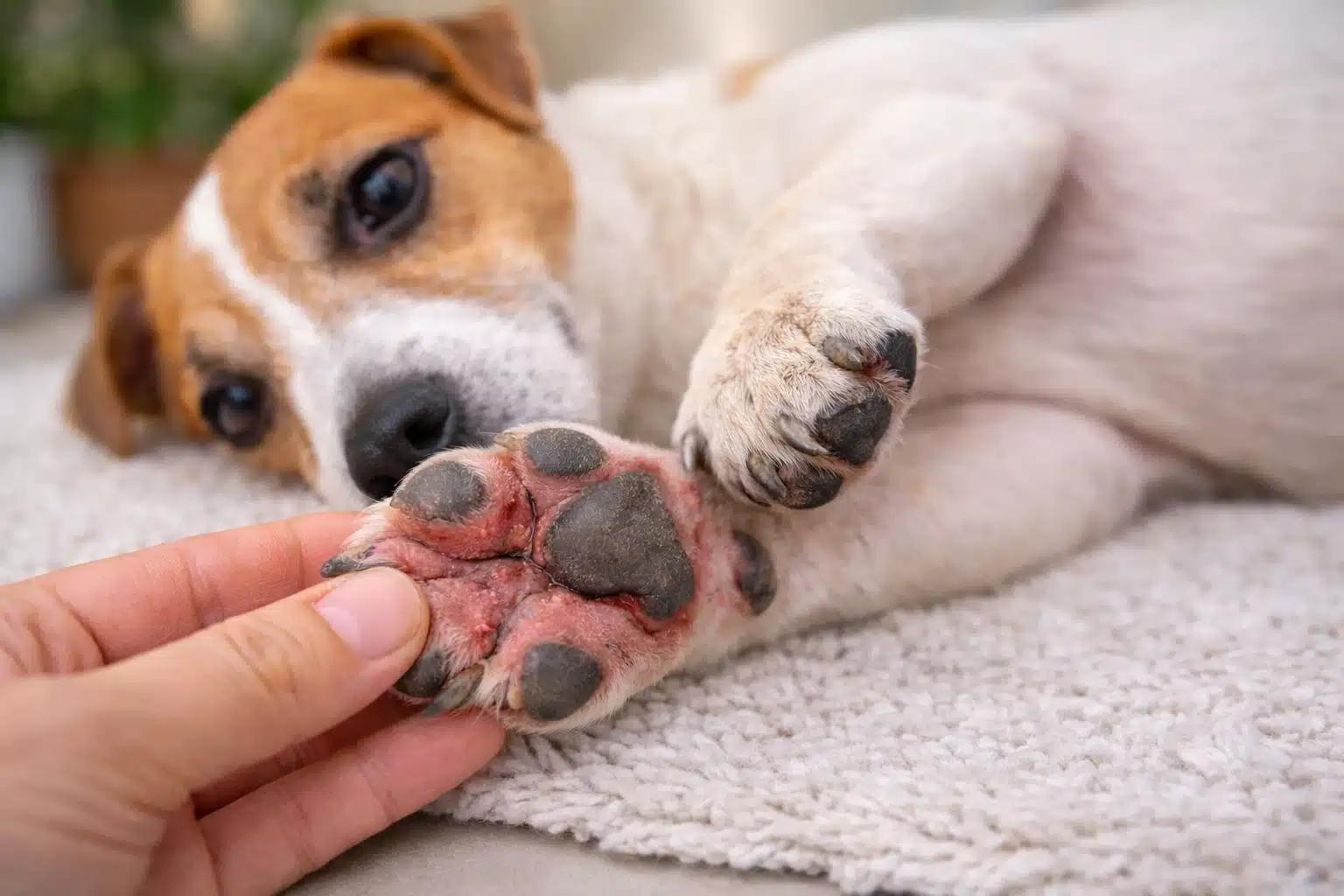
A dog yeast infection can develop anywhere, but certain locations are far more vulnerable than others.
Yeast grows best in warm, moist environments with limited air circulation, which is exactly what many parts of a dog’s body provide.
The ears are one of the most commonly affected areas.
Dogs with floppy or heavily furred ears trap moisture in the canals, creating an ideal environment for Malassezia overgrowth.
Between the paw pads, in the armpits, around the groin, and inside skin folds are other high-risk areas.
Yeast infection, crusty dog skin conditions also appear along the neck, around the nasal folds, near the mouth, and around the base of the tail.
Which Dog Breeds Are at Higher Risk?
Certain dog breeds are at a higher risk of developing yeast infections due to their physical characteristics or genetic predispositions.
Breeds with deep skin folds, such as Bulldogs and Boxers, trap moisture and reduce airflow, which can promote yeast overgrowth.
Dogs with floppy, heavily furred ears, such as Basset Hounds and Cocker Spaniels, also face similar challenges.
Other breeds frequently affected include West Highland White Terriers, Dachshunds, Poodles, Lhasa Apsos, Maltese Terriers, Silky Terriers, Shetland Sheepdogs, and Chihuahuas.
Some dogs may also have hypersensitivity to Malassezia, leading to recurring infections and skin conditions that return shortly after treatment.
How a Yeast Infection Differs from Other Skin Conditions?
Identifying a dog yeast infection can be tricky because its symptoms overlap with those of other skin issues.
Bacterial infections, mange, and flea allergy dermatitis can all cause similar redness, itching, and skin changes.
Key features that distinguish a yeast infection include a strong, musty odor that persists despite regular bathing and skin that becomes greasier, thickening, and darkening over time.
In the ears, yeast infections produce a brown, waxy discharge, while ear mites cause a darker, crumbly discharge.
I usually confirm the diagnosis through a skin scraping, tape impression, or cytology test to identify the organism and rule out other conditions.
How is a Dog Yeast Infection Treated?
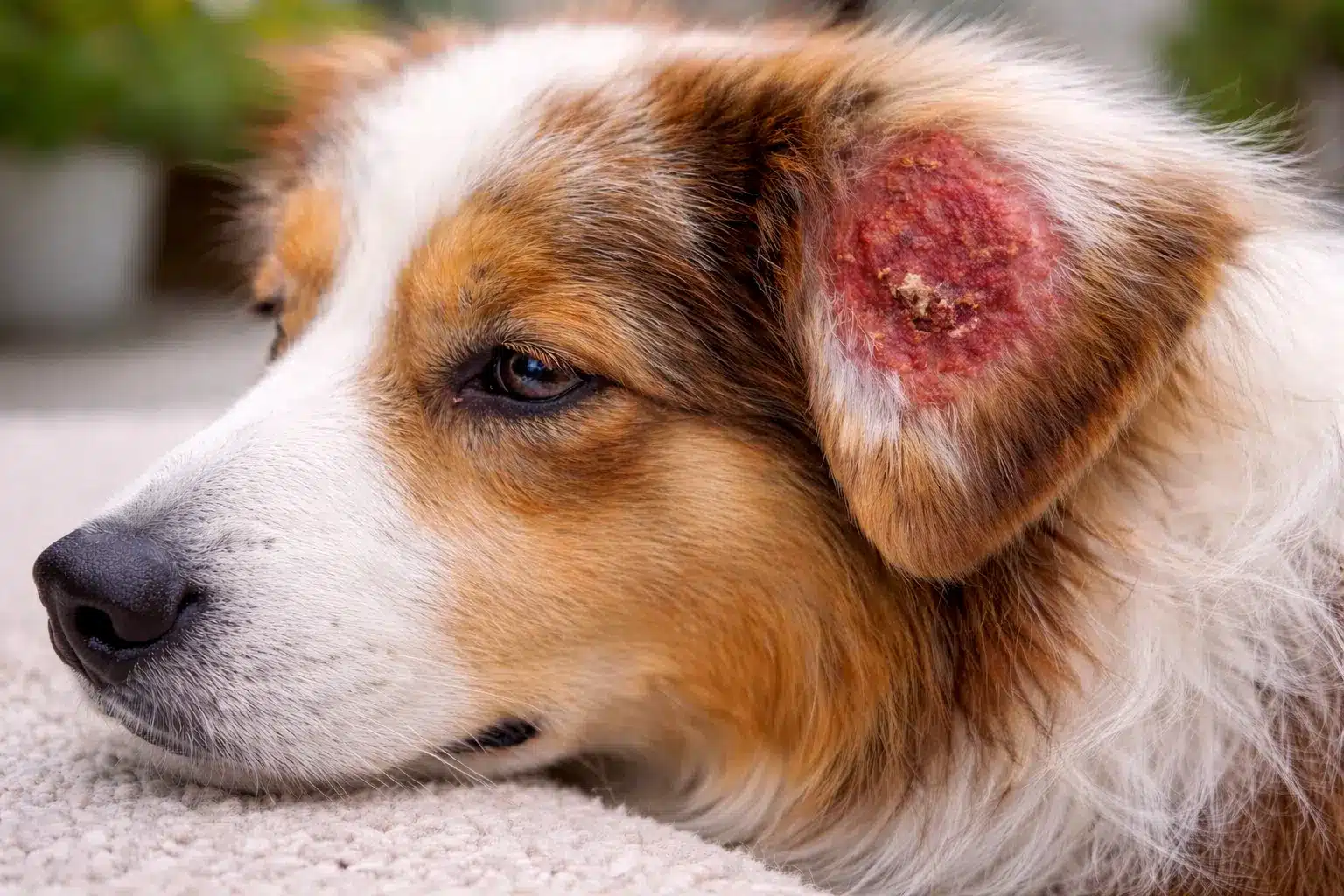
Yeast infections in dogs require dual treatment addressing the active infection and its underlying causes. I will first confirm the infection and then proceed with the treatment based on severity and extent.
1. Topical Treatments
For mild to moderate cases, topical therapy is typically the first-line treatment. Medicated shampoos with chlorhexidine, miconazole, or ketoconazole are commonly prescribed.
Dogs with greasy skin may first require a degreasing wash with selenium sulfide or benzoyl peroxide, followed by antifungal shampoo, which should remain on the skin for at least ten minutes.
This routine is usually repeated every 3 to 5 days for 2 to 12 weeks, depending on the dog’s response.
For localized infections, a topical antifungal ointment or ear drops may be used alongside or instead of shampoo therapy.
2. Oral Medications
More severe, widespread, or persistent dog yeast infections often require treatment with oral antifungal medications for effective relief.
Commonly prescribed options include ketoconazole, itraconazole, and fluconazole.
These systemic medications are particularly beneficial as they penetrate deeper layers of the skin that topical products may not fully address.
I typically recommend routine bloodwork during treatment to monitor liver function and ensure the dog’s overall health and safety.
In terms of timeline, most dogs begin showing relief from itching within one to two weeks of starting treatment.
However, visible skin improvement can reduce crusting, restore coat texture, and take several additional weeks.
Owners should complete the full course even if the dog appears better early on, as stopping too soon is a leading cause of recurrence.
3. Managing the Underlying Cause
To ensure long-term control over a dog’s yeast infection, it’s vital to identify and eliminate trigger ingredients if food allergies are the cause.
For issues like atopic dermatitis, other vets and I may suggest allergy testing or medications to manage flare-ups.
Addressing hormonal conditions such as hypothyroidism can also help reduce infections.
Additionally, keeping skin folds clean, drying the coat thoroughly after baths, and trimming fur in moist areas support overall skin health.
How to Prevent Yeast Infections in Dogs?
Prevention is easier than treatment, and many recurring cases can be avoided with consistent habits.
The key is to keep your dog’s skin dry. Thoroughly dry your dog after baths or swims, focusing on skin folds, ears, and paw pads. A low-heat blow dryer is effective for dogs with thick coats.
Ear hygiene is crucial. Clean the outer ear canal with a vet-recommended solution every 1 to 2 weeks to reduce yeast buildup, avoiding cotton swabs that may go deep into the canal.
Diet also plays a role. Dogs with food sensitivities may benefit from limited-ingredient or hydrolyzed protein diets, which help reduce chronic skin inflammation.
Choosing the right dog brush, for brushing, trimming fur around folds and paws, and checking the skin, helps detect conditions early and removes the conditions that favor yeast growth.
When Is It Time to Call the Vet?
Yeast infections and crusty skin conditions in dogs require veterinary attention. They often worsen without proper treatment and can become more uncomfortable for your dog over time.
If your dog keeps scratching, licking, or chewing the same area for several days, it may indicate an underlying infection that needs medical care.
A strong musty or “yeasty” smell, crusty patches, redness, darkened skin, or thickened skin are also common warning signs.
Ear symptoms can be another clue. Frequent head shaking, constant ear scratching, redness in the ear canal, or dark discharge may indicate a yeast infection in the ear canal.
Changes in your dog’s behavior can also signal discomfort. Restlessness, irritability, or reduced activity may happen when skin irritation becomes painful.
It is especially important to contact your vet if the skin looks swollen, the area becomes warm to the touch, or the infection appears to be spreading.
Conclusion
A yeast infection in dogs might seem like just a surface issue, but it often indicates a deeper health concern that needs attention.
Symptoms like odor, itching, and crusty skin are your dog’s way of signaling that something is out of balance within their body.
Recognizing these signs early can make a significant difference in your dog’s comfort and recovery.
The sooner you address the issue, the less your dog will have to endure, and the better the chances for a full recovery.
I personally recommend that you always consult your veterinarian if you notice these changes in your dog’s skin.
If you found this information helpful, please share it with fellow dog owners who might be facing similar challenges.
I’d love to hear your thoughts! Share your experiences or questions in the comment section below!
Frequently Asked Questions
Is a Dog Yeast Infection Contagious to Other Pets or People?
Yeast dermatitis in dogs is not contagious. The Malassezia organism is specific to each dog’s skin and does not spread to other animals or humans.
Can a Dog’s Yeast Infection Go Away without Treatment?
Dog yeast infections need veterinary care for effective treatment. Addressing underlying causes, such as allergies and grooming issues, is crucial to preventing recurrence. Regular check-ups are essential.
Can Diet Affect a Dog’s Yeast Infection?
Food allergies can trigger yeast overgrowth in dogs, as allergens may cause skin inflammation that allows Malassezia to thrive.