You just noticed your cat is limping out of nowhere, and your heart sank instantly.
The first question that probably hits you is: Is this an emergency, or can I wait and see? That single decision, act now or monitor, is exactly what this guide is built to help you make quickly and confidently.
Limping in cats is one of those signs that is simply impossible to ignore, and for good reason, it can mean anything from a tiny thorn stuck in the paw to something that needs emergency care right away.
Make the wrong call, and you either rush to the vet unnecessarily or wait too long and let a serious condition get much worse.
This blog walks you through exactly what to look for, what to do in the moment, and the warning signs that mean it is time to stop waiting and call your vet today.
Is Your Cat’s Limp an Emergency?
Before anything else, run through this fast check. The single most important question your vet will ask is: can your cat put weight on the leg?
| What You See | What It Likely Means | What to Do |
|---|---|---|
| Limping but still walking, eating, and alert | Mild strain, minor paw injury | Monitor for 24–48 hours; gentle home check |
| Not putting any weight on the leg at all | Possible fracture, ligament tear, or dislocation | Vet visit same day, do not wait |
| Sudden paralysis of back legs, cold paws, crying out | Saddle thrombus (blood clot) is life-threatening | Emergency vet immediately |
| Swelling, discharge, or foul smell near the leg | Abscess or infection | Vet visit within 12–24 hours |
| Limp has lasted more than 48 hours with no improvement | Underlying condition requiring diagnosis | Schedule a vet appointment |
What Does Limping in Cats Usually Mean?
Limping in cats means your cat is in pain or has trouble moving a leg, paw, or joint. An important point many owners miss: if your cat is limping, they are in pain, even if they don’t appear to be.
Cats are experts at concealing discomfort, so a limp that looks mild almost always reflects more pain than is visible.
The cause could range from a minor muscle strain to a fracture or infection, so never assume it will go away on its own.
Cats are very good at hiding pain, meaning the problem may already be worse than it looks by the time you notice a limp.
It is also worth knowing that limping can behave differently depending on which leg is affected.
- A cat limping on a back leg tends to have a more pronounced gait change, since the back legs bear more weight during movement.
- A cat limping on a front leg often dips the head downward when the affected leg touches the ground, a subtle but useful thing to watch for.
Some breeds need extra attention, including Maine Coons, Ragdolls, Scottish Folds, Burmese, Persians, and British Shorthairs, as they are more prone to joint, muscle, and heart conditions that affect movement.
If you own one of these breeds, regular vet checkups are especially important.
Common Reasons a Cat Starts Limping
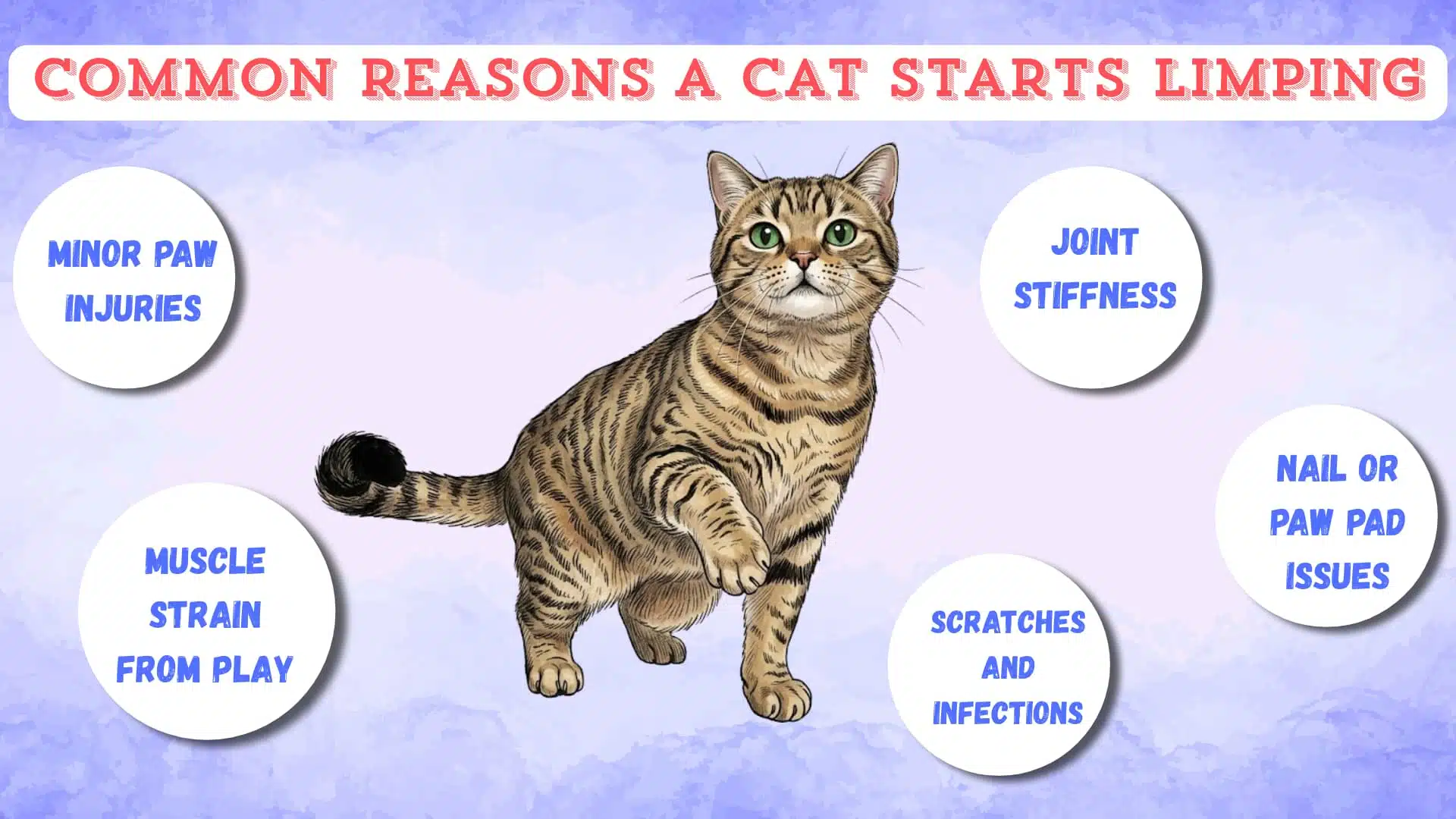
Seeing my cat limping can be concerning, but many causes are common and not always severe. Understanding the most common reasons helps determine when simple monitoring is enough.
1. Minor Paw Injuries
Minor paw injuries are among the most common reasons owners notice their cat limping. Small cuts, thorns, glass fragments, or debris stuck between the toes can cause immediate discomfort.
These injuries may not bleed, making them easy to miss during a quick check. Even indoor cats can develop paw injuries from sharp objects or rough surfaces.
However, persistent limping, redness, or swelling suggests infection or deeper tissue damage and requires veterinary attention.
2. Muscle Strain From Play
Cats frequently jump from high places, and an awkward landing can strain muscles or ligaments.
Muscle strain often causes sudden limping without visible wounds. The cat may still walk but move stiffly or hesitate before jumping again.
Rest usually improves mild strains within a short time, especially if activity is limited.
However, continued limping, worsening pain, or refusal to use the leg can indicate a more serious injury, such as a ligament tear.
If my cat is limping after rough play and does not improve within 48 hours, a vet visit is recommended to prevent long-term issues.
3. Nail or Paw Pad Issues
Problems with nails or paw pads can make walking painful and lead to limping. Torn nails may partially detach and cause sharp pain with each step.
Overgrown nails can curl into the paw pad, creating sores or infection.
Cats often lick or chew the affected paw when nail or pad issues are present. Limping may come and go depending on pressure.
If trimming or gentle cleaning does not resolve the issue, or if swelling and discharge develop, veterinary care is needed to prevent infection.
4. Joint Stiffness
Joint stiffness is one of the most common yet overlooked reasons for limping in senior cats. Unlike sudden injuries, it creeps in slowly, making it easy to miss until the problem is already well advanced.
You may notice your cat hesitating before jumping, moving stiffly after a long nap, or avoiding surfaces they once climbed with ease.
Cold weather and long periods of rest tend to make the stiffness worse. Osteoarthritis, the gradual breakdown of joint cartilage, is the most common form seen in older cats.
In my practice , I see it accelerate noticeably in winter months; owners often come in thinking their senior cat “just slowed down,” not realizing what we’re actually dealing with is chronic joint pain.
If your senior cat seems less active, slower, or reluctant to move, do not wait; a vet visit can catch joint problems early.
5. Scratches and Infections
Outdoor cats are highly vulnerable to bites and scratches from other animals. Even a small puncture wound can quickly develop into a painful abscess beneath the skin, causing swelling and sudden limping.
These wounds often hide under fur and are easy to miss. Fungal infections such as cryptococcosis can also affect multiple body systems, including the musculoskeletal system, and result in lameness, though this is less common than bacterial abscess.
If you notice swelling, warmth, discharge, or lethargy alongside the limp, contact your vet promptly.
6. Hip Dysplasia and Congenital Joint Problems
Some cats are born with structural abnormalities that cause limping, which are often misdiagnosed as injuries or aging.
Hip dysplasia, where the hip joint does not form correctly, is more common in Maine Coons and other large-breed cats.
Patellar luxation, where the kneecap slips out of place, can cause an intermittent limp that comes and goes, sometimes leading owners to think the problem has resolved on its own.
If your cat’s limping comes and goes without any obvious cause or injury history, a congenital joint issue is worth discussing with your vet.
7. Neurological Causes
Not all limping is caused by a problem in the leg itself. In some cases, the issue originates in the spine or nervous system.
Conditions such as lumbosacral disease or spinal cord injury can affect a cat’s ability to walk normally, producing a gait that appears to limp but follows an irregular, uncoordinated pattern. This is called ataxia.
If your cat’s limping looks wobbly or inconsistent, rather than a repeating pattern of favoring one leg, this is an important distinction to share with your vet, as it changes the diagnostic approach entirely.
8. Bone Tumors
While less common, tumors affecting the bone, joint, or soft tissue of a leg can cause progressive limping that worsens over weeks.
Osteosarcoma (bone cancer) is particularly aggressive and painful, often presenting as localized swelling with a limp that steadily deteriorates.
If your cat’s limp has been worsening consistently over several weeks without any identifiable injury, this needs to be ruled out with imaging.
Never Give Your Cat Human Pain Medication. This is one of the most dangerous mistakes cat owners make. Ibuprofen, aspirin, and acetaminophen (Tylenol) are all toxic to cats, even in small doses. Acetaminophen in particular can be fatal.
If your cat is in pain, the only safe next step is calling your vet for guidance on appropriate medication. Do not attempt to manage a limp with over-the-counter human pain relievers.
What to Do Before Calling the Vet?
When you notice your cat limping, the first step is to stay calm and observe carefully. Acting too quickly can make the injury worse or cause unnecessary stress.
Start by limiting your cat’s movement. Move them to a quiet room where they cannot jump onto furniture or run around.
Too much activity can worsen injuries such as sprains or fractures. Setting up a comfortable recovery space for cats with low surfaces, familiar bedding, and easy access to food and water makes a significant difference during this period.
How to Examine Your Cat’s Paw at Home?
Wait until your cat is calm before attempting any examination. A cat in acute pain may scratch or bite even if normally gentle. Once they are settled, follow these steps:
- Start at the paw and work upward. Run your fingers gently along the paw pads and between the toes first, then move up the leg.
- Watch your cat’s reaction at every point. Flinching, pulling away, vocalizing, or turning to look at you are all signs of localized pain.
- Look for visible signs: cuts, swelling, redness, discharge, thorns, glass, or debris between the toes.
- Check the nails for tears or abnormal curling. Check the paw pads for cracking, cuts, or foreign objects.
- If you find a thorn or splinter, remove it gently with tweezers and clean the area with soap and water. Monitor the site for signs of infection over the following 24 hours.
- Stop immediately if your cat shows distress. Do not force the examination.
One thing I always tell owners: if your cat’s limp is intermittent and not always present during your exam, take a short video on your phone the next time you see it.
That footage can be one of the most useful things you bring to a vet appointment, especially when the limp does not reproduce on the exam table.
Signs Your Cat’s Limping Requires a Vet Visit
Some limps heal with rest, but certain warning signs suggest something more serious. Knowing these red flags helps you decide when a veterinary visit is necessary.
- Severe pain or distress: Crying when touched, sudden aggression, or refusing to move can indicate intense pain or injury that needs immediate veterinary attention.
- Visible swelling or deformity: Swollen joints, puffy paws, or a leg positioned unnaturally may signal fractures, joint damage, or severe inflammation.
- Limping lasting 24 hours: If rest does not improve the limp or the condition worsens, the underlying cause is likely to require professional diagnosis.
- Open wounds or signs of infection: Bleeding, discharge, redness, warmth, or a foul smell around the paw or leg may indicate infection or deep tissue injury.
- Behavior changes: Loss of appetite, hiding, lethargy, or irritability alongside limping often mean your cat is experiencing significant discomfort or illness.
- Intermittent limping that keeps returning: A limp that disappears for a few days and then comes back is not “healed.” It often signals a recurring structural issue, joint disease, or early arthritis, warranting a proper examination.
Blood Clots in Cats: Symptoms and Emergency Signs
A blood clot in cats, medically known as saddlethrombus or feline aortic thromboembolism, is a condition where a clot forms in the heart and travels through the bloodstream until it lodges in the aorta
Saddle thrombus is one of the most serious and heartbreaking emergencies a cat owner can face. The onset is sudden and dramatic.
Your cat may cry out in severe pain, lose all movement in their back legs, and develop cold, pale, or bluish paw pads within minutes.
What makes it particularly devastating is the element of surprise. In my clinical experience, a significant number of the saddle thrombus cases I have seen arrived with owners who had no idea their cat had heart disease.
The cat appeared perfectly normal the day before. This condition most commonly develops as a complication of hypertrophic cardiomyopathy (HCM), a heart condition that frequently goes undetected without routine screening.
If you have a breed predisposed to HCM, such as Maine Coons, Ragdolls, or British Shorthairs, ask your vet about periodic echocardiograms.
It will not guarantee prevention, but early detection of underlying heart disease improves the odds significantly.
If you notice any of these symptoms, do not wait; rush your cat to an emergency vet immediately.
How a Vet Takes Care of Your Limping Cat?
Knowing what to expect at the vet, from treatment to the final bill, helps you make faster, calmer decisions when your cat needs care the most.
1. From Diagnosis to Treatment
After identifying the cause through a physical exam, X-rays, or blood work, your vet will put together a treatment plan built around your cat’s specific condition.
A mild sprain may only need rest and anti-inflammatory medication, while an infected wound will require cleaning and antibiotics.
Fractures may need splinting, and more complex conditions, such as ligament damage or joint disease, may require surgery or a specialist referral.
Throughout recovery, your vet will guide you on activity limits, home care, and what warning signs to watch for.
2. Treatment Costs
A basic consultation and physical exam typically runs between $50 and $100, while X-rays cost $150 to $300 and blood work costs $100 to $200.
If your cat needs wound care and antibiotics, expect to pay $100 to $250, and splinting or bandaging can add another $200 to $400.
Surgery for more serious conditions, such as fractures or ligament damage, can range from $1,000 to $3,000 or more, and specialist referrals usually start at $200 to $500 for an initial consultation.
Keep in mind that complex or rare cases, such as saddle thrombus, severe neurological conditions, or advanced joint disease, can cost up to $5,000 or more when hospitalization.
3. Pet Insurance
Pet insurance can be a genuine lifesaver when unexpected injuries arise.
It typically covers accidents, fractures, diagnostic tests such as X-rays and blood work,surgery, hospitalization, specialist referrals, and prescription medications.
If your cat belongs to a high-risk breed, look for plans that specifically include hereditary conditions.
Enrolling early means lower premiums and better coverage options. Always compare plans before an emergency, not after.
What to Do After Your Cat’s Limp is Treated?
Once your vet has treated the cause of the limp, recovery happens at home, and how you manage it matters just as much as the treatment itself.
Keep your cat in a quiet, comfortable space away from stairs and high surfaces. Follow the vet’s instructions exactly, never stopping medication early, even if your cat seems better.
Check the affected limb daily for swelling, warmth, or discharge. Limit activity even when your cat feels well, as rushing recovery can cause setbacks.
The principles of post-treatment home recovery tips for cats apply broadly to any procedure or injury recovery: keeping the environment calm, monitoring the wound site, and following vet instructions without skipping steps.
Keep meals regular, water accessible, and your cat stress-free during this period. Always attend follow-up appointments to ensure healing is fully on track.
How to Prevent Future Limb Injuries in Cats?
Prevention is always better than a stressful vet visit. A few simple habits can make a big difference.
- Trim Nails Regularly: Overgrown nails snag on surfaces and can curl into the paw pad, causing pain and infection.
- Secure High Surfaces: Unstable shelves and furniture are a fall risk. Secure tall furniture to walls and ensure cat trees are stable to avoid fractures.
- Check Outdoor Cats Daily: Bites and scratches hide under fur and quickly turn into abscesses. A quick daily check of your cat’s legs can catch infections early.
- Schedule Routine Vet Visits: Arthritis and joint issues develop silently. The ASPCA recommends annual exams for adult cats.
- Maintain a Healthy Weight: Excess weight puts extra pressure on joints, ligaments, and bones. Feeding balanced portions and encouraging daily play helps reduce strain. If your cat is carrying extra weight, a clear plan for managing your cat’s weight can meaningfully reduce the joint strain that leads to limping over time.
Conclusion
A limping cat can mean something minor, like a thorn in the paw, or something serious, like a blood clot or fracture.
You now know what signs to look for, what to do before calling the vet, and when to treat a limp as an emergency.
The one question to anchor everything else around: Is your cat weight-bearing or not? That single observation will guide your next move more reliably than almost any other.
Do not brush off a limp just because your cat is still eating or seems okay otherwise. Cats hide pain better than almost any other animal, and by the time they show it, the problem may already be serious.
Keep your cat’s nails trimmed, your home safe, and your vet appointments regular. Small habits make a big difference in the long run.
You know your cat. Call your vet, describe what you see, and let the professionals take it from there. That one phone call could change everything.
If this guide helped you figure out what’s going on, drop a comment below. And if your cat has been seen by a vet for a limp, sharing what the cause turned out to be can genuinely help another worried owner in the same situation.