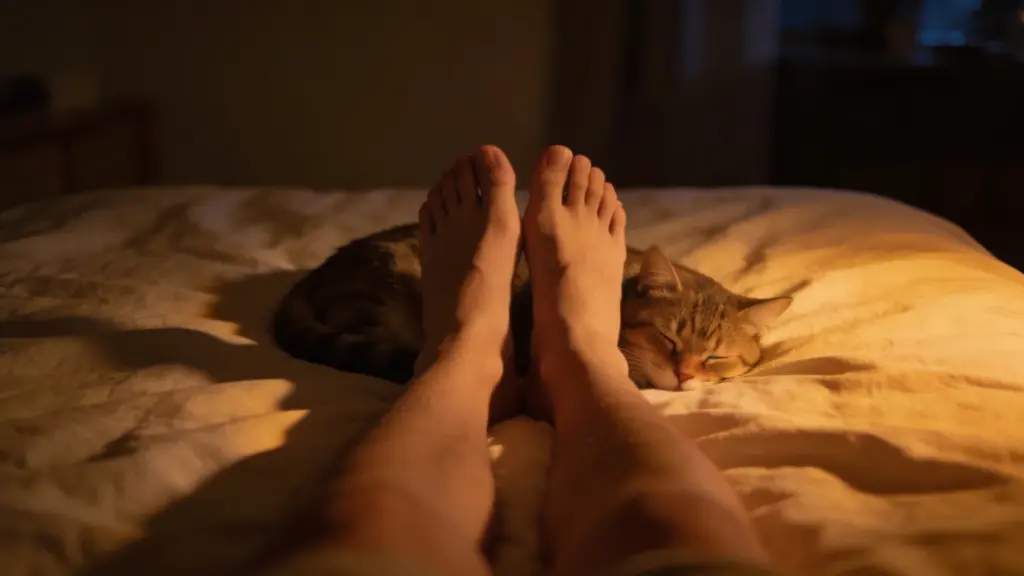
Nighttime often brings out the quietest moments between a cat and its owner.
The room becomes calm, the lights dim, and a cat slowly walks across the bed before settling near the feet. Many owners notice this moment and wonder what makes that exact spot so appealing.
Curiosity usually follows the same question: why do cats sleep at your feet instead of somewhere else on the bed?
Cats rarely do anything without a reason, and every sleeping spot reflects instinct, preference, and a sense of comfort.
What looks like a simple habit can reveal interesting details about how cats feel around people and how they build quiet connections inside a home, often strengthening the bond shared.
Energy Connection Between Cats and their Owners
Cats often sleep at your feet because the spot offers a mix of warmth, security, and easy awareness of their surroundings. The foot of the bed is usually warm but less disturbed by movement, making it comfortable for rest. It also allows cats to stay close to their owner while keeping a clear escape path if needed, which fits their natural instincts. In many cases, sleeping at your feet also shows trust and affection, since cats choose to rest near people they feel safe around.
Many spiritual and cultural beliefs suggest that cats form a quiet energy connection with the people they live with.
When a cat sleeps at someone’s feet, some traditions interpret this as the animal staying close to the owner’s personal energy field.
In several spiritual views, cats are seen as sensitive to emotional shifts and subtle energy around a person.
As per 21cats, cats are viewed as spiritual protectors against negative energy in various cultures, including ancient Egypt.
Some Asian folklore also describes cats as protective companions that stay near humans to guard their energy during rest.
Because of this belief, a cat sleeping at the foot of the bed is sometimes viewed as a sign of trust, comfort, and a quiet spiritual bond between the pet and its owner.
Why Do Cats Sleep at Your Feet?

Understanding the sleeping choice can reveal a lot about cats behaviour. Looking at a few common reasons can help explain why this quiet nighttime habit is so common among cats.
1. Your Cat Feels Safe Around You
Cats carefully choose places where they feel protected. When a cat sleeps at your feet, it often means the cat trusts you and the environment around you.
As the person who provides food, care, and shelter, you naturally become a source of safety for your pet. Sleeping near you allows the cat to relax while still feeling protected.
Cats prefer calm, secure spots for rest, and your bed often becomes one of those places.
Being close to you shows that the cat feels comfortable and confident in your presence.
2. The Foot Area Provides Warmth
Cats love warm places, especially when it is time to sleep, and the bed already offers warmth from blankets and body heat, which makes it very appealing.
The foot area provides a cozy spot where the cat can stay warm without being disturbed often.
People tend to move their arms and upper body more during sleep, while the feet usually remain still.
This makes the area near your feet a stable and comfortable sleeping space. For many cats, it becomes the perfect balance of warmth and quiet rest.
3. A Strategic Position for Awareness
Even while sleeping, cats remain naturally alert to their surroundings, and this instinct comes from their survival habits in the wild.
The foot of the bed gives a cat a good position to observe the room while resting.
From this spot, the cat can quickly notice sounds or movement. It also provides an easy escape path if something startles them.
Cats prefer sleeping locations where they do not feel trapped. The foot area of the bed offers a sense of control and awareness while still allowing them to stay close to their owner.
4. A Way of Showing Affection
Cats show affection in quiet and subtle ways; one of those ways is choosing to sleep near someone they trust.
When a cat sleeps at your feet, it often means the cat enjoys company and feels emotionally connected to the person.
Cats may not always show love through constant attention, but their presence speaks clearly.
Staying near during rest shows comfort and familiarity. Over time, many cats build bedtime routines with their owners, making the foot of the bed their regular sleeping spot.
5. Territory and Scent Comfort
Scent plays an important role in how cats understand their surroundings. Cats recognize familiar smells and use them to feel secure.
The bed carries a scent, which makes it a comforting place for the cat. Cats also like to mix their scent with the scent of people they trust.
Humane World for Animals mentions that cats have an extra olfactory organ that provides more information about the object they’re sniffing, and it is surrounded by a familiar smell.
Sleeping close strengthens that sense of belonging and comfort within their space.
Signs Your Cat Feels Comfortable Sleeping Near You
Cats usually show clear body signals when a sleeping spot feels safe and relaxing. These small signs help owners understand when a cat truly feels secure in the environment.
- Purring While Resting: Soft purring during sleep near the feet often signals relaxation, contentment, and emotional comfort in the environment.
- Curled Sleeping Position: A curled body posture while sleeping shows physical comfort, warmth retention, and a strong sense of safety.
- Slow Blinking Before Sleep: Slow blinking near bedtime indicates trust and relaxation, often seen when cats feel calm around owners.
- Kneading the Blanket: Gentle kneading on bedding before lying down reflects comfort-seeking behavior and lingering kittenhood soothing habits.
- Relaxed Body Language: Loose muscles, tucked paws, and steady breathing during sleep suggest a peaceful state and deep comfort nearby.
Real User Discussion About Cats Sleeping at Feet

A discussion on Reddit revealed that many cat owners notice the same habit: a cat choosing the foot of the bed instead of curling up next to its owner.
Several users explained that this behavior is often tied to instinct rather than distance.
One commenter mentioned that sleeping near a person’s feet allows a cat to stay alert and respond quickly to movement or potential threats.
Others shared personal experiences with cats that simply preferred space.
One user recalled having a tough, independent cat that never sat on laps but still chose the bed every night by their legs.
Another Reddit user suggested a gentle trick, slowly moving a nearby chair closer to the pillow over time, which helped their cat become comfortable sleeping closer.
Overall, Reddit users agreed that every cat has a unique comfort zone.
How to Make Your Cat Comfortable While They Sleep?
Creating a comfortable sleeping space helps a cat rest peacefully and return to the same spot each night.
A soft and warm bed area often makes a big difference, as many cats enjoy blankets, cushions, or a quiet corner of the bed that stays undisturbed.
Stable temperature also matters because cats prefer warm and cozy environments during sleep.
Keeping the sleeping area clean and free from sudden noise supports deeper rest. Some cats also like familiar scents nearby, such as bedding used regularly by the owner.
Gentle nighttime routines, such as dim lights and calm surroundings, help signal sleep time.
Providing enough space for the cat to stretch or curl up adds comfort.
When the sleeping environment feels safe and predictable, most cats relax easily and develop consistent bedtime habits near trusted humans.
What Does it Mean if a Cat Sleeps at Your Feet vs Your Head?
Cats choose different sleeping spots on a bed for specific comfort and behavioral reasons.
Sleeping at the feet usually provides warmth, space, and an easy exit path. This position also allows closeness without constant movement near the upper body.
Sleeping near the head often shows stronger trust and deeper comfort with the owner.
The head area carries a stronger human scent from breath, hair, and natural body warmth. Cats rely heavily on scent when choosing secure and familiar sleeping locations.
The head area also stays warmer throughout the night than the lower part of the bed.
Some cats prefer this spot because the breathing sounds create a calming, steady rhythm. The position near the head also keeps the cat closer to facial scent markers.
Is it Healthy to Let Cats Sleep at Your Feet?
Allowing a cat to sleep at the feet is usually safe and comfortable for both cat and owner.
This habit often strengthens bonding and gives the cat a sense of security, and some owners enjoy the calm companionship at night.
However, minor downsides can appear, such as movement during sleep may disturb the cat, and allergies or light sleep can make the arrangement difficult.
Each household may decide what feels most comfortable. Sleeping habits may change as cats age or adjust to seasonal temperatures.
Stress, illness, or environmental changes can also shift sleeping locations. Sudden changes in sleeping behavior sometimes signal discomfort or health concerns.
Consistent avoidance of usual sleeping spots, combined with unusual behavior, may require closer observation or guidance from a veterinarian.
Conclusion
The question, why do cats sleep at your feet often comes down to instinct, comfort, and trust.
Cats naturally look for warm and secure sleeping spots, and the feet of the person provide both.
This small habit shows how cats balance independence with a desire to stay close to familiar people.
Over time, this behavior can become part of a shared routine that strengthens the connection between a cat and its owner.
Understanding these sleeping choices helps owners see the subtle ways cats show comfort and attachment.
Each cat may develop a slightly different pattern, but the meaning often comes back to feeling safe in a trusted space.
Has a cat ever curled up at your feet during the night? Share personal experiences or stories in the comments.
Frequently Asked Questions
Is Something Wrong if a Cat Avoids Being Held or Cuddled?
Nothing is wrong with this behavior. Sleeping near the feet can show quiet trust and comfort, but avoiding being held often reflects their personality preference.
Age When Cats Develop Consistent Sleeping Spot Preferences?
Most cats begin forming consistent sleeping spot preferences between 6 months and 1 year. Personality development, comfort habits, and environmental familiarity influence the choice.
What is the 3-3-3 Rule for Cats?
The 3-3-3 rule describes adjustment stages for newly adopted cats. 3 days involve settling, 3 weeks build routine, and 3 months usually allow full comfort and trust.