


It only takes a brief moment for an ordinary day with a dog to shift into something deeply unsettling, especially during feeding or play.
Watching a dog coughing and gagging can trigger instant fear, because the behavior feels sudden, unfamiliar, and impossible to ignore.
Many dog owners experience a rush of panic as they try to understand what is happening and how serious it might be. The strong emotional bond makes these moments heavier.
Awareness and preparation create a sense of control, turning fear into readiness and helping dog owners feel more confident when unexpected emergencies arise.
This blog entails what to do if your dog has something stuck in its throat, including performing the Heimlich maneuver, and common signs to look for in case of emergencies.
What is Esophageal Obstruction in Dogs?
If a dog has something stuck in its throat, stay calm and check whether the dog can still breathe. Carefully open the mouth and look for a visible object, but avoid blindly reaching inside because it can push the blockage deeper. If the object is clearly visible and easy to grab, remove it gently with your fingers or tweezers. If the dog cannot breathe, is panicking, or coughing and gagging continuously, perform the Heimlich maneuver for dogs and seek emergency veterinary care immediately to prevent serious injury or airway blockage.
Esophageal obstruction in dogs happens when an object gets lodged in the esophagus, the tube that carries food from the mouth to the stomach.
This is different from normal choking because the airway may still be open, but swallowing becomes difficult or painful.
Signs become more serious if a dog has something stuck in its throat and is struggling to and cannot swallow properly.
In many cases, dog coughing and gagging can also occur as the body tries to clear the blockage on its own. Objects like bones, toys, or large food pieces are frequent causes.
This condition should not be ignored, since pressure or sharp edges can damage the esophagus over time. Quick attention helps reduce the risk of swelling, injury, or infection.
What to Do Immediately If a Dog Is Choking?

If a dog suddenly starts choking, quick but calm action can make a real difference. Take a breath and try to keep the dog as still as possible, since panic can make the situation worse.
Gently secure the dog to avoid sudden movements or accidental bites.
Next, watch the chest and nose to see if air is moving in and out. When a dog has something stuck in its throat, open the mouth carefully and look inside using a flashlight or good lighting.
Only do a visual check and avoid blind finger sweeps, as this can push the object deeper.
If the object is clearly visible and easy to reach, gently remove it with fingers or clean tweezers.
Dog coughing and gagging may continue for a short time after removal, but breathing should slowly return to normal.
How to Perform the Heimlich Maneuver on a Dog?
The Heimlich maneuver is an emergency technique used only when a dog is actively choking and cannot breathe.
It should only be used when a dog is actively choking, not when mild coughing is present.
If a dog has something stuck in its throat and shows panic, inability to inhale, or worsening distress, this technique can help push the object out.
For small dogs, gently hold the dog with its back against your chest, place a fist just below the rib cage, and apply quick, controlled inward and upward thrusts.
For medium and large dogs, stand behind the dog if possible, wrap your arms around the abdomen, and pull inward and upward firmly.
If the dog is lying on its side, apply upward pressure just behind the ribs.
Common Signs a Dog Has Something Stuck in Its Throat
When a dog suddenly starts acting uncomfortable around food or breathing, it can be alarming. Some signs are easy to miss at first, while others show up quickly and demand attention.
1. Repeated coughing, gagging, or retching
One of the most common signs is frequent coughing or gagging that does not stop on its own.
This usually happens when the throat is irritated or partially blocked. Dog coughing and gagging may sound dry, harsh, or strained and can come in repeated waves.
Some dogs retch as if trying to vomit but bring nothing up. This reaction is the body’s natural attempt to remove the object.
If the coughing continues for several minutes or worsens, it often means the object is not moving and needs attention.
2. Pawing at the mouth or throat
Dogs often use their paws when something feels wrong inside the mouth or throat.
When a dog has something stuck in its throat, it may scratch at its mouth, rub its face on the floor, or act restless. This behavior is a clear sign of discomfort and confusion.
Some dogs whine or pace while doing this, and pawing usually happens along with drooling or gagging, especially if the object is sharp or irritating.
This sign should not be ignored, as it often means the dog is unable to fix the problem alone.
3. Drooling and trouble swallowing
Excessive drooling is another strong indicator of a throat obstruction. Saliva may drip continuously because swallowing becomes painful or difficult.
It may appear when the dog tries to swallow food, treats, or even water.
Some dogs refuse food completely or drop it after picking it up. Others stretch their neck or swallow repeatedly without success.
These signs suggest the esophagus is irritated or blocked, and continued swallowing attempts can increase discomfort if action is delayed.
Real User Experience From Other Dog Owners
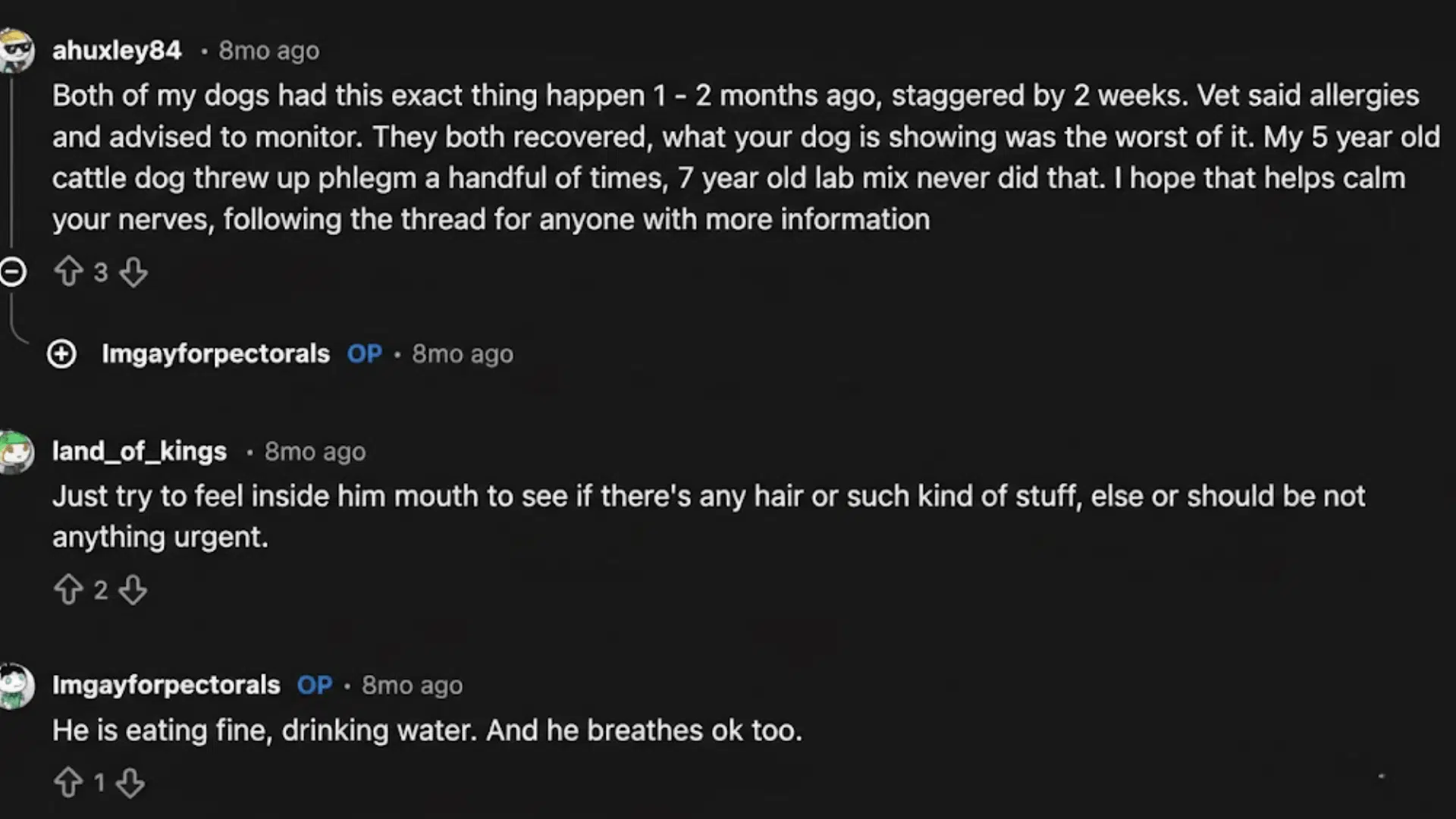
Several Reddit users shared experiences that closely match this situation, offering both reassurance and caution.
One dog owner describes nearly identical throat-clearing and coughing episodes in two dogs, spaced weeks apart, where the dog has something stuck in its throat.
A vet later linked those symptoms to allergies, and both dogs recovered without major treatment.
Another user mentioned coughing that led to vomiting phlegm, while a second dog showed no vomiting at all, showing how symptoms can vary.
Other commenters advised checking the mouth for hair or debris, especially when eating and breathing remain normal.
Some users raised more serious possibilities, including viral illness or age-related heart concerns.
Similar symptoms can have mild causes, but veterinary evaluation remains important, especially when coughing repeats or involves older dogs.
Common Items That Get Stuck in a Dog’s Throat
Dogs often swallow things without slowing down, which increases the risk of blockages. When a dog has something stuck in its throat, recognizing the cause can make the response easier.
- Bones and bone fragments: Cooked bones can splinter easily and lodge in the throat, causing pain, swelling, and serious internal damage.
- Dog toys and toy pieces: Broken toys or small parts can slide into the throat during rough play or chewing sessions.
- Household objects: Dogs often swallow socks, plastic caps, and small items out of curiosity or boredom at home.
- Outdoor debris: Sticks, rocks, and plant pieces can become choking hazards for dogs during walks, parks, or backyard playtime.
- Large treats and chews: Oversized treats or rawhide can swell and get stuck while swallowing, especially when dogs eat too fast.
How to Reduce the Risk of Choking in Dogs?
Reducing the risk of choking often comes down to everyday choices and steady supervision.
Start by offering food and treats that suit the dog’s size, age, and chewing habits, and avoid items that are overly hard or too large to swallow safely.
Meal times should never be rushed, especially for dogs that eat fast or compete for food.
When a dog has something stuck in its throat, it often traces back to unsupervised eating or rough play. Toys should be strong, size-appropriate, and checked often for damage.
Dog coughing and gagging are less likely when play areas stay clear of small and risky objects .
Basic training also helps more than many owners realize. Commands like drop it can stop dangerous swallowing.
When to Seek Emergency Veterinary Care
Emergency veterinary care may be needed when a dog’s breathing does not improve after initial help. A dog with a throat blockage can quickly struggle to breathe.
Seek immediate veterinary care if you notice the following signs:
- Ongoing coughing and gagging that does not stop
- Wheezing or weak breathing
- Blue or pale gums, showing poor oxygen supply
- Collapse or extreme panic
Taking the dog to an emergency vet helps confirm the airway is clear and reduces the risk of infection or further injury.
Conclusion
Fast action matters when a dog is choking because every second affects breathing and safety.
When a dog has something stuck in its throat, quick steps like checking the mouth or using the right technique can make a real difference before help arrives.
Preparation reduces panic and builds confidence, especially during sudden emergencies at home or outdoors.
Learning basic first aid ahead of time allows faster response instead of guessing under pressure.
Dog coughing and gagging can escalate quickly, which is why knowing what to do and when to seek help is so important. Simple awareness, safe habits, and readiness can protect a dog’s life.
Have you ever dealt with a choking scare with your dog? Share what happened and what helped in the comments below.