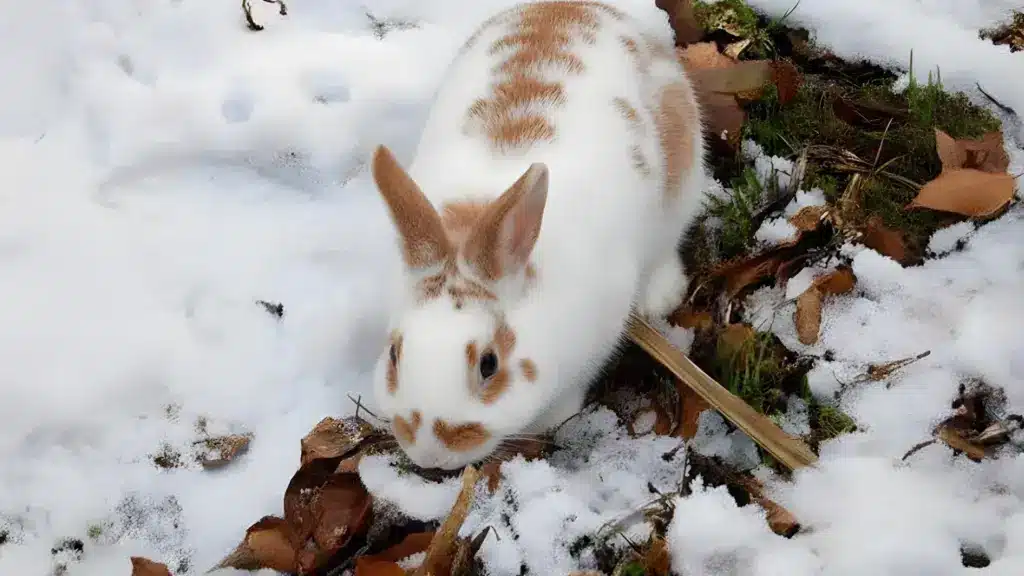
Winter changes the landscape in quiet but powerful ways, covering familiar ground and hiding most visible food sources.
During this time, noticing a rabbit moving through snow often brings a sense of curiosity and concern about survival in such harsh conditions.
The idea that food disappears completely is a common belief, yet rabbits continue to find ways to adapt using what nature provides, even during long winter months.
These small animals rely on instincts shaped by seasons, habitat, and survival.
Learning about their winter diet creates a deeper understanding of resilience and balance in the natural world.
This blog answers the question: what do rabbits eat in the winter, and what to feed wild rabbits during winter, including safe and appropriate food options.
Wild rabbits survive winter by switching from fresh greens to woody and fiber-rich foods that remain available in cold conditions. Their winter diet typically includes tree bark, young twigs, dried grasses, plant stems, evergreen needles, and underground roots or bulbs found beneath the snow. Because fresh plants disappear in winter, rabbits rely on these tougher plant materials to maintain digestion and energy until spring vegetation returns.
How Wild Rabbits Survive Winter without Human Help?
Wild rabbits survive winter through strong natural instincts and smart seasonal adjustments. As temperatures drop, daily activity slows to preserve energy and limit calorie loss.
Movement becomes short and purposeful, focused only on finding food or shelter.
Winter diets shift from fresh greens to tougher plant material because grasses and leafy plants die back after fall.
Shelter plays a major role in survival, with rabbits using burrows, brush piles, tall grass, and dense shrubs to block wind and retain body warmth.
Snow cover also provides insulation rather than danger to the wild rabbits.
These changes allow wild rabbits to maintain body heat, reduce exposure to predators, and survive harsh winter conditions without relying on human support or feeding.
What Do Rabbits Eat in the Winter?
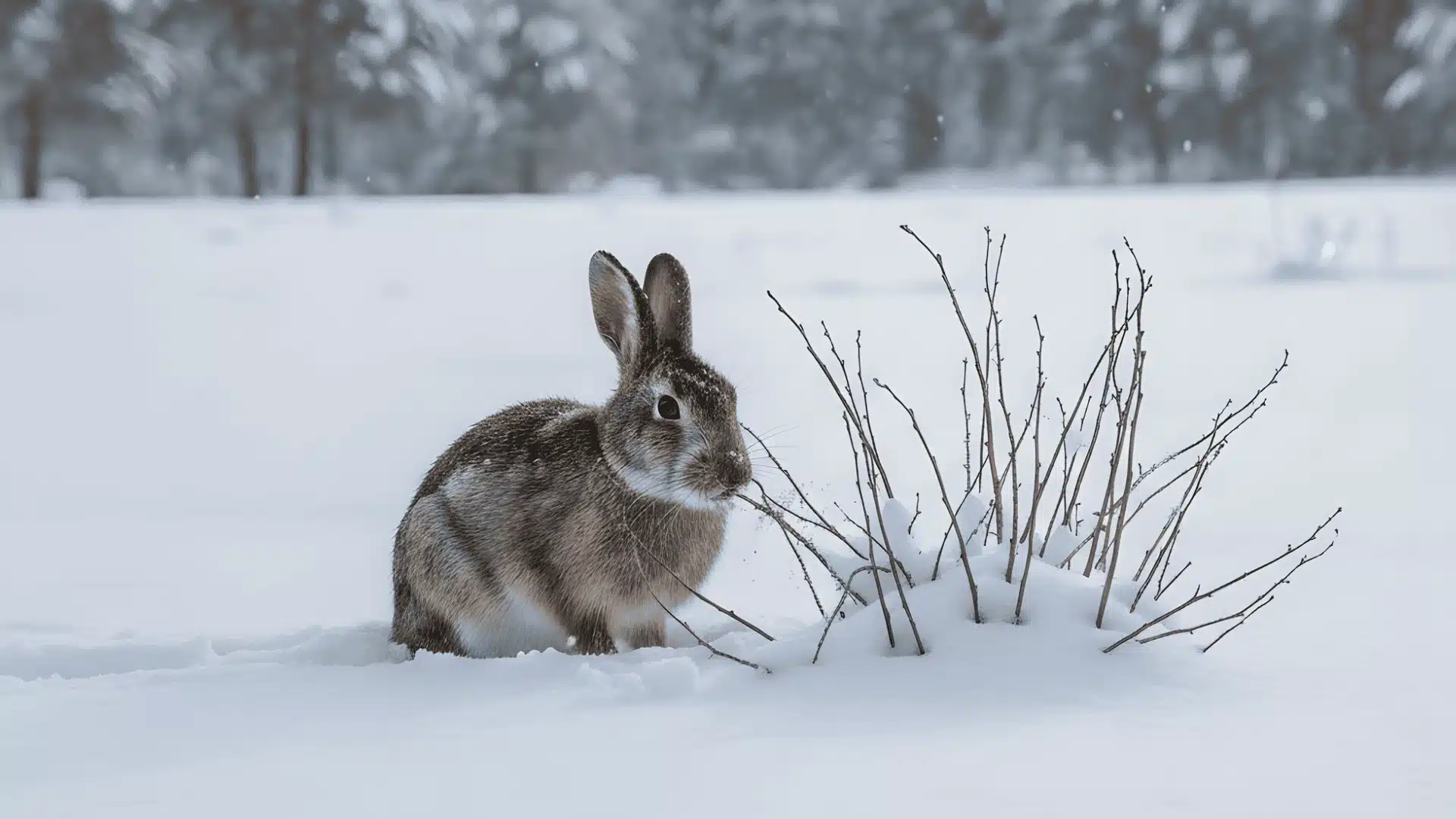
During winter, rabbits rely fully on what the nature provides. Fresh plants disappear, so food choices become limited, so rabbits adapt by eating what is available above or below the snow.
1. Bark and Twigs From Trees and Shrubs
Bark and twigs become one of the most important winter foods for wild rabbits.
When snow covers the ground, rabbits turn to trees and shrubs for nutrition. Common choices include willow, maple, birch, apple, and dogwood.
Rabbits gnaw on young branches and chew the soft inner bark because it contains fiber and stored nutrients. Twigs are easy to reach, even in deep snow, making them reliable.
Bark also helps wear down teeth, which grow constantly. This natural chewing behavior supports digestion and overall health during long winter months.
2. Dried Grasses and Plant Stems
Dried grasses and plant stems left behind from warmer seasons are another key food source.
These materials may look dead, but they still provide fiber that keeps the rabbit’s digestive system working. Rabbits search through snow patches, along field edges to find dry vegetation.
Tall grasses and weeds that stick out above the snow are especially useful.
While dried plants offer fewer nutrients than fresh greens, they help maintain gut movement and prevent digestive issues. Eating these tough plants is a normal and necessary part of survival.
3. Evergreen Plants and Needles
Evergreen plants remain available even during heavy snowfall, which makes them valuable.
Rabbits do not eat all evergreens, but they may nibble on certain needles, buds, or low branches when other food is scarce. Pine, spruce, and fir are sometimes used in small amounts.
They are selective and avoid eating too much because evergreen needles can be strong in taste.
In snowy regions, these plants provide consistent access to food when the ground is fully covered. Even limited feeding helps rabbits bridge long, cold periods.
4. Underground Plant Parts
Roots and underground plant parts become important during extreme winter conditions.
When surface food is hard to find, rabbits dig through snow to reach roots, bulbs, and buried plant bases. This usually happens during long, cold spells or deep snow cover.
Rabbits rely on memory to locate these hidden food sources near familiar feeding areas.
Roots contain stored energy from the growing season, which helps rabbits maintain strength. This food source is not easy to access, but it can be critical when above-ground options are limited.
Safe Foods to Offer Wild Rabbits During Winter
Offering food to wild rabbits during winter should be done carefully and only as light support, not a replacement for natural foraging.
Natural hay and dried grasses are the safest options because they closely match what rabbits already eat in winter. Hay should be placed on dry ground near bushes or natural cover.
Untreated tree branches and twigs from apple, willow, maple, or birch trees are also safe.
Branches should be clean, free from chemicals, and cut into small pieces. Leafy greens like kale,romaine, or beet greens can be offered in very small amounts during extreme cold.
These greens should never replace natural foods, as too much fresh produce can upset digestion. Small portions help avoid harm while respecting natural behavior.
Foods Rabbits Avoid in Winter
Some foods can seriously harm wild rabbits, especially during winter when their digestion is fragile. Avoid offering the following items to keep rabbits safe and healthy.
- Toxic plants and tree types: Yew, foxglove, rhododendron, and cherry trees contain harmful toxins that can be dangerous if eaten.
- Bread, grains, and sugary foods: Bread and grains cause digestive upset and bloating. Sugar feeds harmful gut bacteria, leading to serious digestive problems.
- Human-processed foods: Cooked meals, snacks, and leftovers contain salt and additives that rabbits cannot digest.
- Iceberg lettuce and watery vegetables: These foods provide very little nutrition and can cause diarrhea, which is risky during winter.
- Salt blocks or mineral licks: Unnecessary for rabbits and may cause dehydration or kidney problems.
How Rabbits Find Food Under Snow?
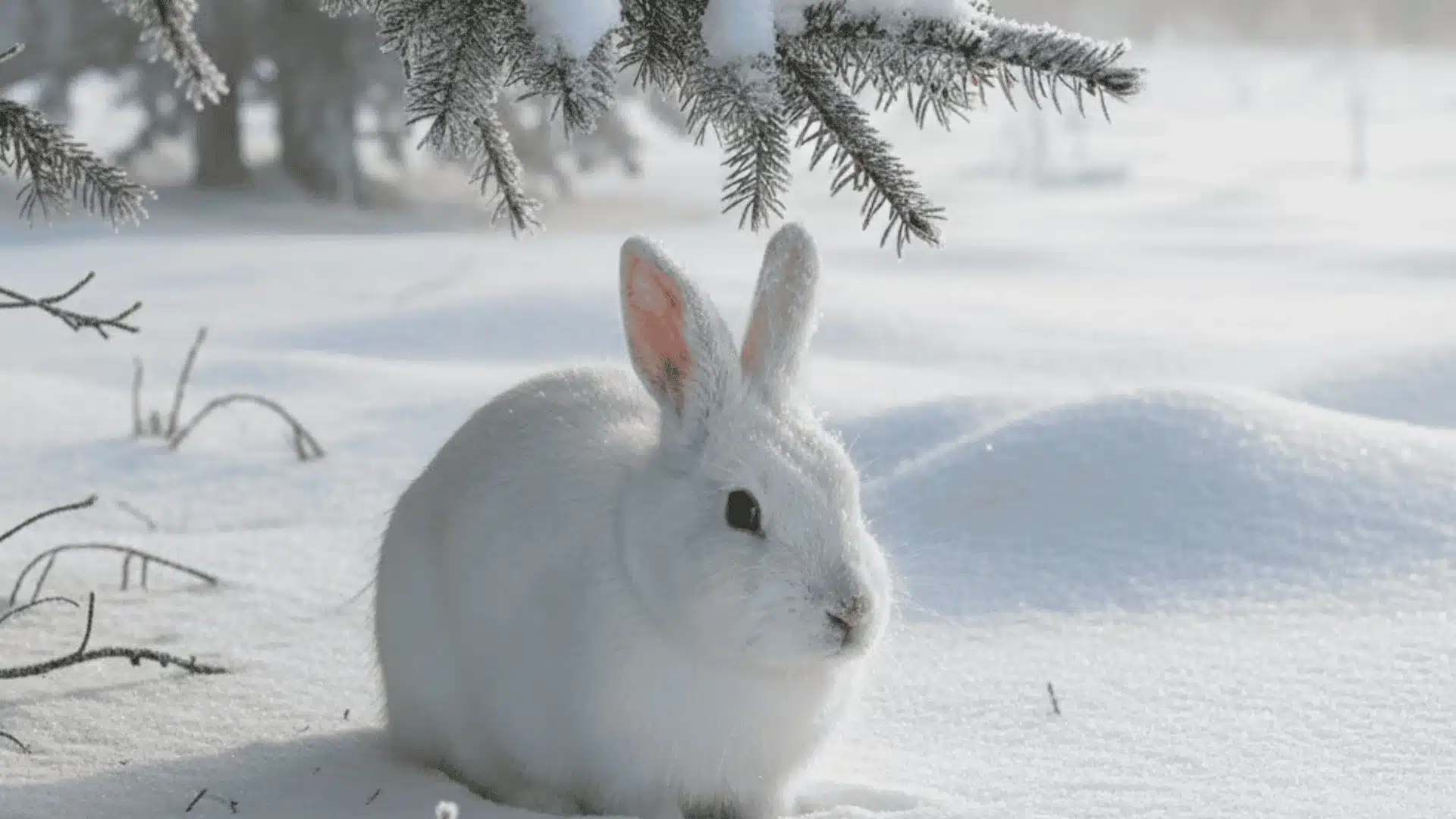
Rabbits use simple but effective methods to find food under the snow during winter.
Strong memory helps them return to areas where food was available in warmer months. These feeding paths are often reused, even after snowfall.
A sharp sense of smell allows rabbits to detect twigs and dried plants hidden beneath snow.
Light pawing and nose pushing help clear small patches without wasting energy. Rabbits usually search close to shrubs, tree bases, and tall grasses where food is more likely to be present.
Instead of digging deep, they focus on shallow snow or wind-clear spots.
These careful foraging techniques reduce effort, limit exposure to predators, and help rabbits access enough food to survive cold winter conditions.
How Much Do Wild Rabbits Eat?
Wild rabbits eat small amounts throughout the day rather than large meals at once.
Food intake depends on body size, weather, and availability, but an average wild rabbit eats roughly its own body volume in plant material each day.
Studies show they consume roughly 65-80 grams per kilogram of body weight each day.
Instead of eating more, rabbits conserve energy and rely on fiber-rich foods to keep digestion steady. A rabbit may spend short periods feeding near shelter, then rest to preserve warmth.
Because winter foods are lower in nutrients than fresh plants, rabbits focus on constant grazing rather than quantity.
This steady intake helps maintain body weight, support digestion, and provide enough energy to survive cold conditions without overeating.
Are Winter and Summer Diets Different?
Yes, winter and summer diets for wild rabbits are very different because food availability changes with the seasons.
During summer, rabbits eat fresh grasses, leafy plants, herbs, and soft vegetables that grow easily. These foods are rich in moisture and nutrients, so rabbits spend more time feeding.
In winter, fresh plants disappear, and rabbits switch to tougher foods like bark, twigs, dried grasses, and woody stems.
These foods are harder to chew but still provide the fiber needed for digestion.
Winter diets are lower in moisture, which is why rabbits rely on snow for hydration when needed.
This seasonal shift helps rabbits survive when growth stops. The change in diet is natural and expected, allowing rabbits to adapt to cold weather without health issues or outside help.
How to Offer Food without Harming Wild Rabbits?
Helping wild rabbits during winter should always be done with care, as the goal is to support their behavior, not replace it. Small, thoughtful actions can reduce risk and avoid stress or dependency.
- Keep food natural: Offer only hay, dried grasses, or untreated twigs that match what rabbits already eat in winter.
- Choose safe placement: Place food near shrubs, brush piles, or natural cover so rabbits can eat without feeling exposed.
- Avoid hand feeding: Direct contact can cause stress and make rabbits less cautious around people or predators.
- Limit quantity: Provide small amounts only during extreme cold or heavy snow, not daily feeding.
- Let rabbits remain wild: Stop feeding if rabbits begin to rely on the food source or change normal behavior.
Conclusion
Wild rabbits are well-adapted and have survived cold seasons long before human involvement.
Natural instincts, smart foraging habits, and flexible diets allow them to manage snow, low temperatures, and limited food.
In most situations, rabbits do not need help, and too much interference can disrupt normal behavior. The best approach is to observe from a distance and step in only in extreme conditions.
When support is offered, it should be minimal and closely match natural food sources.
Quiet observation helps protect wildlife while respecting nature’s balance. Watching what rabbits eat in the winter and how they move through winter can be reassuring.
Do you have any personal experiences or suggestions about helping wild rabbits during winter? Feel free to share them in the comments.