A pearl gourami can look small in a store tank, but many fish keepers later realize these fish grow larger than expected.
That raises an important question about pearl gourami size and how large they can get in a home aquarium.
Many aquarists wonder whether tank size, water conditions, or diet affects the growth of Trichopodus leerii.
I will explain the typical pearl gourami size, the growth pattern over time, and the differences often seen between males and females.
You will also see what tank setups and care habits help these fish grow in a healthy way without limiting their natural development.
Before looking at growth patterns and size differences, it helps to understand the typical size range that pearl gouramis reach in aquariums.
How Big Do Pearl Gouramis Get?
Pearl gouramis reach a moderate adult size, making them suitable for many home aquariums.
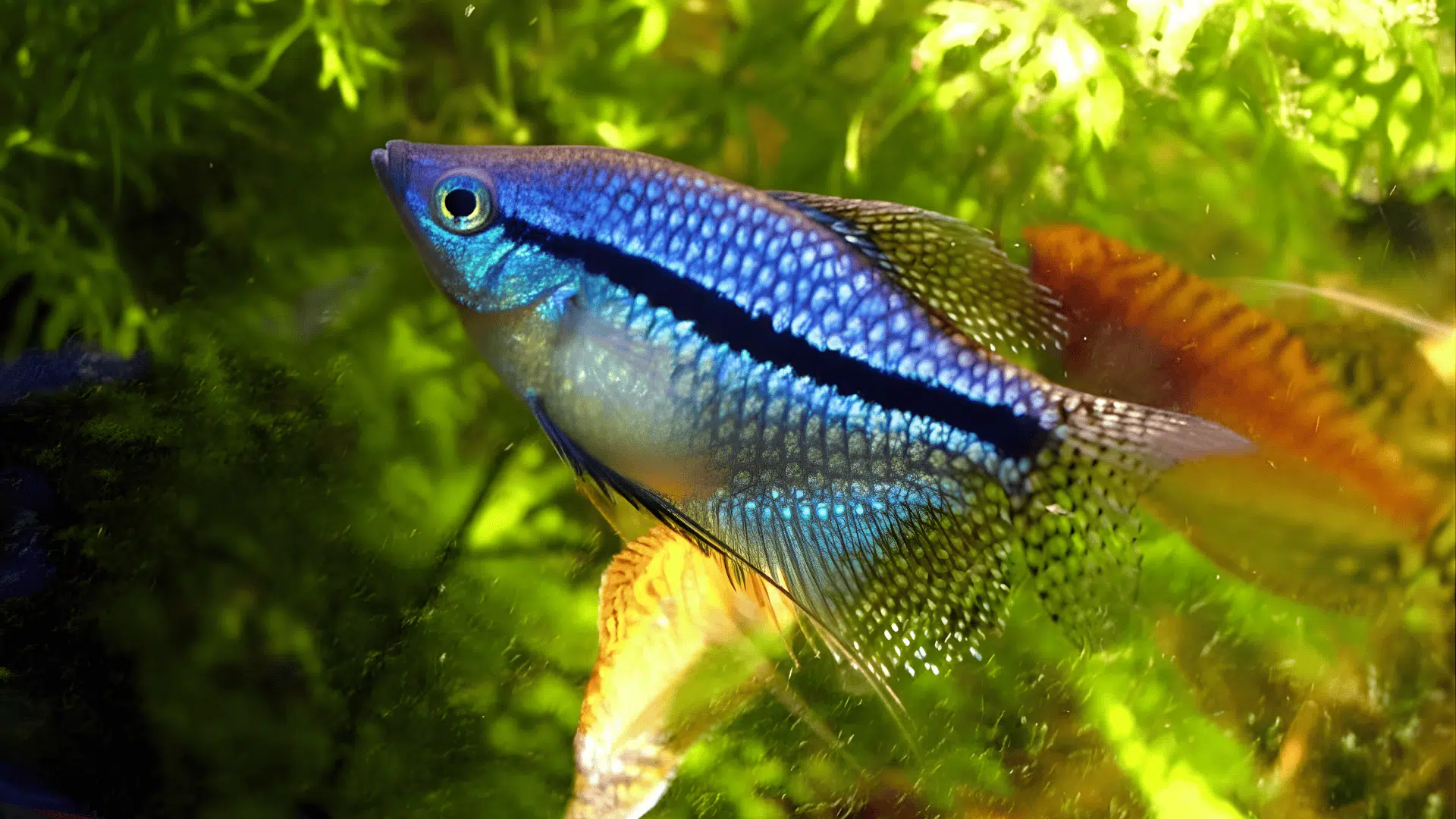
A healthy pearl gourami usually reaches about 4 to 5 inches in body length when fully mature under stable conditions.
This measurement refers only to the body and does not include the long ventral fins that can extend almost the length of the body.
Pearl gourami size can vary slightly depending on genetics, tank space, diet, and water quality.
Males often appear longer and slimmer, with extended dorsal fins and a bright red or orange breast during the breeding season. Females usually look rounder and slightly shorter.
Growth is gradual, with most length gained during the first year.
In well-maintained tanks, pearl gouramis usually reach full size within 18 to 24 months and can live 5 to 8 years in captivity.
Size Variations in Pearl Gouramis
Size differences in pearl gouramis are common and depend on multiple natural and care-related factors.
1. Genetics and Lineage
Genetics strongly influences pearl gourami size and overall growth potential. Some bloodlines naturally grow larger, while others remain closer to the lower end of the size range.
A less common variant, the Gold Pearl Gourami, is also seen in the aquarium hobby, and its size may differ slightly from the standard form.
Breeding quality, parental health, and early life conditions all affect development.
Many aquarists report visible size differences between store-bred fish and selectively bred lines. Strong genetics usually support balanced growth and proper body shape.
2. Tank Size and Swimming Space
Tank size plays a major role in the development of pearl gourami size. Larger aquariums allow natural swimming patterns and better muscle growth.
A 30-gallon tank is commonly recommended for a single fish or a pair, with 5 to 10 extra gallons per additional fish.
Rectangular tanks work best because they provide more surface area, which helps pearl gouramis access air through their labyrinth organ.
Tanks that are calm, uncrowded, and stable usually support healthier and more consistent growth over time.
3. Diet and Feeding Quality
Diet quality strongly affects pearl gourami size and steady growth. These fish are omnivores and grow best with a varied diet.
High-quality flakes or pellets should be the base, supported by protein-rich foods such as brine shrimp, bloodworms, or daphnia.
Consistent feeding routines help maintain healthy development, while poor nutrition can slow growth even in good tank conditions.
Balanced feeding is important because overfeeding can lead to health problems rather than improving size.
4. Water Conditions and Stress Levels
Stable water conditions help pearl gouramis grow at a healthy and steady rate. They usually do best at 77 to 82°F, with a pH of 6.0 to 7.5.
While captive-bred fish can tolerate a wider range, sudden changes in temperature or water quality often cause stress and slow growth.
Poor filtration, aggressive tank mates, or overcrowding can also affect development.
Calm tanks with regular maintenance usually produce fuller bodies and better overall growth.
The Labyrinth Organ and What It Means for Size and Setup
Pearl gouramis are labyrinth fish, a group that includes bettas and other gourami species.
Their labyrinth organ allows them to extract oxygen directly from the air at the water’s surface, which means they need unobstructed surface access at all times.
This trait directly affects tank setup choices that affect their health and growth.
Strong water currents can impede surface access and make breathing more effortful, increasing stress over time.
A filter with a wide, low-flow outlet is a better fit than one that creates heavy surface agitation. Tanks with lids are also recommended, as pearl gouramis can and do jump.
A setup that respects this behavior reduces chronic stress, which in turn supports consistent growth and better color development.
Community Opinions on Pearl Gourami Size
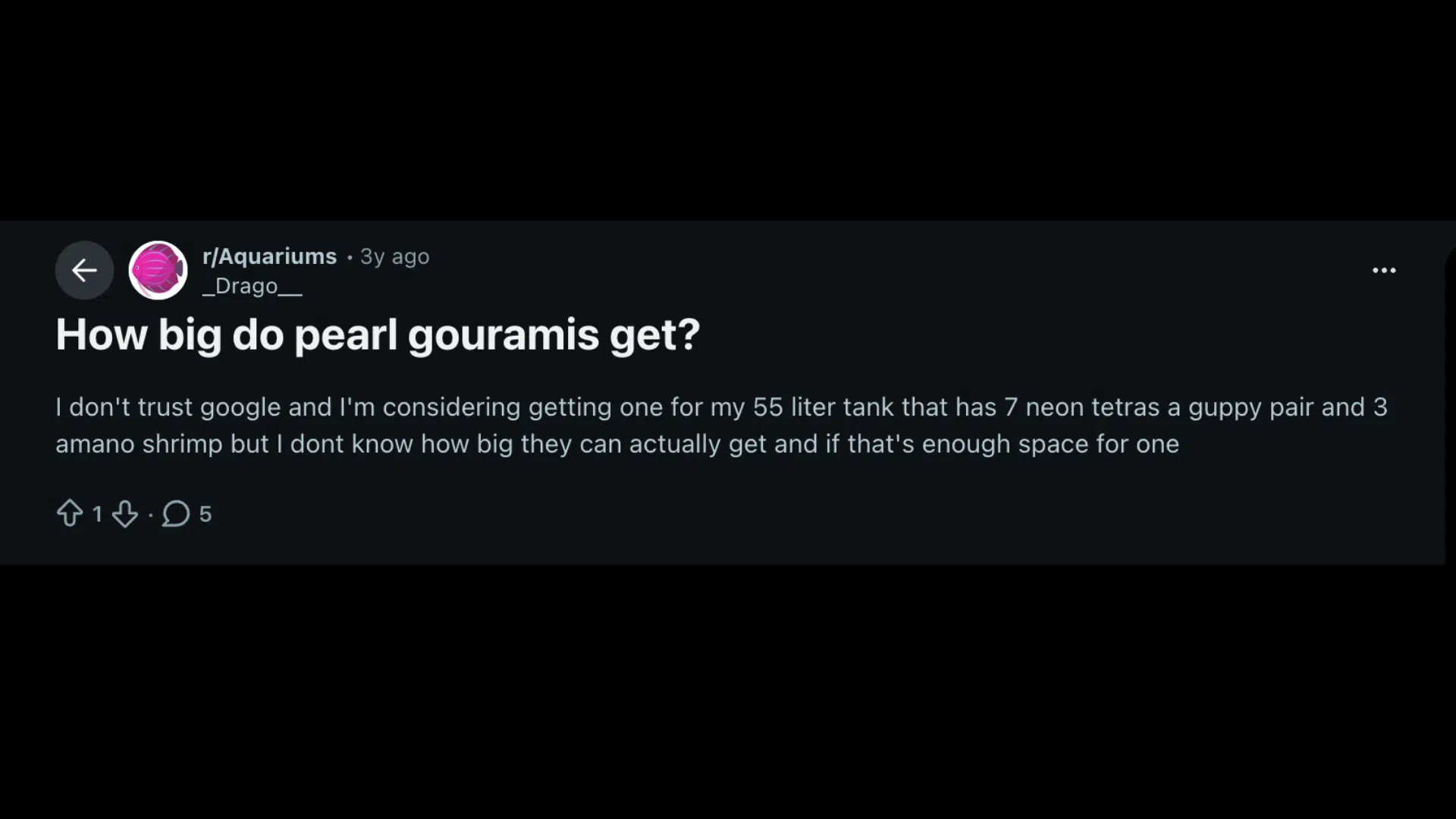
Reddit community opinions on how big pearl gouramis grow range from real experiences to common expectations.
Many aquarists report that these fish usually reach around four to five inches at maturity, matching general size guides for gourami size in home tanks.
Some accounts mention slight variations, with a few fish growing a little more under ideal conditions. While others remain smaller when housed in crowded or less stable environments.
Tank conditions, such as space, stable water parameters, and high-quality feeding routines, often come up in community discussions as key influences on growth outcomes.
In shared threads, reports also highlight that genetics and individual fish temperament can cause noticeable differences in final length.
With healthier, less-stressed fish more likely to reach their expected adult size.
How to Ensure Healthy Growth for Pearl Gourami?
Healthy growth depends on consistency rather than quick changes. Stable care routines, proper planning, and patience play a major role in long-term development.
When the environment supports natural behavior, steady size progression follows without complications.
- Tank space: A minimum of 30 gallons provides enough room for natural movement, which supports proper muscle and body development. Add 5 to 10 gallons for each additional fish.
- Diet quality: Nutritious pellets, frozen foods, and a varied feeding routine help maintain steady growth without health issues.
- Water stability: Keeping the temperature between 77 and 82 degrees Fahrenheit and the pH between 6.0 and 7.5 reduces stress that can slow development.
- Tank mates: Peaceful species such as tetras, rasboras, and corydoras prevent competition and allow relaxed feeding behavior.
- Surface access: Keep the water current low and ensure the tank has a secure lid to protect these surface-breathing fish.
- Disease monitoring: Watch for early signs of fin rot or ich, as chronic low-grade illness is a common and underappreciated cause of stunted growth.
When these elements work together, the pearl gourami size develops naturally over time. Long-term success relies on observation, routine care, and avoiding sudden changes.
Is Pearl Gourami Size Suitable for Community Tanks?
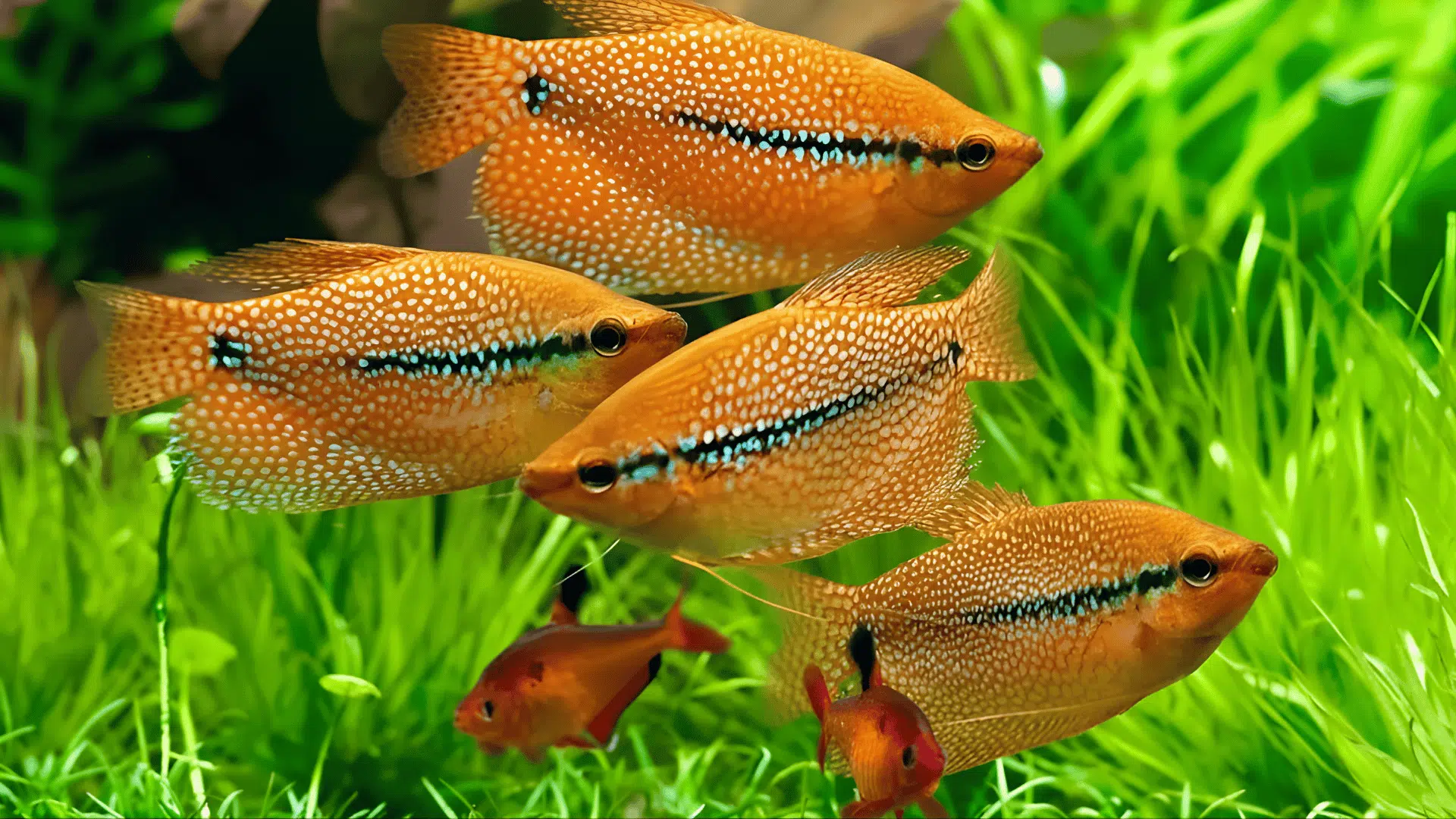
Raising pearl gouramis requires understanding their slow and steady growth rather than expecting rapid changes.
Most physical development occurs gradually during the first year, though full maturity may take longer. Behavioral traits often settle earlier, which can make growth appear slower even when it continues steadily.
Pearl gourami size becomes more noticeable when consistent feeding routines and stable water conditions are maintained.
As body length increases, additional swimming space may be needed for comfort and balance.
Long-term care also involves observing social behavior, since maturity can affect interactions in the tank.
Male pearl gouramis may become more territorial during spawning when building bubble nests at the surface. Monitoring this behavior helps reduce stress for younger or more submissive fish.
With stable maintenance and patience, healthy growth and balanced body shape remain achievable in home aquariums.
What to Expect When Raising Pearl Gouramis?
Raising pearl gouramis involves understanding slow and steady growth patterns rather than rapid changes.
Most physical development happens gradually, especially during the first year, while full maturity may take longer.
Behavioral traits often settle earlier, giving the impression that growth has slowed even when it continues quietly.
Pearl gourami size becomes more noticeable once consistent feeding routines and stable water conditions are maintained.
As body length increases, additional swimming space may be required to support comfort and balance.
Long-term care also includes observing social behavior, as maturity can influence interactions within the tank.
With stable maintenance and patience, predictable growth and well-proportioned body shape remain achievable in home aquarium settings.
Tips for Managing Pearl Gourami Growth
Simple, consistent practices help maintain balanced growth and long-term health in home aquariums.
- Choose the right tank size: Adequate space supports natural movement and prevents crowding-related growth restrictions.
- Maintain a steady feeding routine: Consistent portions at regular intervals help avoid uneven development.
- Focus on water quality: Regular water changes and stable parameters reduce stress-related growth issues.
- Avoid overstocking: Fewer tank mates lower competition for food and space.
- Observe growth patterns: Monitoring changes over time helps identify potential problems early.
- Keep the environment calm: Low aggression setups encourage relaxed behavior and steady development.
- Manage the male-to-female ratio: One male per group reduces territorial conflict and supports more consistent growth across the group.
Conclusion
Keeping pearl gouramis healthy becomes easier when you understand their slow growth and natural habits.
We often notice that fish grow better when water quality stays stable, and the tank provides enough swimming space near the surface.
You may also see better color and body shape when peaceful tank mates and gentle filtration reduce daily stress.
Paying attention to small details such as diet variety and surface breathing space can help these fish stay active and comfortable for many years.
With proper care and a stable environment, pearl gouramis remain among the most rewarding fish to keep in a freshwater aquarium.
Have you noticed how large your pearl gourami has grown in your tank setup? Tell us and share your experience in the comments below.
Frequently Asked Questions
Do Pearl Gouramis Stop Growing Completely at a Certain Age?
Growth slows significantly after maturity, but minor changes in body mass can still occur depending on diet and tank conditions.
Can Pearl Gouramis Grow Larger in Outdoor or Pond Setups?
Outdoor or pond environments may support slightly better growth due to space and natural food sources, though results vary.
Does Water Temperature Affect Pearl Gourami Growth Rate?
Warmer but stable temperatures within the safe range can support metabolism, while unstable temperatures may slow growth.