

Standing in the pet food aisle or scrolling through endless options online can feel confusing, especially when every brand claims to be the right choice.
Diamond dog food often comes up in that search, which makes it worth taking a closer look before deciding what truly works for a dog’s daily needs.
But many dog owners pause and wonder, “Is it just another budget option with hidden trade-offs?
That question often comes after noticing changes in a dog’s energy, coat, or digestion. No one wants to take chances when it comes to a pet’s health.
The desire is simple: safe food, balanced nutrition, and something a dog actually enjoys eating. But finding that balance between quality and price is not always easy.
As a certified pet nutritionist, I have evaluated Diamond across multiple sub-lines for clients ranging from first-time dog owners to multi-dog households watching their monthly budget. What follows is my honest assessment, not a summary of the brand’s own marketing.
Diamond Dog Food: Brand Overview
Diamond dog food is made by Diamond Pet Foods, a family-owned, USA-based company that has been producing pet food since 1970, when brothers-in-law Gary Schell and Richard Kampeter purchased a milling plant in Meta, Missouri.
Today, the brand operates six manufacturing facilities across the United States, located in Meta, Missouri; Gaston, South Carolina; Lathrop, California; Ripon, California; Dumas, Arkansas; and Frontenac, Kansas. All dry food is produced domestically.
The brand also manufactures Taste of the Wild under the same facilities, which is worth knowing when comparing the two.
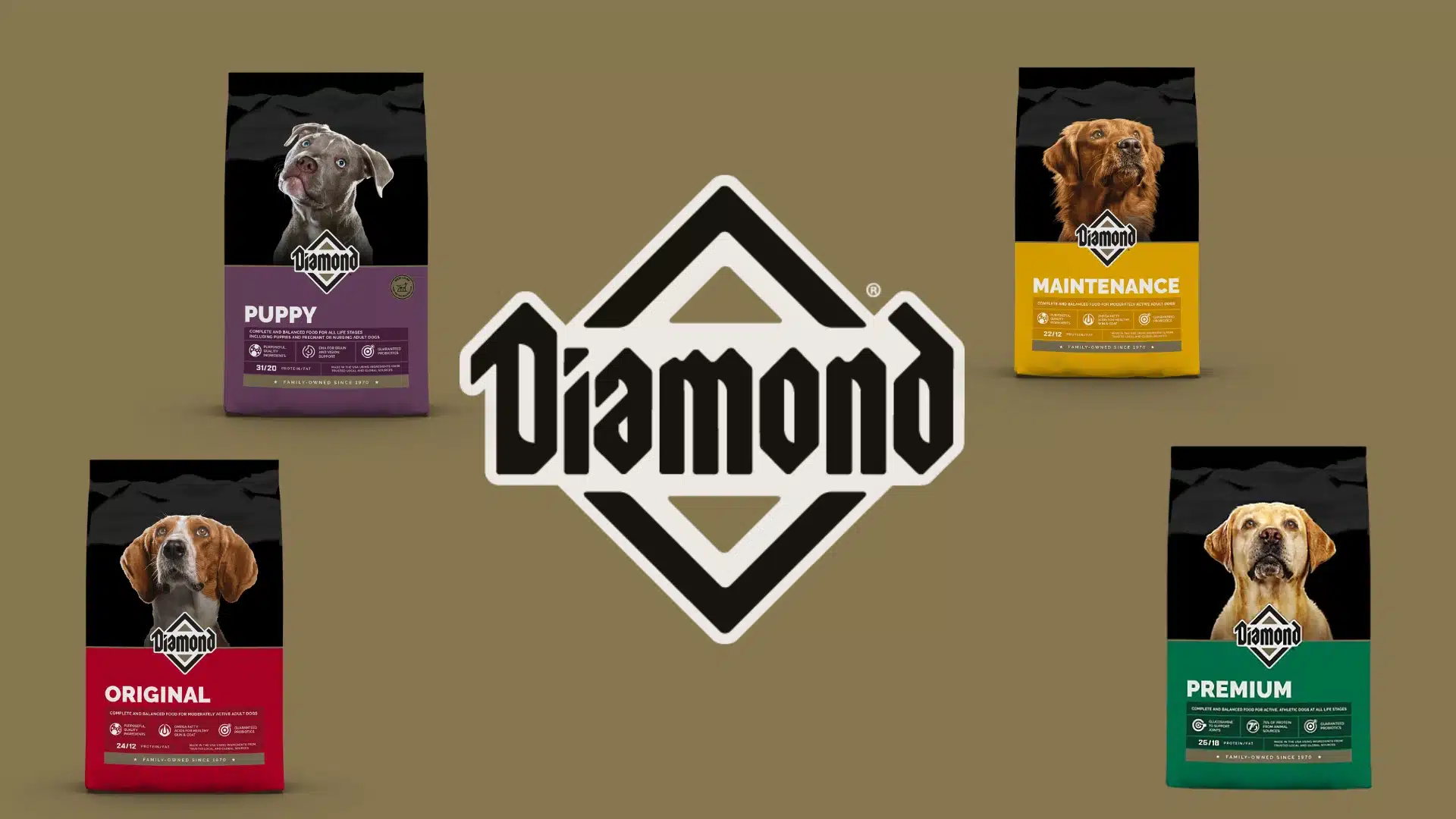
The brand offers several product lines to meet different needs:
The standard Diamond line focuses on budget-friendly kibble for everyday feeding. Diamond Naturals is a step up, using better ingredients and higher protein content, along with added fruits, vegetables, and probiotics.
Diamond Care is designed for dogs with specific dietary needs, such as sensitive stomachs or weight management. Diamond also offers a Pro89 line, a high-protein formula with 89% of its protein from animal-based sources, targeting active and working dogs.
The brand provides both grain-inclusive and grain-free options, giving flexibility based on a dog’s health requirements.
Diamond dog food remains popular mainly because it balances cost and nutrition, making it a practical choice for owners who want decent quality without spending on premium brands.
Is Diamond Dog Food Good?
Diamond dog food is generally considered a decent option, especially for dog owners looking for a balance between cost and nutrition.
It offers a range of formulas, including standard, Naturals, and special care options, which makes it suitable for different types of dogs.
The brand uses meat meals as its primary protein source and adds nutrients such as probiotics and omega fatty acids.
However, the quality can vary depending on the formula, with some lower-tier options containing fillers like corn or wheat.
It may not be the best choice for dogs with sensitivities or those needing premium nutrition.
Overall, Diamond dog food works well for healthy dogs without special dietary needs, making it a practical mid-range option for everyday feeding.
All Diamond formulas are designed to meet AAFCO nutrient profile guidelines for their specific life stage, which means any product labeled “complete and balanced” meets the minimum nutritional requirements.
However, Diamond relies mostly on nutrient formulation standards rather than extensive feeding trials.
I view AAFCO compliance as a starting point, not a final measure of quality. It ensures the food is not lacking essential nutrients, but it does not guarantee how well an individual dog will absorb it.
Ingredient Quality: What’s Really Inside Diamond Dog Food?
Understanding what goes into dog food is key when deciding if it is the right choice. Diamond dog food uses a mix of animal proteins, grains or grain alternatives, and added nutrients to create a balanced formula.
1. Protein Sources
Diamond dog food mainly uses meat meals like chicken meal or lamb meal as its primary protein source.
Meat meals are concentrated, meaning they contain less water and more protein compared to fresh meat, which can be beneficial for muscle support and energy.
This is a positive aspect, especially in the Naturals line. However, in some of the more affordable formulas, there may be the use of by-products.
These are lower-quality protein sources and may not provide the same nutritional value. The overall protein quality depends on which specific formula is chosen.
In my practice, I have seen clients come in frustrated because their dog was not thriving on the standard Diamond line, and the fix was simply switching to Diamond Naturals.
The protein source and quality make a noticeable difference in energy and coat condition within a few weeks.
2. Carbs, Grains, and Fillers
Carbohydrates in Diamond dog food often come from ingredients like corn, wheat, and rice in standard formulas.
These help provide energy and keep costs lower, but they may not suit every dog. Diamond Naturals grain-inclusive recipes use brown rice, barley, and oatmeal rather than corn or wheat, which tend to be easier to digest for most dogs.
This is a meaningful improvement over the standard Diamond line and is one of the main reasons the Naturals sub-brand earns a higher rating from independent reviewers. Some dogs digest grains well, while others may experience sensitivity or mild stomach issues.
For those cases, Diamond also offers grain-free options that use ingredients like peas or sweet potatoes instead. These alternatives can be easier on digestion for sensitive dogs.
The choice between grain-inclusive and grain-free formulas depends on the dog’s individual needs and how well it handles certain ingredients.
3. Added Nutrients & Extras
Diamond includes several added nutrients to support overall health. Many formulas contain probiotics, which help maintain healthy digestion and gut balance.
Omega fatty acids are also included to support skin health and promote a soft, shiny coat.
In the Diamond Naturals line, there are additional ingredients like fruits and vegetables, which provide antioxidants and vitamins.
These extras can help support the immune system and overall wellness. Diamond Naturals also includes chelated minerals, which are minerals chemically attached to protein to improve absorption.
This is a feature typically found in better-quality dog foods and adds nutritional value beyond what AAFCO’s minimum requirements demand
Real Dog Owner Experiences with Diamond Naturals Dog Food
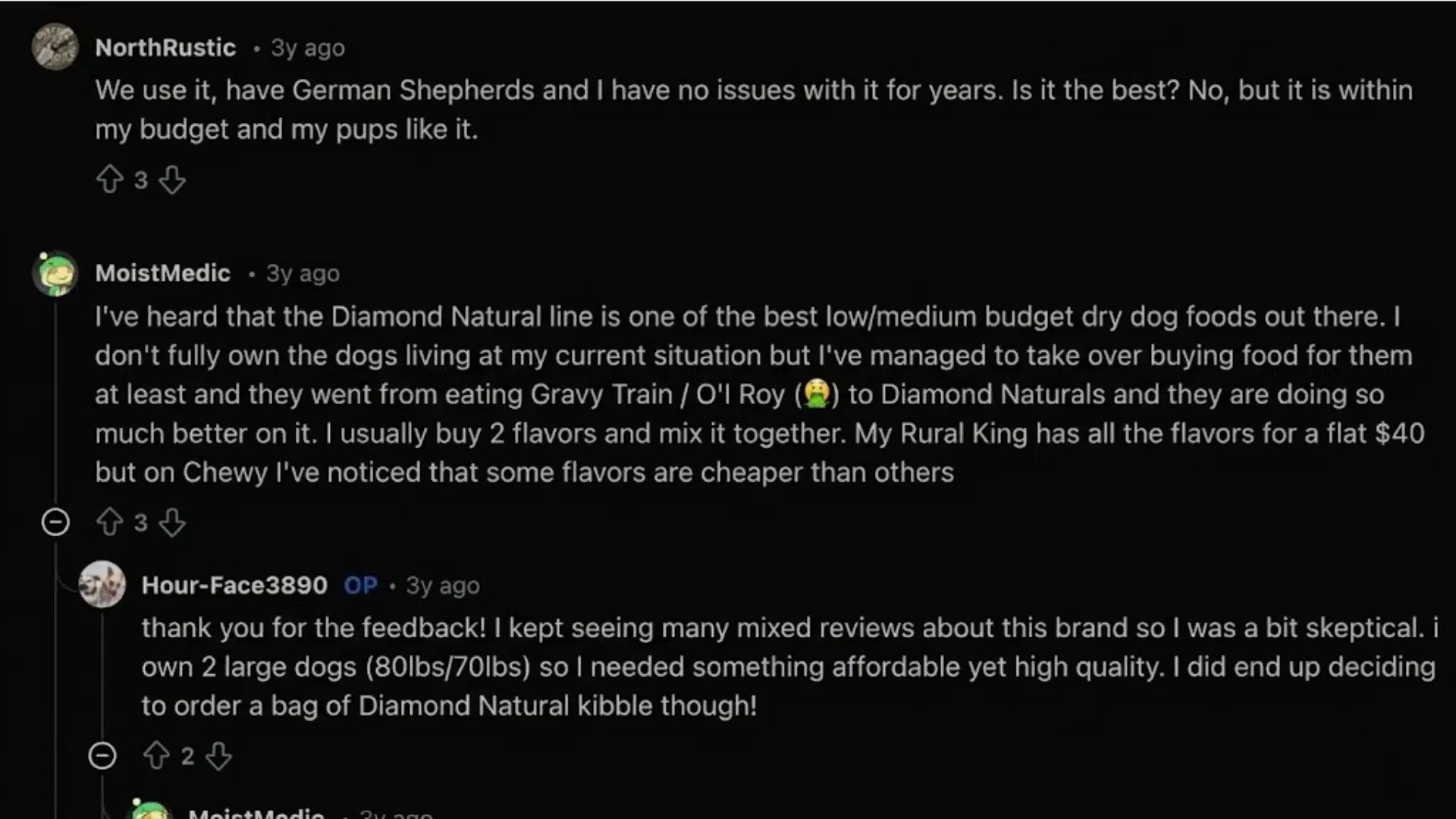
Reddit discussions around Diamond Naturals show a mix of practical satisfaction and cautious concern.
Many dog owners mention that it works well for large breeds and fits within a reasonable budget, making it a popular choice for multi-dog households.
Several users noticed improvements in coat quality, energy levels, and digestion after switching from lower-quality brands.
Mixing flavors is also a common trick to keep picky eaters interested.
At the same time, some users remain skeptical. Concerns about past recalls, ingredient sourcing, and digestive sensitivity in certain dogs come up repeatedly.
A few dogs with sensitive stomachs did not adjust well and required switching back to premium brands.
Overall, Reddit feedback suggests Diamond Naturals is a solid mid-range option, but results can vary depending on the dog’s specific needs and tolerance.
Diamond Dog Food Recalls: Should You Be Worried?
Recalls are an important factor to consider when evaluating any pet food brand, and Diamond dog food has had its share of past incidents. These recalls were mostly linked to contamination issues, such as salmonella or unsafe ingredients, which raised concerns among pet owners.
1. April 26, 2007: Melamine in Canned Pet Food
In April 2007, Diamond Pet Foods was part of a large industry-wide recall due to melamine contamination in certain canned pet food products, including dog formulas.
Melamine is a harmful chemical that was found in adulterated ingredients sourced from overseas suppliers.
This issue was not limited to Diamond alone and affected many major brands during what became known as the 2007 pet food crisis.
The incident raised serious concerns about ingredient sourcing and safety standards across the industry, leading to stricter regulations and better quality control practices over time.
2. April 6, 2012: Initial Recall – Diamond Naturals Lamb & Rice Dry Dog Food
On April 6, 2012, Diamond voluntarily recalled specific lots of Diamond Naturals Lamb Meal and Rice Formula dry dog food after Salmonella Infantis was detected in an unopened bag during testing in Michigan.
This recall marked the beginning of a larger issue connected to the company’s Gaston, South Carolina, manufacturing plant.
Salmonella contamination can pose risks to both pets and humans handling the food. As a result,
Diamond took precautionary steps to remove affected products from the market and investigate the source of contamination.
3. May 21, 2012: Additional Recall – Diamond Naturals Small Breed Lamb & Rice
On May 21, 2012, the recall expanded to include certain lots of Diamond Naturals Small Breed Adult Dog Lamb and Rice Formula.
These products were manufactured on August 26, 2011, at the Meta, Missouri, facility and included both retail bags and sample sizes.
A different strain of Salmonella, known as Salmonella Liverpool, was identified in these products.
This expansion showed that the issue was not isolated to a single plant. It highlighted the need for stronger safety checks and consistent monitoring across multiple production locations.
I advise all my clients to sign up for the FDA’s pet food recall alerts regardless of the brand they choose.
Who Should and Should Not Use Diamond Dog Food
Based on my evaluation of the brand across sub-lines, here is a practical breakdown to help narrow down the right fit:
| A Good Fit If Your Dog Is… | Consider Another Brand If Your Dog Has… |
|---|---|
| A healthy adult with average energy needs | Confirmed food allergies or poultry sensitivity |
| A large or active breed that benefits from higher protein | A breed predisposition to DCM (Golden Retriever, Doberman, Boxer) |
| In a multi-dog household where the cost per day matters | Kidney disease, cardiac issues, or other conditions needing therapeutic food |
| A picky eater who responds well to palatability-focused recipes | A true sensitive stomach that requires a single-protein, limited-ingredient diet |
| A puppy (Diamond Puppy formula meets AAFCO growth standards) | Severe digestive issues requiring a vet-prescribed elimination diet |
Value for Money Analysis of Diamond Dog Food
Diamond dog food stands out mainly for its pricing, which makes it a strong option in the budget to mid-range category.
Most Diamond and Diamond Naturals formulas are priced between $35 to $60 for a 30 to 40 lb bag, depending on the recipe and protein source.
This is noticeably cheaper than premium brands like Blue Buffalo or Orijen, which often cost $70 to $100 for similar sizes, while still offering better ingredient quality than low-budget options like Pedigree.
In terms of value, Diamond sits right in the middle. It provides decent nutrition, added probiotics, and variety without a high price tag.
I often point out to clients that value is not just about the price per bag; it is about the cost per day of feeding and the dog’s actual health outcomes.
I have seen Diamond Naturals work very well as a long-term option for healthy, active adult dogs.
Where I usually advise caution is with dogs that have confirmed food allergies, early signs of heart-related concerns, or breeds that may be more prone to DCM.
Pros and Cons of Diamond Dog Food
Diamond dog food offers a mix of benefits and drawbacks, which makes it important to look at both sides before making a decision. It is often chosen for its affordability and variety, but ingredient quality can vary depending on the formula.
| Pros | Cons |
|---|---|
| Budget-friendly compared to many premium dog food brands | Ingredient quality is not consistent across all formulas |
| Wide range of formulas for different life stages and needs | Some recipes include fillers like corn and wheat |
| Includes added probiotics for digestive support | Lower-tier options may contain byproducts |
| Contains omega fatty acids for skin and coat health | Not ideal for dogs with allergies or sensitive stomachs |
| Easily available in stores and online | Past recalls may raise concerns for some owners |
| Diamond Naturals’ line offers better ingredient quality | Protein sources can vary in quality depending on the product |
Conclusion
Choosing the right food for a dog with relevant standards can feel overwhelming. Knowing the organizations behind these standards helps in making better, more informed choices based on a dog’s specific needs.
So, is Diamond dog food good? The answer depends on what a dog needs and what a budget allows.
It offers solid value, a variety of formulas, and decent nutrition for healthy dogs, but it may not suit every pet, especially those with sensitivities or specific dietary needs.
Taking time to observe how a dog reacts to the food can make all the difference. Energy levels, coat condition, and digestion are good signs to watch.
If Diamond works well, it can be a reliable everyday option. If not, there are always alternatives to consider.
Have you tried Diamond dog food for your dog? Share your experience in the comments below to help other pet owners make a better choice.
Frequently Asked Questions
Can Puppies Eat Diamond Dog Food?
Yes, Diamond offers puppy-specific formulas designed to support growth and development. These formulas include balanced nutrients like protein, fat, and DHA for brain development.
Is Diamond Dog Food Suitable for Large Breed Dogs?
Yes, Diamond provides formulas specifically designed for large breeds. These often include controlled calcium levels and nutrients that support joint health and proper growth.
What Dog Food Should You Stay Away From?
Dogs should not be given certain human foods that are toxic to them, such as xylitol, grapes and raisins, chocolate, onions, garlic, and macadamia nuts.