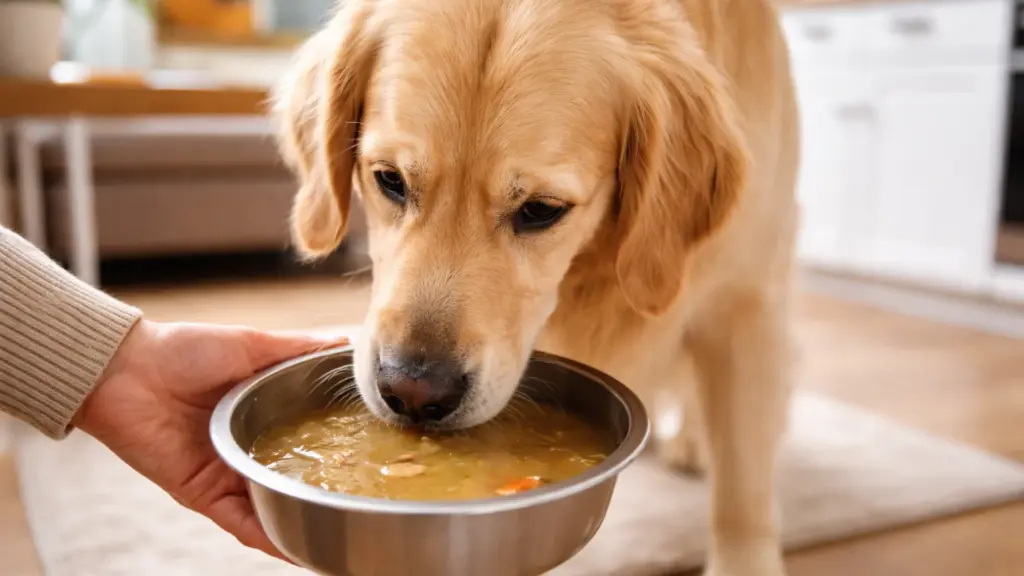
Your dog gives you that big-eyed, hopeful stare every single time you lift a warm mug of bone broth to your lips.
You know the one with their ears perked, tail thumping, and eyes saying, “Please, just a little taste?” You never have to say no again.
Making bone broth for dogs at home is surprisingly simple, and it lets you give your pup something truly nourishing from your own kitchen.
The best part is there’s no need for any mystery ingredients. Unlike store-bought versions that contain onions, garlic, or hidden sodium, these recipes offer real, nutritious food made with love.
In this blog, you’ll get everything you need to create delicious, dog-friendly bone broth, from ingredient selection to the full cooking process with clear step-by-step instructions.
You’ll also learn about the benefits, safe ingredient lists, and exact serving guidelines so you can start cooking with confidence today.
What Makes Bone Broth Nutritious for Dogs?
Bone broth is made by simmering animal bones and joints in water for a long time. This slow process gently draws out collagen, gelatin, and natural minerals from the bones.
Many people confuse bone broth with regular stock. Stock cooks for only a few hours and is mainly about flavor. Bone broth, however, simmers for 12 to 48 hours.
That extra time creates a richer, more nourishing liquid that often turns to a soft jelly once it cools.
The jelly-like set when cooled is actually a good sign. It means your broth is rich in gelatin, which is exactly what you want.
If it doesn’t gel, it simply means the cook time was too short or too much water was used. Try simmering longer with slightly less water next time.
That’s why homemade bone broth works so well for dogs. Store-bought versions often contain onions, garlic, or added salt, which can upset a dog’s stomach.
When you make it at home, you control every single ingredient and keep everything fresh and safe. It’s a simple, wholesome way to give your dog real nutrition straight from your kitchen.
Proven Benefits of Bone Broth for Dogs
Bone broth for dogs offers more than basic hydration. This simple kitchen staple supports your dog’s overall health in multiple powerful ways.
- Joint Health & Mobility: Collagen, glucosamine, and chondroitin work together to ease stiffness and support cartilage repair, particularly beneficial in senior dogs.
- Gut Healing & Digestion: Gelatin and glutamine seal the gut lining and calm inflammation.
- Immune Support: A stronger gut lining directly boosts your dog’s immune defenses.
- Liver Detoxification: Glycine, one of the key amino acids released during the long simmer, helps the liver neutralize and flush everyday toxins more efficiently.
- Hydration & Appetite Boost: Warm broth is one of the most reliable ways to encourage sick or picky eaters to consume enough liquid and eat more consistently.
- Shinier Skin & Coat: Collagen nourishes skin elasticity and promotes healthier fur.
- Better Sleep & Reduced Anxiety: Glycine supports calm behavior and deeper, restful sleep.
If your dog eats treats happily but not regular food, it might be signaling boredom, stress, or a preference for richer flavors. A warm broth poured over their bowl can be a simple, low-risk way to rebuild interest in mealtimes.
The American Kennel Club also recognizes bone broth as a valuable dietary supplement for dogs of every age and size.
How to Make Bone Broth for Dogs: Step-by-Step Recipes
Three reliable methods let you create the same nourishing bone broth for dogs. The slow cooker offers easy all-day simmering, the Instant Pot speeds things up, and chicken feet naturally boost collagen.
Before you start: the best bones for dog broth are knuckles, marrow bones, chicken feet, and neck bones. Joints and connective-tissue-rich cuts produce the most gelatin. For the freshest results, ask your local butcher for broth bones rather than naming a specific weight.
1. Classic Slow Cooker Beef Bone Broth for Dogs
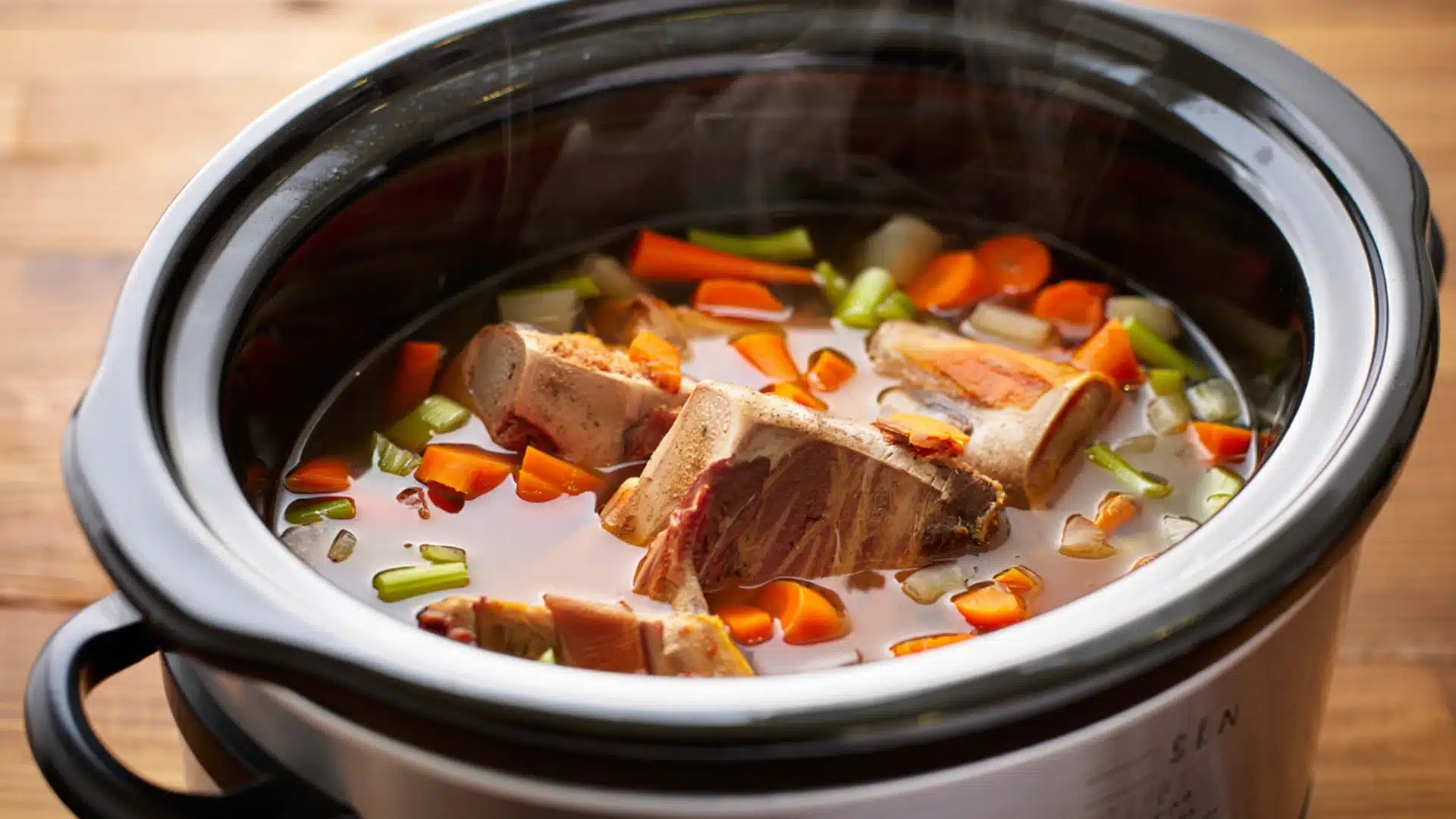
This slow cooker method is ideal for a simple, hands-off approach. It works well overnight, filling your kitchen with a rich, comforting aroma as the nutrients slowly release from the bones.
Serving: 8 to 10 cups
Cook Time: 12 to 24 hours on low
Ingredients: 3 to 4 pounds beef bones, 2 tablespoons apple cider vinegar, filtered water (enough to cover bones by about 2 inches), 1 to 2 chopped carrots and celery stalks (optional)
Steps for the Recipe:
- Place the beef bones in the slow cooker. Add apple cider vinegar and let them soak for 30 minutes to help release minerals.
- Pour in enough filtered water to cover the bones by about 2 inches. Add chopped carrots or celery if using. Do not add salt, onions, or garlic.
- Cover and cook on low for 12 to 24 hours. Add hot water if needed to keep bones submerged.
- Let the broth cool slightly, then strain it through a fine-mesh sieve. Discard all bones and vegetables.
- Refrigerate until chilled, skim off the hardened fat, and store in airtight containers for up to 5 days or freeze in portions.
2. Quick Instant Pot Bone Broth for Dogs
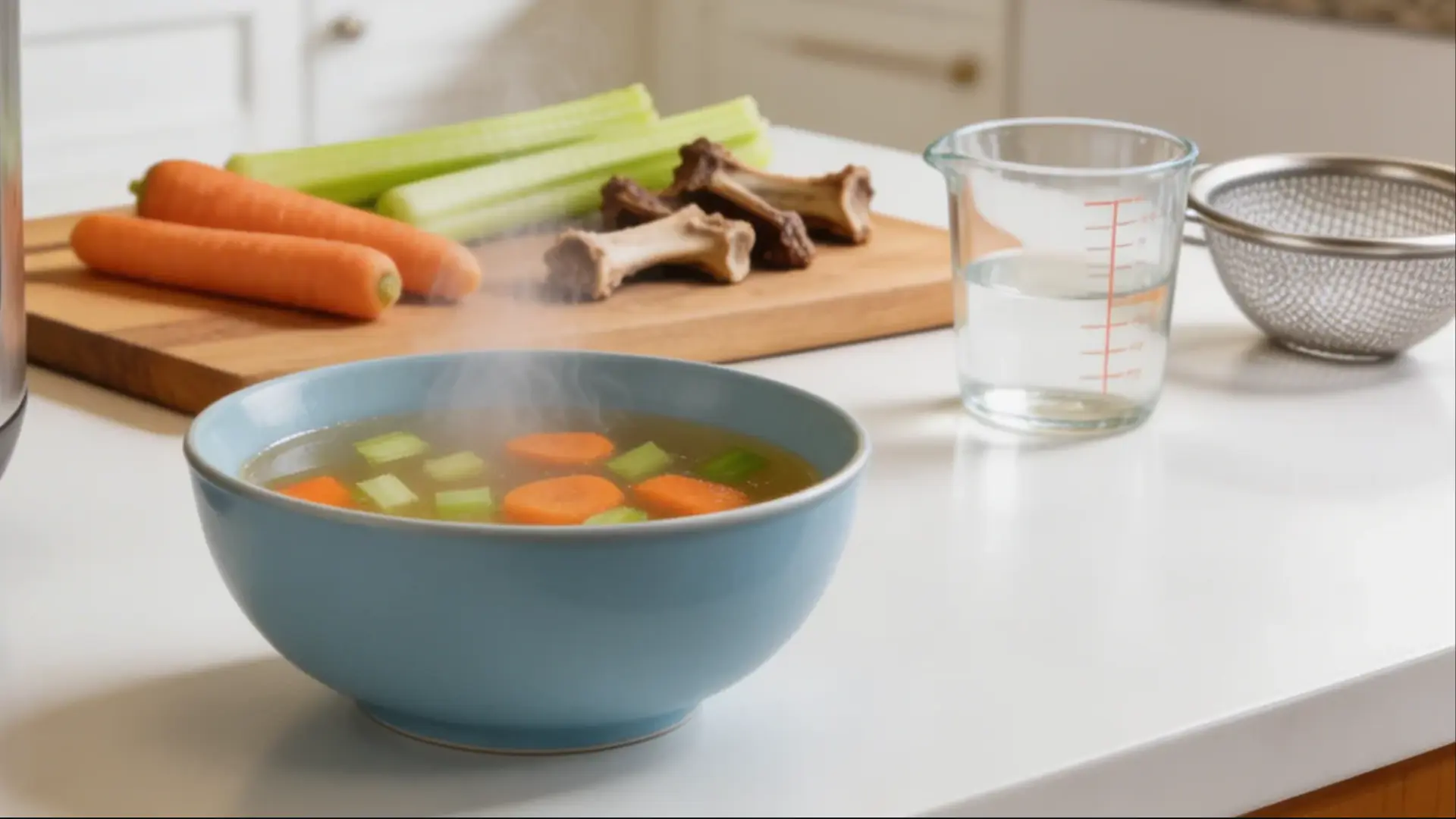
This Instant Pot version works well when you want nourishing broth the same day without waiting overnight. It delivers the same rich flavor and nutrients in a fraction of the time, making it perfect for busy schedules.
Serving: 8 to 10 cups
Cook Time: About 2.5 to 3 hours total
Ingredients: 3 to 4 pounds beef bones, 2 tablespoons apple cider vinegar, filtered water (enough to stay below the max fill line), 1 to 2 chopped carrots and celery stalks (optional)
Steps for the Recipe:
- Place the beef bones inside the Instant Pot. Add the apple cider vinegar and let the bones sit for 30 minutes to help draw out minerals.
- Pour in filtered water, making sure it does not pass the maximum fill line. Add carrots or celery if using. Avoid salt, onions, or garlic.
- Secure the lid, set the valve to sealing, and cook on high pressure for 120 to 180 minutes.
- Allow the pressure to release naturally. Once safe to open, strain the broth through a fine mesh sieve and discard all bones and vegetables.
- Cool completely, refrigerate, skim off the hardened fat, and store in airtight containers or freeze in small portions.
3. Gelatin-Rich Chicken Feet Bone Broth for Dogs
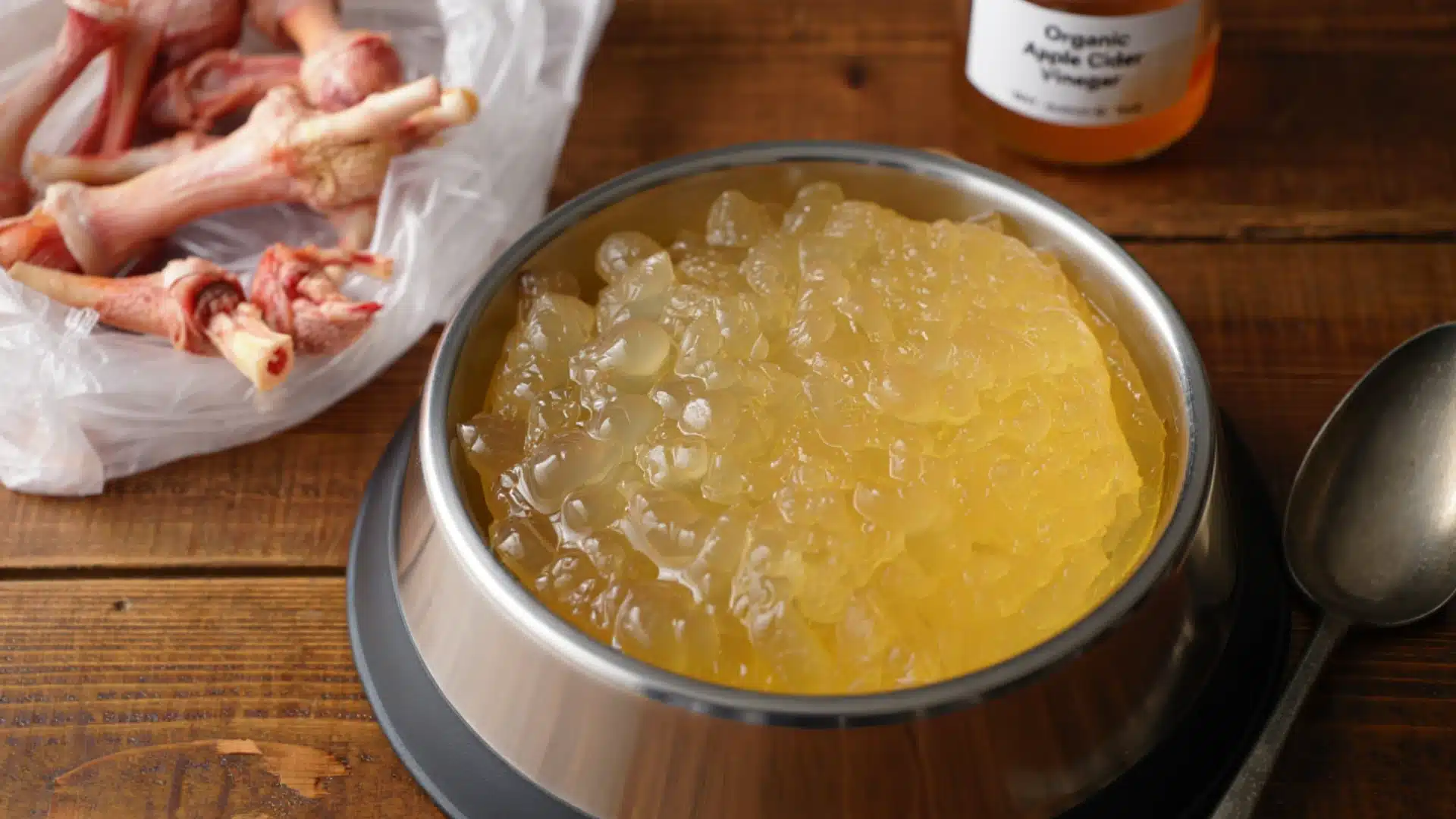
In my practice, this is the recipe I recommend first for senior dogs, dogs recovering from surgery, or any dog showing early signs of joint stiffness.
Chicken feet produce a broth with significantly more gelatin than beef marrow bones alone, and the difference in consistency once cooled is immediately visible. When clients tell me their dog’s broth “never gelled,” my first question is always whether they used chicken feet.
This collagen-packed version is excellent for joint support and skin health. Chicken feet contain a high level of connective tissue, which creates a thick, jelly-like broth when chilled.
In my years of experience advising clients with senior or post-surgery dogs, this is the recipe that consistently produces the strongest gel and the fastest visible improvement in joint comfort.
Serving: 8 to 10 cups
Cook Time: 12 to 24 hours on low
Ingredients: 24 chicken feet rinsed thoroughly, 2 tablespoons apple cider vinegar, filtered water to fully cover, 1 chopped carrot, and 1 celery stalk (optional)
Steps for the Recipe:
- Rinse the chicken feet very well under cold running water to remove any debris. Trim nails if still attached.
- Place the cleaned feet into the slow cooker. Add apple cider vinegar and allow them to sit for about 30 minutes to help release collagen and minerals.
- Pour in enough filtered water to completely cover the feet. Add carrot and celery if desired. Do not add salt, onions, or garlic.
- Cover and cook on low for 12 to 24 hours. Add hot water if needed to keep everything submerged.
- Allow the broth to cool slightly, then strain carefully and discard all solids. Refrigerate until fully chilled, skim off any hardened fat, and store in airtight containers for up to 5 days or freeze for later use.
4. Easy Stovetop Bone Broth for Dogs
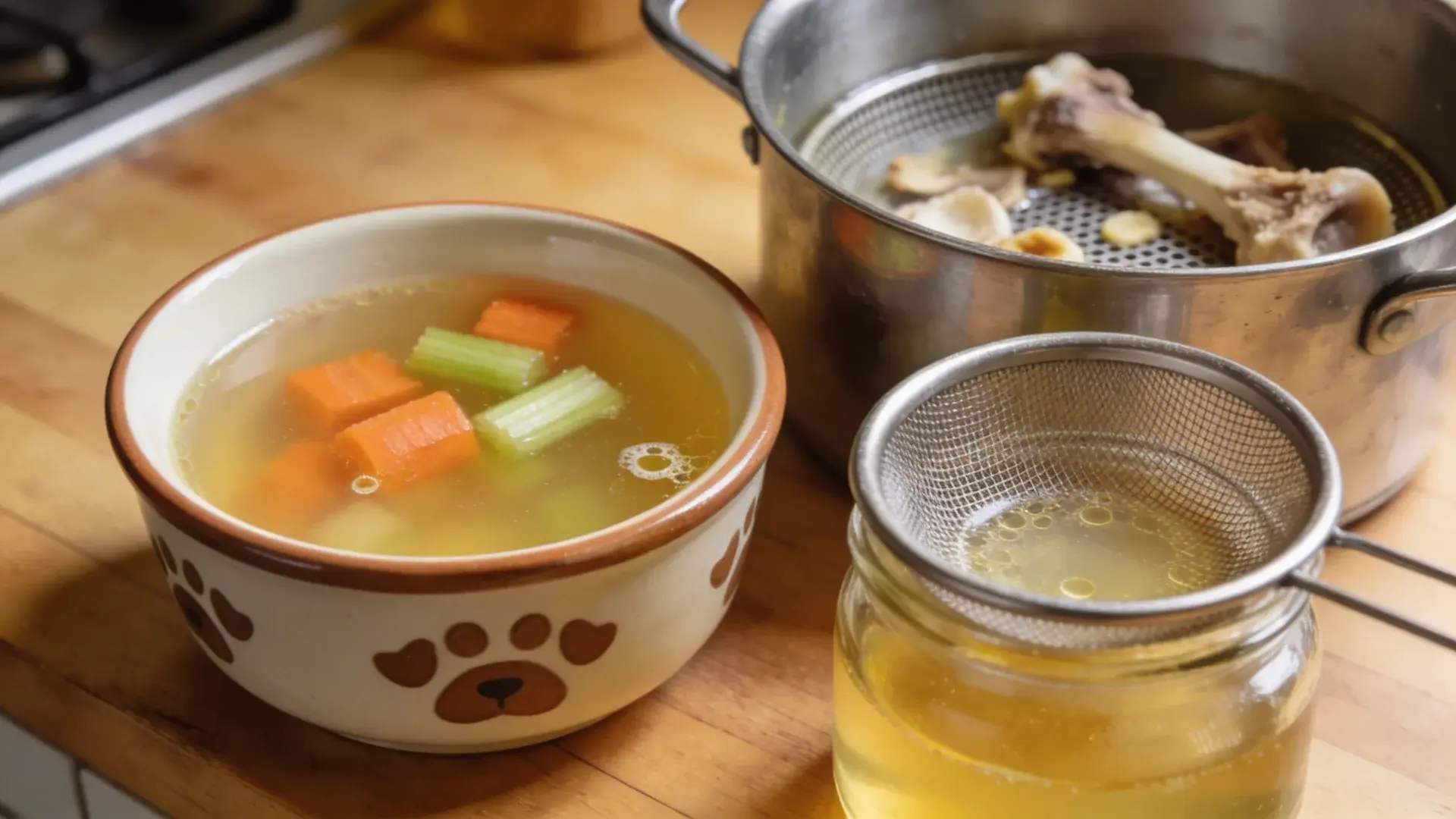
Don’t own a slow cooker or Instant Pot? A large stockpot on the stove works perfectly. This method requires a bit more monitoring but is just as effective.
Serving: 8 to 10 cups
Cook Time: 6 to 12 hours
Ingredients: 3 to 4 pounds beef bones or a whole chicken carcass, 2 tablespoons apple cider vinegar, filtered water to cover bones by 2 inches, 1 chopped carrot and 1 celery stalk (optional)
Steps for the Recipe:
- Place the bones in a large stockpot and cover with filtered water by about 2 inches.
- Add apple cider vinegar and let sit for 30 minutes before turning on the heat.
- Add carrots or celery if using. Do not add salt, onions, or garlic.
- Bring to a gentle boil over medium-high heat, then immediately reduce to the lowest simmer possible.
- Simmer uncovered or partially covered for 6 to 12 hours, checking periodically and topping up with water as needed.
- Strain through a fine-mesh sieve, discard all bones and solids, cool completely, skim fat, and store as usual.
How Much Bone Broth Should Dogs Have?
Serving size depends on body weight and overall diet balance. Moderation supports digestion, hydration, and joint comfort without replacing complete meals.
Bone broth for dogs should be used as a supplement to regular food, not as a replacement for it. Start with small amounts and monitor tolerance before increasing frequency.
Bone broth is relatively low in calories on its own. Its value lies in its micronutrient content, not as an energy source. Start with small amounts and monitor tolerance before increasing frequency.
| Dog Size | Recommended Serving Size | Serving Tips |
|---|---|---|
| Small Dogs | 1 to 2 tablespoons | Mix into kibble or serve as a light topper once daily |
| Medium Dogs | 2 to 4 tablespoons | Add to meals or offer separately in a bowl |
| Large Dogs | ¼ to ½ cup | Use as a meal enhancer or post-activity hydration boost |
Serving by Health Condition:
- Senior dogs: Offer daily as a joint and digestion supplement, mixed into food.
- Post-surgery or recovering dogs: Use as a gentle appetite stimulant. Start with 1–2 tablespoons and increase gradually.
- Dogs with IBD or sensitive stomachs: Begin with very small amounts (1 teaspoon) and increase slowly over several days.
- Active or working dogs: Can be served post-activity as a hydrating, mineral-rich recovery boost.
The most common mistake I see is starting with full portions right away because dogs love the taste. I always recommend beginning with half the suggested amount so the digestive system can adjust. If there are no issues like loose stool or bloating, increase gradually.
How to Store Bone Broth Safely
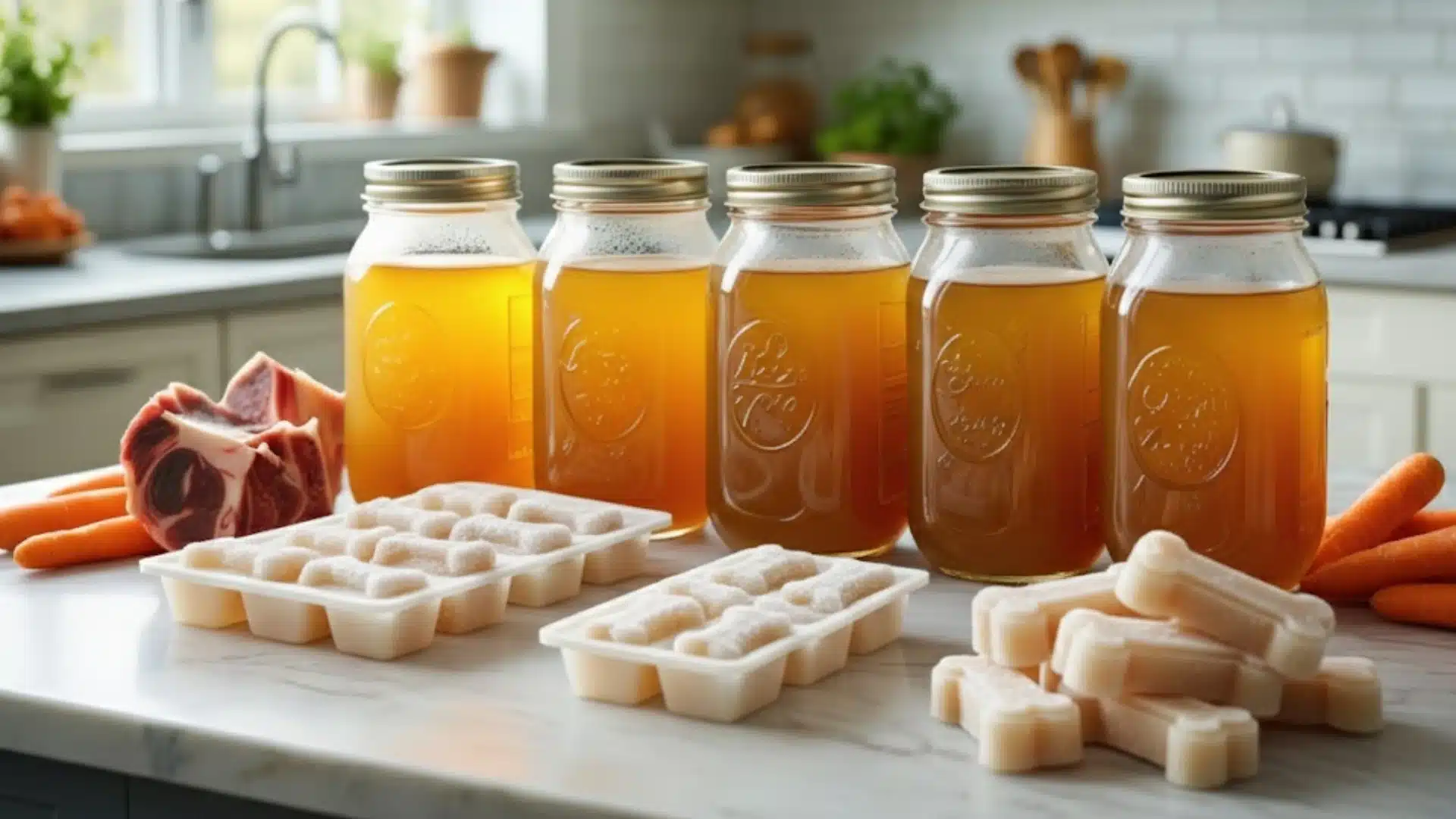
Proper storage keeps your homemade bone broth fresh and safe for your dog, preserving its nutritional benefits like collagen and minerals.
Always cool the broth completely before storing, and use airtight containers to prevent contamination.
For short-term use, store bone broth in the fridge for 4 to 5 days. Pour into glass jars or BPA-free containers, leaving space at the top for expansion.
Skim off any fat layer after chilling to reduce calories. Check for off smells or sliminess before serving; if in doubt, discard.
Extend shelf life by freezing for up to 6 months. (Some sources suggest bone broth can be frozen for up to 12 months, though 6 months is the safer recommendation for maintaining nutritional quality.)
The ice cube tray method is ideal for easy portioning. Simply pour cooled broth into ice cube trays or silicone molds, freeze solid, then transfer the cubes to freezer bags.
Simply pour cooled broth into ice cube trays or silicone molds, freeze solid, then transfer the cubes to freezer bags.
Thaw cubes overnight in the refrigerator or under cold running water. Avoid microwaving, as high heat can reduce nutritional value. Never refreeze broth once thawed.
Creative Ways to Serve Bone Broth:
- Pour over dry kibble to boost moisture and palatability
- Freeze in silicone molds for cool summer treats
- Freeze in silicone molds as summer enrichment treats
- Use to rehydrate dehydrated or freeze-dried dog food
- Fill a Kong or lick mat and freeze for an engaging mental stimulation activity
Troubleshooting Common Bone Broth Problems
Running into issues? Here are the most common problems and how to fix them:
- Broth didn’t gel when cooled: This usually means the cook time was too short or there was too much water. Use more collagen-rich bones (like chicken feet or knuckles), simmer longer, and use slightly less water.
- Broth smells off or sour: If the smell is unpleasant beyond the natural “meaty” scent, discard it. This can happen if the broth was cooled too slowly, contaminated during storage, or cooked at too high a temperature for too long.
- Broth is too fatty: Simply skim more thoroughly after refrigerating. The fat solidifies at the top, making it easy to remove with a spoon.
- Dog won’t drink it: Try warming it slightly (not hot) before serving, or drizzle it over kibble instead of offering it plain.
- Broth is very dark or cloudy: This is normal and does not indicate a problem. Cloudy broth often has more minerals; dark color comes from the type of bones used.
Can Humans Eat This Bone Broth Too?
Yes, a bone broth for dogs recipe can absolutely be shared with the family when prepared properly.
The foundation must remain simple and clean. Use only bones, filtered water, and a small amount of apple cider vinegar to help draw out nutrients.
Avoid onions, garlic, added salt, artificial seasoning, or heavy spices. Those ingredients may be common in kitchen broths, but they are not safe for dogs.
A smart method involves preparing one large plain batch and setting aside a portion for human use before adding any dog-specific herbs or vegetables.
This keeps the broth flexible for soups, rice dishes, or sipping. Proper straining is essential to remove small bone fragments for safety.
The ASPCA’s Animal Poison Control guidance confirms that onions, garlic, and all plants in the Allium family are toxic to dogs, reinforcing why plain preparation is the only safe approach.
Safety Tips to Make a Dog Bone Broth
Safe preparation makes bone broth nourishing instead of risky. A few simple precautions protect your dog from choking hazards, stomach upset, and harmful ingredients while keeping the recipe wholesome and beneficial.
- Never Feed Cooked Bones: Cooked bones can splinter and cause choking or internal injuries. Always strain the broth carefully and discard all bones and solids.
- Use Filtered Water Only: Tap water can contain chlorine or fluoride that can alter the broth’s flavor and may affect sensitive dogs. Filtered water is always the cleaner choice.
- Start with Small Amounts: Begin with 1 to 2 tablespoons and watch for any digestive upset
- Source Bones Reputably: Purchase bones from trusted butchers or reliable suppliers only
- Consult Your Vet for Special Cases: Puppies, pregnant dogs, and pets with kidney concerns need personalized guidance before adding broth.
- Avoid Toxic Add-Ins: Do not add salt, onions, garlic, or spices, as they are harmful to dogs.
- Cool Broth Properly: Allow the broth to cool completely before storing to reduce bacterial growth.
- Use Unpasteurized ACV: When adding apple cider vinegar, choose an unpasteurized version with “the mother” for maximum mineral extraction from bones.
Conclusion
Making bone broth for your dog turns something as simple as simmering bones into a powerful act of care. You’re not just creating a nutritious supplement.
You’re taking control of what goes into your dog’s body, one wholesome ingredient at a time.
The difference between store-bought versions and your homemade batch goes beyond avoiding harmful additives.
It’s about crafting something fresh, safe, and packed with the exact nutrients your dog needs for stronger joints, better digestion, and lasting vitality.
Whether you choose the slow cooker, Instant Pot, or chicken feet method, each batch is an investment in your dog’s long-term health.
Start small, stay consistent, and watch how something this simple makes a genuine difference.
Which bone broth recipe are you going to try first for your dog? Share your suggestions and help other dog parents learn from your favorites.
Frequently Asked Questions
Why Didn’t My Bone Broth Turn Gelatinous After Cooling?
This means the broth needs more collagen-rich bones (like chicken feet or knuckle bones), a longer simmer time, or slightly less water. A proper gel is the sign of a collagen-rich, nutrient-dense broth.
Can I Add Turmeric to Bone Broth for Dogs?
Yes, turmeric is generally considered safe for dogs in small amounts and is known for its anti-inflammatory properties. Add a small pinch per batch and consult your vet for dogs on medication, as turmeric can interact with blood thinners.
Can I Give Bone Broth to a Puppy?
Yes, bone broth can be given from around 8 weeks of age. Start with 1 teaspoon per day and use a plain recipe with no additives. Introduce it slowly over 7–10 days and watch for any digestive issues. Consult your veterinarian before adding it to your puppy’s diet
Can I Use Turkey Bones to Make Bone Broth for My Dog?
Yes, turkey bones are a great option. Use raw, uncooked turkey bones or a plain-roasted turkey carcass (no seasonings). Follow the same slow cooker method as the beef or chicken recipes.