That first walk with a puppy often feels exciting until the leash turns into a tug-of-war.
One moment, there is a calm step forward, and the next, there is pulling, stopping, or a complete refusal to move. It can feel a little frustrating, especially when expectations do not match reality.
In my years of training dogs, leash training is the one skill I see new owners underestimate the most, and the one that makes the biggest difference to daily life once it clicks.
Leash training a puppy is not just about walking nicely; it is about building trust, communication, and confidence from the very beginning, where every small step matters.
The way those early moments are handled shapes how future walks will feel.
With the right approach, even the most distracted or energetic puppy can learn to walk calmly.
It all starts with understanding what the puppy needs and how to guide that behavior in a simple, patient, and consistent way.
Why Leash Training is Important for Puppies?
Leash training a puppy is the process of teaching a young dog to walk calmly beside a handler without pulling, resisting, or becoming distracted.
Leash walking does not come naturally to dogs; it is a human need they have to learn.
Done right, it keeps them safe in public, prevents pulling habits that are hard to fix later, and builds the kind of trust that carries into every other area of training.
Early training plays a key role in shaping long-term behavior, as puppies are more receptive to learning routines and boundaries during this stage.
It directly improves safety during walks by preventing sudden lunging or running into dangerous situations.
Proper training also reduces the chances of developing pulling habits, which can become difficult to correct later.
In addition, it helps build trust and clear communication between the puppy and the handler, while providing mental stimulation and a structured daily routine that supports overall development.
Essential Gear for Leash Training
The right equipment sets the foundation for leash training a puppy. Proper gear not only keeps the puppy safe but also makes it easier to guide the behavior of your puppy.
- Collar or Harness: A flat collar works for basic identification, but a well-fitted harness is often preferred for leash training as it reduces pressure on the neck and gives better control. Knowing how to go about fitting a harness correctly before the first session saves time and prevents discomfort during training.
- Standard Leash (4–6 feet): A fixed-length leash provides consistent control and helps maintain a steady walking pace. I often suggest a 6-foot nylon or biothane leash.
- Avoid Retractable Leashes: These leashes encourage pulling by giving inconsistent feedback. They can make it harder for a puppy to understand boundaries and proper walking behavior.
- High-Value Training Treats: Small, soft treats help reinforce good behavior instantly. Quick rewards make it easier for the puppy to associate calm walking with positive outcomes.
- Treat Pouch or Easy Access Storage: Keeping treats within reach ensures timely rewards, which is essential for effective reinforcement during training sessions.
- Comfortable Fit and Adjustments: All gear should fit properly without being too tight or too loose. Ill-fitting equipment can cause discomfort and lead to resistance or distraction during training.
Step-by-Step Guide to Leash Training a Puppy
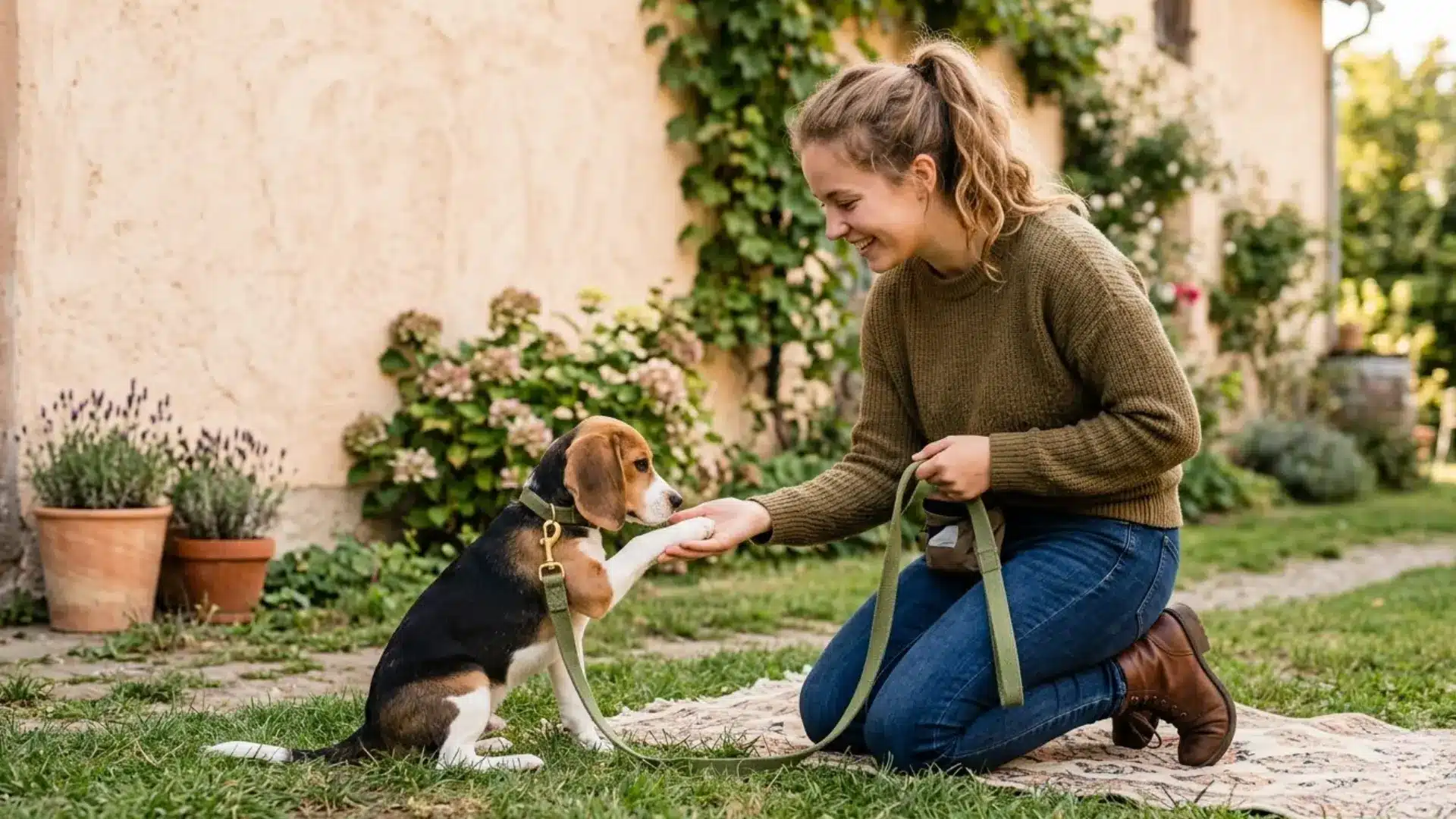
Leash training works best when broken into simple, manageable steps. Each stage builds on the previous one, helping the puppy understand what is expected without stress or pressure.
Step 1: Introduce the Collar and Let the Puppy Drag the Leash
Before any walking happens, the puppy needs to feel comfortable wearing the gear.
Put the collar or harness on during playtime or feeding, so the puppy associates it with good things rather than restriction.
Once the collar is accepted calmly, clip the leash on and simply let the puppy drag it around the house under your supervision.
This step is one that most owners skip, and it is exactly why so many early sessions go sideways.
A puppy that has never felt a leash before will resist it, bite it, or freeze, none of which are about stubbornness. Give this step one to two days before moving on.
Step 2: Start in a Distraction-Free Area
Begin training in a quiet indoor space where there are no loud noises, other pets, or sudden movements. This helps the puppy stay focused and reduces anxiety.
A calm setting allows the puppy to pay attention to you instead of reacting to the environment.
Keep the leash loose and let the puppy move naturally while staying nearby. Use gentle encouragement and avoid pulling.
The goal here is simple: help the puppy feel comfortable wearing the leash and staying close without distractions getting in the way.
Step 3: Teach Your Puppy to Follow You
Stand beside your puppy and use a treat to guide attention toward your side. Take a few small steps and encourage the puppy to follow naturally.
When the puppy stays close, reward immediately. This creates a clear connection between staying near you and receiving something positive when leash training a puppy.
If you are using a marker word, say “yes” the moment the puppy falls into position beside you, then deliver the treat.
This precision helps the puppy understand exactly what earned the reward.
Keep movements slow and predictable so the puppy does not feel rushed. Over time, the puppy will begin to follow without needing constant guidance.
Step 4: Practice Short Walks Indoors
Once the puppy starts following, begin short walking sessions inside the home. Keep each session brief to avoid overwhelming the puppy.
Focus on a few steps at a time rather than long walks, also reward calm behavior, and stop if the puppy becomes distracted or restless.
What if the puppy refuses to move? This is one of the most common questions I get from new puppy owners.
One client’s 10-week-old Labrador, Biscuit, would just sit down and refuse to budge the moment the leash was clipped on.
The fix was simple: kneel down to the puppy’s level, use an excited voice, and let the puppy come to you rather than pulling them forward.
Step 5: Introduce Basic Commands
Start adding simple commands like “come,” “let’s go,” or calling the puppy’s name while walking. Use a calm voice and pair each command with movement or a reward.
This helps in leash training a puppy and connecting words with actions, and consistent use of the same commands is important to avoid confusion.
When the puppy responds correctly, reward right away to reinforce the behavior. Over time, these commands will guide the puppy during walks without needing constant treats.
This step strengthens communication and makes it easier to manage behavior in different situations.
Step 6: Move to Outdoor Training Gradually
After the puppy shows comfort indoors, move training to a quiet outdoor area like a backyard or a quiet street. Outdoor environments introduce new sounds and smells, which can be distracting.
Before moving training outside, it is important to know where it is safe to do so.
As AVMA’s outdoor safety guidance for puppies confirms, the last dose of the parvovirus vaccine must be given at 14–16 weeks of age, and it is not until 7–10 days after that final dose that the risk of infection becomes very low.
Start slow and keep sessions short, allow the puppy time to adjust before expecting perfect behavior. Gradually expose the puppy to more distractions as confidence improves.
If the puppy becomes overwhelmed, return to a quieter space and rebuild focus.
This step helps the puppy learn to stay calm and attentive even in changing environments.
Step 7: Reward Good Walking Behavior
Consistently reward the puppy for walking with a loose leash and staying close to your side. The Humane Society’s positive reinforcement guide confirms that the reward must occur within seconds of the desired behavior
Timing matters, so reward immediately when the puppy walks correctly. Avoid rewarding pulling or wandering, as this can send mixed signals.
Over time, reduce treats and replace them with praise or gentle encouragement.
With regular practice, the puppy will begin to walk calmly without needing constant rewards, making walks more enjoyable and controlled.
How Long Does it Take to Leash Train a Puppy?
Leash training a puppy can begin as early as 8 weeks of age, once a puppy is comfortable wearing a collar or harness.
The timeline varies based on breed, energy level, and personality, but most puppies show basic progress within 2 to 4 weeks of consistent training.
High-energy breeds like Huskies, Labradors, and Border Collies may need longer and more structured sessions compared to naturally calmer breeds.
That is not a training failure; it is just breed reality.
Full leash control and reliable walking behavior can take several months to develop.
From a behavioral standpoint, as noted in clinical training observations, short and repeated sessions help puppies learn faster than long or inconsistent practice.
Building routine early sets a strong foundation for calm, controlled walks over time.
Simple Techniques to Stop a Puppy from Pulling on The Leash
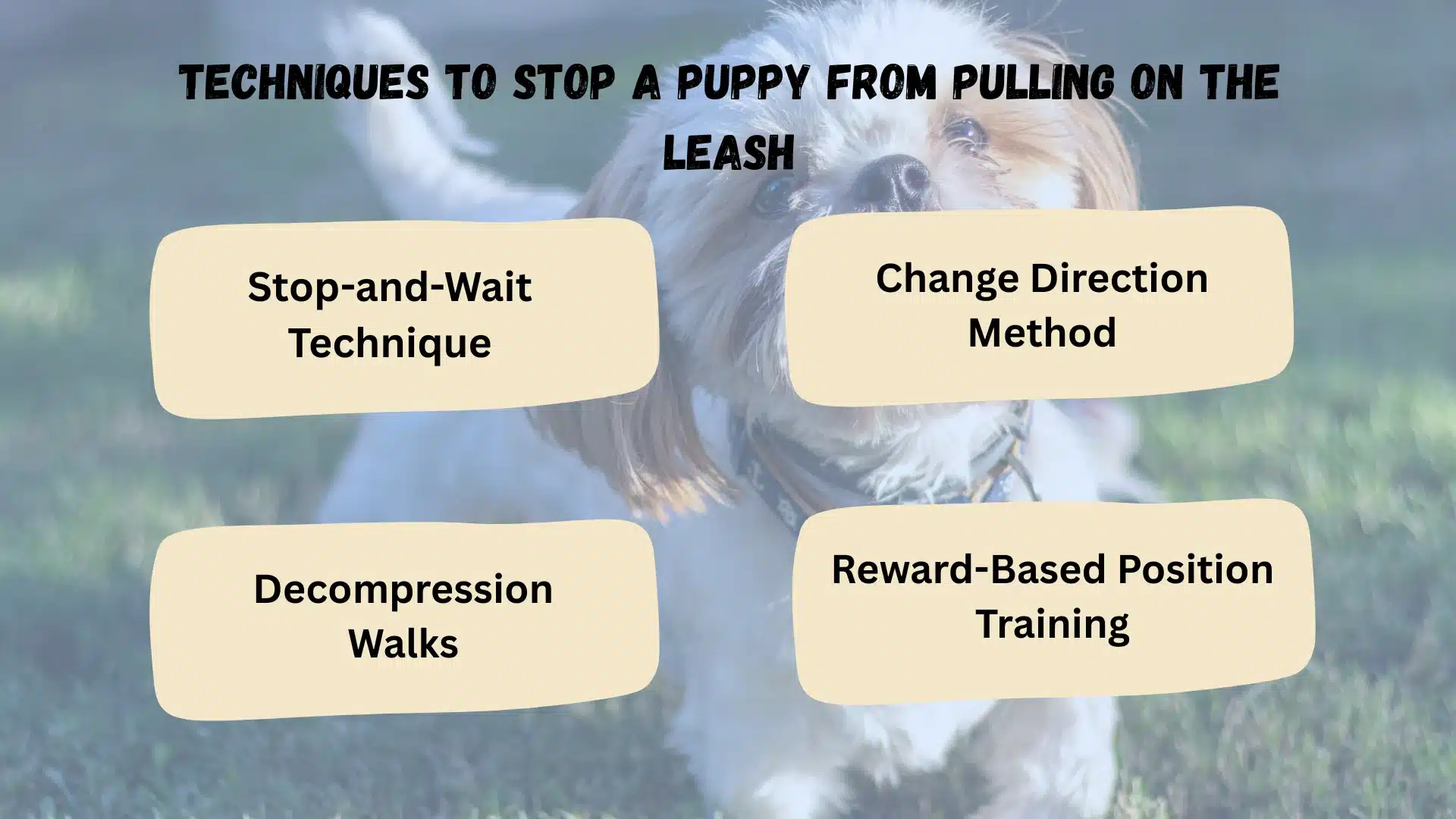
As a certified trainer, the pulling question is the one I field most often.
The good news: pulling is almost never a dominance or attitude issue; it is simply that moving forward has been accidentally rewarded every time the owner kept walking while the leash was tight.
1. Stop-and-Wait Technique
This method helps leash train a puppy so that pulling will not get them where they want to go. As soon as the leash becomes tight, stop walking and stand still.
Wait until the puppy relaxes and the leash loosens before moving again.
Over time, the puppy learns that only a loose leash allows forward movement. Consistency is important here, as giving in even once can confuse the learning process.
2. Change Direction Method
Leash biting is a phase that many puppies go through and usually grow out of, but it often signals that the puppy is frustrated or does not yet fully understand what leash walking means.
When the puppy starts pulling or biting, gently turn and walk in the opposite direction. This encourages the puppy to pay attention and follow your lead instead of moving ahead on their own.
It also helps break the habit of pulling toward distractions. Keep movements smooth and avoid sudden jerks. Reward the puppy when they catch up and walk beside you.
This technique improves focus and teaches the puppy to stay aware of your direction during walks.
3. Decompression Walks
Decompression walks allow the puppy to explore freely in a safe, low-pressure environment.
Instead of strict training, the focus is on leash training a puppy while letting the puppy sniff, move at their own pace, and release built-up energy. This reduces frustration and overstimulation, which often lead to pulling.
These walks are usually done with a longer leash in a quiet area. Over time, a more relaxed puppy becomes easier to guide during structured leash training sessions.
I recommend one decompression walk per day alongside structured training sessions; the mental reset they provide makes the structured sessions noticeably more productive.
4. Reward-Based Position Training
This technique focuses on teaching the puppy to stay close to your side. Hold treats near your leg and reward the puppy for walking in the correct position.
Start with a few steps and gradually increase the distance as the puppy improves. Clear and timely rewards help the puppy understand exactly what behavior is expected.
With regular practice, the puppy begins to choose this position naturally, reducing pulling and making walks more controlled and enjoyable.
Common Leash Training Mistakes to Avoid
Leash training a puppy can become frustrating when small mistakes go unnoticed. Many early issues come from timing, inconsistency, or using the wrong approach.
- Starting Too Early Outdoors: Jumping straight into busy outdoor areas can overwhelm a puppy. Loud sounds, people, and new smells make it harder to focus.
- Skipping gear desensitization: Putting a leash on a puppy for the first time right before a training session almost guarantees resistance. The collar and leash should feel like background noise before walking practice begins.
- Long Training Sessions: Puppies have short attention spans, and long sessions often lead to frustration and distraction.
- Inconsistent Commands: Switching between different words or tones can confuse a puppy. Using the same commands consistently helps build a clear understanding.
- Not Rewarding Enough: Skipping rewards reduces motivation. Puppies learn best when good behavior is reinforced immediately with treats, praise, or attention.
- Using the Wrong Equipment: Poorly fitted collars or incorrect leashes can cause discomfort and resistance. Proper gear supports better control and encourages calm walking behavior.
Conclusion
Leash training a puppy is a gradual process that builds over time with consistent effort and clear guidance.
Progress may seem slow at first, but steady practice helps puppies develop better habits.
The puppies I have seen struggle the most are not the high-energy ones, but rather they are the ones whose owners gave up too early or trained inconsistently.
Consistency, not intensity, is what produces reliable loose-leash walking
Positive reinforcement speeds up learning by encouraging the right actions in a clear way.
It is also important to remember that every puppy learns at a different pace, so comparison should be avoided.
Start today, keep sessions simple, stay consistent, and focus on small improvements that lead to lasting results.
Have you started leash training your puppy yet, or are you facing any challenges along the way? Share your experience or tips in the comments below.
Frequently Asked Questions
What is The 10-10-10 Rule For Puppies?
The 10-10-10 rule refers to building routines with 10 minutes of training, 10 minutes of play, and 10 minutes of rest to balance learning, energy, and recovery.
What is The 7-7-7 Rule For Puppies?
The 7-7-7 rule suggests exposure to 7 new people, 7 environments, and 7 experiences to support socialization and build confidence during early development stages.
How Long Can I Leave My 10-Week-Old Puppy in a Crate?
A 10-week-old puppy can stay in a crate for about 2 to 3 hours at a time, as bladder control is still developing and frequent breaks are needed.
What is the Best Harness for Leash Training a Puppy?
A Y-shaped front-clip harness is generally recommended for leash training puppies. It reduces neck pressure, distributes force more evenly, and helps redirect pulling behavior without discomfort.