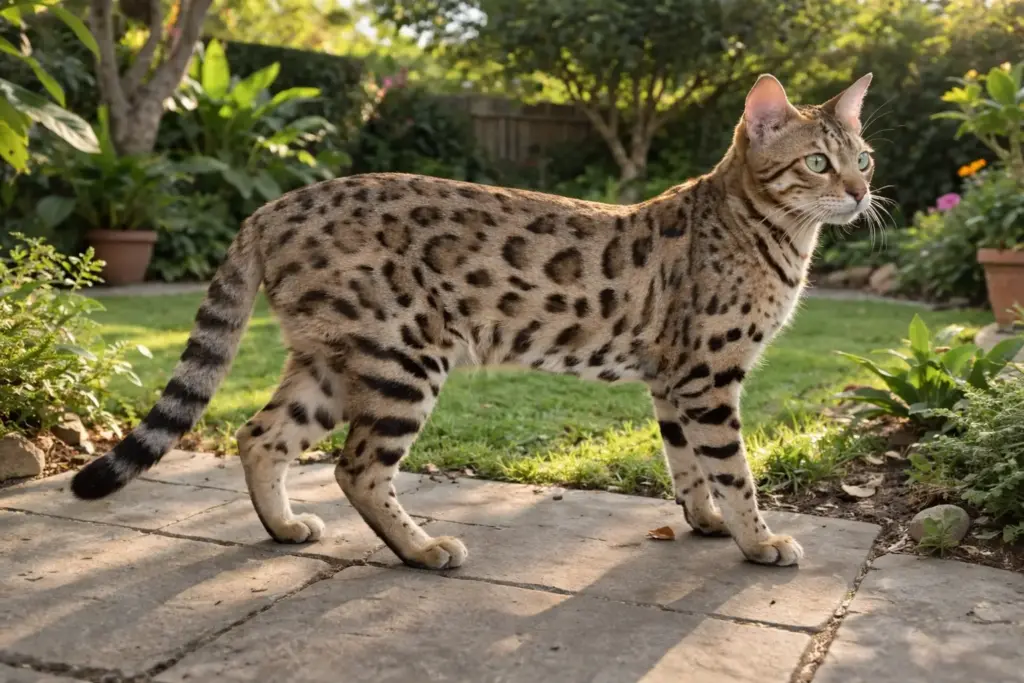
Have you ever seen a cat that looks like a miniature leopard and wondered why it looks so wild?
That striking feline is not a baby leopard. It’s the Bengal cat, a breed known for its exotic appearance, high energy, and bold personality.
Bengals stand out in any room due to their dramatic coat patterns and athletic build. It is a breed that blends the fierce look of the Asian leopard cat with the affectionate side of a domestic cat.
A full-grown Bengal carries that same wild vibe in a stronger, more muscular frame, yet still feels completely at home in a family setting. But there’s more to know before bringing one home.
In this post, you will learn about their fascinating history, detailed size guide, and growth stages.
I’ll also talk about the typical lifespan ranges, growth timeline, health concerns, personality traits, and daily care needs to help you decide if this breed fits your lifestyle.
History and Origin of the Bengal Cat
The Bengal cat breed began in the 1960s when Jean Mill, a California breeder, deliberately crossed an Asian leopard cat with domestic cats such as the Egyptian Mau and Abyssinian.
This resulted in the creation of a gentle pet with a striking wild appearance.
Early generations (F1 to F3) were often too wild for homes, so breeders worked carefully through F4, F5, and beyond to produce cats that look exotic but behave like loving companions.
Today, a full-grown Bengal cat is usually F4 or later, which is why they are calm, affectionate, and legal to own in most places.
The International Cat Association accepted the breed for championship in 1983, and CFA granted full recognition in 2016.
Thanks to decades of selective breeding, the modern Bengal combines leopard-like beauty with a truly domestic heart, making it perfect for active families who want something extraordinary.
Full-Grown Bengal Cat Personality Traits and Behavior
Full-grown Bengal cats act nothing like ordinary house cats. They stay playful and kitten-like their entire lives, making them perfect for active owners who want an interactive, dog-like cat.
- Very Energetic: they need hard daily play, or they bounce off walls
- Obsessed with Water: most happily jump in showers and play in water bowls
- Extremely Intelligent: learn tricks fast, opens doors and cabinets
- Very talkative: chirps, trills, and loud “roars” instead of normal meows
- Strongly Bonded: they follow you from room to room and sleep on your pillow
- High Prey Drive: laser pointers and feather wands are addictive
- Confident and Bold: rarely scared, love meeting new people
Growth Stages of the Bengal Cat
Bengal kittens grow faster than most breeds and turn into little wildcats. Knowing exactly what happens at every stage makes you better prepared if you’re considering getting one.
1. The Rapid Growth Phase: Newborn to 3 Months
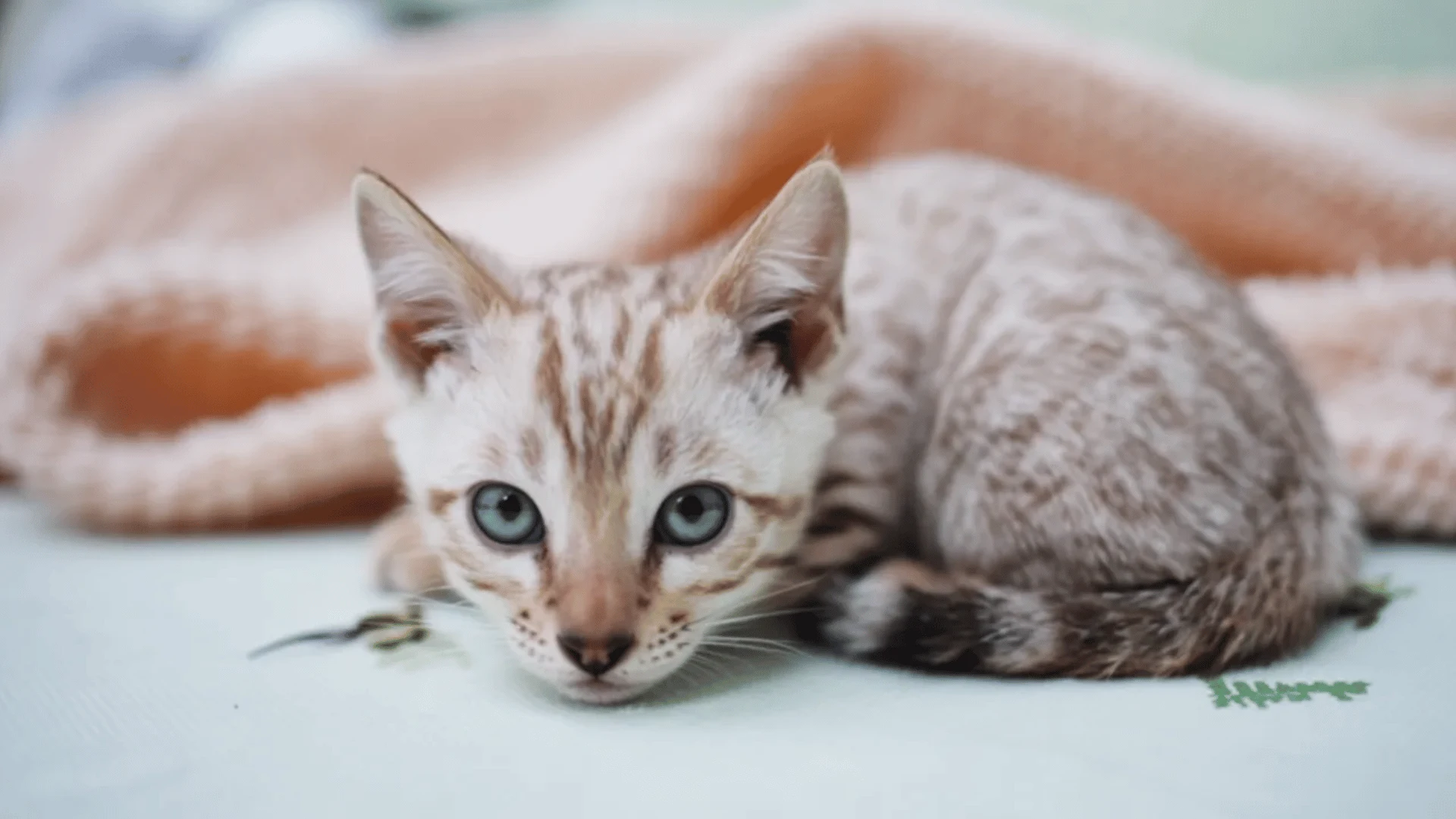
Bengal kittens are born tiny, weighing just 3 to 5 ounces, and they are both blind and completely dependent on their mother.
By the second week, their eyes begin to open, and they start taking their first wobbly steps. Between weeks 4 and 12, growth speeds up, and they grow rapidly in size.
Many kittens reach 3 to 4 pounds by the time they go to their new homes at 10 to 12 weeks. During this phase, they climb, chew, and explore nonstop, followed by deep sleep crashes.
Feed high-quality kitten food four times daily, trim nails weekly, and handle them gently to encourage a friendly temperament.
2. Teenage Energy Overload: 4 to 6 Months
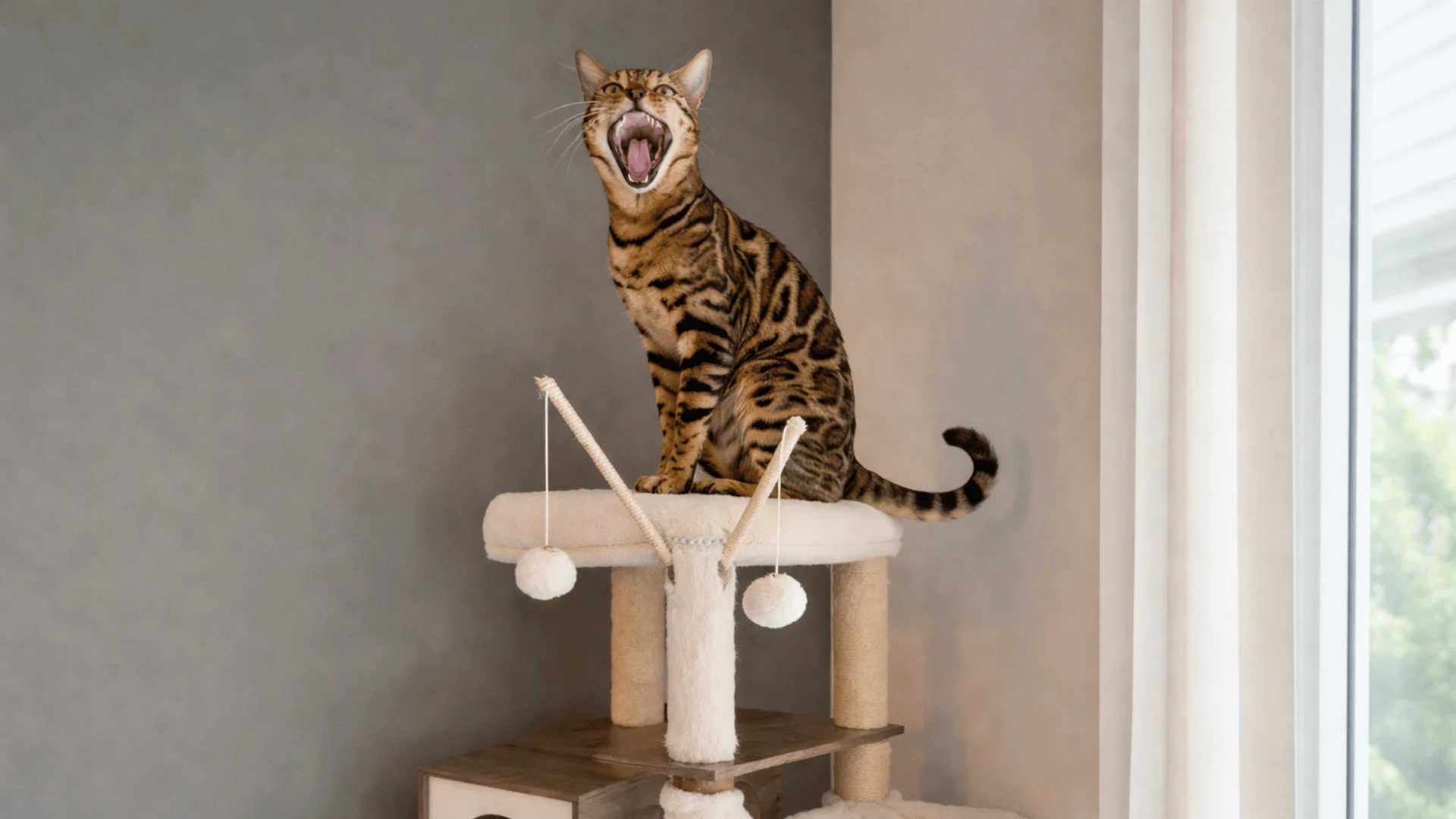
This stage feels like controlled chaos. Bengals between 4 and 6 months often weigh 6 to 9 pounds, though their bodies still look long and lean.
Their jumping ability improves dramatically, and many can easily reach the top of refrigerators or tall furniture. Around 4 to 5 months, baby teeth begin falling out, so offering soft chew toys helps.
Transition to three meals per day and provide plenty of vertical space, like cat trees or shelves. This is also an ideal time to introduce leash training before their strength fully develops.
3. The “Mini Leopard” Stage: 7 to 12 Months
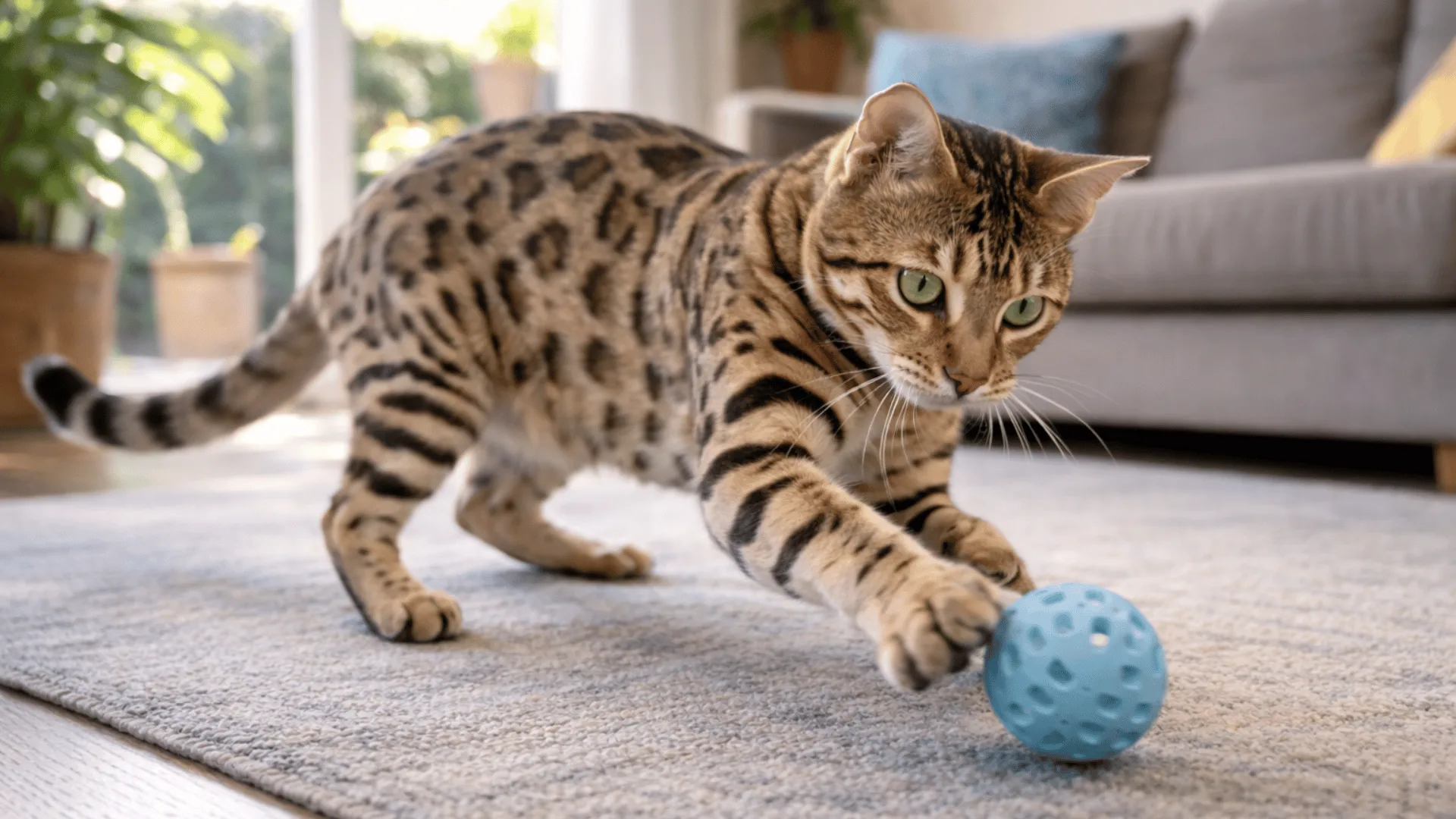
By this age, Bengals begin showing their athletic build more clearly.
Males typically broaden across the chest and may reach 10 to 13 pounds, while females usually range from 8 to 11 pounds with a slimmer frame.
Although they look nearly adult, their playful kitten behavior continues. Energy levels are extremely high, and at least two structured 15-minute play sessions daily are important.
Around 10 to 12 months, you can gradually switch to adult food while maintaining adequate portions to support continued muscle development.
4. Turning into the Full-Grown Bengal Cat: 1 to 2 Years
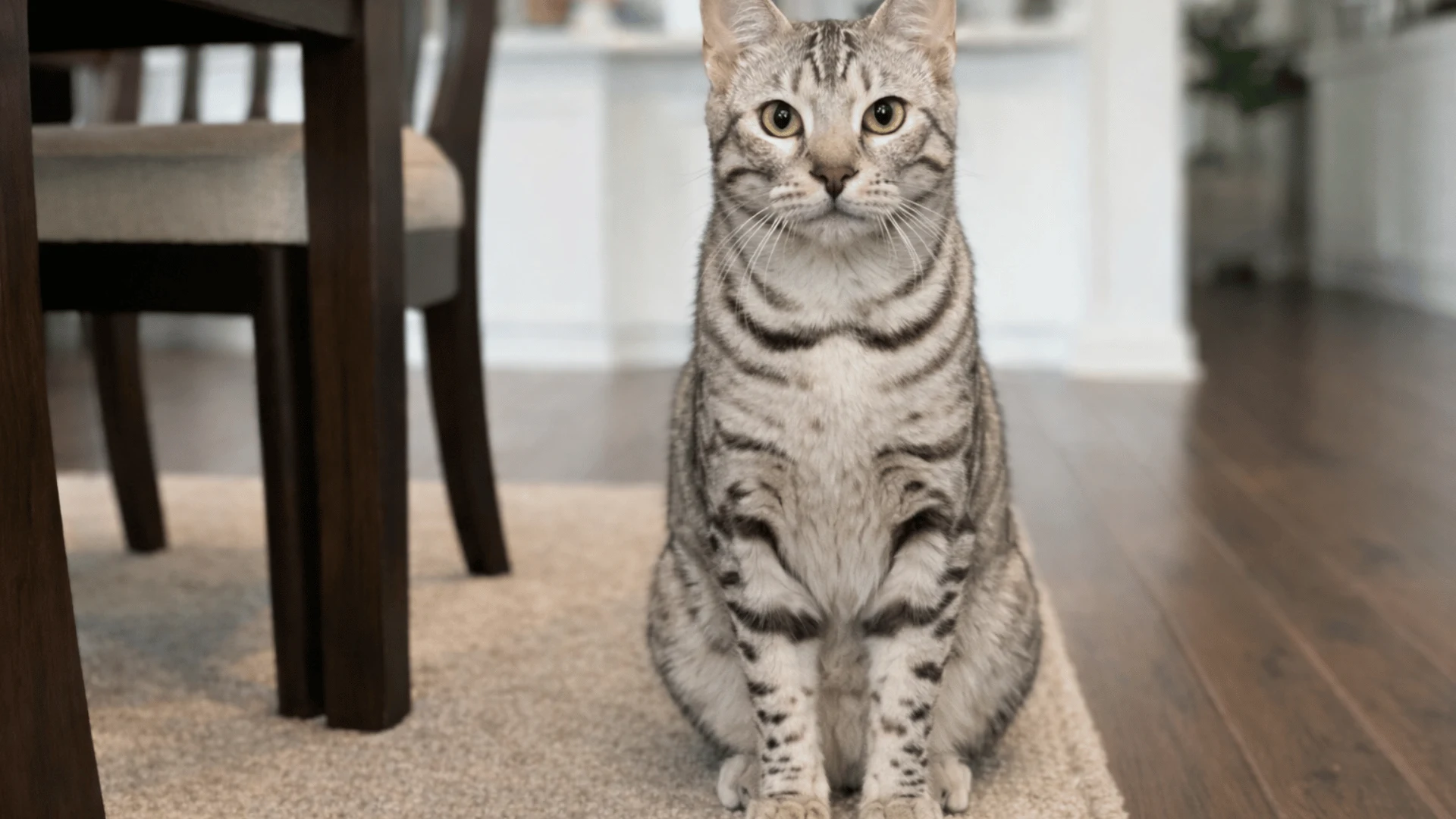
Between 18 and 24 months, a Bengal’s body fully matures. Males generally reach 12 to 15 pounds of solid muscle, while females settle between 8 and 12 pounds.
Their stride becomes more confident, and their distinct vocalizations grow stronger. While they are calmer than in earlier months, they remain active and intelligent companions.
If not already done, spaying or neutering should be completed during this period. Continue daily interactive play, and have fun with your fully developed Bengal.
Physical Traits of Full-Grown Bengal Cat Size
The exact measurements and proportions of full-grown Bengal cats are defined in the official breed standard by the Cat Fanciers’ Association in this manner.
| Aspect | Male Full-Grown Bengal Cat | Female Full-Grown Bengal Cat |
|---|---|---|
| Weight | 10-15 lbs | 8-12 lbs |
| Height (at shoulder) | 10-12 inches | 9-11 inches |
| Body length (nose to tail base) | 15-18 inches | 13-16 inches |
| Build | Broad chest, heavy muscling | Sleek, athletic, elegant |
Bengal Cat Lifespan and Health Tips
A well-cared-for Bengal cat lives 12 to 20 years, with many reaching 16 to 18 years regularly.
Responsible breeding and modern veterinary care have increased the average lifespan beyond that of earlier generations.
The biggest health risks are genetic conditions, which reputable breeders now screen for with DNA tests and annual heart scans.
Obesity shortens life quickly, so keep your Bengal lean with high-protein food and daily hard play. Annual vet visits plus echocardiograms after age 3 catch problems early.
When you buy from a tested, registered breeder and stay active with your cat, 15 to 18 healthy years is common.
Real Experiences of Owning a Bengal Cat

On Reddit, owners often share everyday moments with their Bengal pets that highlight how lively and unique this breed can be.
Many posts show Bengals playing intensely, lounging in funny positions, or interacting with their humans throughout the day.
Some owners say their Bengals follow them around the house, acting more like a constant companion than a quiet lap cat.
Others show photos and stories of Bengals climbing high shelves, exploring every corner, and making their presence known with playful antics and curiosity.
There are also heartfelt posts about bonding and appreciation, with users expressing joy over how affectionate their Bengals are with family members.
Overall, community discussions indicate that the Bengals are energetic friends who bring personality and activity into daily life.
Essential Care Tips for a Healthy Bengal Cat
Bengals thrive when their powerful bodies and sharp minds are supported with proper nutrition, structured activity, and consistent preventive care.
- High-Protein Diet: Choose quality wet or raw food with 35-45% protein to support muscle development and sustained energy.
- Running Space: Provide a cat wheel or tall climbing towers to safely burn excess energy.
- Weekly Brushing: Groom once a week to maintain their shiny coat and reduce shedding.
- Early Leash Training: Start young for safe outdoor enrichment without free-roaming risks.
- Right Calorie Intake: Most adults need about 250 to 350 calories daily, adjusted for weight and activity level.
- Daily Intense Play: Schedule 15-minute play sessions to prevent boredom and destruction.
Conclusion
A full-grown Bengal is not just a beautiful cat; it is a high-energy athlete that demands daily interaction, premium food, and an enriched environment.
If you love intense play sessions, constant conversation, and having a cat that acts more like a loyal dog, you’ll never want another breed.
But it is a breed that requires commitment, from strict feeding schedules to hours of active playtime. If your lifestyle allows for adventure and affection, a Bengal could be your perfect match.
But if you want a quiet lap cat that sleeps 20 hours a day, look elsewhere. Bengals reward active, committed owners with 15 to 18 years of wild beauty and unbreakable bonds.
Planning on getting a Bengal cat soon? Drop your questions in the comments below. I’d love to help you out further!
Frequently Asked Questions
What Are the Different Bengal Cat Colors?
Bengals come in brown tabby, snow, silver, and charcoal varieties, each featuring bold rosettes or dramatic marbled patterns that enhance their wild appearance.
Do Full-Grown Bengal Cats Ever Calm Down?
Full-grown Bengal cats typically mellow around 3 to 4 years old, but they remain energetic, playful, and active throughout adulthood rather than becoming quiet lap cats.
Can Bengal Cats Be Kept Indoors?
Yes, indoor living is safest. Leash training or secure outdoor enclosures provide stimulation while protecting them from traffic, predators, and other risks.