It’s 2 AM, The house is silent, and then you hear it, a soft cry, a small whimper coming from your dog’s bed. You sit up instantly, heart racing, thinking if something is wrong.
If you’ve ever caught your dog whimpering in sleep, you’re not alone, and more importantly, it usually isn’t a reason to panic.
This behavior is surprisingly common in dogs of all ages. In most cases, it’s just a sign that your dog is dreaming or processing the day.
Still, as a pet owner, it’s natural to question what’s normal and what might need attention.
This blog explains why dogs whimper in their sleep, how to tell the difference between harmless sounds and genuine warning signs, and what you should actually do in the moment.
Is It Normal for Dogs to Whimper in Their Sleep?
Yes, in most cases, it is completely normal. Just like humans, dogs dream while they sleep, and those dreams can trigger small sounds or movements.
Dogs are polyphasic sleepers, meaning they rest in multiple shorter bouts throughout the day, averaging 10–12 hours of total sleep daily. Puppies, senior dogs, and large breeds often sleep even more.
All of this sleep time creates ample opportunity for dreaming, and the sounds that come with it.
Dogs go through sleep cycles, including the REM stage, when dreaming occurs. During this phase, the brain stays active while the body rests, leading to twitching, paw movements, or soft whimpering.
REM cycle length also varies by size: smaller dogs tend to have shorter, more frequent REM periods, while larger dogs experience longer ones, which may explain why bigger breeds sometimes seem more vocal at night.
In fact, according to the American Kennel Club, dogs may make noises during sleep as part of normal dreaming behavior.
So, when your dog whimpers at night, it is usually just a natural part of how their brain processes daily experiences.
Common Reasons Why a Dog Whimpering in Sleep?
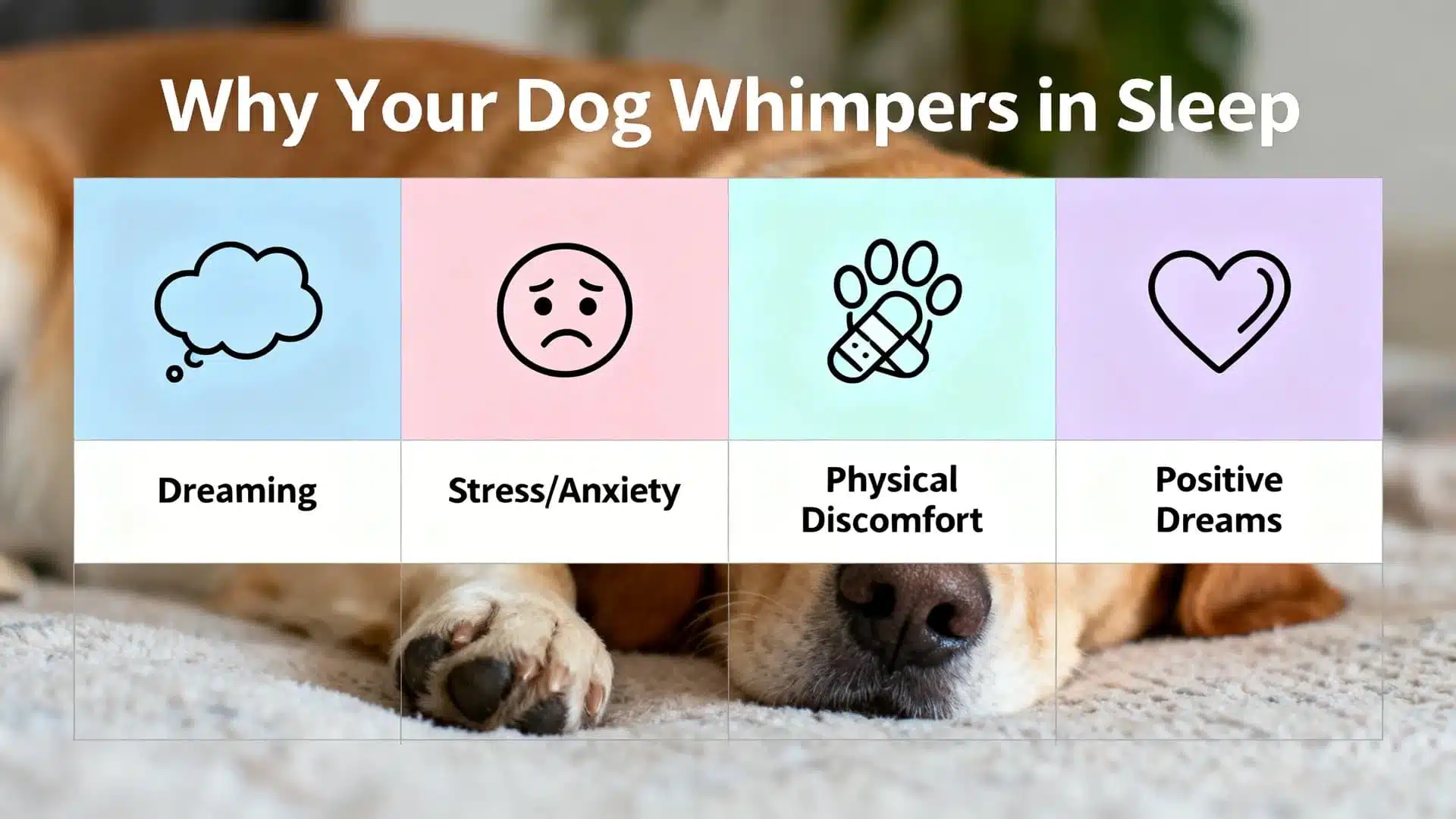
There are a few common reasons behind this behavior, and most of them are completely harmless once you understand what’s happening.
1. Dreaming
The most common reason is simple dreaming. Dogs often relive moments from their day while they sleep, running, playing, or reacting to experiences they had earlier.
As a result, you may notice twitching legs, slight body movements, or soft cries during deep REM sleep.
Research on memory consolidation in dogs shows that sleep actively reinforces what they learned during the day, as it does in humans.
So that soft whimper you hear at 2 AM might just be your dog mentally rehearsing the new command you practiced that afternoon.
In my clinical experience, owners are often relieved to hear that a whimpering, twitching dog is usually a learning dog, not a distressed one.
2. Stress or Anxiety
Stress or anxiety can also cause whimpering during sleep. Loud noises like fireworks or thunderstorms, changes in surroundings, new people, or a disrupted routine can all affect how a dog rests.
When a dog carries that stress into sleep, it can surface as whining or restless movement. Separation anxiety is another specific trigger.
Dogs with strong attachment to their owners may whimper during sleep when not close to the people they feel secure with.
I’ve seen this pattern frequently in dogs brought to the clinic after major life changes, a new home, a new baby in the family, or the loss of a companion animal.
Even when the dog appears settled during the day, unresolved stress often surfaces at night.
If anxiety is a recurring theme, it’s worth discussing behavioral strategies or calming support with your vet before assuming the whimpering is purely dream-related.
Building a consistent daytime enrichment routine can help reduce the stress that carries over into sleep. A solid daytime enrichment routine gives anxious dogs a constructive outlet for their energy and lowers overall arousal levels before bedtime.
3. Physical Discomfort or Pain
In some cases, whimpering may be linked to physical discomfort. Injuries, sore muscles, or joint problems can make certain sleeping positions uncomfortable, and older dogs are more susceptible due to conditions like arthritis.
Conditions like acid reflux can also disturb sleep, as lying down can push stomach acid back into the esophagus and cause discomfort.
If your dog frequently shifts positions at night or wakes suddenly, this is worth raising with your vet.
One thing I always ask owners in this situation: Does the whimpering seem to start as the dog settles into position, or does it come later during what looks like deep sleep?
The timing can tell you a lot. Pain-related sounds often occur early in the rest period, before the dog is fully asleep, while dream-related whimpering typically happens mid-sleep during REM.
4. Feeding Timing and Digestive Discomfort
This one surprises many owners: your dog’s meal timing can directly affect how they sleep. Heavy or late meals can also cause digestive discomfort, which can disrupt sleep.
Research shows dogs fed twice daily (versus once) tend to fall asleep earlier at night, experience shorter sleep latency, and shift to fewer but longer daytime naps
If your dog’s whimpering tends to happen on nights after larger meals or later feedings, adjusting the feeding window, ideally finishing meals 2–3 hours before bedtime, is a simple first step worth trying.
5. Breed Tendencies
Some dog breeds are naturally more vocal, and this expressiveness carries into their sleep.
Breeds such as Beagles, Huskies, and Malamutes carry strong communication instincts rooted in their working and pack history, making them more likely to vocalize during dreaming compared to quieter breeds.
If you own a naturally expressive breed, nighttime sounds are even less of a concern.
6. Rescue Dogs and Past Trauma
Rescue dogs, particularly those with unknown or difficult histories, may whimper during sleep as they process past stressful or traumatic experiences.
This is generally most pronounced in the first weeks after adoption and tends to decrease significantly as the dog builds trust and settles into a secure routine.
Providing a consistent, calm environment and avoiding forced interaction during this adjustment period supports better sleep over time.
7. REM Sleep Behavior Disorder
In rare cases, a dog’s nighttime sounds and movements may be connected to a condition called REM Sleep Behavior Disorder (RBD).
This happens when the muscle relaxation that normally occurs during REM sleep does not function correctly, causing a dog to physically act out their dreams rather than rest through them.
A dog with RBD may move suddenly, bump into nearby objects, bark, or cry in ways that closely resemble waking behavior.
Research has identified signs consistent with this disorder in certain dogs following illness, resulting in unusually active and sometimes intense sleep episodes.
If your dog’s sleep movements seem extreme, physically disruptive, or are increasing in intensity over time, this is worth raising with your veterinarian rather than treating as normal dreaming.
Signs When Your Dog’s Sleep Whimpering is Normal
Most sleep sounds are harmless if your dog behaves normally before and after rest, showing no unusual behavior or discomfort signs.
- Light, soft sounds: Gentle whimpering without loud crying usually points to normal dreaming, not distress.
- Short duration: Episodes that last only a few seconds and stop on their own are typically nothing to worry about.
- Relaxed body language: No stiffness or panic, just mild twitching or small movements during sleep.
- Normal behavior when awake: Eating, playing, and acting usual during the day signals everything is fine.
- Consistent sleep pattern: Regular sleep without sudden changes shows your dog is comfortable and secure.
When to Worry About Dog Whimpering in Sleep?
While most cases are harmless, some signs should not be ignored.If whimpering turns into loud crying or distress sounds, it could indicate fear, pain, or a medical issue that needs attention.
Frequent episodes every night are a red flag, especially if this is new behavior or worsening over time. Watch for daytime changes too; limping, reduced appetite, low energy, or unusual behavior can all point to an underlying issue.
If the whimpering suddenly starts in an older dog, consider joint pain, cognitive dysfunction syndrome, or other age-related concerns.
Canine Cognitive Dysfunction (CCD), often compared to dementia in humans, is more common than many owners realize, affecting an estimated 14–35% of the pet dog population.
Disrupted sleep, nighttime vocalization, and apparent confusion are among the earliest signs.
If your senior dog has started whimpering at night after years of quiet sleep, a conversation about CCD with your vet is worth having.
How to Tell the Difference Between Dreaming and a Seizure?

This is one of the most important distinctions for any dog owner to understand. During normal dreaming, movements are soft and brief, typically lasting only a few seconds.
Your dog will respond if you gently call their name and will settle quickly after waking with no confusion or disorientation.
- During a seizure, movements tend to be rigid, repetitive, or violent, and last longer than two minutes.
- Your dog may be impossible to rouse, and after waking, may appear confused, drool, or lose bladder control.
One practical distinction I share with owners in my clinic: during a dream episode, your dog’s body is generally soft, the legs may paddle or twitch, but the muscles aren’t locked.
During a seizure, you’ll often notice rigidity in the jaw, neck, or limbs. If you’re ever unsure, do not touch or restrain the dog. Remove any objects that could cause injury, note the time, and record a short video if it’s safe to do so.
That footage is one of the most valuable things you can bring to a vet appointment. If you suspect a seizure rather than a dream, contact your veterinarian right away.
Should You Wake a Dog That’s Whimpering?
It’s natural to want to wake your dog when you hear them whimper, but it’s best to avoid doing it suddenly.
Interrupting a dog during deep sleep, especially during dreaming, can startle them and cause confusion. In some cases, they may react defensively without fully recognizing their surroundings.
A safer approach is to gently call your dog’s name from a distance or make a soft sound to help them wake out.
This helps them wake up gradually without fear. If the whimpering stops on its own and your dog settles back into sleep, it’s usually nothing to worry about.
Do Puppies Also Whimper More in Their Sleep?
Yes, and it is usually completely normal. Puppies are constantly absorbing new sights, sounds, and experiences, and their brains process all of this during sleep, leading to small cries, twitching, or restless movements.
Puppies are also still adjusting to their environment, especially if recently separated from their litter or moved into a new home. This transition can make sleep more active.
In my experience, the first two to four weeks after a puppy joins a new home tend to be the most vocally active at night.
I usually tell new owners: if the puppy is eating well, gaining weight, and alert during the day, nighttime whimpering is almost never a clinical concern at this stage; it’s developmental.
It typically decreases significantly once the puppy establishes a consistent routine and feels secure in its new environment.
Crate training with a well-placed comfort item, a worn t-shirt from you, for example, can make a noticeable difference in settling nighttime sounds.
Tips to Help Your Dog Sleep More Peacefully
Small changes in your dog’s daily routine can make a big difference in how calmly they sleep at night overall.
- Consistent bedtime routine: Keep sleep and wake times fixed to help your dog feel secure and relaxed every night.
- Comfortable sleep space: Provide a soft, safe, and cozy spot that feels enclosed, especially helpful for anxious dogs.
- Daily exercise matters: Regular physical activity helps burn energy, leading to deeper and more restful sleep.
- Manage daytime anxiety: Reduce stress through training, play, and mental stimulation to prevent it from carrying into sleep.
- Check diet and health: Adjust feeding times and consult a vet for issues like discomfort or joint pain, especially in older dogs.
- Track sleep patterns: If your dog whimpers while sleeping regularly, keeping a short log of when it happens and what they did that day can help you identify triggers and give your vet useful context for evaluation.
- Review feeding timing: Try to complete your dog’s last meal at least 2–3 hours before sleep. Heavy or late dinners can cause digestive discomfort that surfaces during rest.
- Track sleep patterns with a simple log: A three-field note works well: (1) time of episode, (2) what the sound or movement looked like, (3) what your dog did earlier that day. Even three to four entries can reveal a pattern and give your vet something concrete to work with rather than a general “it keeps happening.”
- Consider calming aids for anxious dogs: A three-field note works well: the time of the episode, what the sound or movement looked like, and what your dog did earlier that day. Even three to four entries can reveal a pattern and give your vet something concrete to work with rather than a general description of recurring episodes.
Conclusion
Hearing your dog whimpering in sleep can feel unsettling, but in the vast majority of cases, it is a normal, and even healthy, part of how dogs dream, consolidate memories, and process their day.
The key is context. A soft, brief whimper from an otherwise healthy dog is almost always benign. A sudden change in frequency, intensity, or character, especially in an older dog, deserves a closer look.
As a veterinarian, the advice I give most often is this: trust what you observe over time, not just in the moment. One alarming night means very little.
A pattern that develops over two to three weeks is what warrants a conversation. Keep a simple log, note any daytime behavioral changes, and don’t hesitate to reach out to your vet; even a brief check-in call can give you clarity and peace of mind.
Have you noticed your dog whimpering in sleep? Drop your experience in the comments below. What did you observe, and what helped?
Frequently Asked Questions
Can Dogs Have Nightmares While Sleeping?
Yes, dogs can have nightmares, especially after stress or fear. Loud crying, growling, or distress during sleep may indicate a bad dream.
How long does the Dreaming Phase Last in Dogs?
Dogs enter short REM cycles that last a few minutes, during which twitching, movement, and whimpering usually occur.
Can Diet Affect how My Dog Sleeps at Night?
Yes, late or heavy meals can cause discomfort, leading to restless sleep and increased chances of whining or movement during the night.