Your dog’s cheerful smile is one of the best parts of sharing life with a pet. Yet many owners miss the quiet warning signs until real trouble starts.
Dog tooth decay is far more common than most people realize. What starts as simple plaque can quickly turn into a painful infection, loose teeth, and even spread to other organs.
The good news is that dog tooth decay is both preventable and treatable when you know what to look for and what steps to take.
In this post, you’ll find clear answers on the real causes, the stages it moves through, and simple daily habits and dietary changes that actually work.
You will also learn about the professional treatment options your vet can offer, so you can protect your dog’s comfort and health for years to come.
The Truth About Dog Tooth Decay
Real cavities are rare in dogs. Their teeth are cone‑shaped, their saliva is less acidic, and they eat far less sugar than people.
When a cavity does appear, it usually shows up on the flat chewing surfaces of the back teeth (molars and premolars).
In dogs over two years old, 80-90% of tooth problems are gum and bone infections, not true cavities.
This condition, called periodontal disease, can cause bad breath, sore gums, and loose teeth. Veterinary sources note that true cavities are uncommon in dogs compared to gum disease.
Regular brushing and vet checkups help keep their mouths healthy. Early care prevents pain and costly treatments.
What is Dog Tooth Decay?
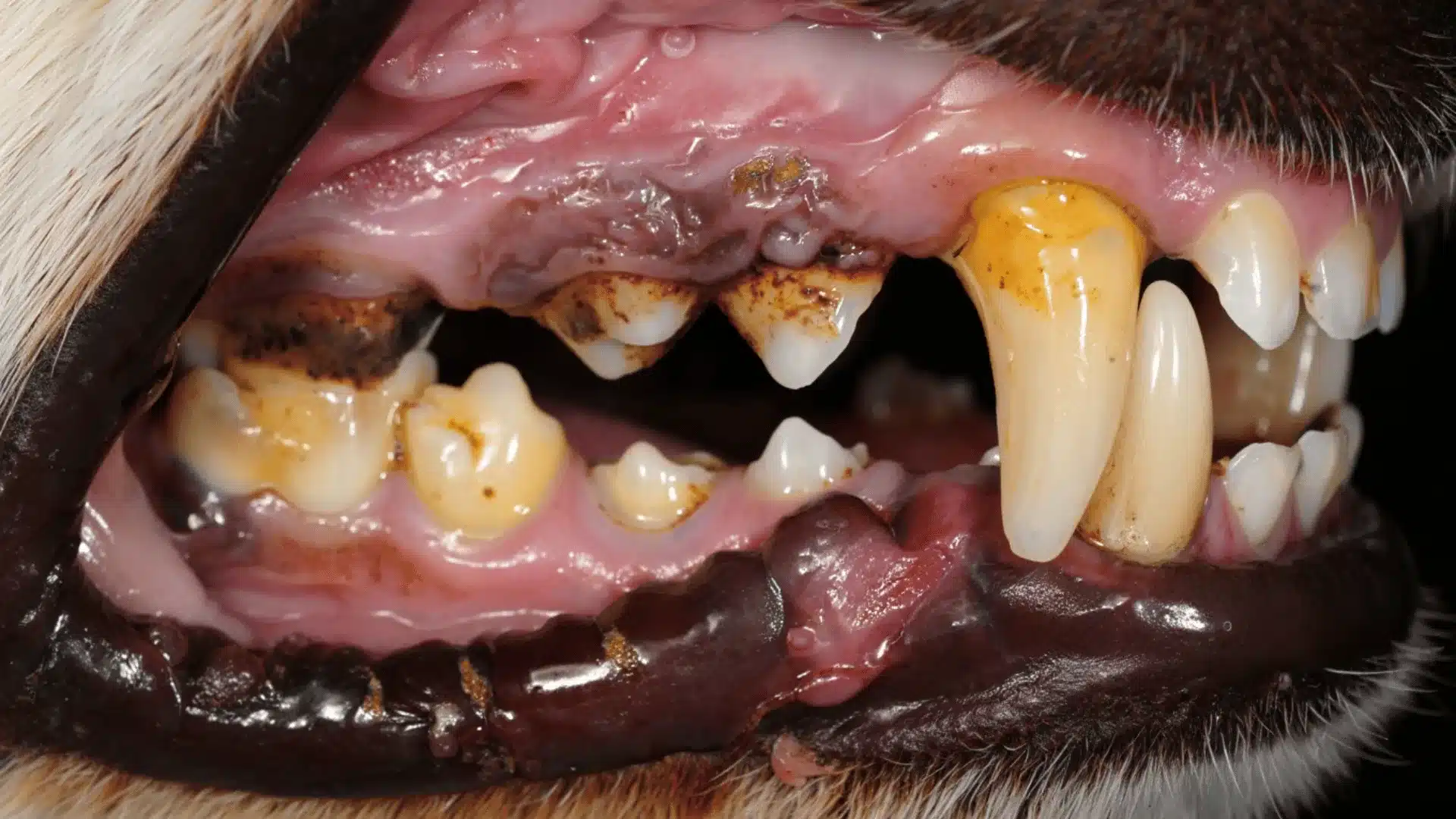
Dog tooth decay happens when harmful bacteria slowly damage a dog’s teeth over time. Many owners ask, can dogs get cavities like humans?
The answer is yes, but cavities are less common in dogs than in people. In most cases, problems begin with plaque, a soft film of bacteria that sticks to the teeth.
When plaque is not removed, it hardens into tartar. This buildup allows bacteria to break down the enamel, the outer protective layer of the tooth.
It is important to understand the difference between cavities and periodontal disease. Cavities affect the tooth itself, while periodontal disease targets the gums and supporting bone.
As dog tooth decay progresses, plaque turns into tartar, bacteria invade deeper layers, infect the pulp, and may even affect the surrounding bone.
You can visit the official website of the American Veterinary Medical Association if you’re looking for a detailed explanation of dental diseases in dogs.
What Causes Dog Tooth Decay?
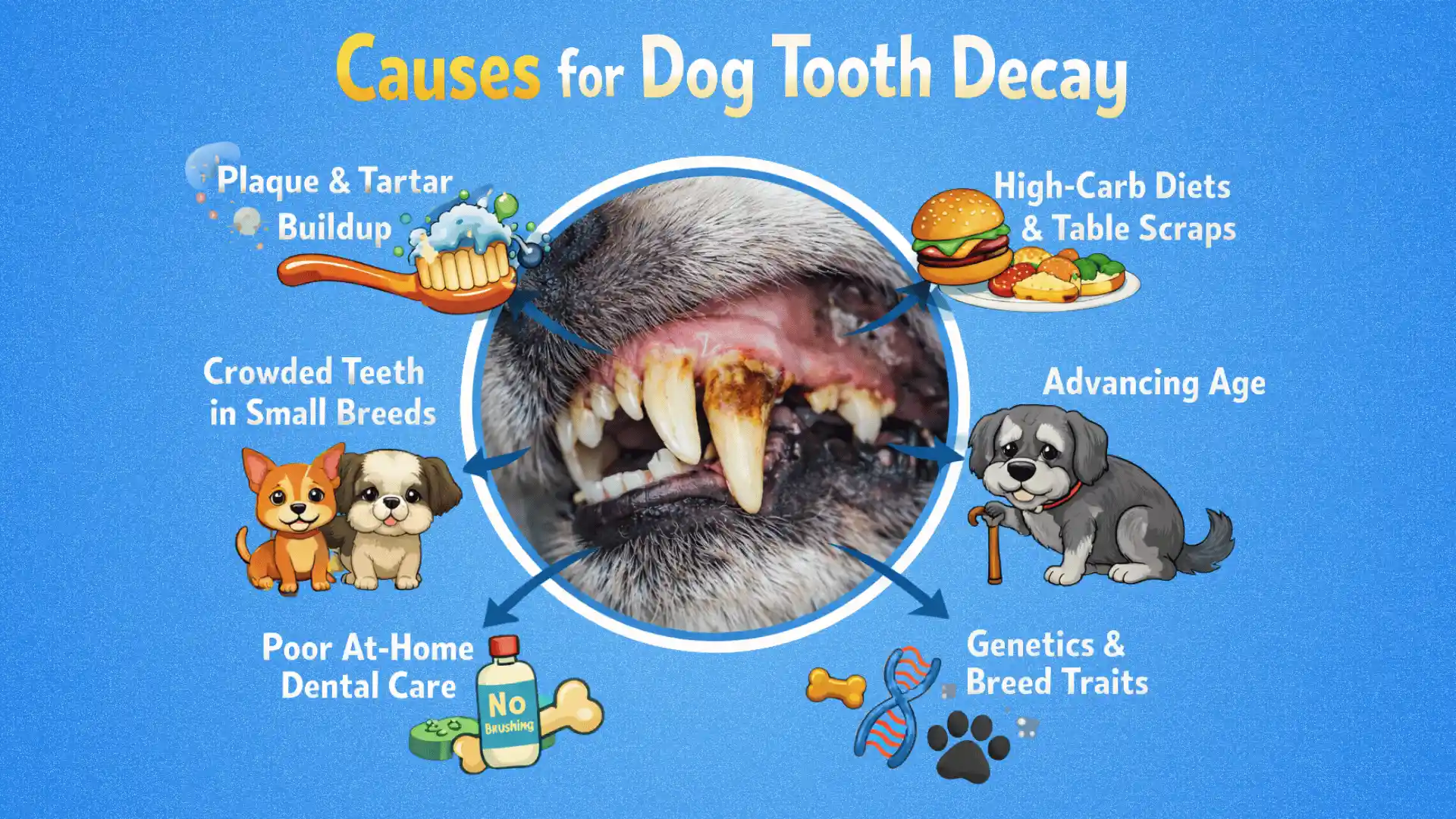
Several everyday factors combine to raise the risk of dog tooth decay, including plaque, diet, breed traits, age, and daily care habits.
1. Plaque and Tartar Buildup
Every time your dog eats, bacteria in the mouth mix with food particles to form a soft, sticky film called plaque.
Minerals in saliva quickly harden this plaque into rough tartar that sticks to the teeth and slips under the gumline. The tartar creates tiny pockets where more bacteria hide and multiply.
These bacteria release acids and toxins that irritate the gums and slowly damage the tooth roots and supporting bone.
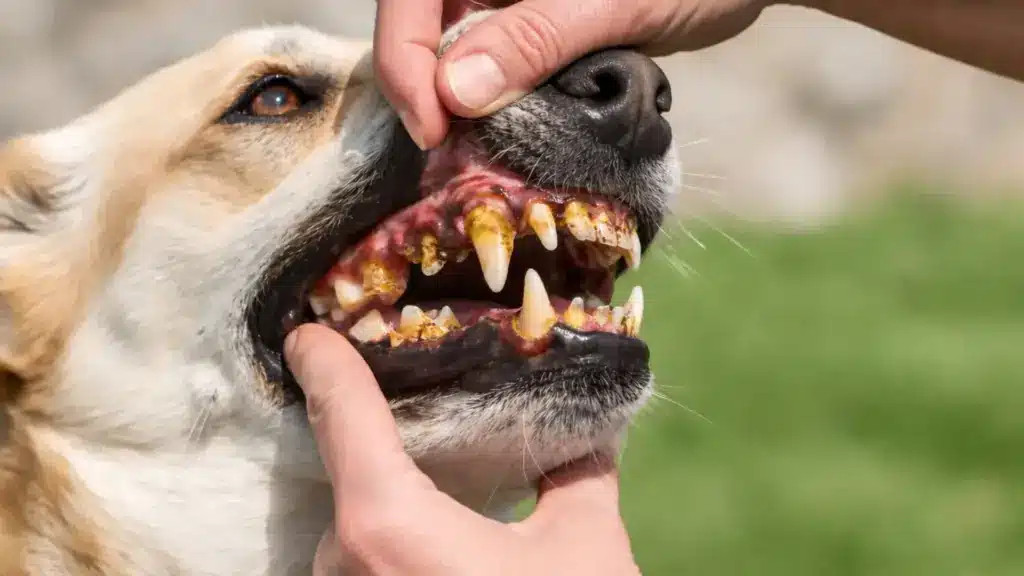
Most owners notice the yellow or brown buildup first, but the real harm happens out of sight. Without daily removal, this cycle speeds up and leads directly to dog tooth decay.
2. High-Carb Diets and Sticky Table Scraps
Sugary and starchy foods feed mouth bacteria and help plaque build up faster. Table scraps, soft canned food, and many treats leave a sticky coating on the teeth that lingers for hours.
Bacteria turn that residue into acids that weaken enamel and begin the decay process.
Dogs eating high-carbohydrate diets often develop dental problems sooner than those on crunchy dental kibble or specially designed dental diets.
Choosing lower-carb options and VOHC-approved treats can help reduce plaque and lower the risk of tooth decay in dogs.
3. Crowded Teeth in Small and Toy Breeds
Small dogs have the same number of teeth as large dogs, but those teeth are packed into much smaller jaws. This crowding leaves tight spaces where food and plaque easily get trapped.
Teeth may grow at awkward angles, making natural cleaning during chewing difficult. Breeds like Chihuahuas, Yorkshire Terriers, Pugs, and Pomeranians are especially prone to buildup.
When tartar builds up quickly in these narrow spaces, gum infections and early tooth decay become more common. Daily care is especially important for small breeds.
4. Advancing Age
As dogs age, their saliva changes, and they tend to chew less vigorously. The body’s natural defenses against bacteria also become weaker.
Most dogs begin showing signs of dental problems after age three, and the risk continues to rise with each passing year.
Years of small amounts of plaque can suddenly add up to a painful infection and tooth damage.
Older pets often hide their discomfort until the problem is advanced. That is why regular dental check-ups become even more important once your dog reaches middle age and beyond.
5. Poor At-Home Dental Care
When plaque is not removed every day, it hardens into tartar within just a few days.
Without brushing, dental chews, or water additives, bacteria remain protected and keep producing acids that attack the teeth and gums.
Many owners think an annual vet cleaning is enough or that their dog’s breath is “normal.” In truth, consistent home care is what stops most cases of dog tooth decay before they start.
Starting a simple daily routine early makes the habit easy and protects your dog’s mouth for years to come.
6. Genetics and Breed Predisposition
Some dogs are naturally more prone to dental problems because of jaw shape, tooth alignment, or saliva chemistry.
Flat-faced (brachycephalic) breeds and certain lines of small dogs often have crowded teeth and shallower roots. Genetics can also adversely affect a dog’s dental health.
While you cannot change your dog’s DNA, knowing the higher risk lets you add extra preventive steps.
Breeds such as Pugs, Bulldogs, and Greyhounds, in particular, benefit from more frequent dental care to prevent tooth decay.
Understanding Dog Tooth Decay Stages
Dog tooth decay moves through four clear stages. Early stages respond well to simple home care, while later ones usually need prompt veterinary help to stop pain and further damage.
| Stage | What Happens | Visible Signs | Symptoms | Bone Loss | Treatment |
|---|---|---|---|---|---|
| 1 | Plaque hardens into tartar | Yellow or brown buildup | Mild bad breath only | 0% | Daily brushing and yearly cleaning |
| 2 | Gums become inflamed and bleed | Red, swollen, bleeding gums | Stronger breath, light drooling | Under 25% | Professional dental cleaning |
| 3 | Infection reaches the roots and bone | Gum recession, loose teeth | Trouble eating, weight loss | 25–50% | Deep cleaning + possible extractions |
| 4 | Severe decay with major bone loss | Missing teeth, jaw swelling | Severe pain, refuses to eat | Over 50% | Multiple extractions + antibiotics |
How to Spot Dog Tooth Decay Early
Dogs are masters at hiding pain, so tooth decay can progress quietly for months. Watch closely for these eight common signs. Early detection can spare your dog a lot of discomfort.
- Persistent Bad Breath and Excessive Drooling: This often signals bacterial buildup, plaque accumulation, or early stages of dog tooth decay developing beneath the gumline.
- Tooth Discoloration: Brown, yellow, or black spots on teeth usually indicate tartar deposits, enamel damage, or developing cavities that require closer dental attention.
- Red, Swollen, or Bleeding Gums: Inflamed gums often appear when bacteria irritate gum tissue, which may lead to gum disease and worsening tooth decay if ignored.
- Difficulty Chewing: Dogs with dental discomfort may chew slowly, avoid harder foods, or drop food while eating due to pressure on painful teeth.
- Reduced Appetite: Ongoing oral pain from untreated decay can discourage eating, leading to decreased food intake and noticeable weight changes over time.
- Behavior Changes or Facial Swelling: Irritability, reduced playfulness, or swelling near the jaw may signal a tooth abscess or spreading infection.
Note: If you notice two or more of these signs, contact your veterinarian within 48 hours for a thorough dental check.
How Veterinarians Treat Dog Tooth Decay?
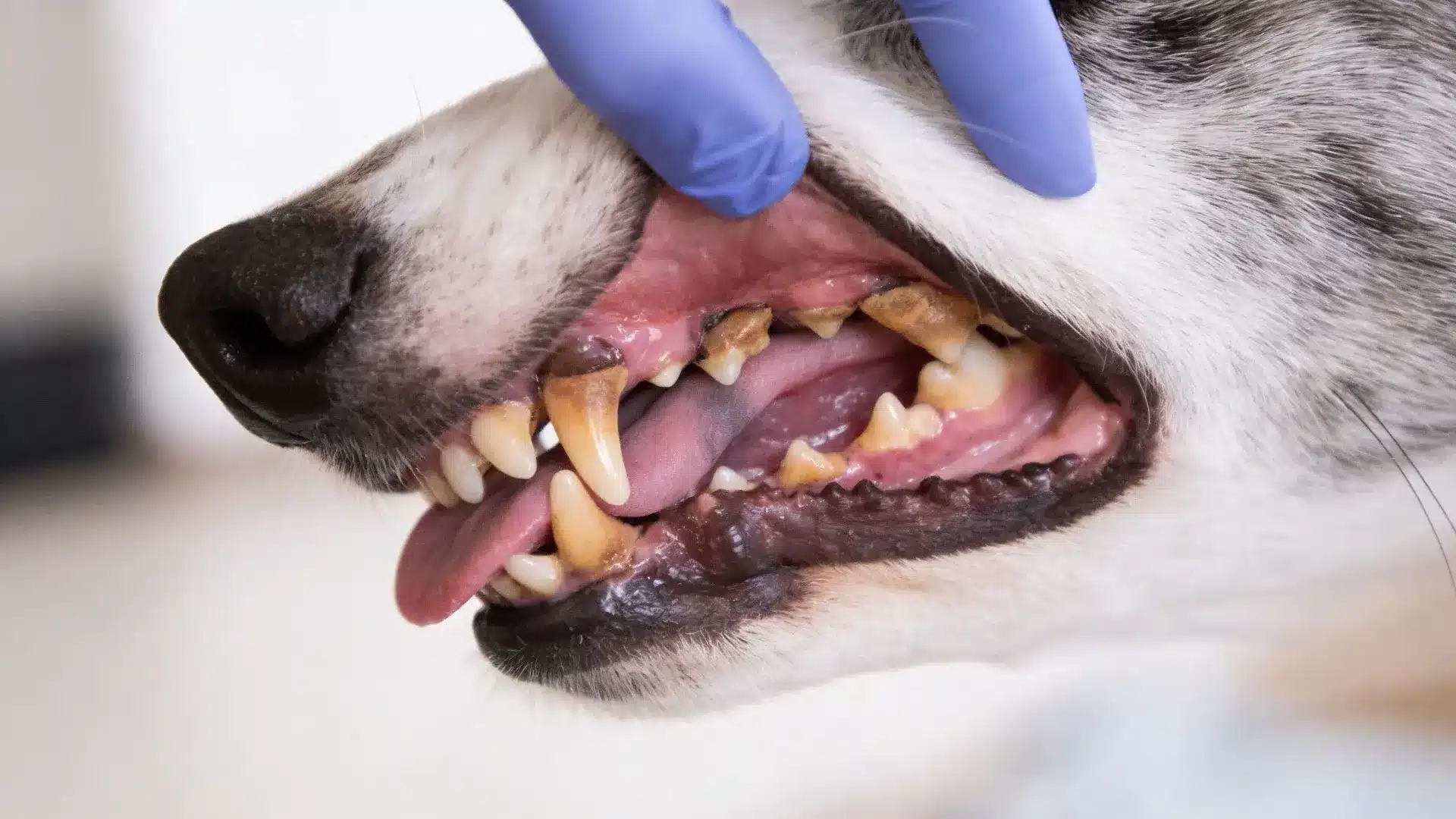
Veterinary treatment becomes necessary when dog tooth decay progresses beyond mild plaque or begins causing pain, infection, or visible damage to the tooth.
At this stage, professional dental care from a veterinarian is the safest and most reliable way to stop the decay and protect nearby gums, roots, and supporting bone.
The procedure typically begins with a thorough dental examination performed under anesthesia, allowing the veterinarian to carefully inspect each tooth and obtain dental X-rays.
Once the assessment is complete, the hardened plaque and tartar are removed through professional scaling, followed by polishing to slow future buildup.
If the tooth has suffered severe damage or infection, the veterinarian may recommend tooth extraction or other advanced procedures to prevent further complications.
The American Veterinary Medical Association states that professional dental care helps prevent the spread of infection and protects a dog’s overall health.
Caring for Your Dog at Home After Dental Treatment
Proper aftercare helps your dog recover comfortably and protects the results of professional dental treatment. Being cautious after the treatment reduces the risk of further dog tooth decay.
- Give Medications Exactly as Prescribed: Pain relief or antibiotics help control discomfort and prevent infection. Never skip doses unless advised by the vet.
- Offer Soft Food for Several Days: Moist kibble or soft meals reduce pressure on sensitive gums and recently treated teeth.
- Avoid Hard Toys and Chews Temporarily: Bones, antlers, and hard chew toys can irritate healing gums or damage treated teeth.
- Monitor Your Dog’s Behavior: Watch for excessive drooling, bleeding, swelling, or refusal to eat, and contact the vet if symptoms appear.
- Schedule the follow-up visit: A quick dental check ensures healing is progressing properly and helps maintain long-term oral health.
When Tooth Extraction Becomes Necessary?
If dog tooth decay has progressed to stages three or four, extraction is often the most compassionate choice.
Although it may sound extreme, extraction removes ongoing pain and infection that medication alone cannot fix.
Most dogs adjust quickly after the procedure and continue eating and playing normally. Many owners even notice improved energy and comfort once the painful tooth is gone.
Dogs adapt well even after multiple extractions, thanks to their strong jaws and remaining teeth.
Your vet will discuss anesthesia safety and recovery expectations to ensure you feel confident in this decision.
Tips to Prevent Dog Tooth Decay
Healthy teeth start with simple daily habits and regular vet care that keep plaque under control and protect your dog from painful decay over time.
- Brush Their Teeth Daily: Use a soft toothbrush and gentle circular motions along the gums and teeth for about two minutes.
- Choose Pet-Safe Toothpaste: Pick an enzymatic formula made for dogs that is xylitol-free.
- Offer VOHC-Approved Chews: Dental chews like Greenies and OraVet reduce plaque buildup.
- Provide Dental Toys: Rubber toys and textured chews help scrub teeth naturally during play.
- Switch to Dental Dog Food: Special kibble formulas help scrape plaque as your dog chews.
- Use Water Additives: Add enzyme solutions to your dog’s water to help control bacteria daily.
- Book Annual Cleanings: Professional veterinary cleanings remove hardened tartar and protect long-term oral health.
Conclusion
Dog tooth decay may start quietly, but its impact on your pet’s quality of life can be profound.
The difference between a dog suffering silently with dental pain and one living comfortably often comes down to the small daily choices you make.
A two-minute brushing session, choosing the right treats, or scheduling that annual cleaning you’ve been postponing.
Your dog depends on you to notice what they cannot tell you in words. If you are just starting a dental care routine or managing treatment after a diagnosis, every step you take matters.
The investment of time and attention today can prevent years of discomfort and costly interventions down the road. Your dog’s smile is worth protecting.
Have questions about your dog’s dental health?
Share your concerns in the comments below, and I’ll clarify them for you.
Frequently Asked Questions
How Much Does Professional Dental Cleaning Typically Cost?
Professional dental cleanings range from $300 to $1,500, depending on the severity of the case, any extractions needed, the type of anesthesia used, and your location.
Can I Reverse Early-Stage Dog Tooth Decay with Home Care Alone?
Yes, early-stage dog tooth decay can often be controlled with daily brushing, dental chews, and proper diet. But veterinary cleaning is needed if tartar hardens or gums become inflamed.
Is Anesthesia-Free Dental Cleaning a Safe Alternative?
No. Anesthesia-free cleanings only address surface tartar and miss critical below-gum disease, delaying proper treatment and care.