Imagine walking into the room to find your dog acting strangely, drooling nonstop, vomiting, or struggling to stand.
Panic sets in, and you instantly wonder, “Is my dog poisoned?” It’s a terrifying thought that all dog parents fear.
The feeling of helplessness is real, but it’s crucial to stay calm and act fast. Recognizing the symptoms of dog poisoning quickly can make all the difference in saving your dog’s life.
In this blog, I’ll cover the common dog poisoning symptoms, how to assess the situation, and what actions to take immediately.
Knowing when to seek professional help could be the key to a positive outcome for your furry friend. Let’s see how you can protect your dog from the dangers of poisoning.
Note: This blog helps you recognize dog poisoning symptoms and respond quickly, but it is not a replacement for veterinary care. Always consult a professional for diagnosis and treatment.
About Dog Poisoning
According to the American Kennel Club, dog poisoning can occur when dogs ingest or inhale toxic substances, and symptoms may appear rapidly depending on the type and amount of toxin involved.
These toxins can come from everyday items such as certain foods, medications, household chemicals, plants, or pest control products.
Because dogs are naturally curious and often investigate objects with their mouths, accidental exposure to toxic substances can happen easily.
The effects of poisoning vary depending on the type of toxin, the amount involved, and the dog’s size, age, and overall health.
Some toxins cause symptoms within minutes, while others may take hours to appear. In many cases, the body reacts quickly, leading to visible signs of poisoning in dogs.
Common Dog Poisoning Symptoms To Look for

Poisoning can show many different symptoms. Knowing what to look for can help you get your dog the help they need as quickly as possible.
1. Immediate/Severe Symptoms
If your dog shows signs of seizures, difficulty breathing, or loss of consciousness, these are signs of severe poisoning.
Other warning signs include extreme lethargy, where your dog can’t stand, or severe vomiting and diarrhea, especially if it’s bloody.
These symptoms are critical and need immediate vet attention. Don’t wait, and call the vet or emergency animal hospital right away to save your dog’s life.
2. Digestive Symptoms
Dog poisoning symptoms can include excessive drooling or foaming at the mouth. Vomiting and diarrhea are also common signs.
If your dog is vomiting often or refuses to eat or drink, it could be a sign of Poisoning.
You may also notice abdominal pain, which can make your dog adopt a hunched posture or cry when you touch their stomach. These digestive signs should never be ignored.
3. Neurological Symptoms
If your dog seems confused, disoriented, or has trouble recognizing you, it might be due to poisoning. Tremors (shaking), along with weakness or difficulty walking, are also warning signs.
Some dogs may seem extra tired or hyperactive, while others may press their head against the walls.
These neurological symptoms can indicate that the poison is affecting your dog’s brain and nervous system.
4. Behavioral Symptoms
Poisoning can cause sudden and unusual behavior in dogs. This may include aggression or anxiety that wasn’t there before.
Your dog may start whining, crying, or making unusual vocalizations. Restlessness and an inability to settle are other common signs.
In some cases, dogs will seek out a place to hide or isolate themselves.
If your dog is acting out of character, it’s essential to consider Poisoning as a possibility and get help quickly.
How Quickly Do Symptoms Appear After Poisoning?
Symptoms of dog poisoning can appear within minutes or may take several hours, depending on the substance involved, the amount consumed, and your dog’s size and health.
Fast-acting toxins such as chocolate, xylitol, certain medications, or household chemicals may trigger vomiting, tremors, drooling, or weakness within 30 minutes to two hours.
Other poisons, including some plants, rodenticides, and antifreeze, may take several hours for clear signs to develop.
In some cases, symptoms such as lethargy, loss of appetite, or unusual behavior may appear gradually.
Because timing varies widely, any suspected exposure should be treated as urgent. Immediate veterinary guidance is critical, even if dog poisoning symptoms seem mild at first.
Dog Poisoning Symptoms by Toxin Types
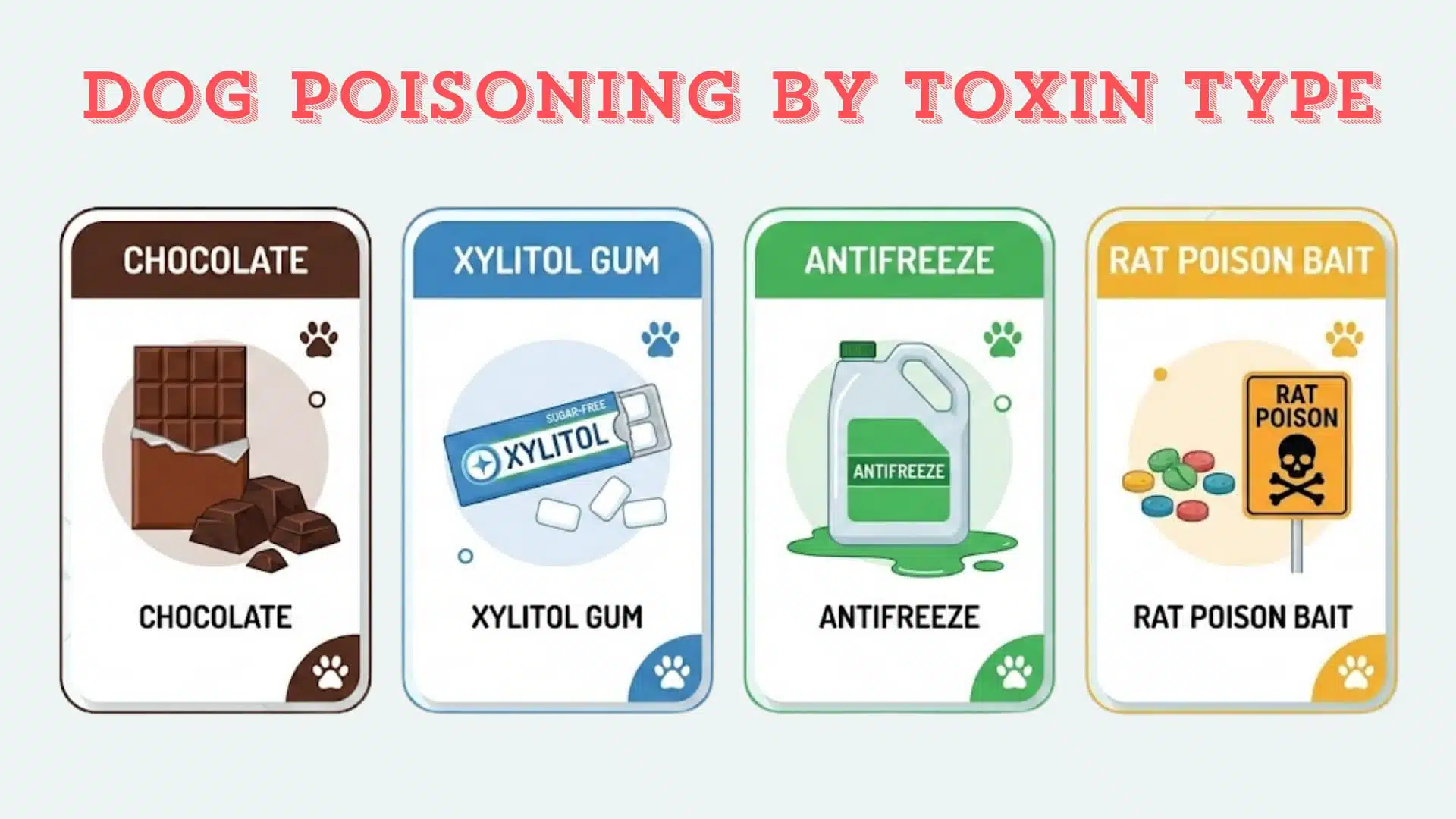
Different toxins affect a dog’s body in different ways. The type of substance swallowed often determines how quickly symptoms appear and how severe they become.
1. Chocolate Poisoning Symptoms
Chocolate contains theobromine and caffeine, which can overstimulate a dog’s nervous system and heart.
Common symptoms include vomiting, diarrhea, restlessness, rapid breathing, increased heart rate, and tremors. In more serious cases, dogs may experience muscle rigidity or collapse.
Dark chocolate and baking chocolate are especially dangerous because they contain higher concentrations of theobromine.
2. Xylitol Poisoning Symptoms
Xylitol, a sugar substitute found in gum, candy, and some peanut butter, can cause a rapid drop in blood sugar.
Symptoms may begin within 10 to 60 minutes and include vomiting, weakness, staggering, confusion, and seizures.
In severe cases, xylitol can also lead to liver failure, which may cause jaundice or bleeding problems.
3. Antifreeze Poisoning Symptoms
Antifreeze contains ethylene glycol, which is highly toxic to dogs. Early signs include vomiting, excessive thirst, increased urination, wobbling, and lethargy.
As poisoning progresses, dogs may develop rapid breathing, dehydration, and kidney failure.
Without quick treatment, antifreeze poisoning can become fatal within a short period.
4. Rat Poison Symptoms
Rat poison, also called rodenticide, can cause internal bleeding or neurological problems depending on the type.
Symptoms may include weakness, pale gums, coughing, nosebleeds, bruising, difficulty breathing, or seizures.
Signs sometimes appear several days after ingestion, making early veterinary attention critical if exposure is suspected.
How to Assess if Your Dog Has Been Poisoned?
If you suspect your dog may have eaten something toxic, quick observation and calm action can make a critical difference in preventing serious complications.
- Check for sudden symptoms: Look for vomiting, diarrhea, drooling, tremors, weakness, pale gums, difficulty breathing, confusion, or unusual behavior that appear without warning.
- Inspect Surroundings: Search for chewed medication bottles, toxic plants, spilled chemicals, chocolate wrappers, gum packs, rodent bait, or open trash within reach.
- Note timing and possible amount: Try to estimate when the exposure occurred and how much may have been consumed, as this helps guide treatment decisions.
- Call a veterinarian: Contact your vet or emergency clinic right away, describe symptoms, suspected toxin, timing, and your dog’s weight.
- Avoid home remedies: Do not induce vomiting or give food, milk, or medication unless a veterinary professional specifically instructs you to do so.
Immediate Actions If You Suspect Dog Poisoning
If you believe your dog may have been poisoned, act quickly but stay calm. Panic can delay important steps.
First, remove your dog from the source of the toxin. Take away any remaining substance and prevent further access. If possible, keep the packaging or sample of what was ingested.
Check your dog for symptoms such as vomiting, drooling, tremors, weakness, difficulty breathing, or unusual behavior. Note when the exposure may have happened and estimate how much was consumed.
Call your veterinarian, an emergency animal clinic, or the ASPCA Poison Control (888-426-4435) or Pet Poison Helpline (855-764-7661) immediately.
Provide details about the substance, timing, your dog’s weight, and any symptoms observed.
Do not induce vomiting or give home remedies unless a veterinary professional specifically instructs you to do so.
Common Household Toxins to Consider
Many everyday household items can pose serious dangers to your dog if ingested or inhaled. let’s have a look:
- Foods: Chocolate, especially dark chocolate, contains theobromine, which can cause seizures and heart issues. Onions and garlic can damage red blood cells and cause anemia.
- Medications: Both human and pet medications, such as painkillers like ibuprofen, can cause stomach ulcers, liver damage, and kidney failure.
- Rodent Poison: Rodenticide or pest control products can cause internal bleeding, seizures, or organ failure in dogs.
- Antifreeze: Contains ethylene glycol, which has a sweet taste that attracts dogs but can cause kidney failure, seizures, and death even in small amounts.
- Essential Oils: Oils such as tea tree, peppermint, and eucalyptus are toxic to dogs and can cause drooling, vomiting, and even liver damage.
Tips to Protect Your Dog from Poisoning
Preventing poisoning starts with awareness, consistent supervision, and simple safety habits that reduce your dog’s exposure to common household and outdoor toxins.
- Store medications securely: Keep all prescription drugs, cleaning supplies, antifreeze, and pesticides locked inside cabinets or placed on high shelves beyond your dog’s reach.
- Be cautious with human foods: Never leave chocolate, xylitol gum, grapes, onions, alcohol, or other toxic foods unattended on counters, tables, or accessible trash bins.
- Secure outdoor spaces: Use dog-proof trash cans and routinely inspect your yard for toxic plants, spilled chemicals, compost, or rodent bait.
- Read product labels carefully: Always check ingredient lists on peanut butter, dental chews, and treats to avoid hidden toxins like xylitol.
- Supervise and reinforce training: Teach commands such as “leave it” and closely monitor walks to prevent scavenging for potentially dangerous substances.
Conclusion
Recognizing dog poisoning symptoms early can make all the difference in saving your dog’s life. No matter if it’s from food, chemicals, or other household toxins, quick action is crucial.
By being aware of common poisons and knowing the proper steps to take, you can help protect your dog from harm.
Always keep harmful substances out of reach, and don’t hesitate to contact your vet if you suspect Your Pet Is Poisoned.
Whenever you notice any unusual signs or feel your dog is not well, an immediate visit to the veterinarian is essential.
Prevention is key, so take the time to safeguard your home and stay alert to unusual behavior changes.
Have you had a close call with dog poisoning? Drop your comments below and share your experience, or ask any questions you may have.