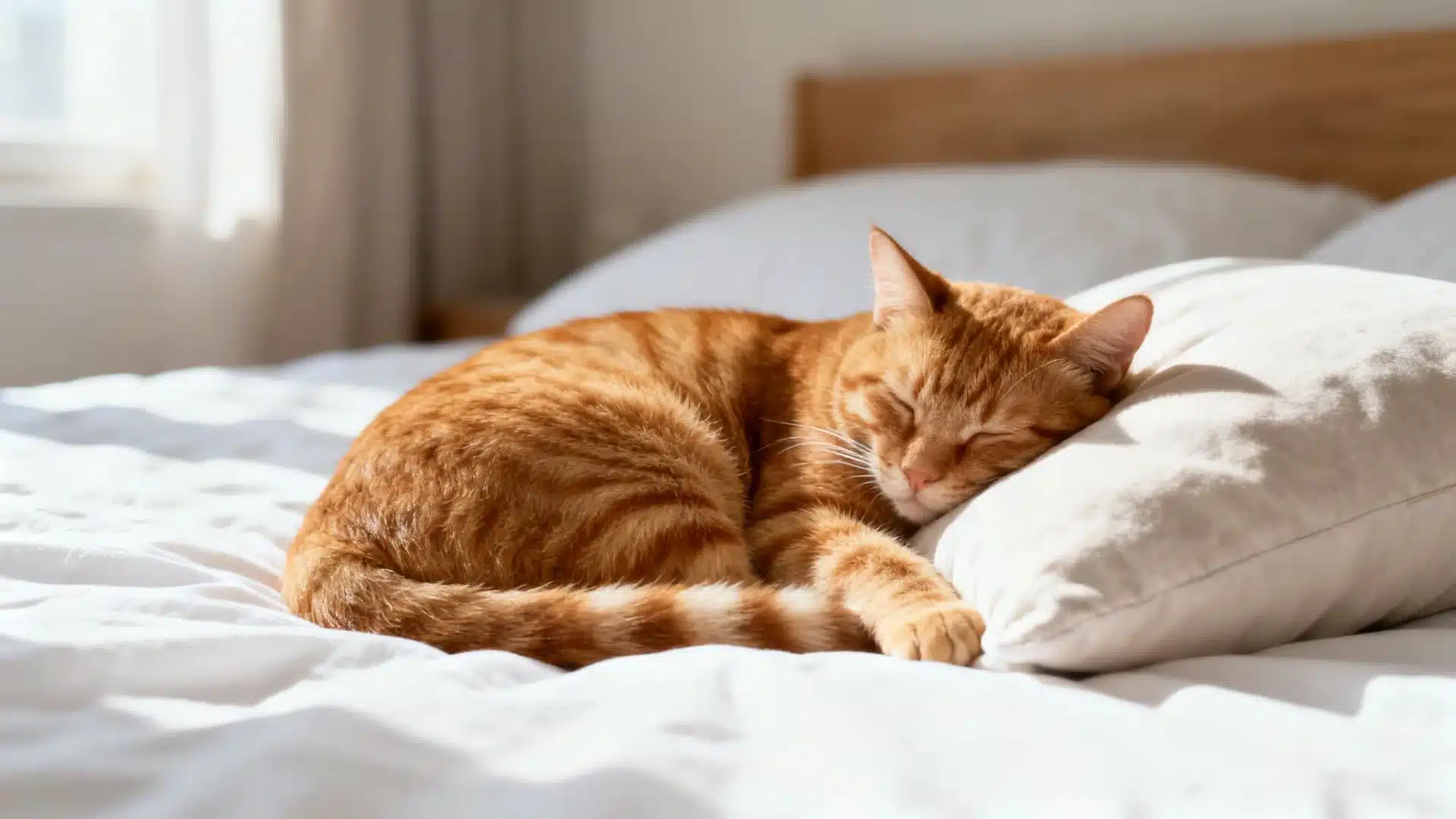
Your cat is curled up on the couch, breathing slowly, tail wrapped around its body. Everything looks peaceful. Then suddenly, a paw twitches. The whiskers move.
Maybe there is a tiny sound, almost like a quiet whimper. A second later, your cat jolts awake and looks around like something just happened.
If you have ever watched this, you probably paused and thought the same thing many cat owners do: can cats have nightmares?
That small moment sparks a lot of curiosity. Are they dreaming about chasing toys or hunting birds? Or could something scary be playing out in their mind?
We have all seen these strange sleep movements, which raise two big questions. Do cats actually dream, and if they do, can those dreams turn into nightmares?
Understanding cat sleep can help you know what is normal and when something might be wrong.
How Cats Actually Sleep?
Cats sleep anywhere between 12 to 20 hours a day, but that sleep is not one long, steady stretch. It moves through different stages that affect how deeply they rest.
The first stage is light sleep. In this phase, a cat can wake up quickly because the brain is still somewhat alert to sounds and movement around them.
The second stage is deep sleep, also known as REM (Rapid Eye Movement) sleep. During this stage, brain activity becomes very similar to when the cat is awake.
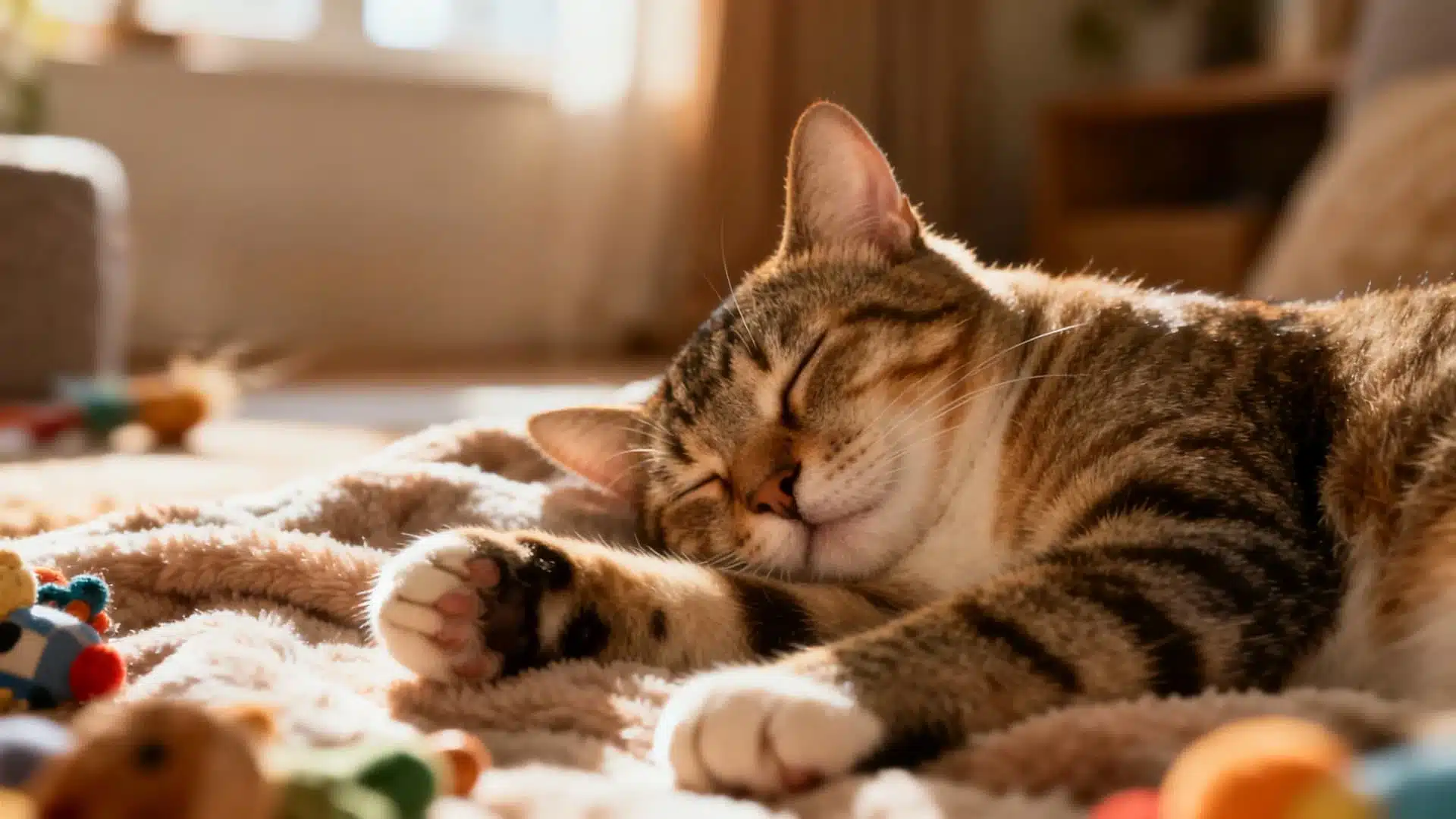
Their eyes may move under the eyelids, muscles relax, and small body movements appear. This is when you might notice twitching paws, whisker movements, or soft noises.
Kittens experience even more REM sleep because their brains are processing large amounts of new information as they grow.
Do Cats Actually Dream? What the Science Says!
Almost certainly, yes. Research over the decades strongly suggests that cats experience dreams during sleep.
In the 1960s, neuroscientist Michel Jouvet studied the pons, a region of the brainstem that normally prevents the body from acting out dreams.
When this area was altered in cats, the animals began performing actions such as stalking or pouncing while still asleep. This indicated that active dream processes were happening.
Later research in 1979 confirmed that cats enter dream states similar to humans during REM sleep.
A 2001 MIT rat study also showed that brain activity during REM sleep closely matched activity during real experiences. This suggests cats are mentally replaying experiences.
Their dreams may even rely heavily on smell, an essential sense in their daily life. Scientists cannot confirm dream content, but the evidence strongly supports that dreaming occurs.
What Do Cats Dream About?
Scientists cannot see inside a cat’s dreams, but behavior, sleep studies, and brain activity give strong clues about what might be playing out.
- Hunting instincts: Paw twitching, whisker movements, and jaw chatter suggest cats may dream about stalking or chasing prey, reflecting their natural hunting behavior.
- Daily experiences: Cats likely replay moments from their day, including interactions with people, other pets, or new sights and sounds around the home.
- Favorite humans: Strong bonds mean familiar people may appear in dreams, especially if the cat spent time playing, cuddling, or seeking attention earlier.
- Food and play: Activities tied to reward and excitement, like eating, playing with toys, or exploring spaces, are likely common dream themes.
- Recent memories: Dreams often relate to recent experiences, so an active, stimulating day may lead to more vivid dreams.
Can Cats Have Nightmares?
Scientists believe it is possible, but absolute proof is difficult to obtain. Cats share the same REM sleep structure that produces dreams and nightmares in humans, which makes the idea very likely.
Researchers and veterinarians have observed cats suddenly waking from sleep with wide eyes, a tense posture, or distressed sounds.
In some cases, cats with a history of trauma show stress vocalizations during sleep and wake up appearing frightened.
Possible nightmare triggers include fights with other animals, loud noises, vet visits, or past traumatic events.
Rescue cats may be more prone to this if they experienced hardship before adoption. Still, not every sudden wake-up means a nightmare. Sometimes cats simply wake confused after deep REM sleep.
Signs Your Cat Might Be Having a Nightmare
Sometimes, sleep movements are harmless dreaming, but certain behaviors can lead owners to think something is happening during their cat’s sleep cycle.
- Intense twitching: Strong, repeated body jerks or rapid paw movements may suggest a distressed dream rather than the gentle twitches common in normal REM sleep.
- Distressed vocal sounds: Whimpering, growling, or sudden crying noises during sleep can indicate the cat is reacting to something unsettling in a dream.
- Startled wake up: Cats may suddenly wake with wide eyes, flattened ears, or a puffed tail, showing signs of fear or confusion.
- Post-sleep disorientation: After waking, the cat may seem confused or tense, or take longer than usual to return to normal behavior.
- Seeking comfort or hiding: Some cats immediately approach their owner for reassurance, while others may retreat and hide after waking abruptly.
Should You Wake a Cat Having a Nightmare?
In most cases, it is best to leave your cat alone if they seem to be having a bad dream. During REM sleep, their brain is active, and waking them suddenly can cause confusion.
A startled cat may react defensively, scratching or biting without realizing what is happening.
However, there are situations where gentle intervention may help. If the movements become very intense or if your cat appears distressed for a long time, you can try to wake them calmly.
Do not touch them immediately. Instead, softly say their name or make a quiet sound to wake them naturally.
Once they are awake, keep the environment calm and allow them to approach you if they want comfort.
When Sleep Behavior Might Signal a Health Issue?
Most sleep movements in cats are harmless, but certain unusual patterns can sometimes signal a health problem.
Normal dreaming movements during REM sleep are usually brief and gentle, while seizures often involve stiff limbs, strong shaking, drooling, or loss of body control.
Repeated intense body movements or visible distress during sleep may indicate a neurological or medical concern, especially if these episodes happen frequently.
Changes in breathing during sleep can also be a warning sign, as rapid breathing, gasping, or irregular breathing may point to an underlying health issue.
Behavior after waking can offer important clues, and cats that remain confused, weak, or unable to stand normally may require medical attention.
Tips to Help Your Cat Sleep Better
Small changes in routine and environment can help cats sleep more calmly at night. The following tips focus on comfort, routine, and daily activity.
- Create a quiet sleeping spot: Choose a warm and soft place away from loud noises and busy areas of the home.
- Keep a consistent routine: Feed, play, and settle your cat for sleep at the same time each day to reduce stress.
- Encourage daily play: Use interactive toys, climbing spaces, or short play sessions to help release extra energy.
- Support natural instincts: Activities like chasing toys or exploring help keep the mind active and prevent boredom.
- Allow time to relax: Calm moments after play and feeding help cats settle and rest more comfortably.
Conclusion
Watching your cat sleep can be peaceful, but those sudden twitches or startled wake-ups can make any owner think: can cats have nightmares?
While science cannot confirm every detail of what happens in a cat’s mind, research strongly suggests that cats do dream during REM sleep.
Because of that, it is possible that cats sometimes experience bad dreams too. Most of the time, sleep movements are completely normal and simply part of dreaming.
Still, understanding sleep behavior helps you recognize when something may need attention.
So the next time you see those tiny paw movements, you might again ask yourself: can cats have nightmares, or are they just dreaming?
Have you ever seen signs that made you wonder, can cats have nightmares? Drop your comments and share your experience.