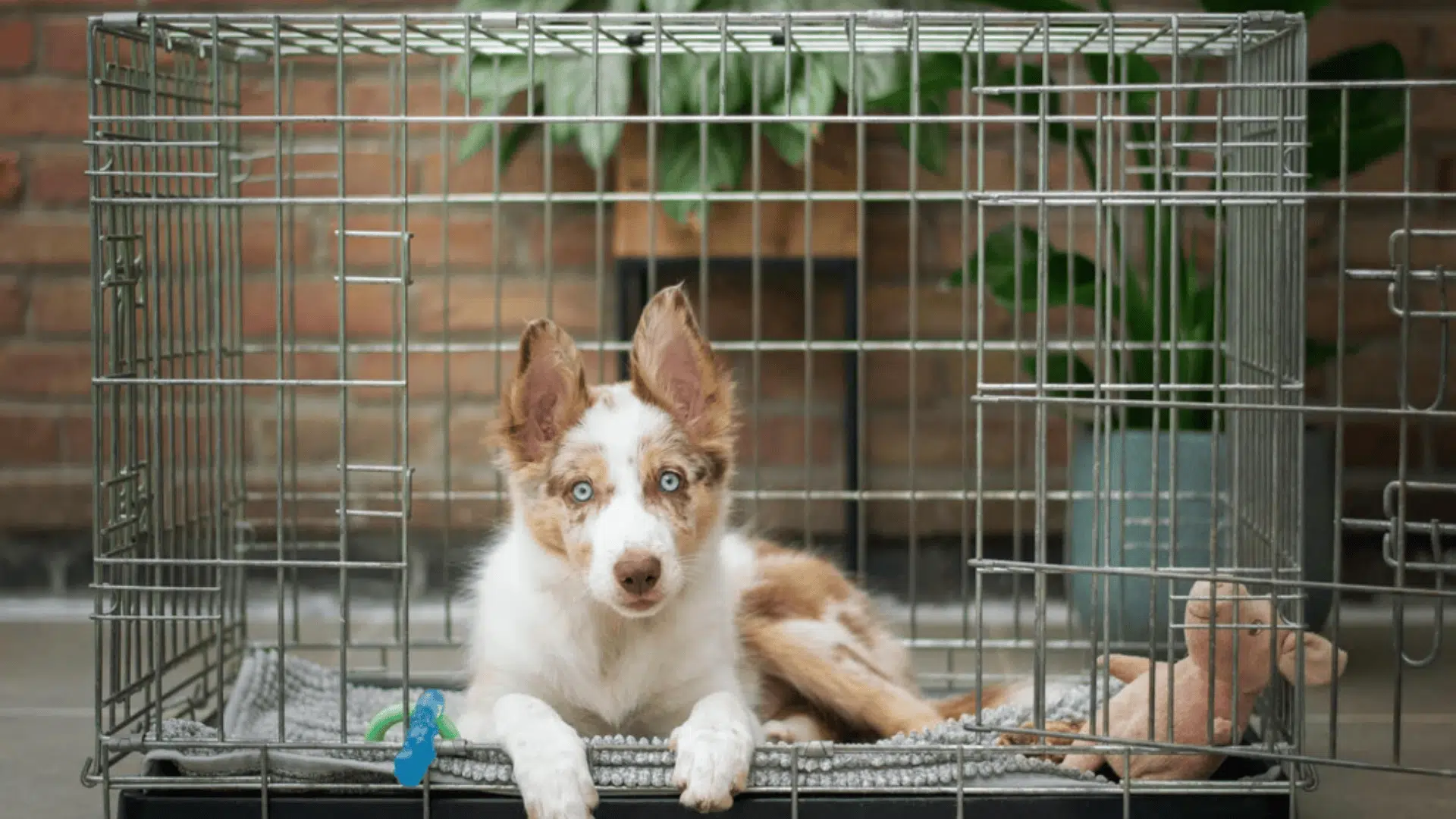
Crate training at night can be one of the most challenging parts of raising a puppy. It’s tough to see your little one whimpering or feeling uncomfortable in a crate, but it’s a necessary step for both of you.
I’ve been there, and I know the struggle, the sleepless nights, the constant worry if they’re okay, and the occasional mess to clean up. But trust me, it gets easier.
In this blog, I’ll share personal stories from other dog owners who’ve gone through the same, along with advice and tips that actually worked.
You’ll find out why your puppy might be struggling, how to make the process smoother, and what real experiences say about crate training.
If you’re just starting or feeling stuck at a frustrating point, keep reading to get the support and insights you need.
Why Crate Training at Night is Challenging for Puppies
Crate training at night can be tough for both you and your puppy. During the day, there’s more activity, so your dog might be distracted or tired enough to settle in their crate without much fuss.
But at night, everything slows down, and that’s when the real struggle begins. Puppies are naturally more anxious when they’re left alone in a quiet, dark room.
They might whine, bark, or try to escape the crate, especially in the first few nights. This can be stressful for new pet owners, as it feels like progress isn’t happening.
The initial adjustment period is crucial, as your puppy is learning how to be alone and trust the crate as a safe space.
It’s a tough phase, but with patience and consistency, they’ll eventually adapt to the nighttime routine.
Crate Training at Night: Real Experiences from Dog Owners

Starting crate training at night right from the first day is crucial for your puppy’s success. Many dog owners swear by putting their puppies in the crate immediately.
One owner shares how their pup quickly adapted to a crate setup in their room, with a blanket-covered crate for comfort.
They even switched from a bed to a towel and blanket that smelled like her mom, which worked just as well.
Another owner emphasizes that consistency is key, crating from the first night avoids confusion for the puppy.
One tip is to sleep near the crate for the first few nights to comfort the pup as they get used to the new environment.
Don’t feel the need to change your life, watch shows, or relax as you normally would.
Practical Tips to Make Night Crate Training Easier
Nighttime crate training becomes smoother when the environment and routine support calm behavior. Small adjustments can help puppies relax and sleep better.
1. Create a Comfy Environment
A puppy settles faster when the crate feels safe and inviting. The space should feel like a quiet den rather than a place of isolation.
Place the crate in a calm area where the puppy can still sense people nearby. This helps reduce stress during the first few nights.
A consistent location also helps the puppy understand where sleep happens every night. Avoid bright lights and loud sounds around the crate.
2. Use Soft Bedding
Comfort inside the crate plays a big role in helping a puppy sleep well at night. A soft blanket, towel, or simple crate mat can make the space feel warm and safe.
Puppies often relax faster when the crate feels similar to a sleeping spot they are used to. Some owners even place a blanket that carries a familiar scent.
This can help reduce stress during the early nights of crate training. If a puppy tends to chew bedding, switching to a durable towel or simple mat can still provide comfort while preventing damage.
3. Stick to a Bedtime Routine
A clear bedtime routine helps puppies understand that sleep time is approaching. Consistency is what makes this routine effective.
Take the puppy out for a potty break before bedtime, then guide them calmly into the crate. Avoid high-energy play right before crate time because it can make settling harder.
Repeating the same steps every night builds a predictable pattern. Puppies learn quickly when the same actions happen before sleep.
4. Limit Water Before Bed
Managing water intake before bedtime can reduce nighttime accidents in the crate. Puppies often have small bladders, so too much water close to bedtime can lead to discomfort or bathroom accidents.
This does not mean removing water entirely, but simply avoiding large amounts shortly before sleep. A final potty break before crate time is also helpful.
Over time, this simple adjustment supports successful crate training because the puppy learns to rest through the night without needing frequent bathroom trips.
How Long Does it Take to Get Your Dog Used to the Crate at Night?
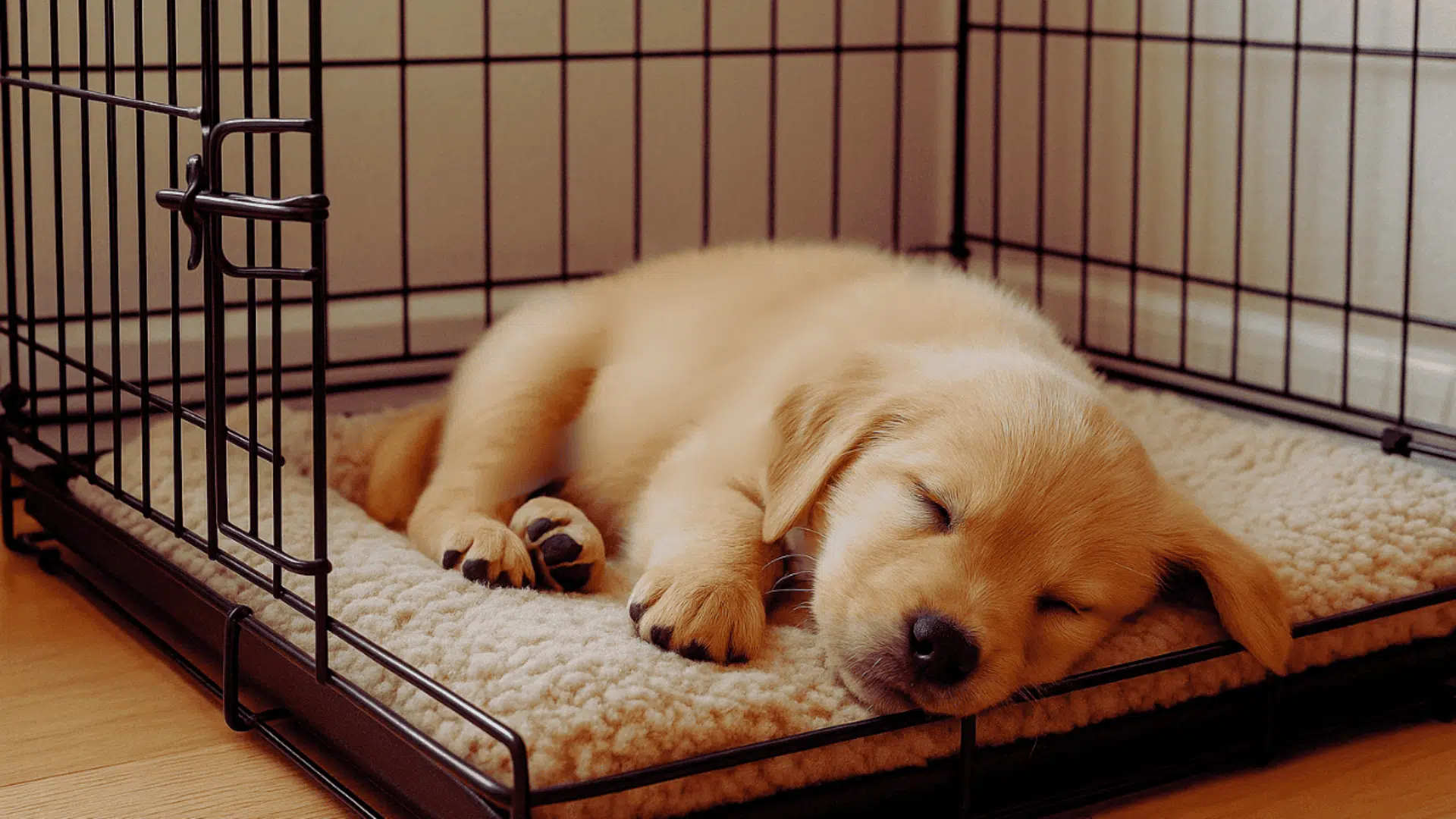
The time it takes for a puppy to adjust to the crate at night can vary, but most puppies take around 1-2 weeks to start settling in.
During the first few nights, you’ll likely face some frustration as your puppy may whine, cry, or seem restless. This is completely normal.
Puppies are adjusting to a new routine, and it can be overwhelming for them at first. While some pups get used to their crate quickly, others might take longer, especially if they’re particularly anxious.
It’s important to stay patient and avoid giving in to their cries, as this can reinforce unwanted behavior. If you’re struggling after a few weeks, it might be a sign to adjust your training approach.
Every puppy is different, but with consistency and encouragement, most will eventually adapt to sleeping in their crate at night.
Why Crate Training Is Helpful for Long-Term Flexibility
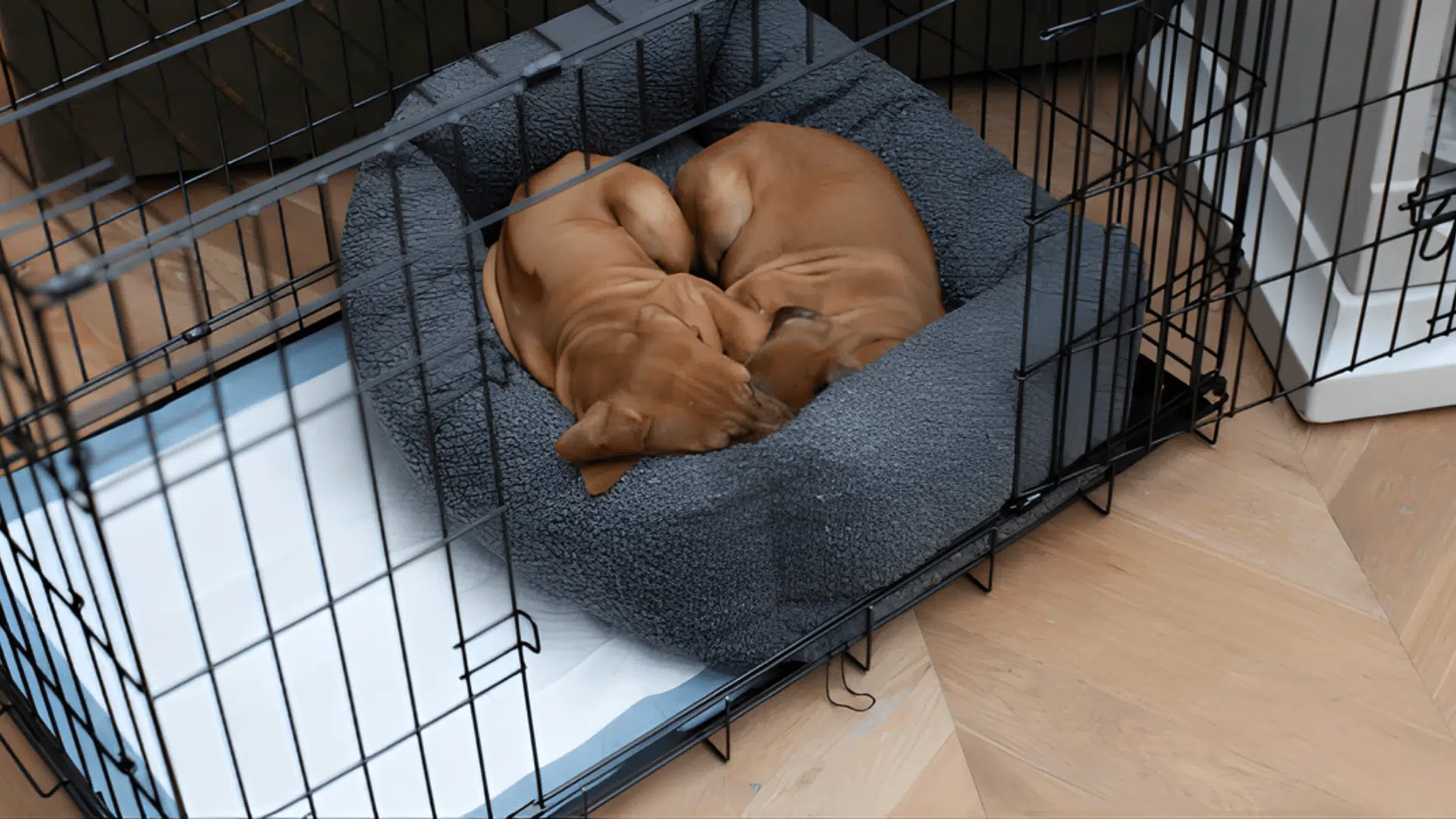
Crate training supports long-term flexibility for both the dog and the owner. When a puppy learns to rest calmly in a crate, it becomes easier to manage different situations later in life.
Travel becomes simpler because the dog is already comfortable staying in a confined space. It also helps during vet visits, grooming appointments, or temporary boarding.
A dog that understands crate time is less likely to panic in unfamiliar environments. Crates also provide a safe space at home when supervision is not possible.
Puppies that grow up with this routine often learn to relax independently. Over time, the crate becomes a familiar resting place rather than a restriction.
This early training helps build good habits that make daily life easier and more flexible as the dog grows older.
When to Seek Help or Adjust Your Approach
Crate training can take time, but there are signs that it’s not working.
If your puppy continues to show extreme anxiety, such as excessive barking, drooling, or trying to escape the crate, it might be a sign that they’re not adjusting well.
If accidents in the crate persist, even after proper potty breaks, it could indicate that the routine or environment needs to be tweaked.
Another red flag is if your puppy is consistently not sleeping or settling in the crate after a few weeks of consistent training.
If you notice any of these issues, it’s a good idea to reassess your approach. You might need to adjust crate placement, try shorter crate sessions, or introduce calming aids.
If problems continue, seeking advice from a professional trainer or vet can help you find the right solution for your puppy.
Conclusion
Crate training at night is a journey that takes time and patience, but with the right approach, your puppy will eventually adapt.
Remember, every dog is different, and what works for one may not work for another.
Whether it’s adjusting the crate setup, sticking to a consistent routine, or using calming aids, there are many ways to make the process smoother.
If you’re facing challenges, don’t get discouraged; try adjusting your approach and being patient. Puppies need time to settle into their new routine, and some may need a little extra help.
The key is consistency and understanding that things will get better. What has your crate training experience been like so far?
Share your thoughts or questions in the comments below. We’d love to hear how you’re managing your puppy’s crate training!