
Late at night, when the house goes quiet and the lights go off, many rabbit owners sense those soft movements, the gentle rustle of hay, the quiet hops in the dark of the rabbits.
Can rabbits see in the dark, or are they moving around, unsure and uneasy?
It is a common concern, especially for anyone who wants their rabbit to feel safe, calm, and comfortable after sunset.
Darkness can feel unsettling to people, so it is natural to project that feeling onto a small, sensitive animal. Yet rabbits have their own way of understanding the world, shaped by instincts.
This blog helps you understand if rabbits can see in the dark or if darkness is beneficial for rabbits’ health, and if a night light should be used.
Are Rabbits Nocturnal or Active at Night?
Rabbits are not nocturnal, but they are most active during low-light hours. This pattern is known as crepuscular behavior, meaning activity increases around early morning and evening.
During these times, rabbits eat, move, and interact more. Daytime is usually spent resting, while late-night hours involve lighter movement rather than full activity.
This routine comes from natural survival habits, where low light reduces the risk of predators.
Indoor rabbits often follow a similar schedule, becoming lively when the house is quiet. Seeing a rabbit active at night is normal and does not mean discomfort or sleep issues.
This natural rhythm helps support digestion, alertness, and overall well-being when lighting remains balanced and predictable.
Can Rabbits See in The Dark?
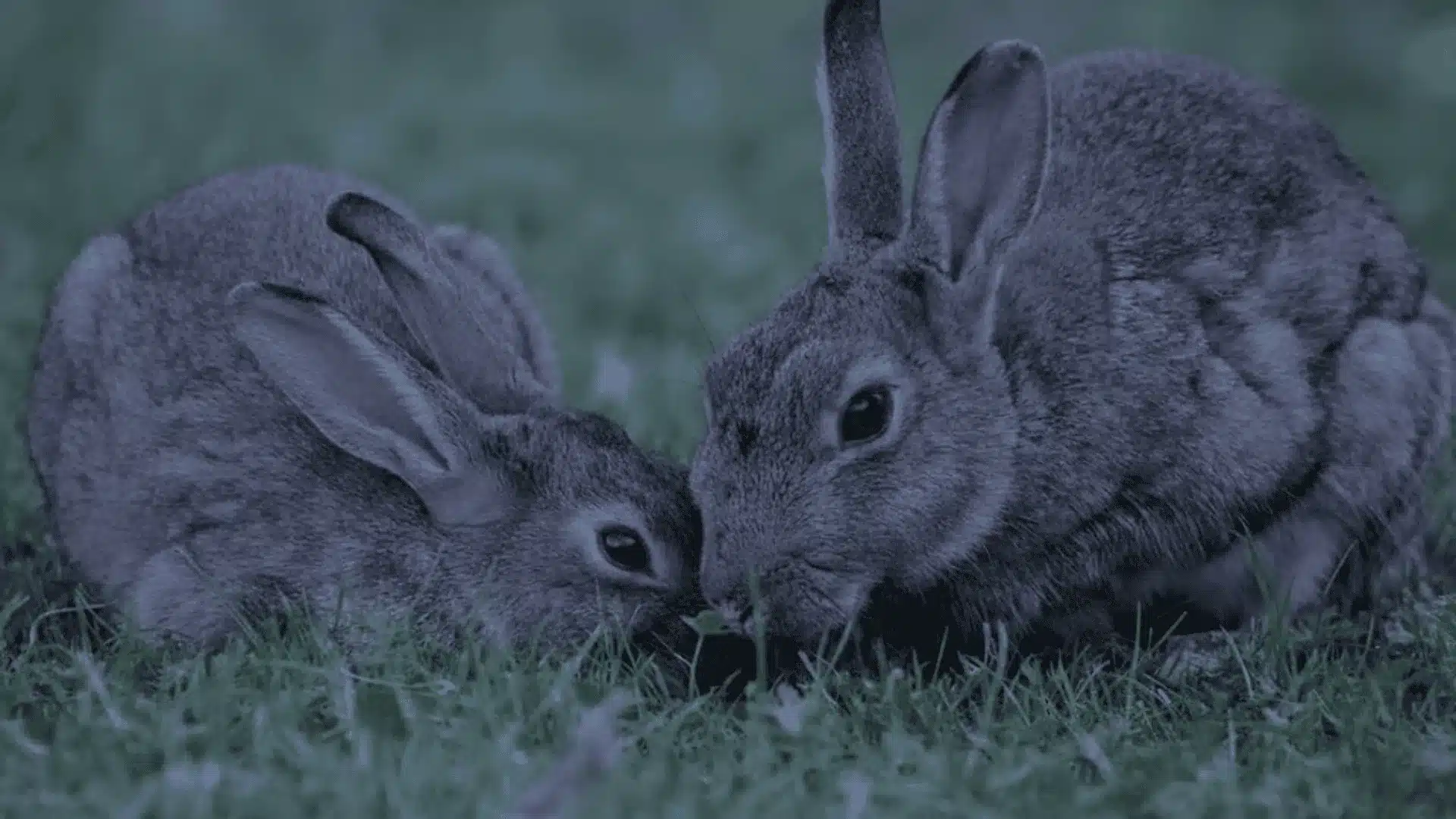
Rabbits have strong night vision capabilities, but it is important to understand their limits. They cannot see in complete darkness, yet their eyes are highly sensitive to low light.
Their eyes are large and placed on the sides of the head, which allows a wide field of view and helps notice movement quickly.
Rabbit eyes are highly sensitive to low levels of light, making dusk, dawn, and moonlit nights comfortable for moving around safely and confidently.
They mainly see shades of blue and green, while reds and pinks appear muted or gray. As light fades, their ability to see color drops significantly, and vision shifts toward light sensitivity instead.
This design helps rabbits stay alert to predators and obstacles without needing bright light.
However, a small blind spot exists directly in front of the nose and another just behind the head. Objects placed very close to the face may not be seen clearly, especially in low light.
How Light Affects Rabbit Behavior?
Light plays an important role in rabbit behavior and daily activity patterns. Bright light often signals rest time, while low light encourages movement, feeding, and exploration.
Rabbits feel most comfortable during dim periods, such as early morning, evening, or softly lit rooms at home.
Excessive brightness can lead to restlessness, hiding, or reduced activity because strong light feels unnatural and unsafe for rabbits.
On the other hand, complete darkness does not cause harm but shifts reliance toward sound, scent, and memory.
A balanced light environment supports calm behavior and steady eating habits. Consistent lighting also helps maintain a healthy body clock, which affects digestion and energy levels.
Gentle transitions between light and dark are ideal, allowing natural routines without stress or sudden behavioral changes.
Is Darkness Good or Bad for a Rabbit’s Health?
Darkness is not harmful to rabbits and actually supports natural habits and daily comfort. Rabbits cannot see in total darkness, but darkness itself does not negatively affect health.
A clear day and night cycle helps maintain proper rest, digestion, and steady energy levels throughout the day.
Constant light can interrupt sleep patterns and may lead to stress or discomfort over time. Darkness signals rest periods, allowing the body and mind to slow down and reset naturally.
Rabbits feel safest in calm, dim environments rather than brightly lit spaces kept the same at all hours.
While complete darkness shifts reliance toward hearing, scent, and memory, it does not cause anxiety when the surroundings are familiar and predictable.
Balanced lighting supports steady behavior, healthy appetite, smoother movement, and long-term comfort for both indoor and outdoor rabbits in different living setups.
Rabbit Vision vs Human Vision at Night
While humans struggle to see clearly in dim light, rabbits are built to function during low-light hours. Their eyes gather more available light and focus on detecting movement rather than detail.
| Aspect | Rabbit Vision at Night | Human Vision at Night |
|---|---|---|
| Ability in low light | Strong vision in dim conditions | Limited vision in low light |
| Vision in total darkness | Cannot see, relies on other senses | Cannot see, relies on memory and touch |
| Eye design | Large eyes gather more available light | Smaller eyes take in less light |
| Field of view | Wide view helps detect movement | Narrower forward-focused view |
| Sensitivity to movement | Quickly notices motion in low light | Slower to detect movement |
How Rabbit Eyesight Compares to Other Pets?
Rabbits see the world differently from many common household pets, especially in low-light conditions. Each animal’s eyesight is shaped by natural habits and activity patterns.
- Dogs: Dogs see well in low light but rely more on smell than vision, while rabbits depend heavily on motion detection and peripheral awareness.
- Cats: Cats have stronger night vision and can see in darker conditions than rabbits, allowing smoother movement in very low lighting.
- Hamsters: Hamsters have weaker eyesight overall and rely more on scent and touch than rabbits, especially during nighttime movement and exploration.
- Guinea Pigs: Guinea pigs have limited low-light vision and are less confident moving in dim spaces without familiar surroundings.
- Ferrets: Ferrets see moderately well in low light but do not match a rabbit’s wide field of view or motion sensitivity.
Do Rabbits Need a Night Light?

Rabbits do not need a night light in most situations. Low light or natural darkness feels normal and safe for healthy rabbits, especially in familiar spaces.
A night light is often added for the owner’s comfort rather than the rabbit’s needs. Bright or constant light can interrupt rest and affect natural routines.
Rabbits move confidently in dim conditions by using memory, hearing, and whiskers.
In some cases, a soft night light may help, such as during recovery from illness, vision decline with age, or adjustment to a new environment.
Even then, lighting should stay gentle and indirect, and for daily care, maintaining a natural light cycle works best.
Darkness supports calm behavior, steady eating, and proper rest without causing fear or confusion at night for most rabbits.
Can Rabbits Navigate at Night without Light?
Rabbits move confidently at night, even without light, by using senses other than vision. Whiskers help detect nearby objects, walls, and narrow spaces, preventing collisions in the dark.
A strong memory of surroundings allows rabbits to remember cage layout, food placement, and pathways once familiar.
Scent plays a key role in locating bedding, litter areas, and feeding spots. Sound also guides movement, alerting rabbits to changes or unfamiliar noises.
Sudden changes in cage layout can cause confusion because rabbits memorize their space carefully. Moving items increases the risk of bumping into objects, creating stress or hesitation.
Keeping the layout consistent supports safe nighttime movement, builds confidence, and allows rabbits to rest and explore without discomfort or fear.
Signs a Rabbit is Uncomfortable in the Dark
Some rabbits adjust to darkness easily, while others may show signs of discomfort. Recognizing these signs early helps maintain comfort and prevent anxiety during nighttime hours.
- Excessive Thumping: Repeated thumping may signal fear, alertness, or unease in dark surroundings.
- Refusal to Move: Staying frozen in one spot can indicate uncertainty or lack of confidence in the environment during low-light conditions.
- Sudden Hiding: Constant hiding suggests the rabbit does not feel secure in low-light conditions and is trying to avoid perceived danger.
- Increased Restlessness: Frequent pacing or shifting positions can reflect stress or discomfort in darkness, especially when the space feels unfamiliar.
- Unusual Vocal Sounds: Soft grunts or tooth sounds may point to anxiety or confusion after the lights go off in the surrounding area.
Conclusion
Rabbits are naturally comfortable in low-light settings, where rest, movement, and daily habits stay balanced throughout their active hours and quiet periods.
While vision fades in total darkness, familiar environments allow rabbits to rely on memory, sound, and scent without stress.
Darkness supports natural sleep patterns and reduces overstimulation caused by constant light.
Night lights should only be considered when there is a clear need, such as vision changes, recovery, or new surroundings.
Each rabbit responds differently, so observing behavior matters more than following fixed rules. Calm posture, steady eating, and relaxed movement usually signal comfort.
What do you think, can rabbits see in the dark? Share your thoughts or personal experiences in the comments to help other rabbit owners make better nighttime care decisions.