Bringing home a rabbit is exciting. But standing in front of an empty cage and thinking about where everything should go can feel confusing fast.
Most first-time owners assume a basic cage with food and water is enough. In reality, a proper bunny cage setup needs a lot more thought.
Rabbits need space, comfort, and the right layout to feel safe inside their rabbit home. The good news is that setting up the right rabbit home is not complicated once you know the basics.
A few smart choices with bedding, litter placement, feeding areas, and hiding spots can completely change how comfortable your rabbit feels.
In this blog, you will learn exactly how to create a practical bunny cage setup that keeps your rabbit safe, clean, and happy every day.
Understanding What Rabbits Need in a Rabbit Home
Creating a comfortable rabbit home starts with understanding how rabbits live and move. They are active animals that enjoy stretching, hopping, and turning freely.
A cage that is too small can make them stressed and inactive. Ideally, the space should allow the rabbit to stand up on its back legs and take a few hops without hitting the sides.
Ventilation is another important part of a healthy rabbit home. Good airflow helps prevent moisture buildup and reduces strong odors.
A well-ventilated cage also lowers the risk of respiratory problems that rabbits can develop in closed or damp environments.
Use solid flooring and soft bedding, such as paper-based bedding, hay, or fleece mats, to create a safe and comfortable setup for your bunny cage.
Choosing the Right Cage or Enclosure
Before starting a bunny cage setup, choosing the right enclosure is most important. Size, structure, and safety directly shape how comfortable your rabbit’s home will be.
- Minimum cage size: At least 4 times the rabbit’s body length. A single rabbit should have at least 4 by 4 feet of floor space, as recommended by the House Rabbit Society.
- Enclosure types: Wire cages, wooden hutches, exercise pens, and free roam rooms each offer different levels of space, safety, and flexibility for a rabbit home.
- Wire cages: Good ventilation and visibility. Must have solid flooring or mats to protect rabbit feet from pressure and injury.
- Wooden hutches: Common for outdoor rabbits. Provide insulation and shelter, but require proper ventilation and predator protection. If housing a rabbit outdoors in a hutch, place it in a shaded area away from direct sun, bring it off the ground to block ground predators, and bring the rabbit indoors during extreme heat or cold. Outdoor temperatures above 80 degrees Fahrenheit can cause dangerous heat stress in rabbits.
- Exercise pens and free roam rooms: Best for space and movement. They allow rabbits to hop freely while maintaining a safe, structured cage setup.
Bunny Cage Set Up Step-by-Step
The most effective bunny cage setup organizes the space into four clear zones: a rest zone, a feeding zone, a hygiene zone, and a play zone.
Building around this structure makes the rabbit home intuitive for your rabbit from day one.
Setting up a rabbit cage becomes much easier when you organize the space into clear zones for rest, food, and hygiene.
Step 1: Choose the Right Location in Your Home
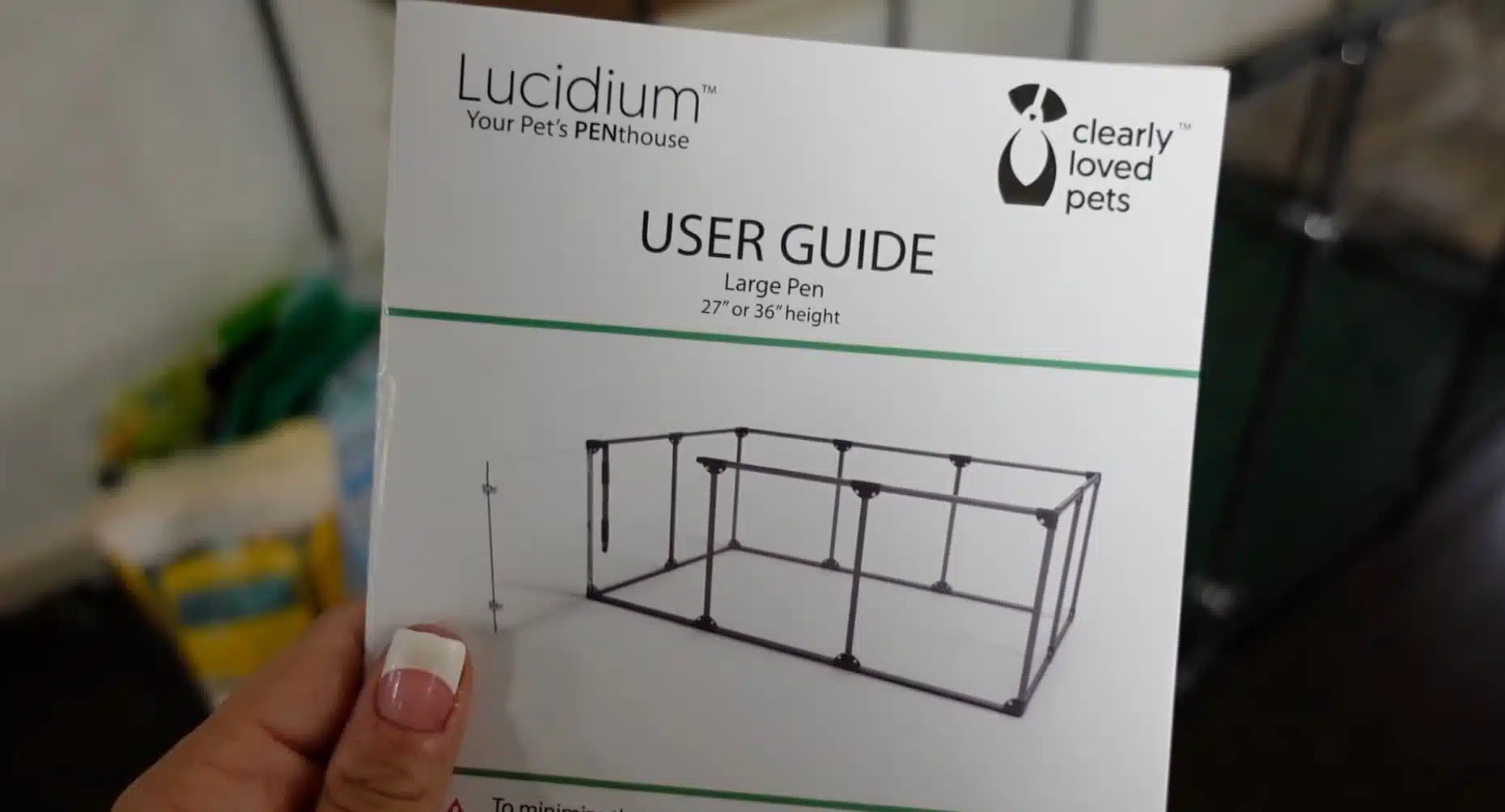
The first step in a proper bunny cage setup is picking the right location. Rabbits prefer calm areas where they feel safe and undisturbed.
Place the cage in a quiet room corner where daily activity is visible but not overwhelming. Avoid areas near heaters, air vents, loud speakers, or direct sunlight.
Extreme heat and noise can stress rabbits. A stable indoor environment helps them relax and settle into their rabbit home comfortably.
Step 2: Install Proper Flooring
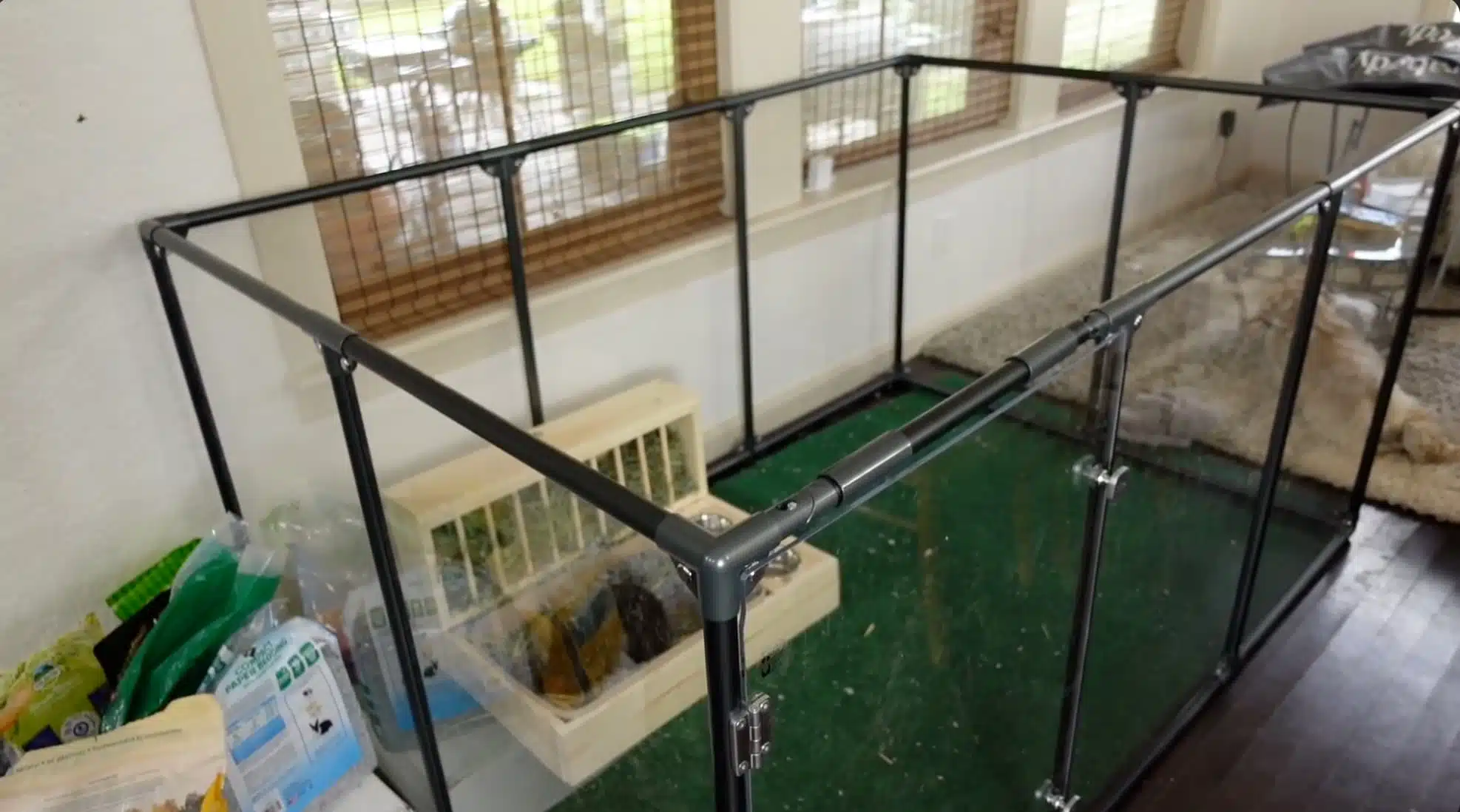
Flooring plays a major role in rabbit comfort and health. Always start with a solid base instead of bare wire floors. Wire bottoms can injure a rabbit’s feet and cause painful sores over time.
Line the cage floor with soft materials such as fleece mats, paper-based bedding, or thick mats.
This creates a dry, comfortable resting surface while making cleaning easier during regular cage maintenance.
Step 3: Add a Litter Box
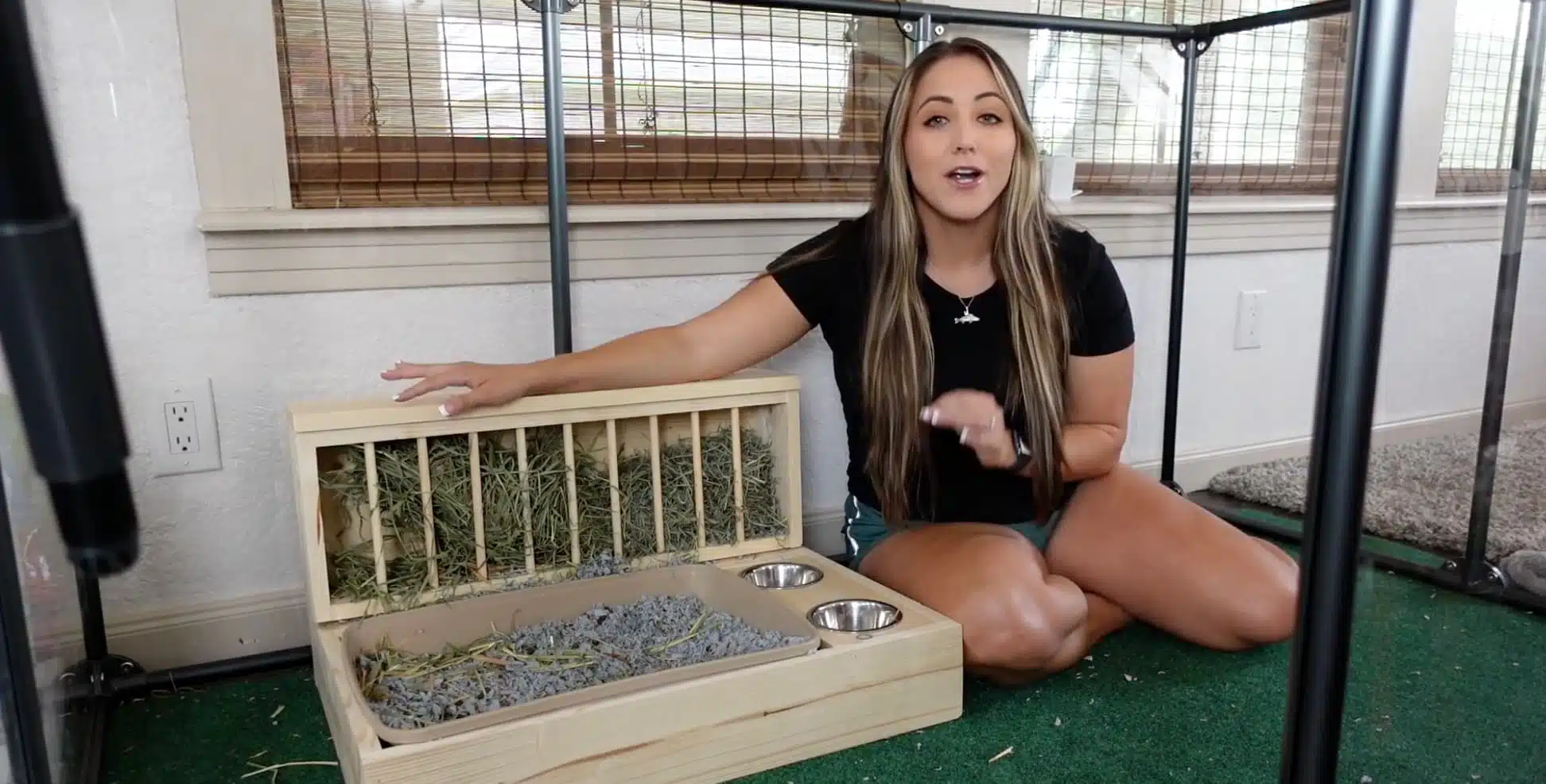
A litter box is essential in a well-organized bunny cage setup. Place it in the corner where your rabbit naturally chooses to use the bathroom. Rabbits often prefer specific corners, which makes training easier.
Use a large low-sided box with rabbit-safe litter such as paper pellets or kiln-dried wood pellets.
Many owners place fresh hay near or inside the litter area because rabbits like eating while using the box.
Consistent litter box placement from day one also supports litter training, since rabbits are creatures of habit and learn to associate a fixed corner with bathroom use.
Step 4: Set Up Food and Water Stations

Next, create a clear feeding area inside the cage. Fresh hay should be available at all times since it forms most of a rabbit’s diet.
A hay rack or container placed near the litter box works well. For water, use a heavy ceramic bowl or a bottle attached to the cage wall.
Many rabbits prefer bowls because they allow a natural drinking posture, while bottles help reduce spills.
In addition to hay, rabbits need a small daily portion of fresh leafy greens such as romaine lettuce, cilantro, or parsley, and a limited amount of plain timothy hay-based pellets.
Avoid pellet mixes with added colorful or fruity pieces, as these can upset a rabbit’s digestive system.
Step 5: Create a Safe Hiding Spot
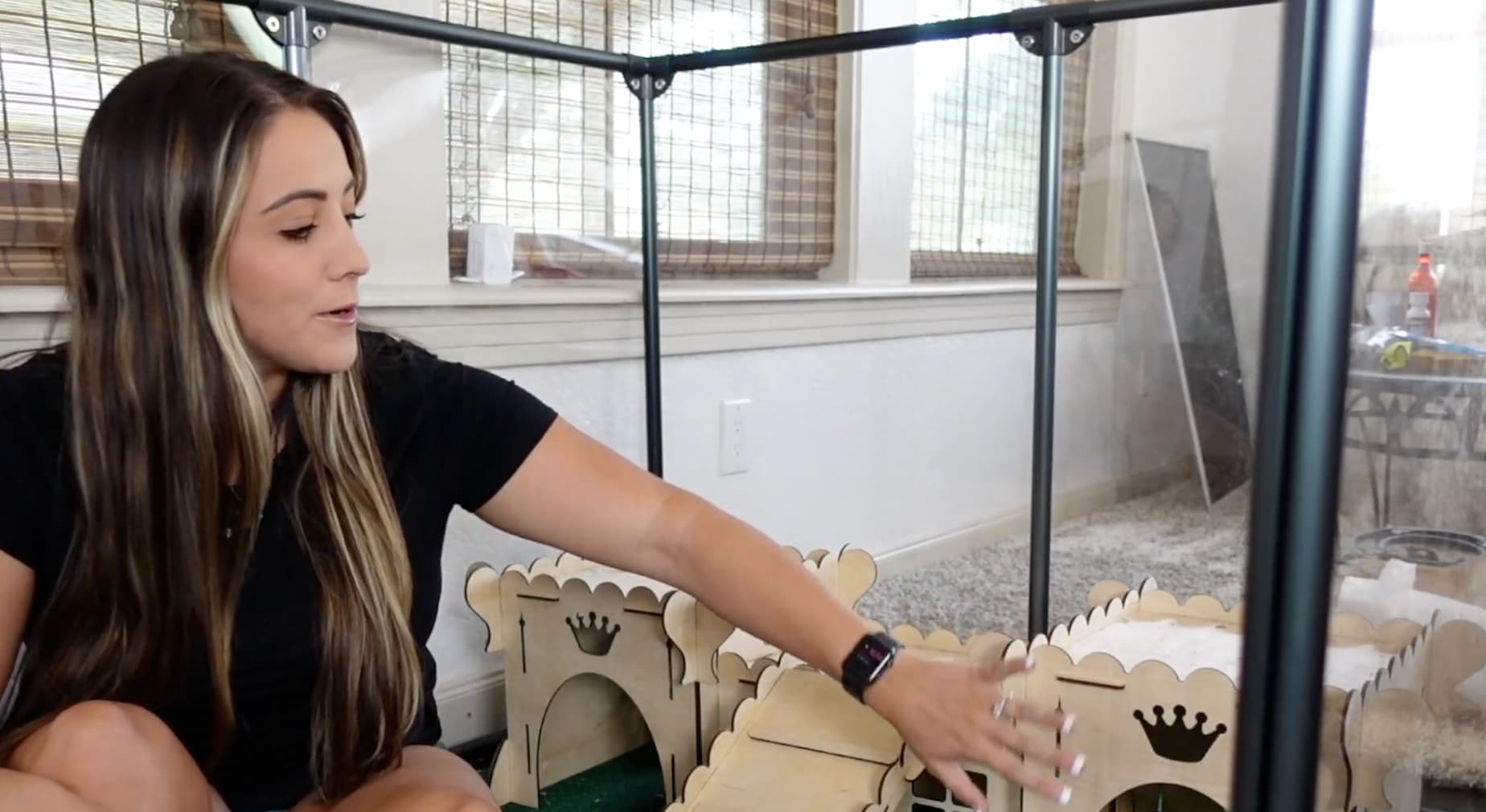
Rabbits are prey animals, so they naturally look for places to hide when resting or feeling nervous.
Adding a small hide house makes the cage feel secure and comforting. This can be a wooden shelter, a cardboard box, or a tunnel-style hideout.
A simple DIY hide box with two openings works well because rabbits like having an exit path while resting inside their enclosure.
Step 6: Add Toys and Enrichment
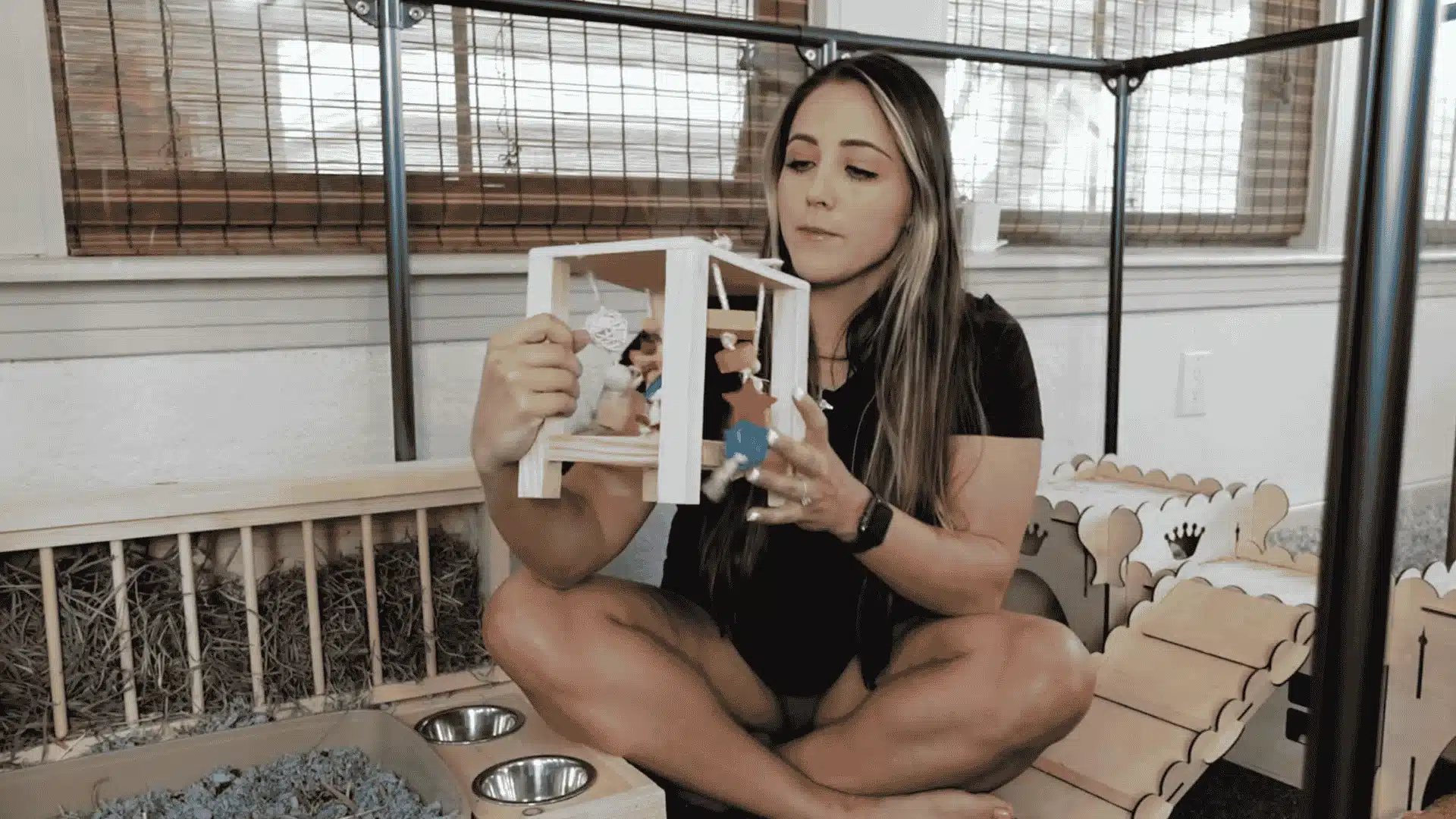
The final step is adding enrichment to keep your rabbit active and mentally stimulated. Chew toys help wear down constantly growing teeth and prevent destructive chewing.
Safe wooden blocks, hay-based toys, or cardboard items work well. You can also add tunnels, chew mats, or small play items to prevent boredom.
Enrichment keeps rabbits curious and encourages natural behaviors inside their rabbit home.
I’d like to give credit to Katherine Michelle for their informative video, which served as a reference for this guide.
Day 1: Introducing Your Rabbit to Its New Space
Once the bunny cage setup is complete, the way you introduce your rabbit to their new home matters. Rabbits can feel overwhelmed in unfamiliar environments, so give them time to explore at their own pace.
Place your rabbit gently inside the cage and step back. Avoid reaching in repeatedly or encouraging interaction right away.
Let them sniff, move around, and find the hiding spot on their own. Most rabbits will retreat to the hide box first, which is completely normal.
Keep noise low and foot traffic minimal for the first 24 to 48 hours.
This quiet adjustment period helps your rabbit begin to associate their new rabbit home with safety rather than stress.
Once they start eating, drinking, and using the litter box independently, they are settling in well.
Common Bunny Cage Setup Mistakes to Avoid
Many new owners unintentionally create uncomfortable rabbit homes. Avoiding these common bunny cage setup mistakes will keep your rabbit healthy, relaxed, and active.
- Cage too small: Rabbits need space for at least three full hops, standing upright, and stretching comfortably. Small cages restrict movement and cause boredom.
- No hiding spot: Rabbits are prey animals. Without a hide house, they feel exposed, which can cause long-term stress and nervous behavior.
- Wire or mesh flooring: Bare wire floors can injure sensitive rabbit feet and cause sore hocks, a painful condition that impairs mobility.
- Cage placed in an isolated room: Rabbits are social animals. Keeping their rabbit home away from family activity can make them feel lonely and withdrawn.
- No bunny proofing for free roam time: Rabbits chew electrical cords, baseboards, furniture legs, and toxic houseplants. Before allowing any free roam time, cover or hide all accessible cords, block off gaps behind furniture, remove toxic plants from reach, and use cable organizers or cord covers in areas the rabbit can access. Without proper bunny proofing, free-roam time can quickly become dangerous for both your rabbit and your belongings.
How to Maintain & Clean the Cage?
Keeping your bunny cage set up and clean is essential for your rabbit’s health and comfort. Start with a simple daily routine. Remove leftover food, replace dirty bedding, and check the litter box.
Rabbits are clean animals, so a fresh space helps them stay stress-free and prevents odors from building up.
Once a week, perform a deeper cleaning of the rabbit’s home. Empty the litter box completely, wash food and water bowls with warm water, and wipe down cage surfaces.
Replace bedding and inspect toys or mats for wear. Regular cleaning also helps you notice health changes, such as unusual droppings or reduced appetite.
A clean rabbit home keeps your bunny comfortable, active, and safe every day.
Upgrading Tips for Your Rabbit’s Home Over Time
As your rabbit grows and becomes more active, improving the bunny cage setup helps create a more comfortable rabbit home:
- Outgrowing the cage: Constant pacing, chewing cage bars, or limited movement usually mean the rabbit’s home is too small for comfort.
- Moving to free roam: Gradually allow supervised roaming time while bunny proofing wires, furniture edges, and small gaps around the room.
- Adding levels: Platforms, ramps, and small steps increase usable space and encourage natural hopping and climbing activity.
- Multi-level setups: These setups create separate areas for resting, eating, and play, making the rabbit home more engaging.
- Enrichment upgrades: Adding tunnels, chew toys, and soft resting mats helps keep rabbits mentally stimulated and prevents boredom.
Conclusion
Creating the right bunny cage setup does not have to be complicated, but it does require thoughtful planning.
When you focus on space, comfort, and enrichment, you create a rabbit home where your bunny can feel safe and relaxed every day.
Small details like proper flooring, a litter area, hiding spots, and toys can make a huge difference in your rabbit’s well-being.
Over time, you can also improve the setup by adding more space or enrichment as your rabbit grows and becomes more active. A well-designed rabbit home keeps your pet healthy, active, and stress-free.
Do you also have some bunny cage setup tips or ideas? Drop your comments below and share what works best for your rabbit.
Frequently Asked Questions
How Long Should a Rabbit Stay in Its Cage Each Day?
Rabbits should not stay confined all day. They need at least 3 to 4 hours of daily exercise outside the cage to stay healthy and active.
Can Two Rabbits Live in The Same Cage?
Yes, bonded rabbits can share a cage. The enclosure must be large enough to give both rabbits space to move, rest, and eat comfortably.
What Temperature is Safe for a Rabbit Cage Indoors?
Rabbits are comfortable between 60 and 75 degrees Fahrenheit. Temperatures above 80 degrees can cause dangerous heat stress and should be avoided.