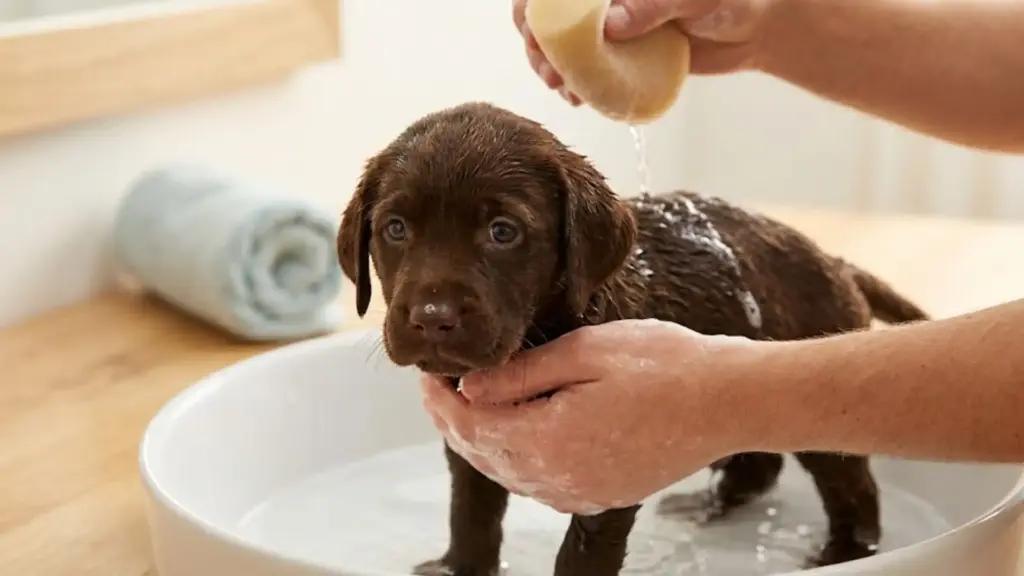
Bringing home a new puppy comes with plenty of questions, and bath time is one of the first concerns for most owners.
Knowing when puppies can have their first bath is essential for keeping them safe, healthy, and comfortable from the start.
Bathing too early can put young puppies at serious risk, as their bodies are still developing and they struggle to regulate body temperature.
As a veterinarian who has fielded this exact question from new puppy owners, I can tell you the most common mistake isn’t the shampoo choice or the water temperature; it’s the timing. Getting that right changes everything.
Most experts recommend waiting until around 8 weeks of age, when puppies are better equipped to handle the experience.
This guide covers everything, from spotting readiness signs to choosing the right products, so your puppy’s very first bath becomes a calm and safe experience.
When Can Puppies Have Their First Bath?
Most new owners ask the same question: when can you give a puppy a bath without causing harm? In general, experts agree that the safest time for a puppy bath is around 8 weeks of age.
In my clinic, I advise owners to think of 95–100°F (35–38°C ) as the safe water temperature window, close to a puppy’s normal body temperature of around 101°F.
This small detail alone prevents most of the chilling cases I see after early baths.”
Before that, very young puppies can get cold easily, and their skin is still sensitive, making early bathing risky.
However, the exact timing can vary slightly depending on factors like breed, size, and overall health.
Smaller or weaker puppies may need extra care and delayed bathing, while healthy, well-developed puppies may handle it better at the recommended age.
Understanding when puppies can have their first bath helps ensure the experience is safe, comfortable, and stress-free for both the puppy and the owner.
Why You Should Not Bathe a Puppy Too Early?
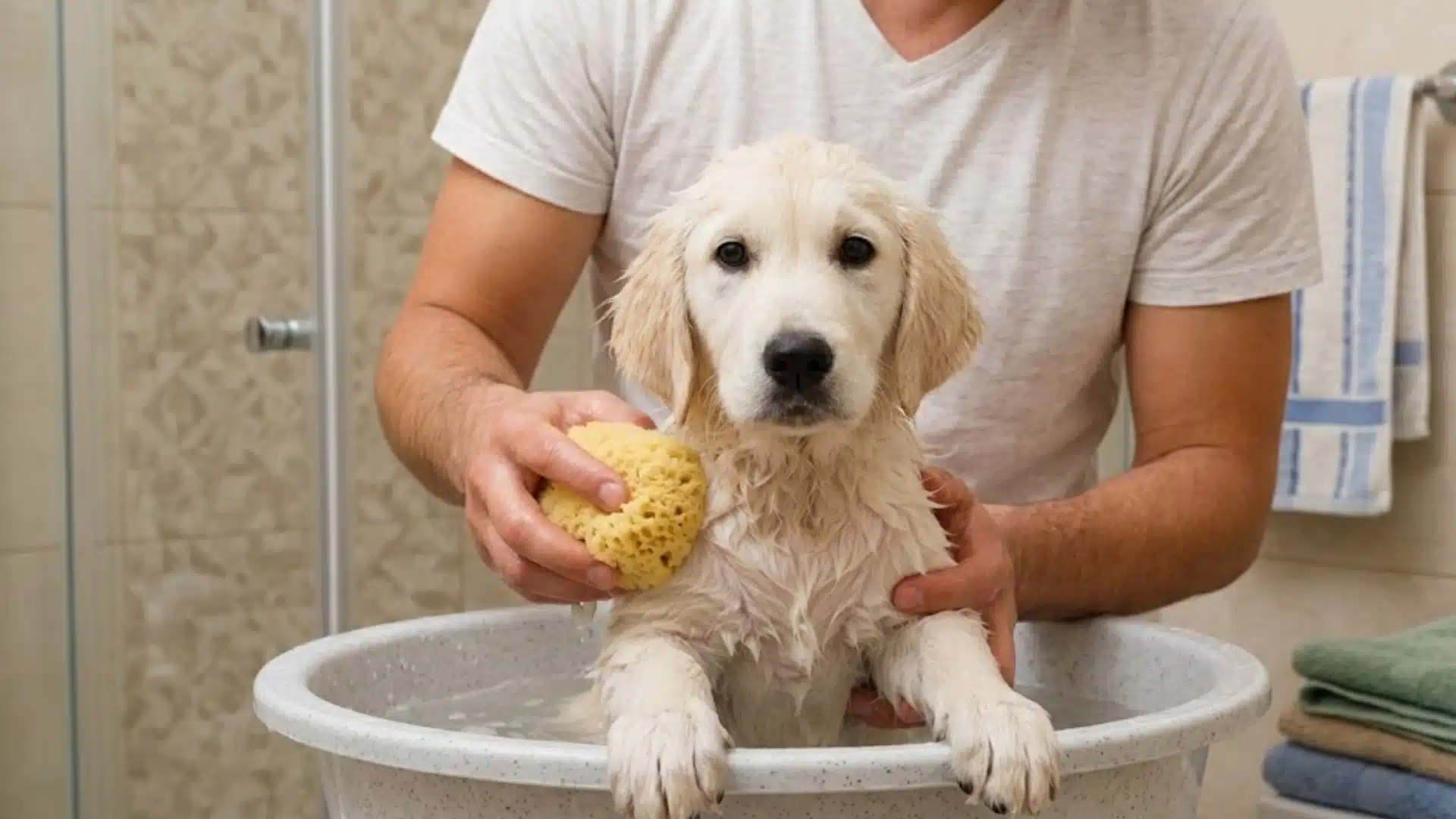
Understanding when you can give a puppy a bath is important because bathing too early can create several risks.
Very young puppies cannot regulate their body temperature properly, so even a short bath can cause them to cool quickly, leading to discomfort or health issues.
Their skin is also extremely sensitive, and the coat is still developing, which means frequent or early bathing can strip natural oils and cause dryness or irritation.
One case that still stands out: a breeder brought in a 5-week-old litter after giving all four pups a full bath on a cool day. Two of them came in hypothermic.
They recovered well, thankfully, but it’s a scenario entirely preventable by simply waiting those extra few weeks.
Waiting until the puppy is older ensures a safer and more comfortable bathing experience while protecting skin health and overall well-being.
Puppy Bath Before 8 Weeks: What To Do Instead
Puppies under 8 weeks rarely need a full bath, and even when they get dirty, safer methods can clean them without unnecessary risk.
- Warm cloth spot cleaning: Use a soft cloth dipped in lukewarm water to gently wipe away dirt, milk residue, or small messes. This method is simple, low-stress, and avoids exposing the puppy to sudden temperature changes.
- Puppy safe wipes: Apply only to the dirty area and avoid overuse. Choose fragrance-free, hypoallergenic wipes made specifically for young puppies, ideally with soothing ingredients like oatmeal or vitamin B5 to protect sensitive skin.
- Partial cleaning: Focus on specific areas, such as paws, belly, or the rear, using lukewarm water. Dry the puppy immediately with a soft towel and keep them in a warm, draft-free space to prevent chilling.
Knowing your safe cleaning options at home means you’re never caught off guard when a young pup needs a quick tidy-up.
What to Prepare Before You Start
Before starting a puppy bath, it helps to have everything ready, so the process stays smooth and stress-free, especially if it is your first time.
Keep a soft, absorbent towel nearby to dry your puppy quickly after the bath. Use a gentle puppy shampoo that suits their sensitive skin.
A small cup or a light spray makes rinsing easier and more controlled. Place a non-slip mat in the tub to keep your puppy stable and prevent slipping.
Have a few treats ready to reward calm behavior and build a positive association with bath time.
It is also useful to brush your puppy beforehand with a soft brush to remove loose fur and small tangles, making the bath more effective and comfortable for your puppy.
Choosing the right brush for your puppy makes this pre-bath step much more effective and comfortable
Step-by-Step Puppy Bath Routine
Following a simple and gentle routine makes a big difference during a puppy’s first bath. A well-paced routine helps reduce fear, protects the puppy’s sensitive skin, and builds a better association with bath time for the future.
1. Gently Wet the Puppy’s Body While Avoiding the Face and Ears
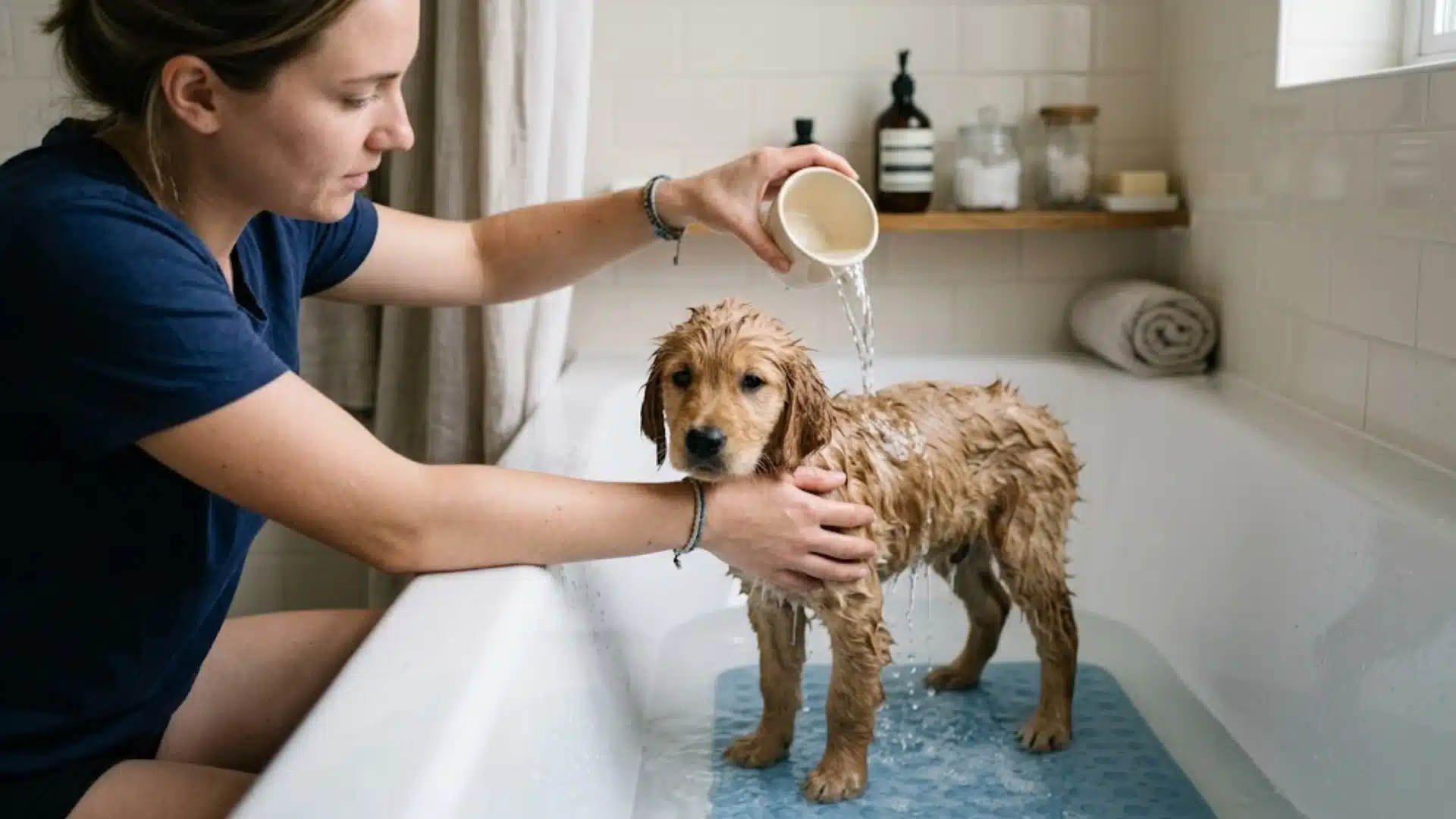
Begin by slowly wetting the puppy’s body with lukewarm water using a small cup, your hand, or a gentle spray setting. Start from the back or shoulders so the puppy does not feel startled .
It is important to avoid the face, eyes, ears, and nose at this stage, since water in these areas can create discomfort and make the puppy anxious.
Moving slowly helps the puppy adjust to the sensation of water and keeps the first bath from feeling overwhelming.
2. Apply a Small Amount of Shampoo and Lather Lightly
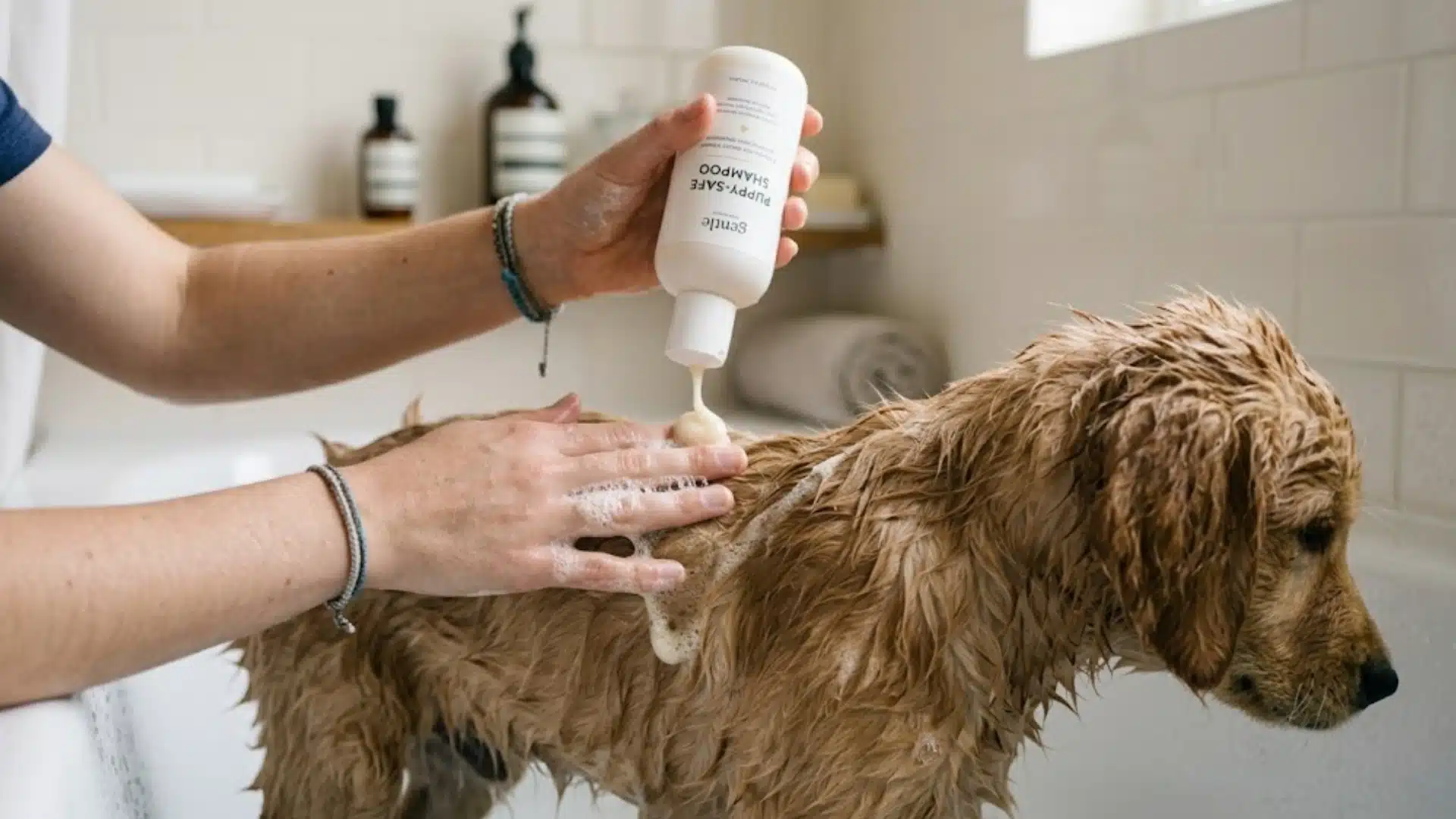
Once the coat is damp, apply a small amount of puppy-safe shampoo and work it gently through the fur. Focus on dirty areas, but avoid overusing the product, as too much shampoo can be hard to rinse out completely.
A puppy’s skin is more sensitive than an adult dog’s and has a different pH, which is why human shampoo, even mild varieties, should never be used on puppies.
Dog-specific formulas are designed to match the pH of canine skin.
3. Keep Movements Slow and Calm to Prevent Stress
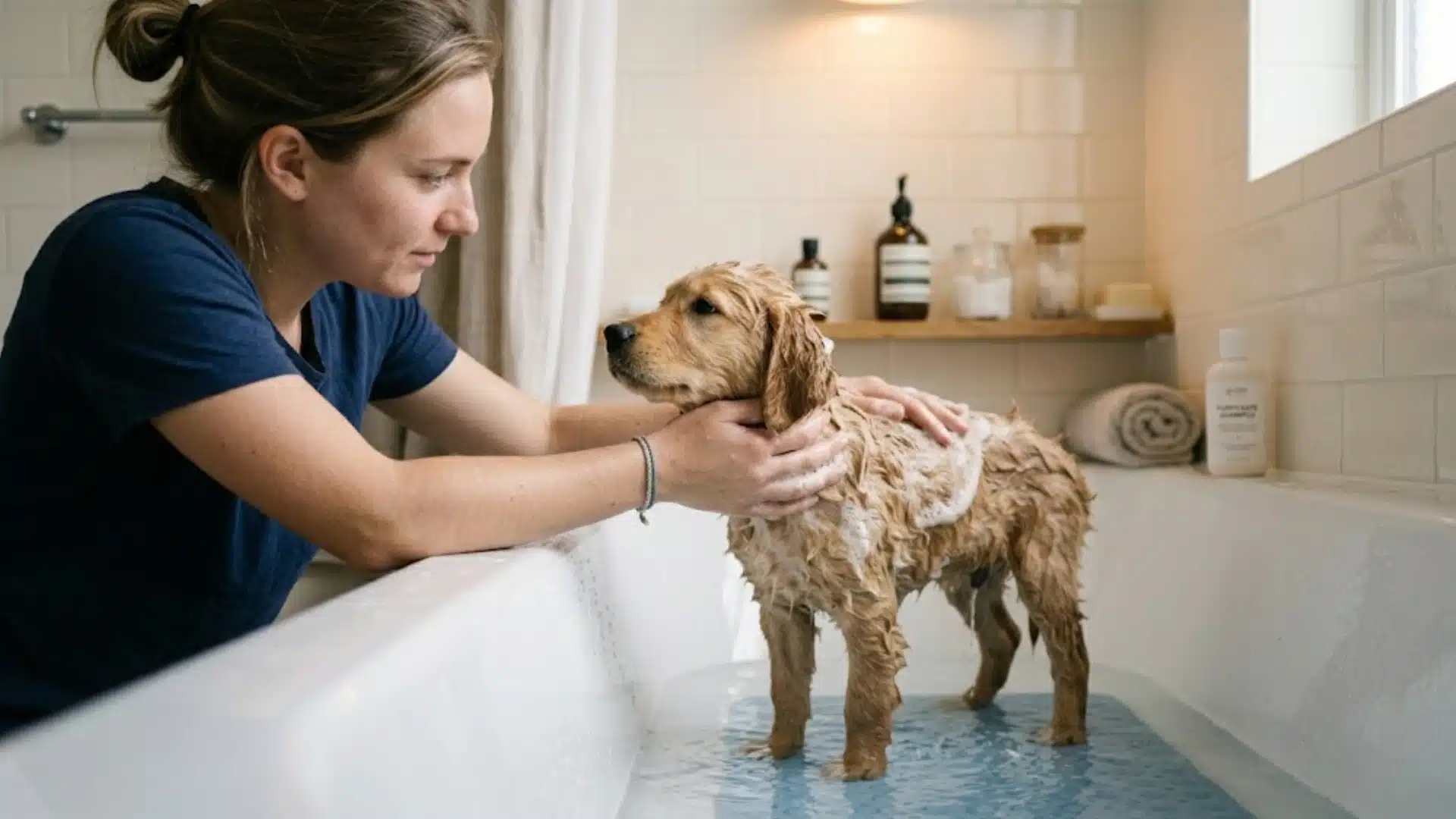
Throughout the bath, try to keep your movements slow, steady, and predictable. Puppies can easily pick up on tension, so a calm voice and gentle handling make the experience feel safer.
Sudden grabbing, rushing, or loud noises can increase fear and cause the puppy to resist. Staying calm also helps build trust, which is especially important during early grooming experiences.
A peaceful approach makes future baths easier because the puppy learns that bath time is not something to fear.
4. Rinse Thoroughly to Remove All Shampoo Residue
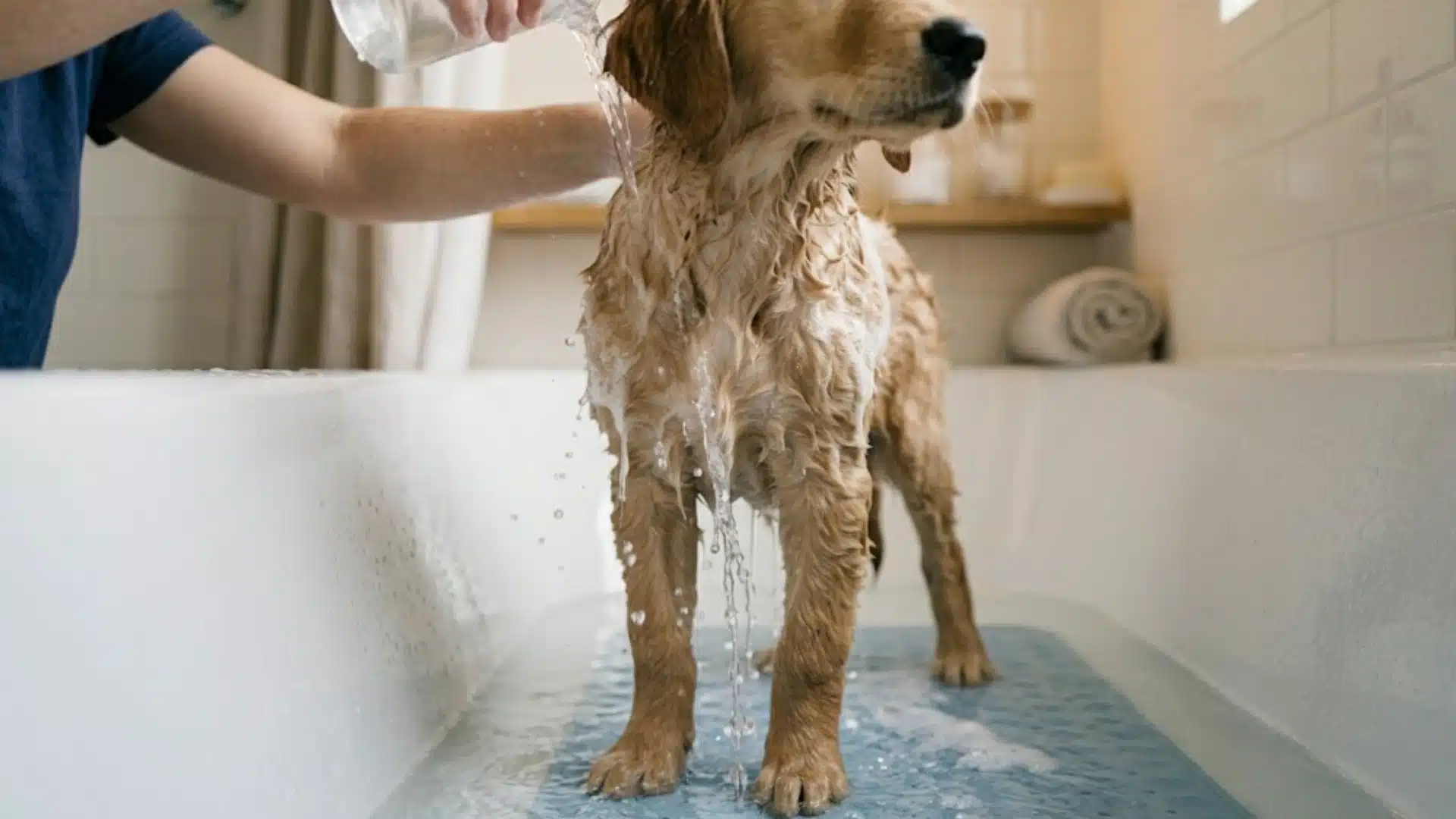
After lathering, rinse the puppy carefully until the coat feels completely clean and free of shampoo. Leftover residue can lead to itching, dryness, or skin irritation, especially in young puppies with sensitive skin.
Take your time and check areas like the chest, underbelly, legs, and tail where product can collect.
A thorough rinse is one of the most important parts of the bath because it keeps the coat soft, clean, and comfortable after drying.
5. Keep the Bath Short and Controlled
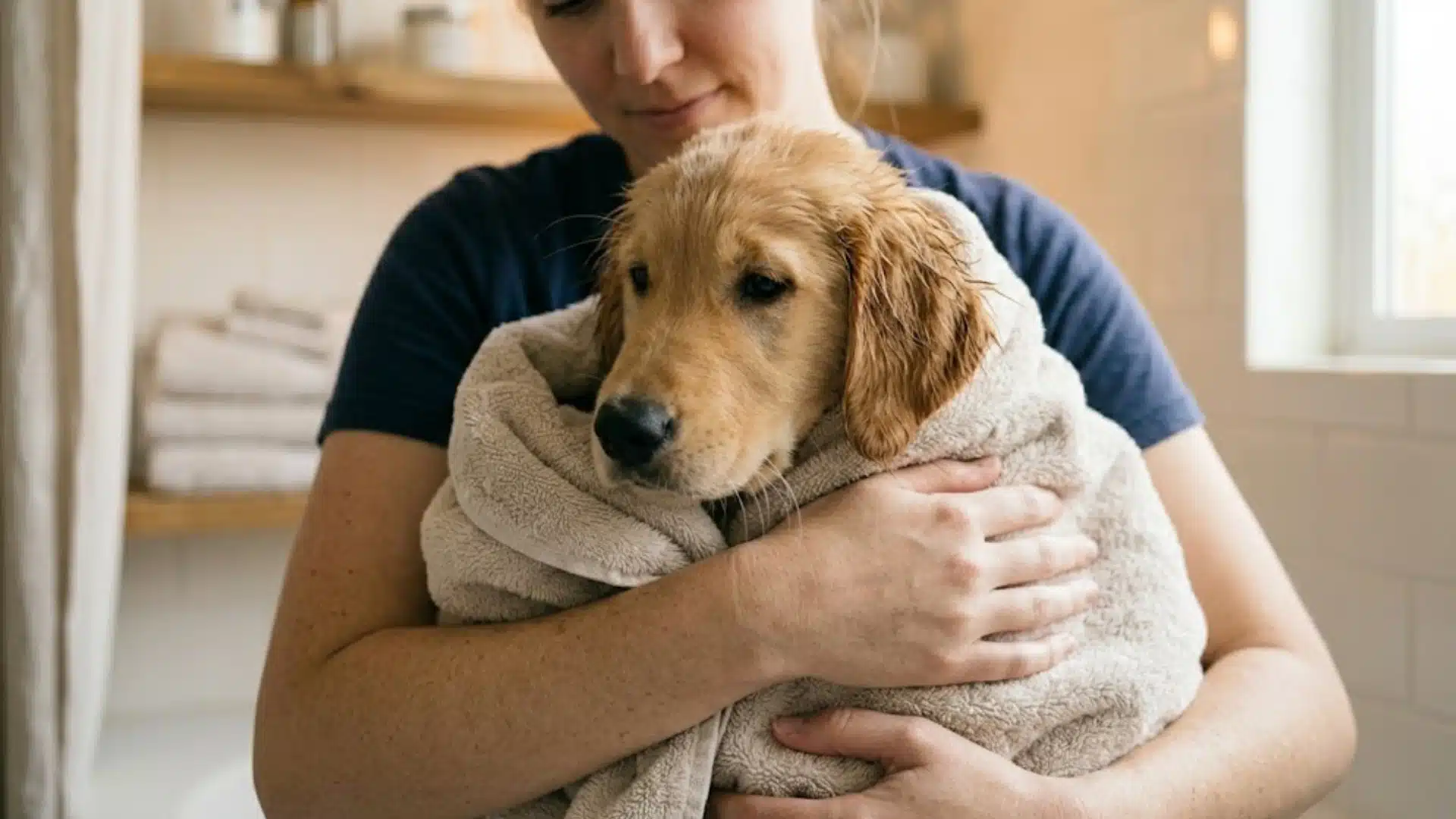
The first puppy bath should be quick, simple, and well-managed. Long baths can make puppies cold, restless, or overstimulated, increasing the risk of stress.
Keeping the process short helps the puppy stay more comfortable and makes the experience easier for both the owner and the pup.
A controlled bath also allows you to end on a positive note, which helps build confidence and creates a smoother routine for future baths.
Signs Your Puppy Is Ready for a First Bath
Knowing when you can give a puppy a bath depends on a few clear readiness signs. Instead of rushing into a puppy bath, checking these indicators helps ensure the experience is safe, comfortable, and stress-free.
- Age and weaning milestones to look for: Most puppies are ready around 8 weeks, once fully weaned and better able to regulate body temperature.
- Comfort with gentle handling and grooming: A puppy that stays relaxed when touched, brushed, or held is more likely to handle bath time calmly.
- Good health: The puppy should be free from illness, active skin irritation, open wounds, or recent spot-on flea treatment. If a topical flea or parasite treatment was applied recently, wait at least 48 hours before bathing so the product can fully absorb.
- Ability to stay warm after cleaning: Puppies that can maintain body warmth and recover quickly after drying are better prepared for bathing.
- Calm behavior in new situations: A puppy that does not panic easily will adjust better to water, sounds, and handling during a bath.
- Basic trust with the owner or handler: When a puppy feels secure around the handler, it reduces stress and makes the first bath smoother.
Common Puppy Bath Mistakes To Avoid
Understanding when you can give a puppy a bath is only part of the process; knowing which mistakes to avoid is equally important. Taking a slow, careful approach helps ensure that bath time remains safe and positive, especially during the early stages.
- Using human shampoo: Choosing regular human products can disrupt skin pH balance, causing irritation, dryness, and discomfort for puppies with delicate and highly sensitive skin
- Bathing too frequently: Washing too often strips natural oils from the coat, leading to dryness, dull fur, and potential skin issues over time if not managed properly
- Improper drying: Leaving a puppy damp after a bath can cause chills, discomfort, and even illness, especially in young puppies that struggle to regulate body temperature
- Rough handling during the first bath: Rushing or being too firm can create fear, making future baths stressful and difficult as the puppy begins associating grooming with negative experiences
- Water temperature mistakes: Using water that is too hot or too cold can shock the puppy, cause discomfort, and increase stress during what should be a calm and controlled bathing process
Conclusion
Knowing when puppies can have their first bath makes a real difference in keeping them safe, healthy, and comfortable.
Waiting until around 8 weeks of age gives your puppy the best chance of handling bath time without stress or unnecessary health risks.
By preparing the right supplies, using a gentle puppy-safe shampoo, and following a calm, step-by-step routine, you can make the entire experience positive from the very start.
Avoiding common mistakes like bathing too early, using human shampoo, or skipping proper drying will protect your puppy’s sensitive skin and developing coat in the long run.
With patience and the right approach, bath time can become a smooth and stress-free part of your puppy’s regular grooming routine.
Frequently Asked Questions
Can I Use Warm Water Only Without Shampoo for My Puppy?
Yes, in some cases, plain lukewarm water can be enough for light cleaning, especially if the puppy is not very dirty. This is a safer option for very young puppies or those with sensitive skin, as it avoids unnecessary product exposure.
How Long Should a Puppy Bath Take?
A puppy bath should be quick and controlled, usually lasting around 5 to 10 minutes. Keeping it short helps prevent stress and avoids your puppy getting cold during the process.
What Should I Do if My Puppy is Scared of Water?
Start slowly by introducing water gradually and using positive reinforcement like treats. Allow the puppy to explore the bathing area first so they feel more comfortable before starting the bath.
Can I Bathe My Puppy at Night?
Yes, but only if you can dry your puppy completely and keep them warm afterward. Puppies are sensitive to temperature changes, so proper drying and a warm environment are essential after a bath.