
Many dog owners find themselves adding rice to their dog’s bowl without thinking twice, especially when trying to improve digestion or add something “healthy” to meals.
Brown rice often stands out as the better option at first glance, thanks to its fiber and nutrient content. But feeding it regularly raises a more important question about balance rather than just benefits.
What works for one dog may not work the same way for another. Factors like overall diet, activity level, and existing health conditions all play a role in how well certain foods fit into daily feeding routines.
Even ingredients that seem harmless can have a different impact when used too often. But the real question is not just “can dogs have brown rice,” it’s whether it actually fits your dog’s specific needs.
This guide breaks down the key differences, safety concerns, and nutritional value of both options.
Is Rice Safe for Dogs?
Plain, cooked rice is safe for most dogs, but the type of rice matters depending on their needs.
White rice is easy to digest and works well for dogs with sensitive stomachs, while brown rice is also safe but can be harder to process.
It is always best to serve rice plain, without adding spices, salt, or butter. Portion size should be controlled to avoid unnecessary weight gain, especially for less active dogs.
Additionally, dogs with diabetes should have limited amounts of white rice since it has a higher glycemic index and may affect blood sugar levels.
White Rice vs Brown Rice: Key Differences
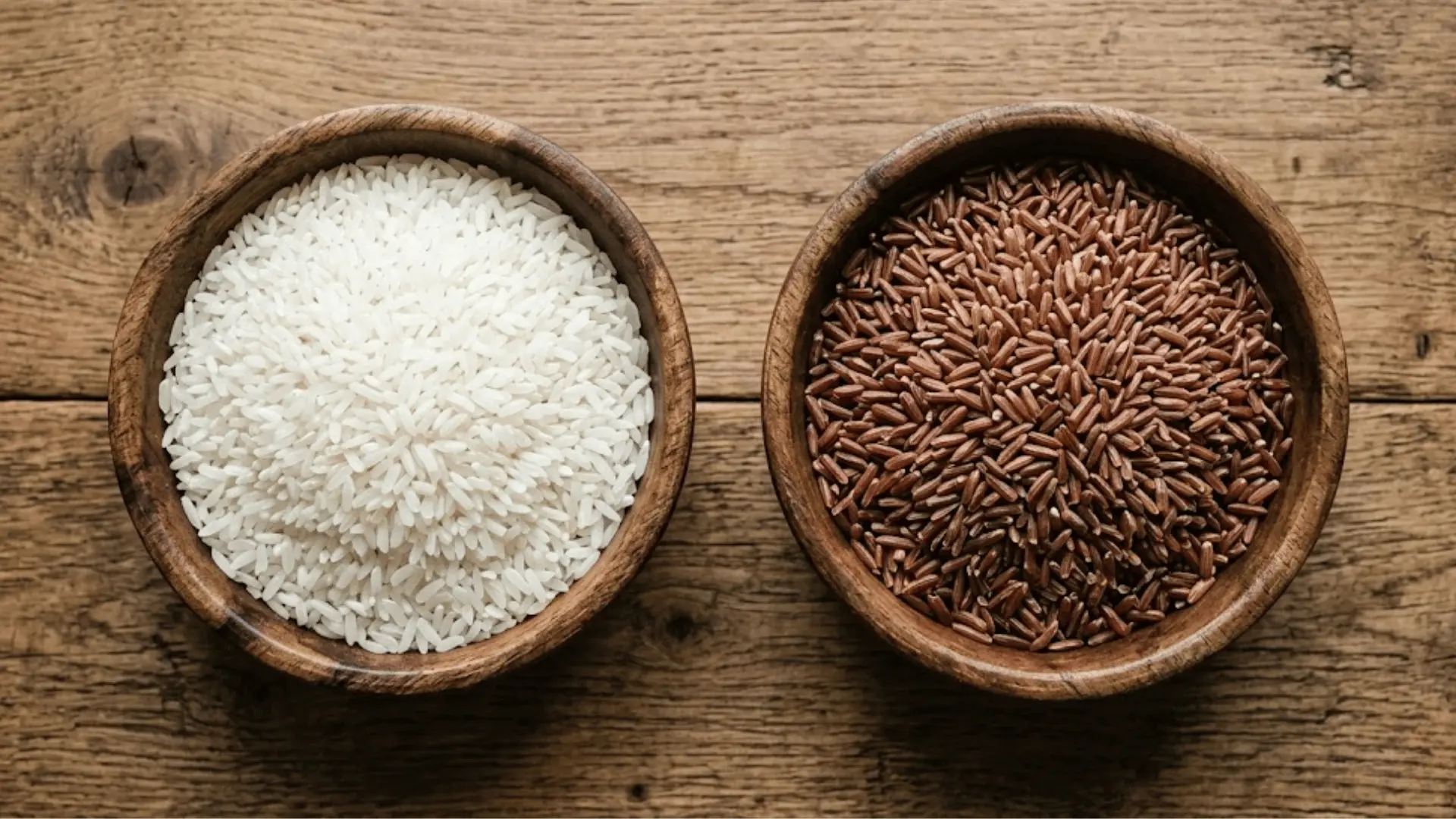
Understanding how both types affect digestion and nutrition helps make better choices for dogs with different needs and conditions.
1. Digestibility and Stomach Sensitivity
White rice is softer and easier to break down, making it ideal for dogs with upset stomachs or diarrhea. It helps firm stools quickly and provides quick energy.
Brown rice contains more fiber, which can be harder for dogs with sensitive digestion to process. Dogs recovering from illness or digestive issues often benefit more from white rice because of its gentle nature.
One thing I consistently flag in my consultations: white rice has a significantly higher glycemic index than brown rice. That means it causes a faster spike in blood sugar.
For healthy dogs, this is rarely a concern in small amounts, but for dogs managing diabetes or obesity, white rice should be used only when medically directed, not as a routine addition.
2. Nutritional Value and Fiber Content
Brown rice contains more fiber, vitamins, and minerals than white rice because it retains the bran layer.
Specifically, it’s a meaningful source of B vitamins (B1, B3, B6), magnesium, manganese, and selenium nutrients that support energy metabolism, bone development, muscle function, and immune health.
This can support better overall nutrition for healthy dogs. However, the higher fiber content may not suit every dog, especially those with digestive issues.
White rice has fewer nutrients but provides quick energy from carbohydrates, making it useful in specific situations.
One thing that rarely gets mentioned in these comparisons: brown rice spoils faster than white rice because it retains its natural oils.
If you’re batch-cooking rice for your dog, white rice can be stored safely in the fridge for a few days. Brown rice should ideally be used within a day or two.
3. Glycemic Index and Blood Sugar
White rice ranks high on the glycemic index, meaning it’s digested quickly and causes a rapid rise in blood sugar.
Brown rice digests more slowly, providing sustained energy without the spike. For most healthy dogs, eating rice occasionally isn’t a dealbreaker.
But if your dog is overweight, diabetic, or prone to energy crashes, defaulting to white rice long-term isn’t ideal.
I’ve seen owners unknowingly contribute to their dogs’ weight gain by routinely adding white rice to meals “for digestion” long after the stomach issue had resolved.
Brown rice can be a better long-term option for some dogs, but it is not automatically the better choice for every dog. For dogs that don’t tolerate rice well, other safe alternative foods may be a better long-term option.
4. Arsenic in Brown Rice
Brown rice does contain slightly higher levels of naturally occurring arsenic than white rice, because arsenic concentrates in the outer bran layer.
The FDA considers rice safe in moderation, but long-term exposure to arsenic is still something many pet nutritionists prefer to minimize where possible.
That said, if you want to minimize exposure, rinsing brown rice thoroughly before cooking, soaking it for a few hours, and cooking it in a higher water ratio (about 6 cups of water per 1 cup of rice) can meaningfully reduce arsenic content.
That is the approach I prefer for owners who use brown rice often enough that preparation details actually matter.
When Should You Feed Brown Rice or White Rice?

What to give your dog can seem confusing. That is where understanding the situation matters most. Some foods work better for daily support, while others are meant only for short-term care.
Brown rice is better suited for healthy dogs that need extra fiber and nutrients in their daily diet. It supports digestion in dogs without sensitivities and can help maintain steady energy levels.
It’s also a reasonable option for active dogs that need slow-releasing carbohydrates for sustained energy throughout the day. However, it should be introduced slowly to avoid digestive upset.
For long-term feeding, brown rice can be part of a balanced diet when tolerated well. When I recommend brown rice to clients, I follow what’s sometimes called the 10% rule for treats and additions.
Rice and other extras should make up no more than 10% of a dog’s total daily calories. For a medium-sized dog, that typically means no more than a few tablespoons of cooked brown rice per meal.
White rice is best for dogs with diarrhea, vomiting, or stomach discomfort. If symptoms persist, understanding proper care for a dog’s upset stomach can prevent recurring digestive issues.
Its low fiber content helps soothe the digestive system and allows easy absorption of nutrients. It is often recommended by vets as part of a bland diet with boiled chicken. For short-term feeding, white rice is a practical and safe choice.
Note: The classic white rice and boiled chicken bland diet is a short-term tool, typically 2 to 3 days. It is not nutritionally complete and should not be extended without veterinary guidance.
If your dog’s symptoms persist beyond 48 to 72 hours, it’s time to call your vet rather than continue the bland diet.
How Much Rice Can Dogs Eat Safely?
Portion size is where many well-meaning pet parents go wrong. Here’s a practical starting point based on body weight:
- Small dogs (under 20 lbs): 1 to 2 tablespoons of cooked rice per meal.
- Medium dogs (20–50 lbs): ¼ cup of cooked rice per meal.
- Large dogs (over 50 lbs): Up to ⅓ cup of cooked rice per meal.
These are guidelines, not prescriptions. If your dog is on a complete commercial diet, rice should be an occasional addition, not a daily top-up.
If rice is being used as part of a true home-cooked diet, balancing the full recipe matters far more than the rice choice alone.
Should Brown Rice Be a Regular Part of a Dog’s Diet?
Dogs can have brown rice regularly, but that does not mean every dog should have it every day. Brown rice is not a complete food on its own, and too much of it can push the diet toward excess carbohydrates.
If a dog already eats a complete grain-based food, adding more brown rice on top may not improve the diet at all. This is one of the first label checks I suggest when owners tell me they want to “make the bowl healthier” with extras.
For most dogs, brown rice works best as a small addition rather than a daily staple.
What to Consider?
White rice makes the most sense for short-term digestive upset. Brown rice makes more sense for healthy dogs that tolerate fiber well and need only a small, nutrient-rich grain addition.
If a dog is overweight, diabetic, or already eating a grain-inclusive complete food, I am more cautious about adding rice, even though it seems harmless. The best choice is often not “more rice,” but a better look at the whole bowl.
Whatever type you choose, cook it plain, introduce it gradually, and watch how your dog responds over the next day or two. Stool quality, appetite, energy, and comfort will usually tell you quickly whether the choice was a good fit.
Signs Your Dog May Not Tolerate Rice Well
Even though rice is considered safe, not every dog responds well to it. Watch for:
- Loose stools or gas after meals
- Reduced appetite
- Low energy levels
- Itching or signs of sensitivity
If any of these appear, it may be better to remove rice and reassess the overall diet.
Conclusion
Choosing between white and brown rice depends on the dog’s specific needs rather than a one-size-fits-all answer. When asking whether white rice or brown rice is better for dogs, the real answer lies in digestion, health condition, and tolerance.
White rice supports recovery and sensitive stomachs, while brown rice offers more nutrients for healthy dogs.
The most important principle I share with every pet parent I work with: no single ingredient, including rice, should carry the weight of your dog’s nutrition.
Rice is a useful tool, not a dietary foundation. Paying attention to how a dog responds makes all the difference.
Have thoughts or experiences with feeding rice to dogs? Leave a comment below, share your experience, and join the conversation with other dog owners.
Frequently Asked Questions
Can Dogs Eat Jasmine or Basmati Rice?
Yes, both jasmine and basmati are varieties of long-grain white rice and are safe for dogs when cooked plain. The grain length does not change how they affect a dog’s digestion; both are processed similarly to regular white rice and carry the same benefits and limitations.
Can Rice Help a Dog with Constipation?
Brown rice can help relieve mild constipation in dogs due to its fiber, while white rice may worsen it because it slows digestion. Persistent or severe constipation should be checked by a vet, as rice alone isn’t enough.
Can I Feed My Dog Rice Water?
Rice water is safe for dogs and can help soothe an upset stomach while keeping them hydrated, especially if they won’t eat. It has little nutritional value, so it should be used only as a temporary aid and prepared plain, without salt or seasonings.