

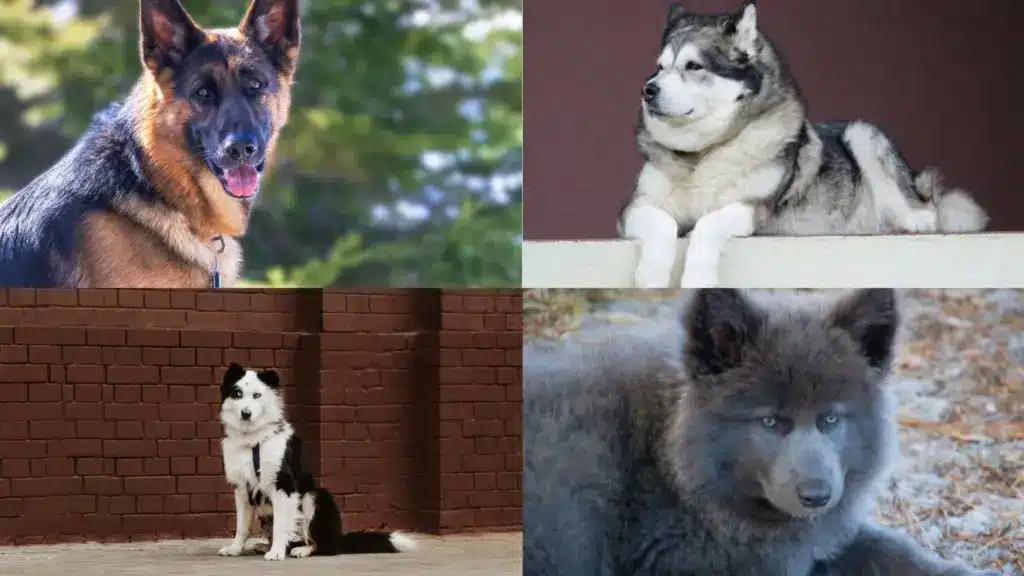
A powerful dog with a wolf-like appearance often captures attention immediately.
The thick coat, sharp ears, and confident stance create an image that feels both wild and majestic.
Many dog lovers feel drawn to animals that resemble wolves because they represent strength, independence, and a deep connection to nature.
Interest in large wolf dog breeds has grown as people discover dogs that carry the same striking features as wolves.
The idea of living with a wolf hybrid dog appeals to those who admire animals that look untamed yet share a bond with humans.
These remarkable dogs stand out for their size, intelligence, and presence, creating fascination among people who appreciate dogs with a bold and powerful character.
What Makes Wolf Dogs Different from Regular Dogs?
A wolf dog is a hybrid created by breeding a wolf with a domestic dog.
Large wolf dog breeds often raise curiosity because they look powerful and mysterious, but a wolf dog is not the same as a typical domestic dog.
Common wolf ancestors used in breeding include the gray wolf, eastern wolf, and sometimes the timber wolf.
True wolf hybrids carry actual wolf genetics, while some dog breeds only resemble wolves in appearance without having wolf DNA.
The idea of creating wolf dog breeds came from early human interaction with wolves and selective crossbreeding with dogs to gain strength, stamina, and intelligence for working roles.
Many wolf dog breeds show strong prey drive, independent thinking, and pack instincts.
The Famous Giant Wolf Dog Story: Meet Yuki
The story of Yuki became famous online and helped many people understand the reality behind large wolf-dog breeds.
Yuki was a wolf hybrid that lived to about 13 years old at the Shy Wolf Sanctuary in Florida after being rescued.
He quickly went viral because of his huge size and striking wolf-like appearance.
Yuki was estimated to be about 5.4 feet long and weighed around 120 pounds, which made him much larger than most domestic dogs.
His thick fur, tall body, and sharp features made him look almost identical to a wild wolf.
He suffered from hemangiosarcoma, a serious type of blood cancer that affects blood vessels, and died in 2020.
However, Yuki’s story also showed the challenges of wolf hybrids. He had been abandoned earlier because his behavior and needs were difficult for regular owners to manage.
Popular Small and Medium Wolf-Like Dog Breeds
Not every wolf-dog resembling a dog comes in a massive size. Several small and medium breeds share the same sharp ears, thick coats, and wild appearance while having a manageable build.
1. Siberian Husky
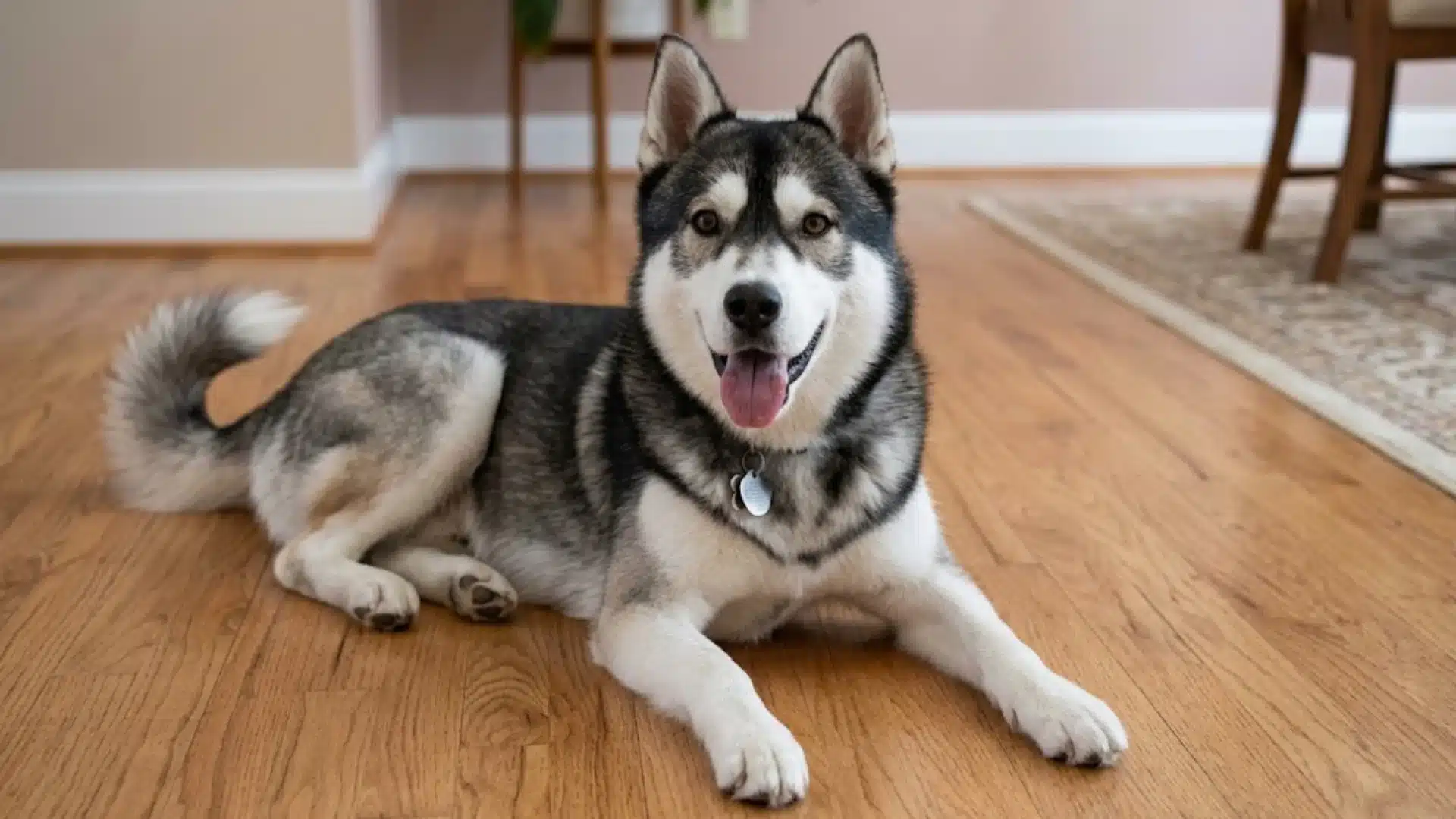
The Siberian Husky originated in northeastern Siberia, where the Chukchi people developed it for sled pulling and endurance travel.
It has a medium athletic build, erect ears, and a thick double coat designed for cold climates.
Coat colors commonly include black, gray, red, and white combinations.
The temperament is friendly, energetic, and social, often enjoying activity and teamwork. Because of its wolf-like face and dense fur, it is frequently compared with large wolf dog breeds.
- Weight: 35-60 pounds
- Height: 20-24 inches
- Lifespan: 12-15 years
2. Yakutian Laika
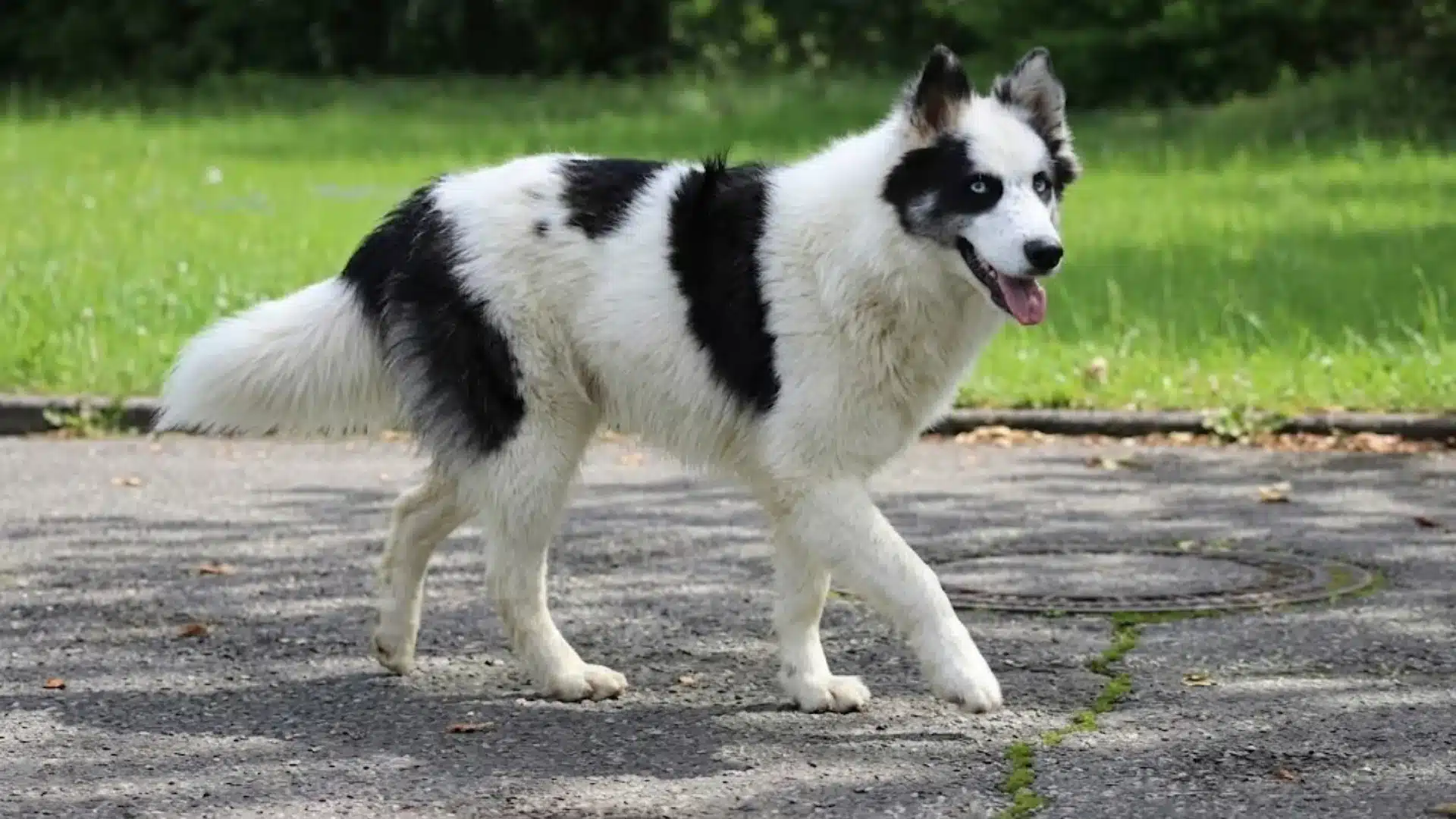
The Yakutian Laika is an ancient working dog from Siberia used for sledding, hunting, and guarding by the Yakut people.
It has a compact medium build, upright ears, and a thick coat that protects against extreme cold.
Coat colors often include white with black, gray, or brown markings.
The temperament is intelligent, active, and loyal, with strong endurance and adaptability in harsh environments.
- Weight: 40-55 pounds
- Height: 21-23 inches
- Lifespan: 10-12 years
3. Greenland Dog
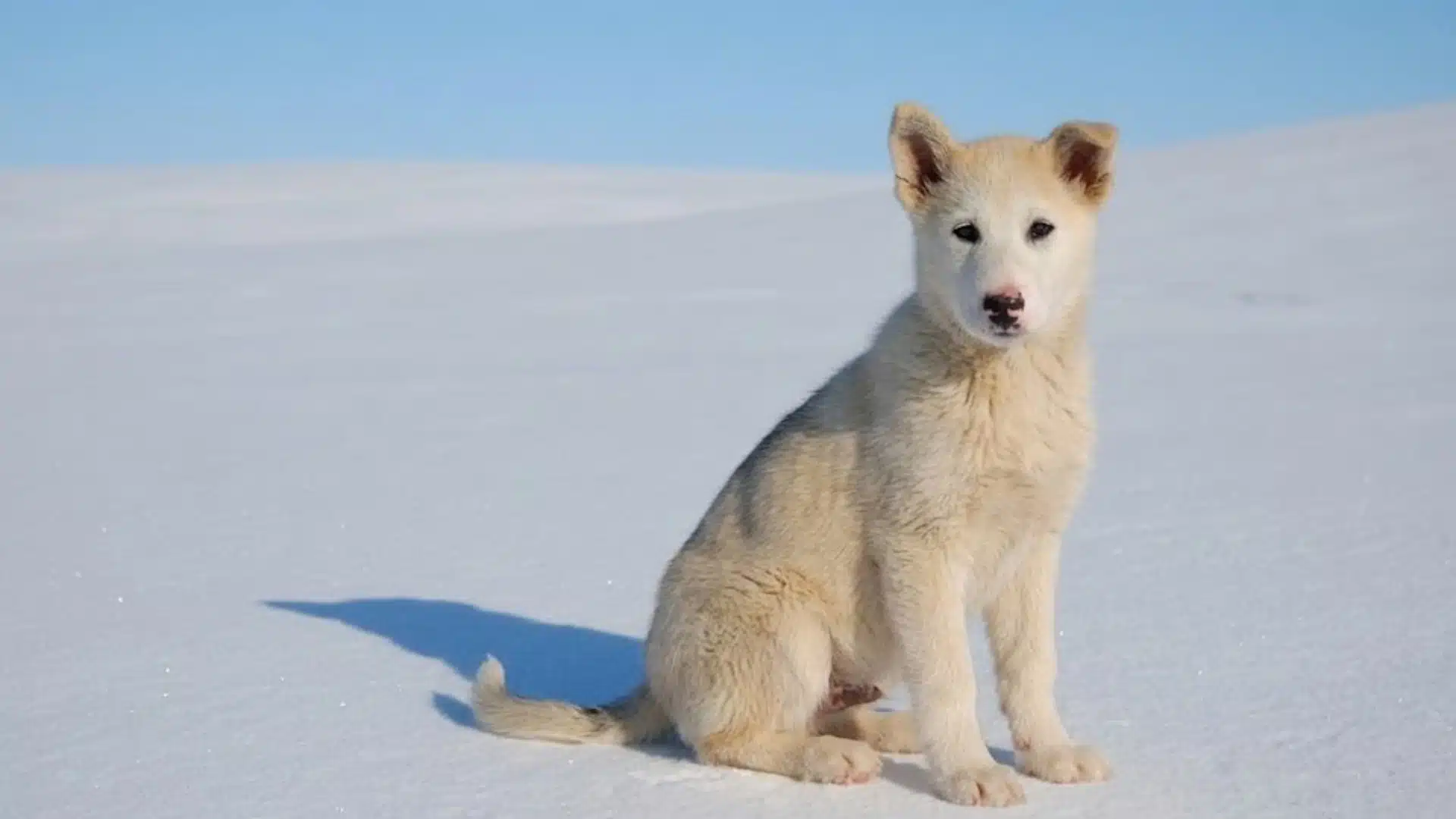
The Greenland Dog is an Arctic sled dog developed by Inuit communities for pulling sleds and assisting in hunting.
It has a muscular medium to large frame, strong legs, and a thick insulating coat suited for freezing climates.
Common coat colors include black, gray, brown, and white. The temperament is energetic, resilient, and independent.
Its rugged build, thick fur, pointed ears, and powerful stance give it a striking wolf-like appearance.
- Weight: 60-100 pounds
- Height: 22-27 inches
- Lifespan: 10-14 years
4. Alaskan Klee Kai
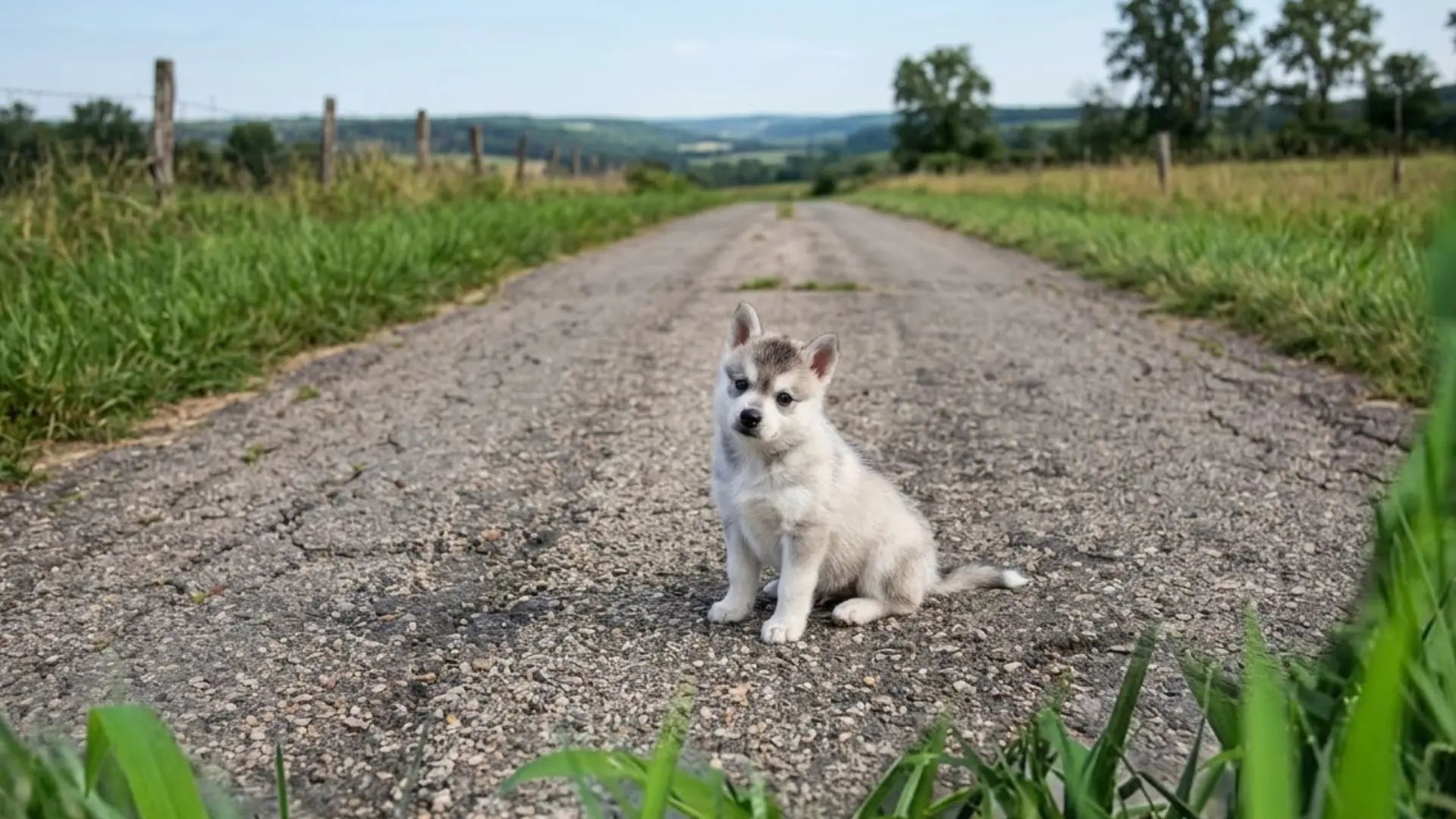
The Alaskan Klee Kai was developed in the United States during the 1970s as a smaller companion version of northern sled dogs.
It has a compact body, pointed ears, and a thick coat that closely resembles a miniature husky.
Coat colors commonly include black and white, gray and white, or red and white.
The temperament is intelligent, alert, and energetic while remaining strongly attached to family members.
- Weight: 10-25 pounds
- Height: 13-17 inches
- Lifespan: 12-16 years
5. Kugsha Dog
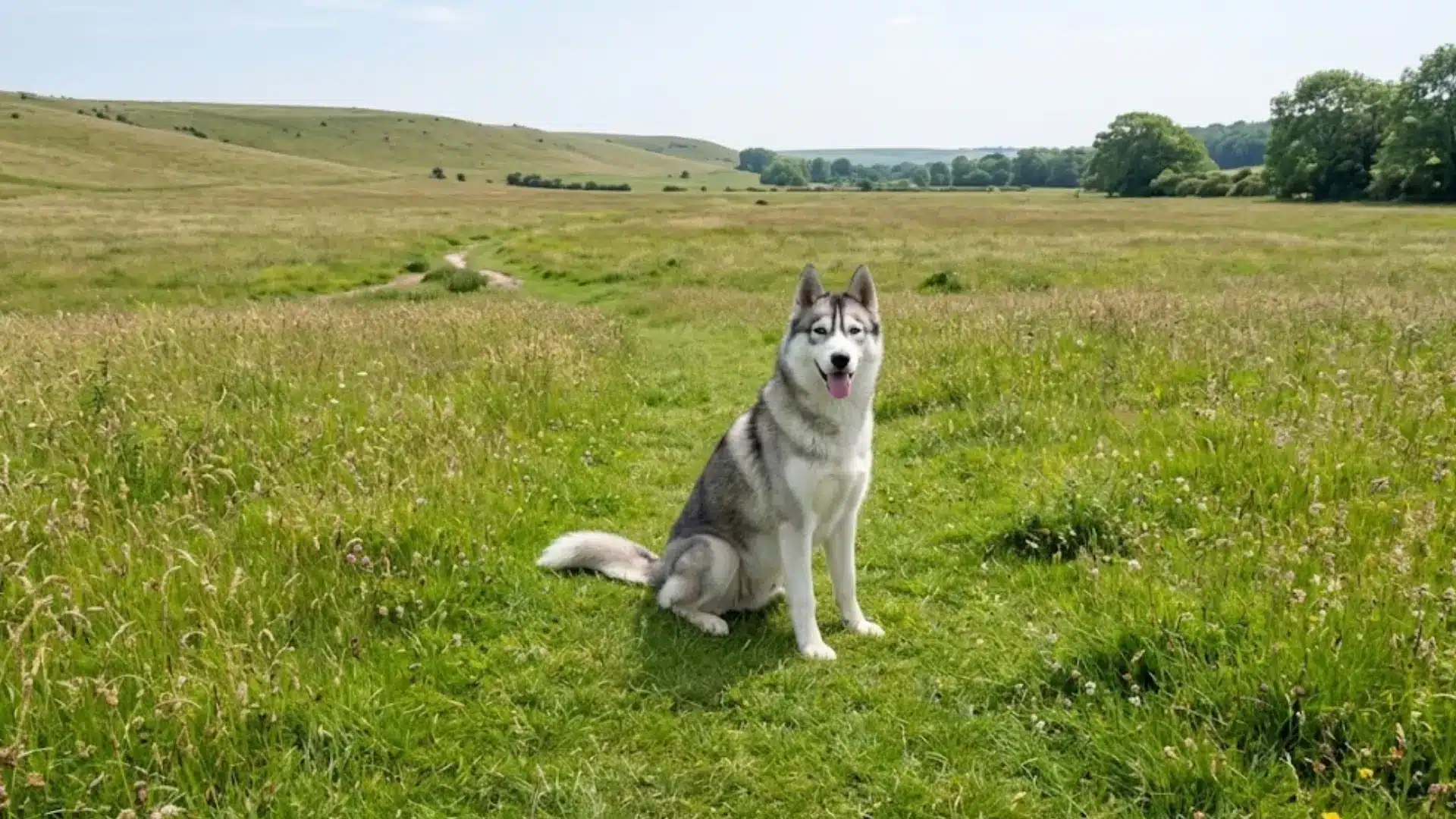
The Kugsha Dog, sometimes called the Amerindian Malamute, is believed to descend from ancient Arctic working dogs and northern wolf-like canines.
It has a strong athletic body, long legs, and a thick double coat appearing in gray, black, sable, or white tones.
The temperament is intelligent, energetic, and highly independent, with strong working instincts.
Because of its wolf-like appearance and endurance, it is often compared with large wolf dog breeds.
- Weight: 70-100 pounds
- Height: 24-30 inches
- Lifespan: 12-14 years
6. Italian Lupo Dog
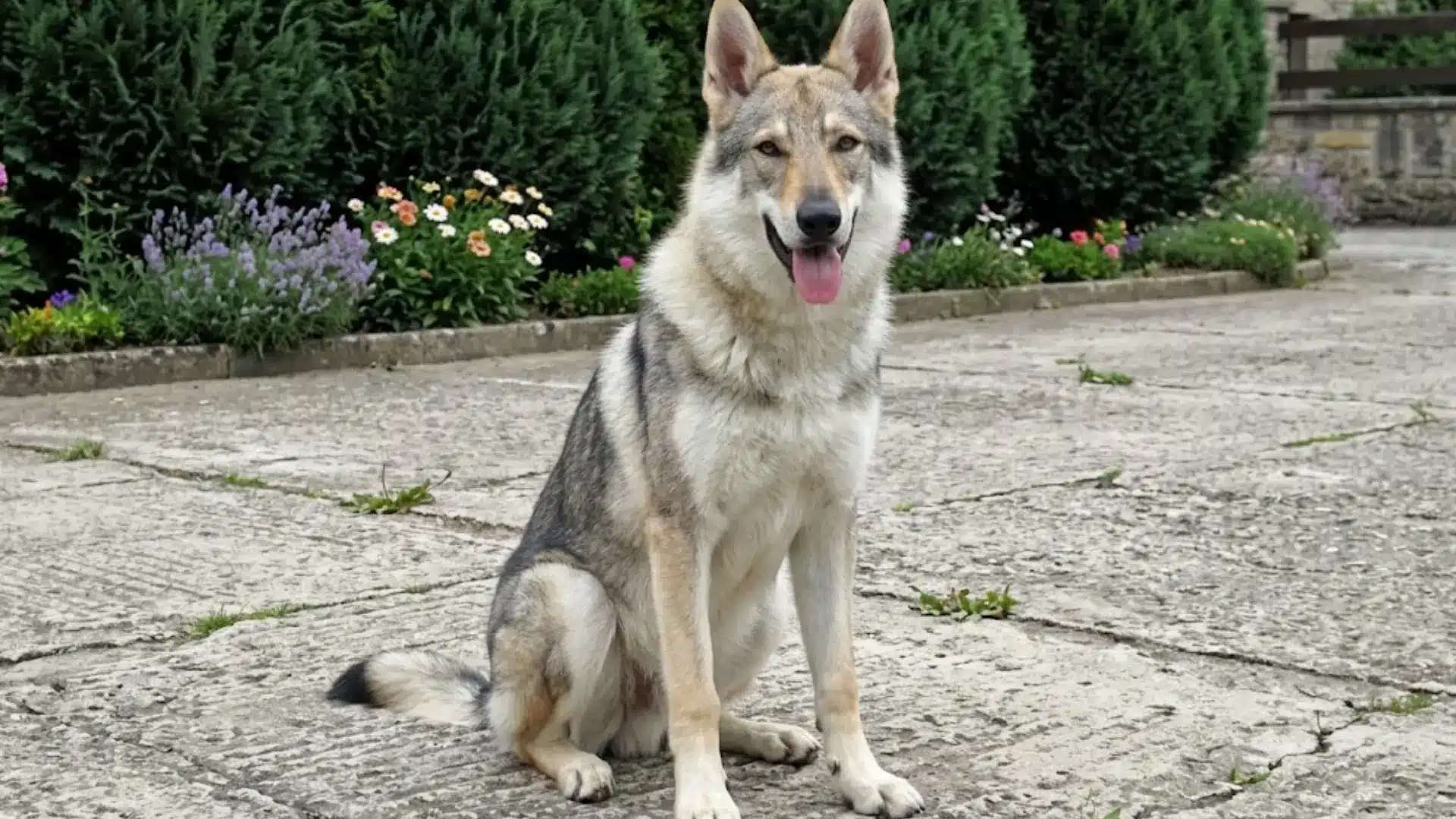
The Italian Lupo Dog was developed in Italy during the 1960s by crossing a German Shepherd with an Italian wolf for search and rescue work.
It has a lean athletic body, sharp ears, and a dense coat that resembles a wild wolf, giving it a striking and powerful appearance.
The coat typically appears in gray or wolf gray shades.
The temperament is intelligent, loyal, and highly trainable with strong tracking ability, making it well-suited for rescue operations and demanding working environments.
- Weight: 66-88 pounds
- Height: 24-28 inches
- Lifespan: 12-14 years
7. Hierran Wolfdog
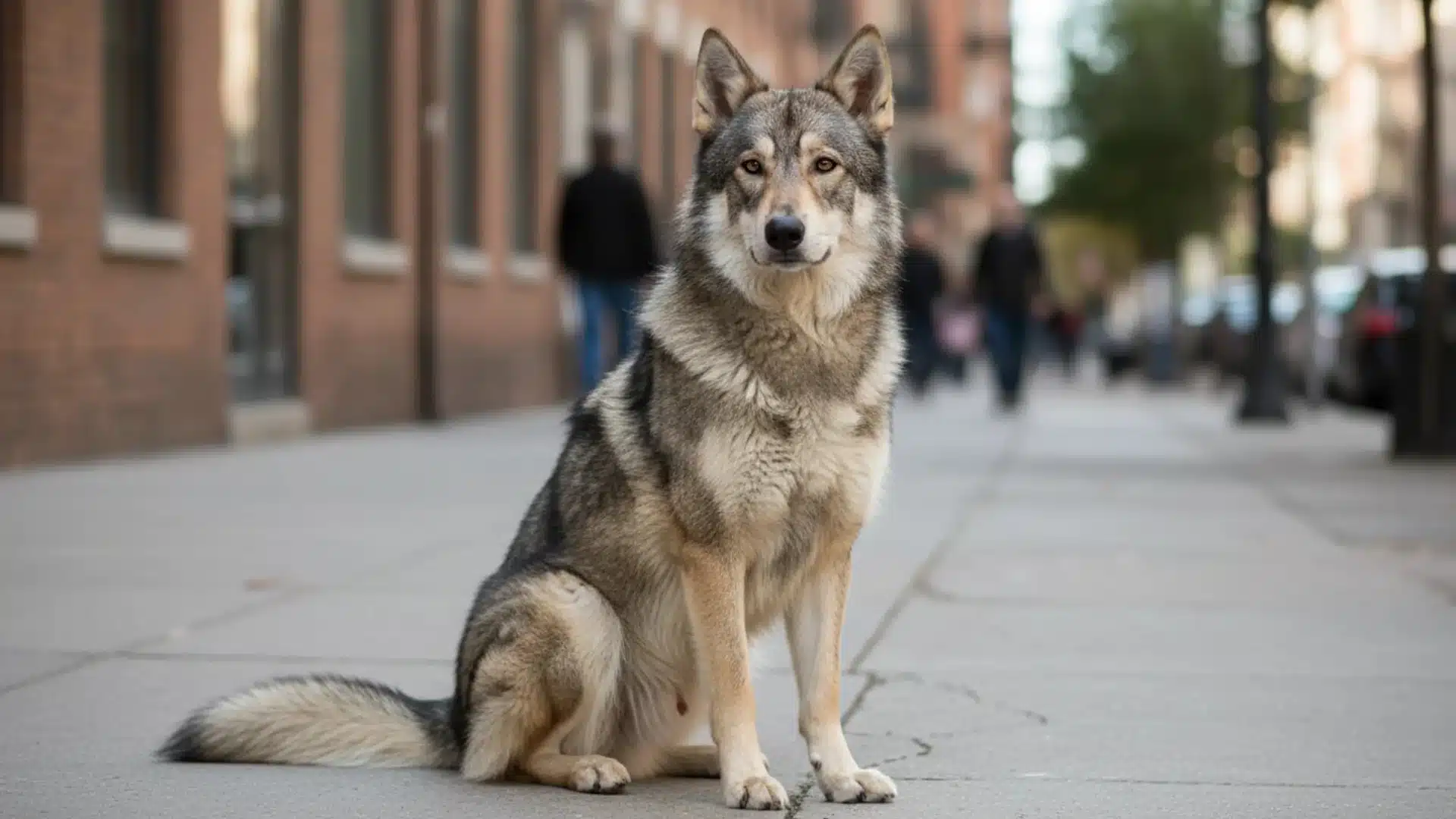
The Hierran Wolfdog is a rare wolfdog type believed to originate from breeding programs that combined shepherd-type dogs with wolf ancestry.
It has a medium to large athletic frame, long legs, and a dense coat usually appearing in gray, sable, or black shades.
The temperament is alert, intelligent, and independent, with strong instincts.
This breed often requires experienced handling and consistent training to manage its energy and natural behavioral traits.
- Weight: 60-90 pounds
- Height: 24-30 inches
- Lifespan: 12-14 years
Large Wolf Dog Breeds That Look Closest to Wolves
These breeds either contain actual wolf ancestry or were created by crossing wolves with domestic dogs. They have more demanding care requirements compared with regular dogs.
8. Czechoslovakian Wolfdog
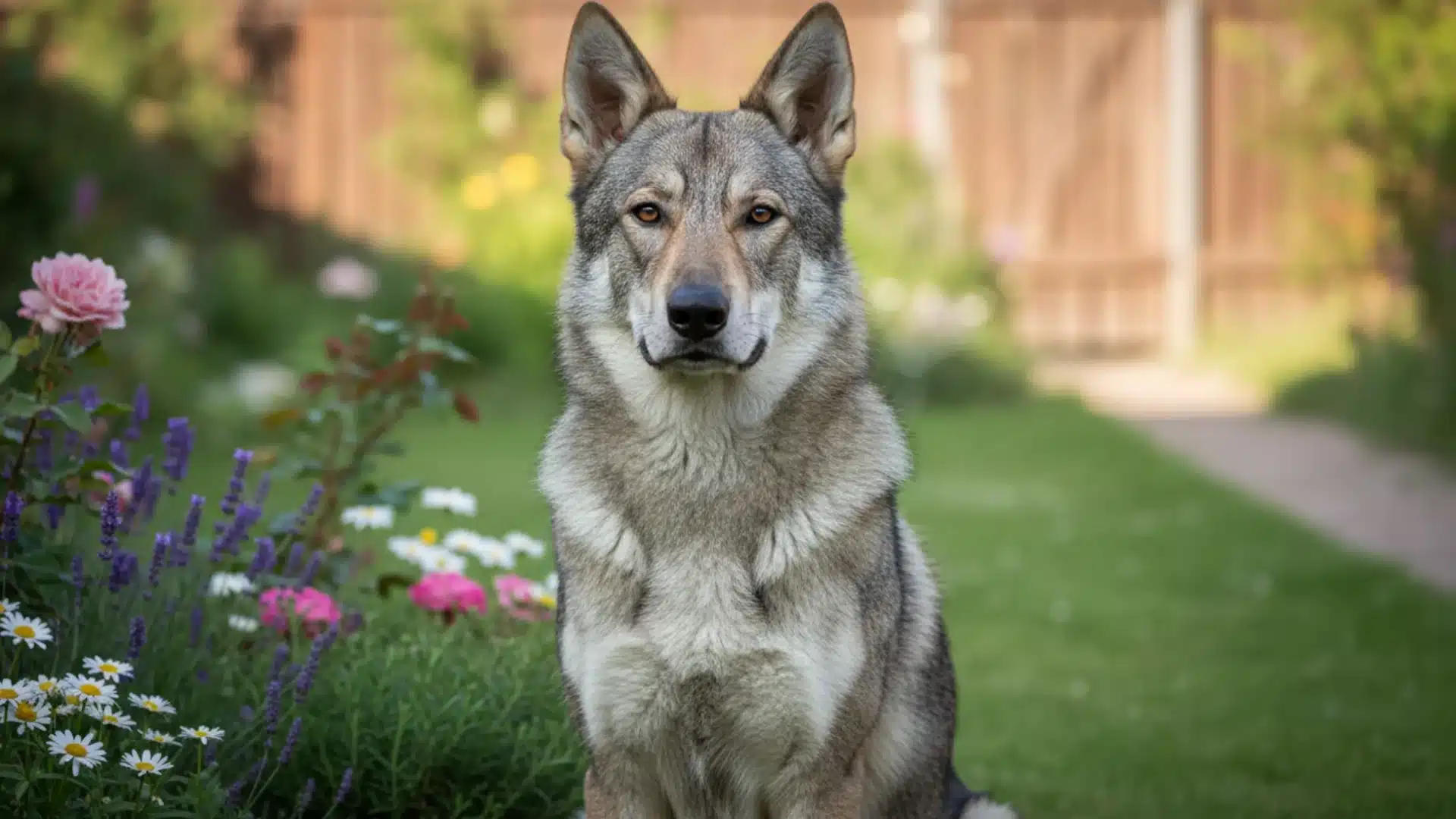
The Czechoslovakian Wolfdog was developed in the 1950s in Czechoslovakia by crossing German Shepherds with Carpathian wolves for military working purposes.
This breed is known among large wolf dog breeds for its strong wolf-like appearance, athletic body, and high endurance.
It has a dense straight coat that usually appears in gray, silver, or yellow-gray shades.
The temperament is intelligent, alert, and loyal but independent. Adoption is usually available through specialized breeders or rare wolfdog rescue groups.
- Weight: 44-57 pounds
- Height: 24-26 inches
- Lifespan: 12-16 years
9. Saarloos Wolfdog
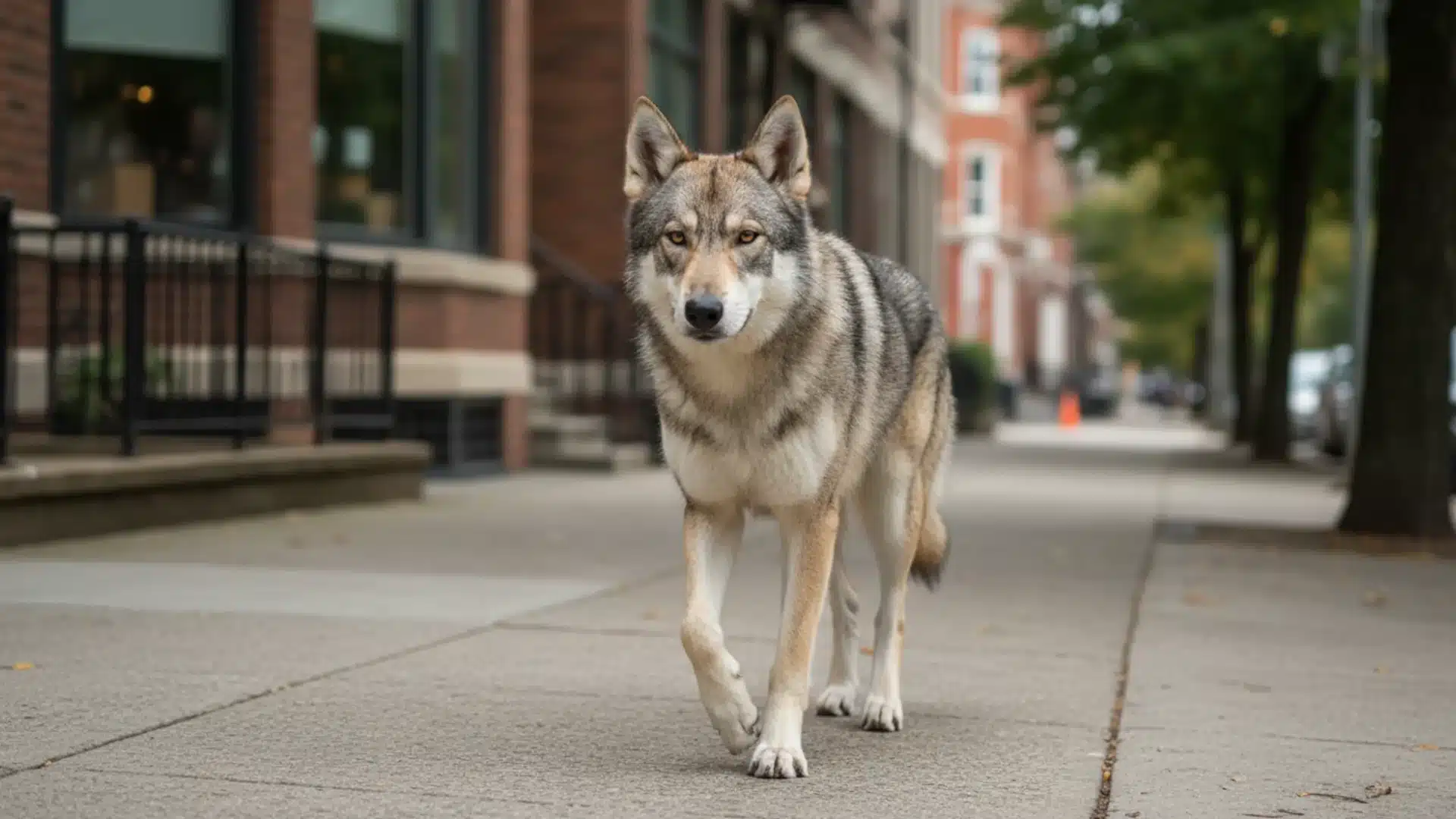
The Saarloos Wolfdog was developed in the Netherlands during the 1930s by breeder Leendert Saarloos through a cross between a German Shepherd and a European gray wolf.
It is often discussed among large wolf dog breeds because of its strong wolf appearance and athletic body.
The breed has long legs, a narrow chest, and a thick double coat that appears in wolf gray, brown, or cream shades.
Its temperament is independent, observant, and reserved with strangers but loyal to familiar people.
- Weight: 70-90 pounds
- Height: 24-30 inches
- Lifespan: 10-12 years
10. American Wolfdog
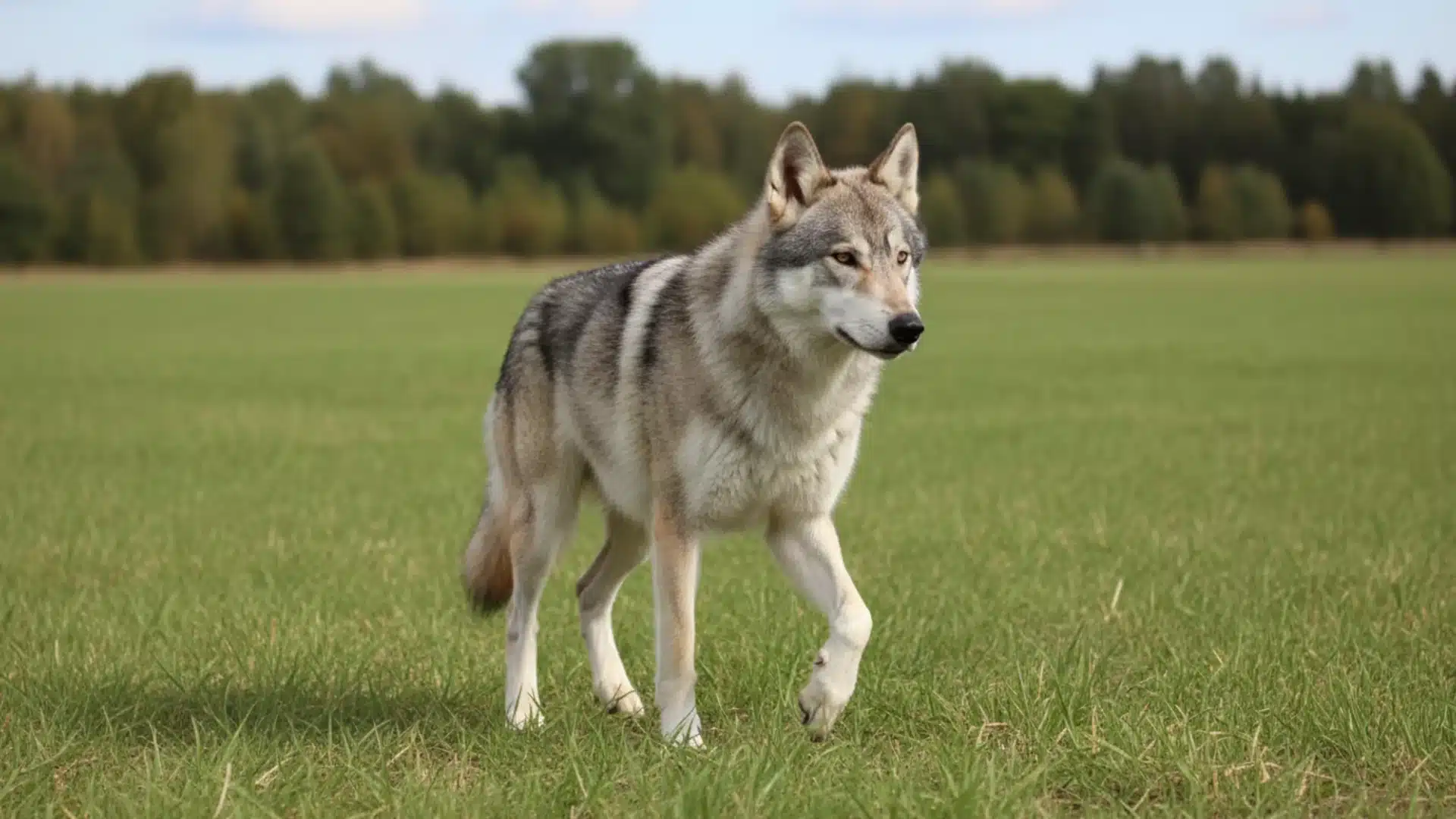
The American Wolfdog is a hybrid created by crossing domestic dogs with gray wolves, often bred for appearance and strength.
It is commonly associated with large wolf dog breeds because of its tall frame, muscular build, and strong wolf-like features.
The coat is usually thick and dense, appearing in gray, black, sable, or white shades.
Temperament varies widely depending on the wolf content but generally includes high intelligence, strong instincts, and independence.
- Weight: 70-120 pounds
- Height: 26-34 inches
- Lifespan: 12-15 years
11. Canadian Timber Wolf Dog
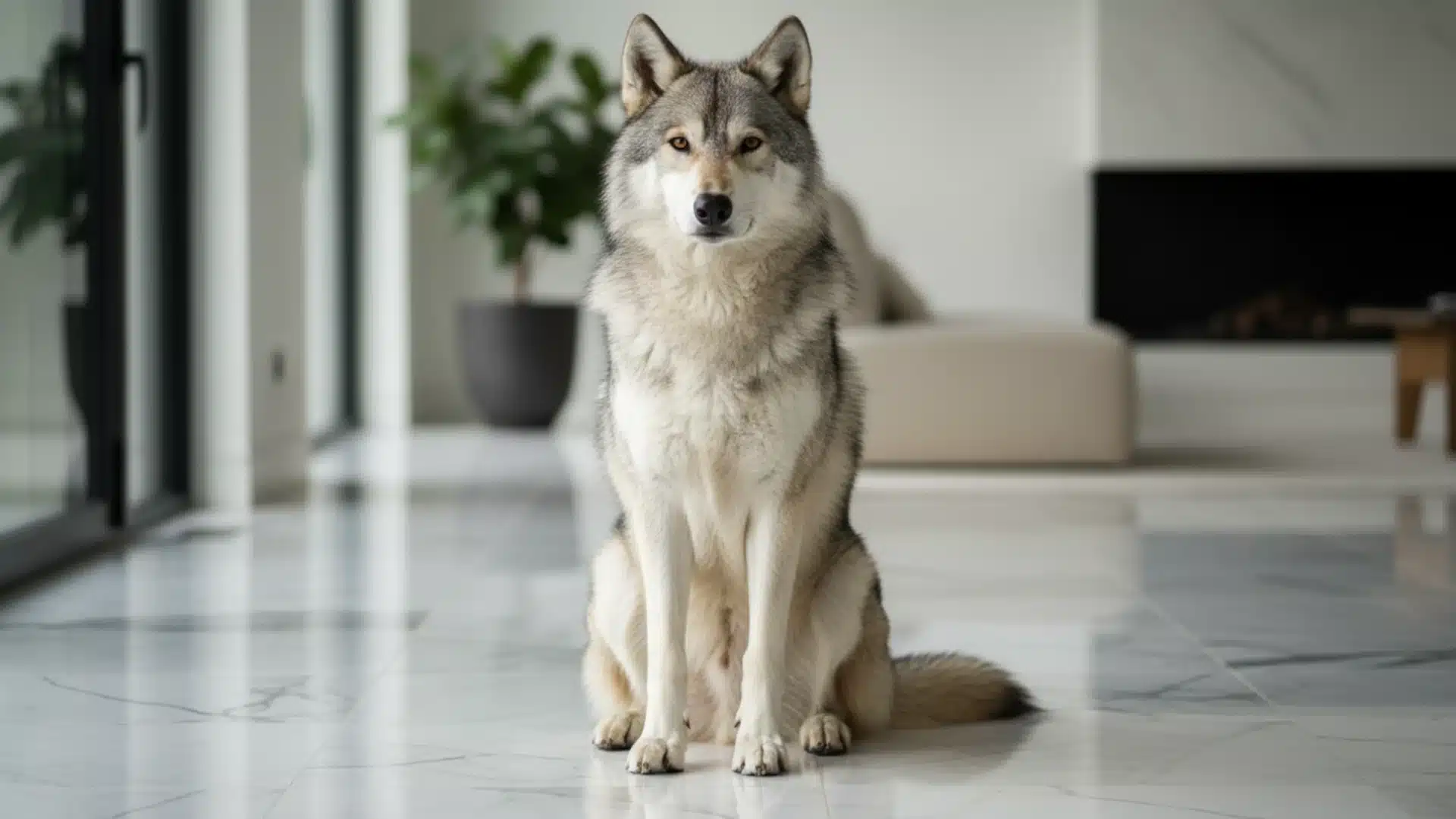
The Canadian Timber Wolf Dog is a powerful hybrid developed from domestic dogs and Canadian gray wolves.
It is known among large wolf dog breeds for its tall frame, strong bone structure, and dense fur that protects it in colder climates.
The breed has a thick double coat that usually appears in gray, black, sable, or white tones.
Its temperament is highly intelligent, alert, and independent, often showing strong pack instincts and loyalty to familiar people.
- Weight: 80-140 pounds
- Height: 26-34 inches
- Lifespan: 12-15 years
12. Blue Bay Shepherd
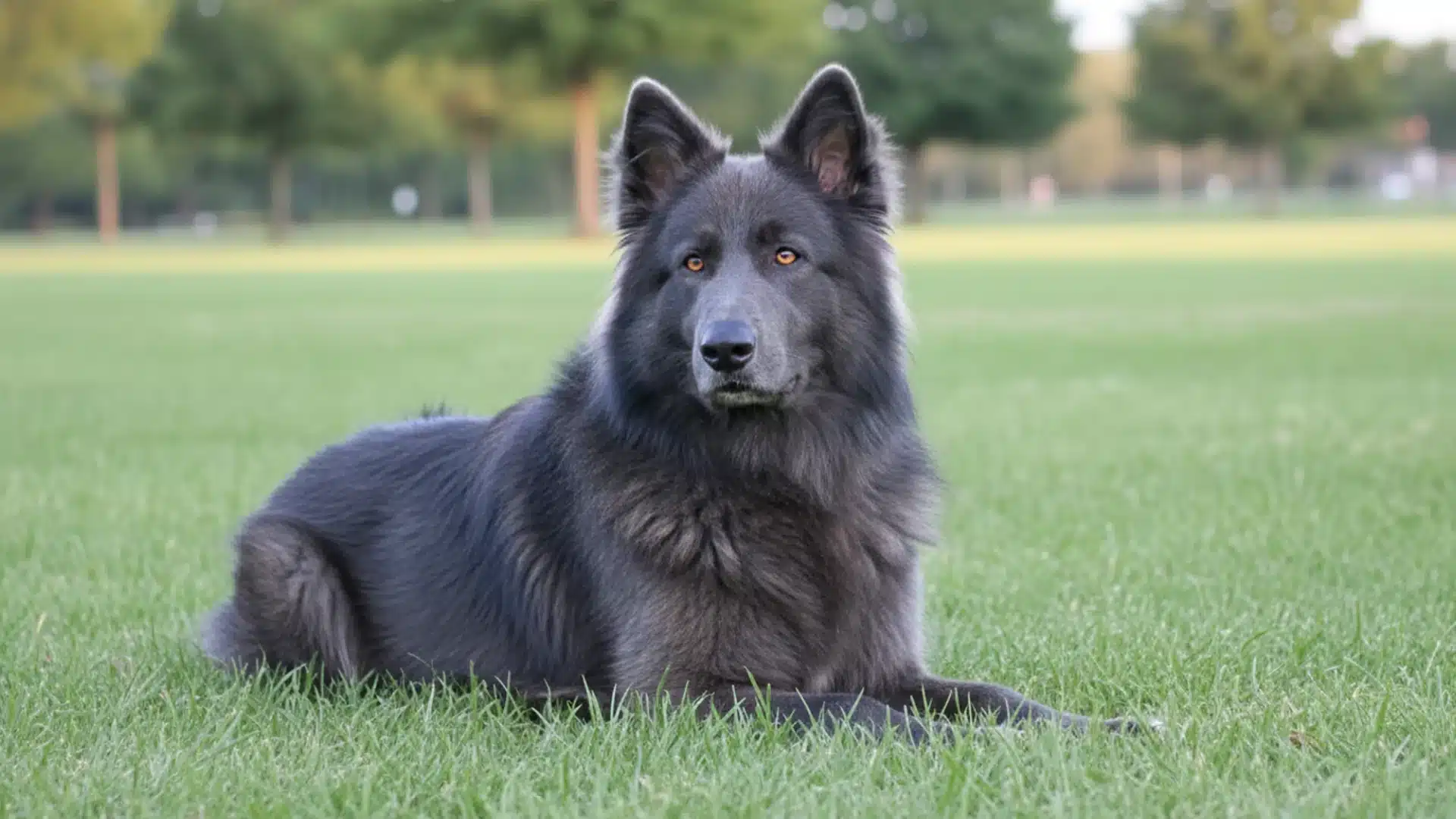
The Blue Bay Shepherd is a modern breed developed in the United States by crossing wolf-content dogs with shepherd lines to create a companion with a wolf-like appearance.
This breed has a large, athletic body, a broad head, and a striking blue or steel gray coat that gives it a unique look.
Its temperament is generally calm, loyal, and social compared with many wolf hybrids.
The thick double coat is usually long and dense, designed to handle cooler climates.
- Weight: 70-130 pounds
- Height: 24-30 inches
- Lifespan: 12-14 years
13. Kunming Wolfdog
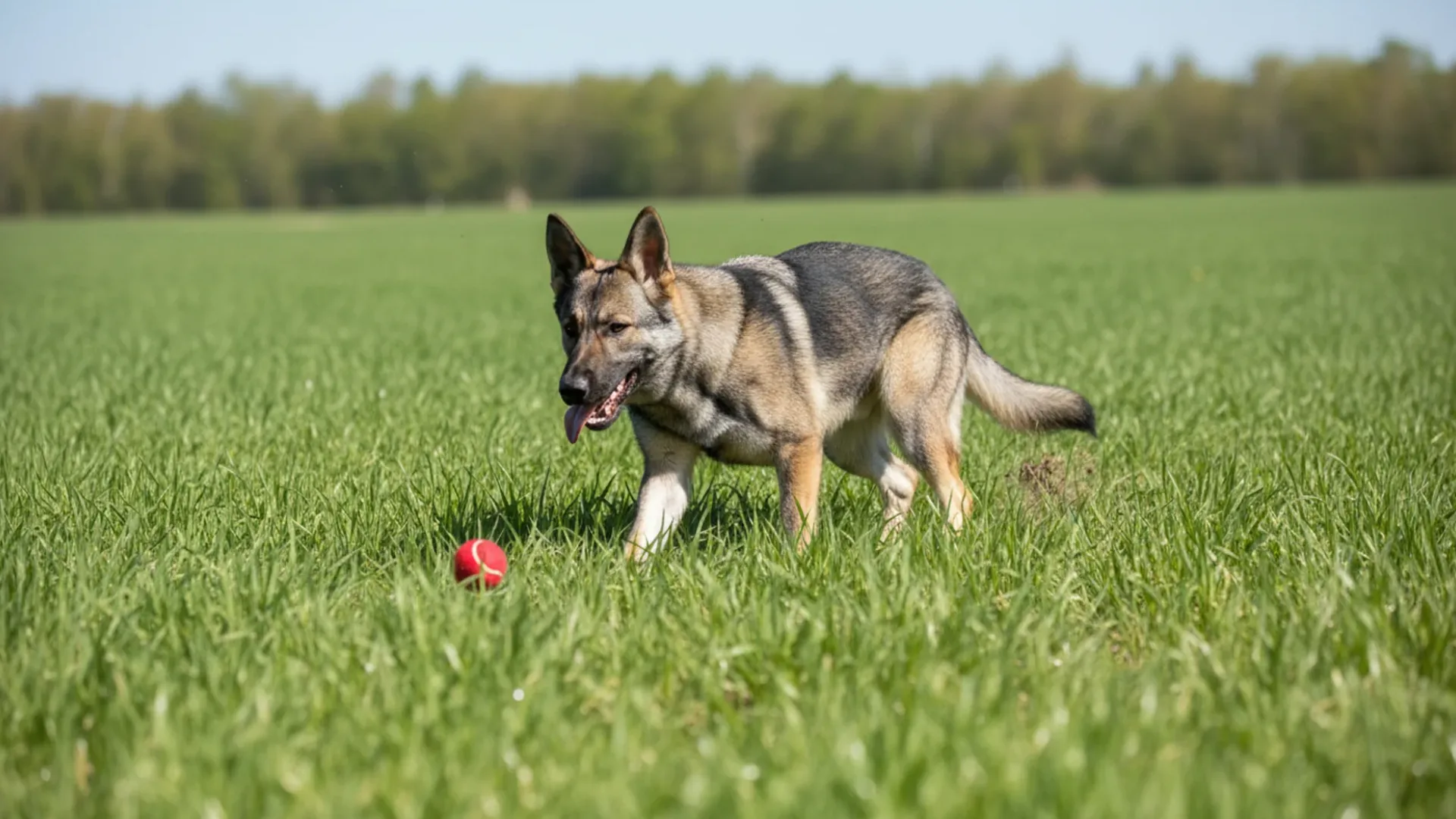
The Kunming Wolfdog is a working dog developed in China during the 1950s for military and police work.
It was bred from German Shepherd-type dogs and local wolf-like canines to create a strong, intelligent working breed.
It is often mentioned among large wolf dog breeds because of its tall build, long legs, and wolf-like facial structure.
The coat is dense and usually appears in black, wolf gray, or straw yellow. The temperament is alert, trainable, confident, and highly loyal to handlers.
- Weight: 65-85 pounds
- Height: 24-27 inches
- Lifespan: 12-14 years
14. Russian Wolfdog
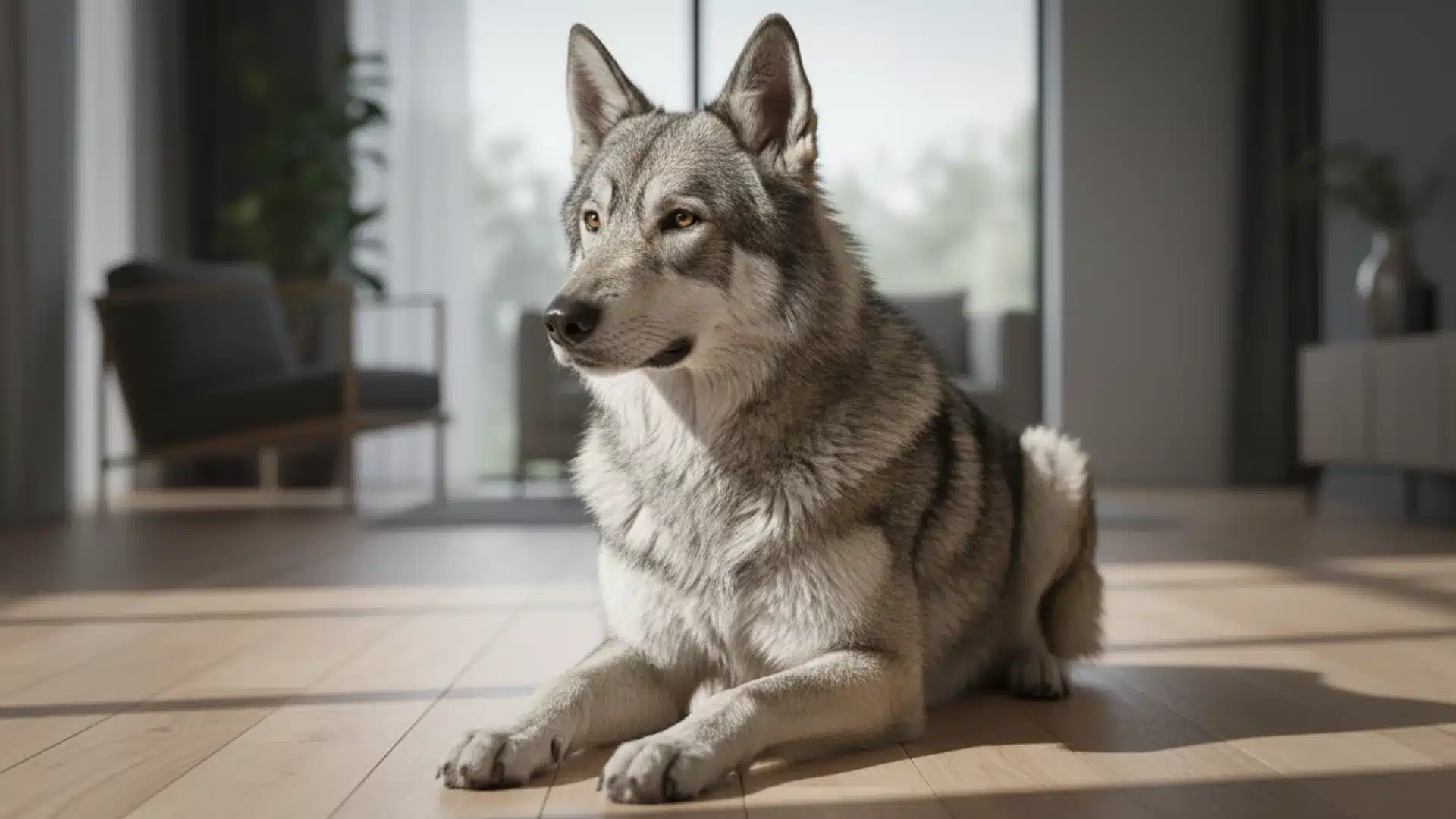
The Russian Wolfdog, also called Volkosob, was developed in Russia by crossing German Shepherds with gray wolves for border patrol and military work.
It is recognized among large wolf dog breeds for its strong build, long legs, and powerful endurance.
The breed has a dense double coat that usually appears in gray, sable, black, or wolf gray shades.
Its temperament is alert, highly intelligent, and extremely loyal to handlers, though it remains cautious and reserved around unfamiliar people.
- Weight: 80-120 pounds
- Height: 26-32 inches
- Lifespan: 12-15 years
15. Alaskan Malamute
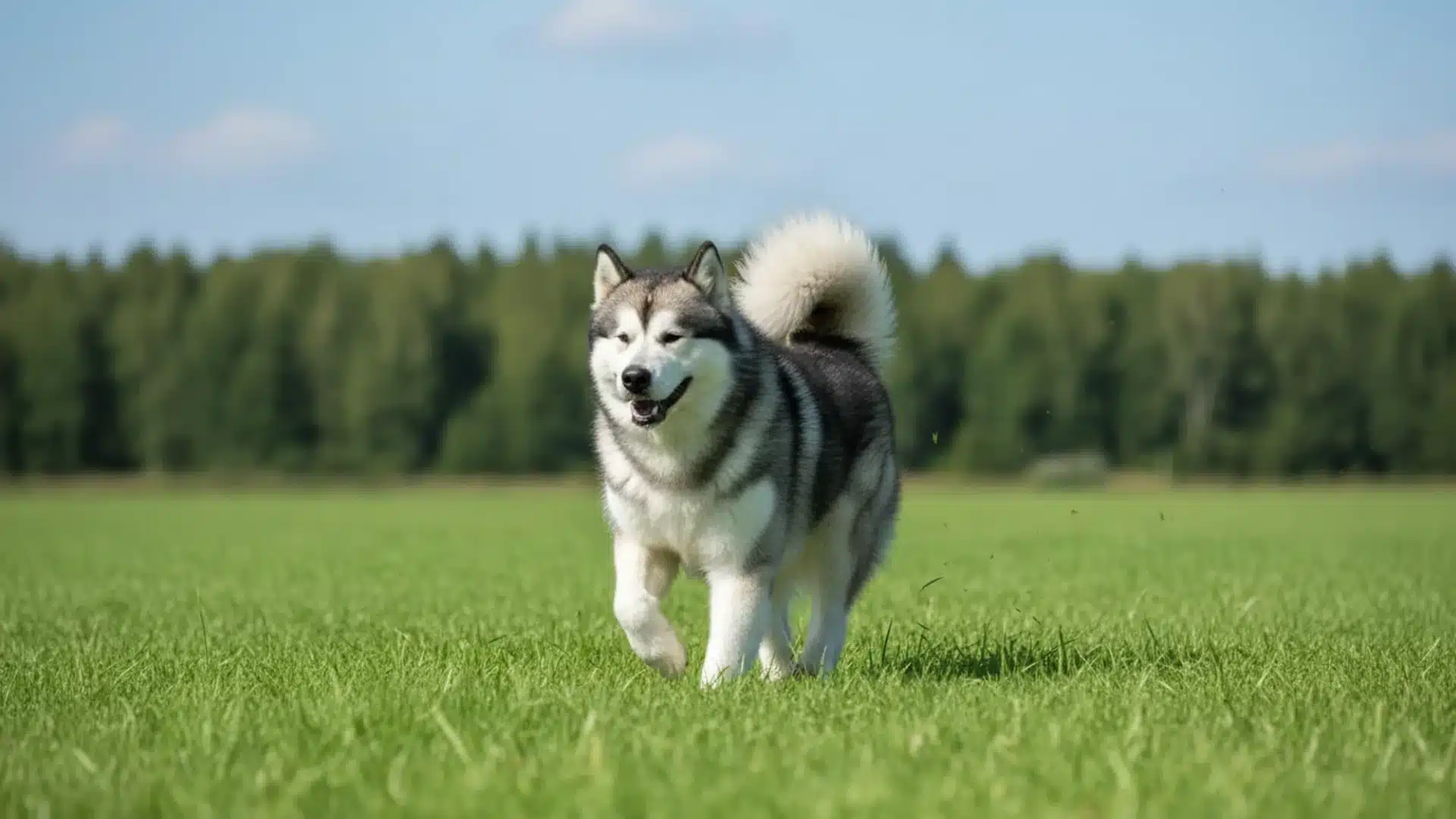
The Alaskan Malamute is an ancient Arctic sled dog developed by the Inuit Mahlemut tribe for hauling heavy loads in harsh climates.
It has a powerful, sturdy build, broad chest, and a thick double coat designed to withstand extreme cold.
The coat commonly appears in gray, black, sable, red, and white combinations.
The temperament is friendly, loyal, and energetic, though the breed can be strong-willed and independent. Malamutes are known for endurance and strong working instincts.
- Weight: 75-100 pounds
- Height: 23-25 inches
- Lifespan: 10-14 years
16. Tamaskan Dog
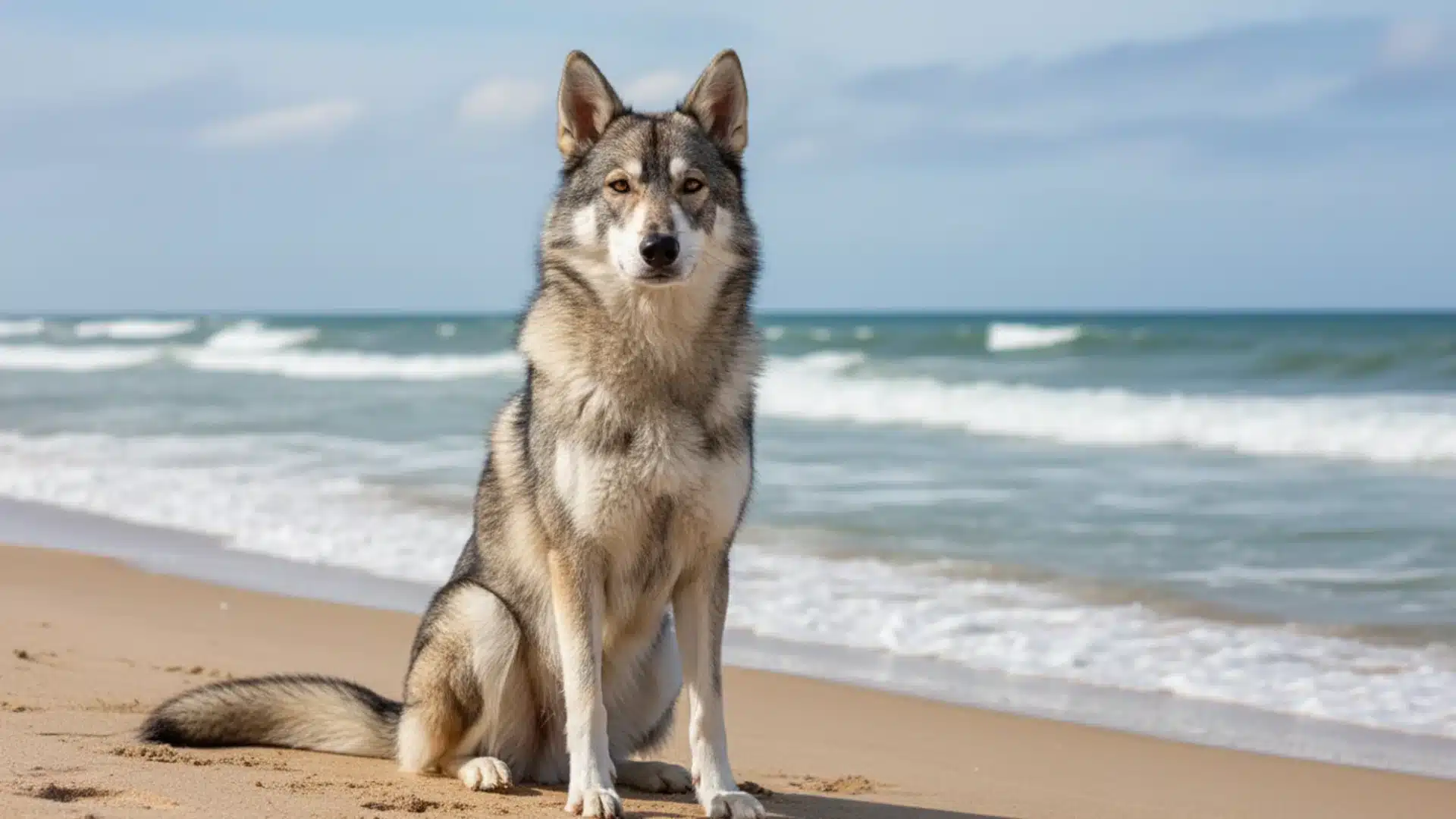
The Tamaskan Dog was developed in Finland in the late 20th century by combining Siberian Huskies, Alaskan Malamutes, and shepherd-type dogs.
It has a tall athletic body, straight back, and almond-shaped eyes that enhance its wolf-like appearance.
The thick double coat usually appears in wolf gray, red gray, or black gray shades.
The temperament is intelligent, friendly, energetic, and cooperative, making the breed responsive to training.
- Weight: 55-90 pounds
- Height: 24-28 inches
- Lifespan: 14-15 years
17. Northern Inuit Dog
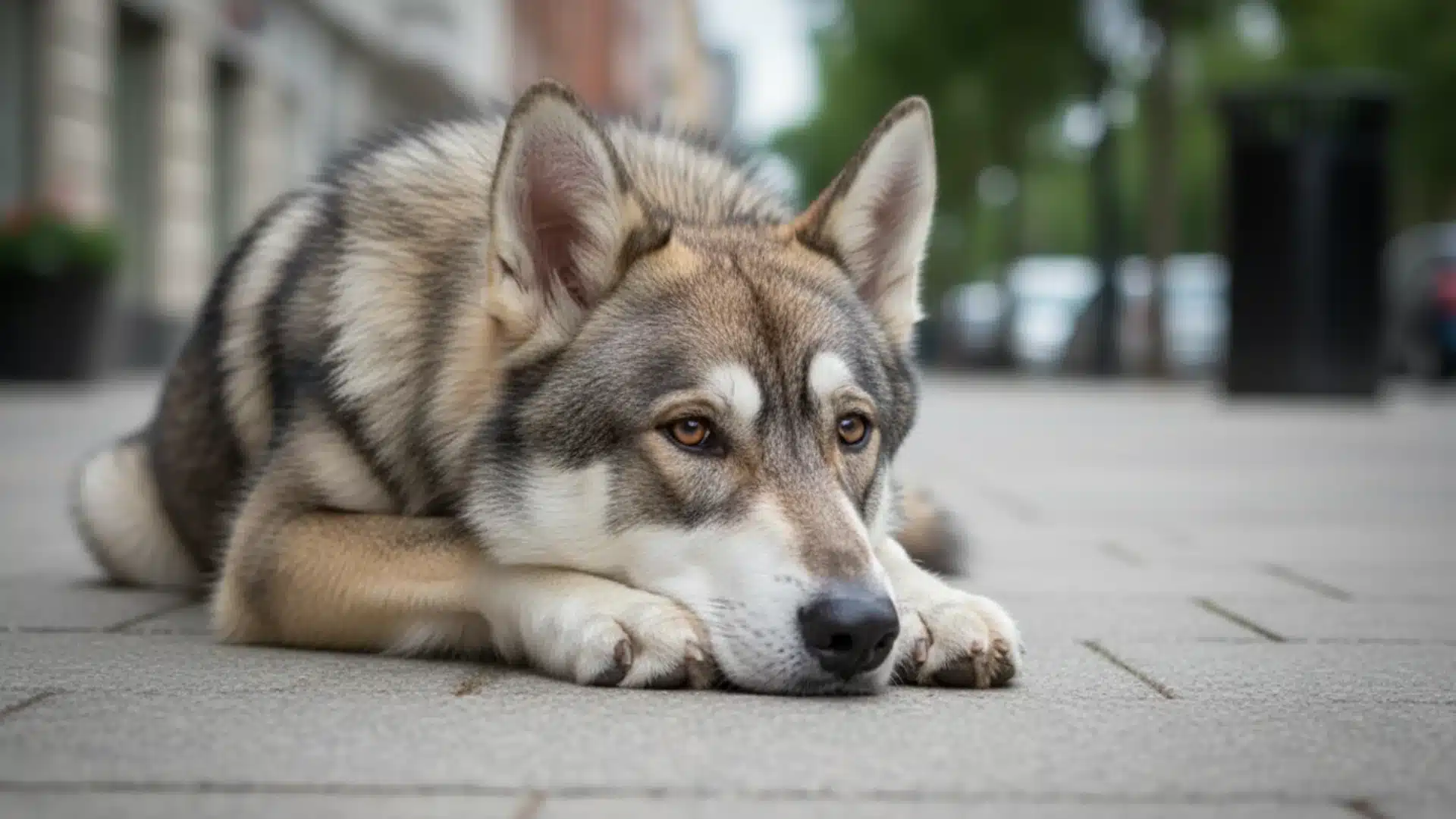
It was developed in the United Kingdom during the 1980s by mixing Siberian Huskies, Alaskan Malamutes, and German Shepherd type dogs to create a wolf-like companion.
This breed is often included in discussions about large wolf dog breeds because of its tall frame, pointed ears, and striking wolf appearance.
The coat is thick and straight, commonly appearing in wolf gray, sable, black, or white shades.
The temperament is friendly, intelligent, social, and generally loyal to family members.
- Weight: 55-110 pounds
- Height: 23-32 inches
- Lifespan: 12-15 years
18. Utonagan
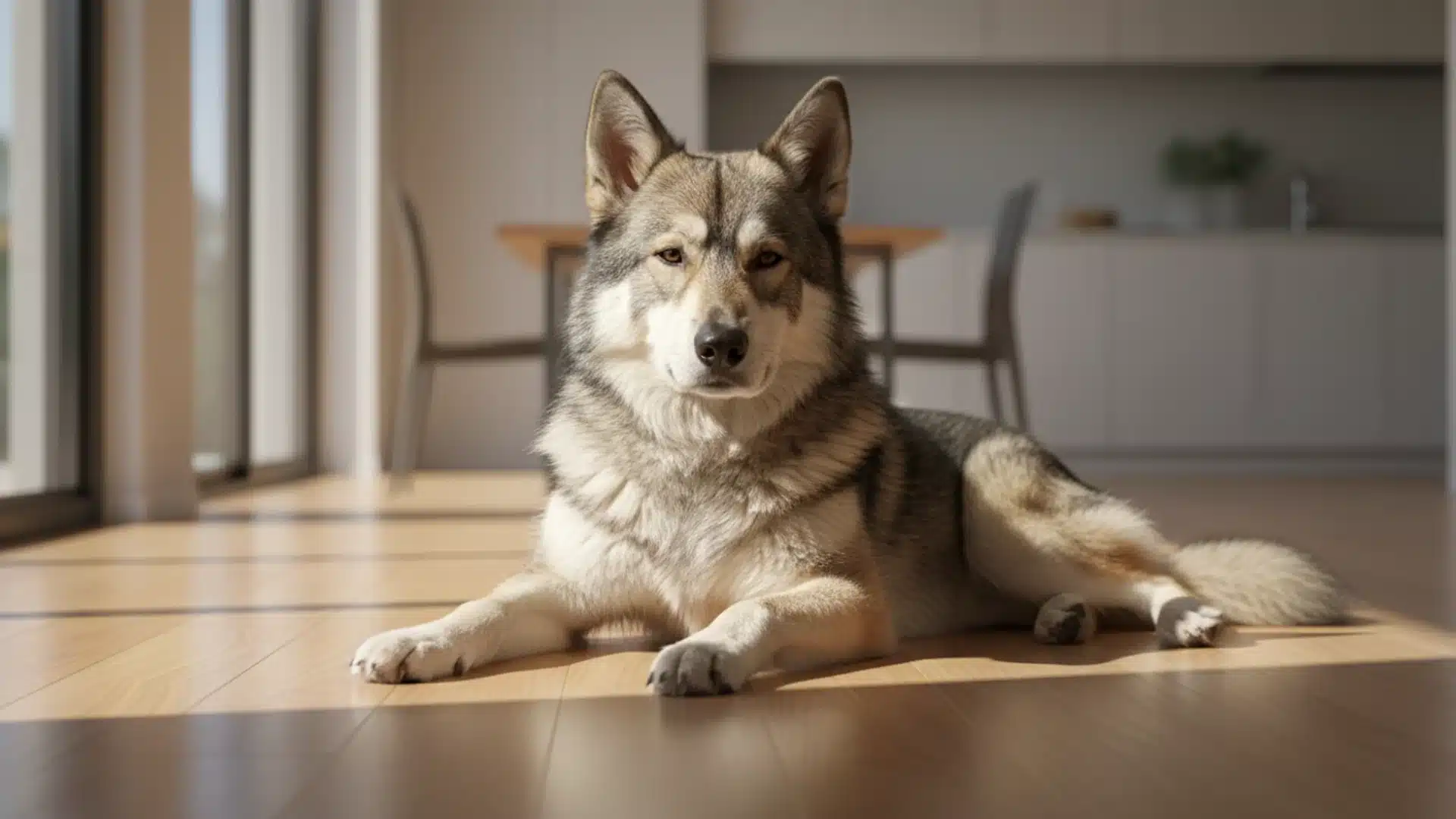
The Utonagan is a wolf-like companion breed developed in the United Kingdom by combining Siberian Huskies, Alaskan Malamutes, and German Shepherd lines.
The goal was to create a dog with a strong wolf appearance but a stable, family-friendly temperament.
It has a tall athletic frame, erect ears, and a thick double coat that appears in wolf gray, black, white, or sable shades.
The temperament is intelligent, calm, loyal, and highly social with people.
- Weight: 55-90 pounds
- Height: 23-30 inches
- Lifespan: 12-15 years
19. German Shepherd
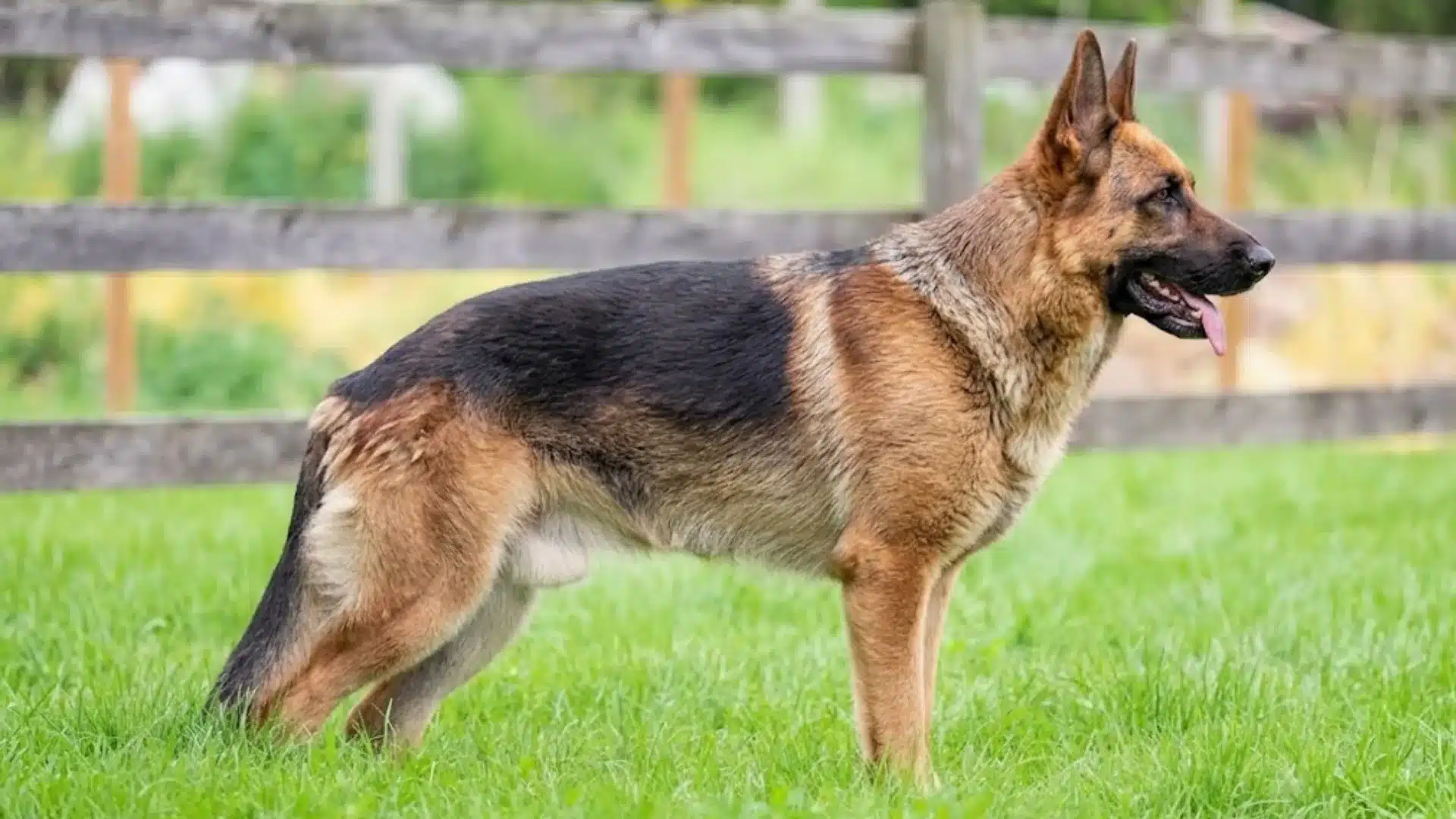
The German Shepherd was developed in Germany in the late 19th century as a herding and working dog known for intelligence and strength.
It has a strong muscular body, upright ears, and a confident posture that sometimes gives it a wolf-like appearance.
Because of its build and facial structure, it is occasionally mentioned when discussing large wolf-dog breeds.
The coat is usually medium or long and appears in black and tan, sable, black, or white. The temperament is loyal, courageous, alert, and highly trainable.
- Weight: 50-90 pounds
- Height: 22-26 inches
- Lifespan: 9-13 years
Are Wolf Dog Breeds Legal to Own?
The legality of owning large wolf dog breeds or wolf hybrid dogs depends on the country, state, and sometimes even the local city rules.
There is no single nationwide ban, but laws vary widely from one state to another.
The International Wolf Center explains that, at the federal level, the USDA classifies a cross between a wild animal and a domestic dog as a domestic animal.
Wolf dog breeds are legal without major restrictions in states like Alabama, Arizona, and Colorado, where owners often just follow standard pet rules or minor housing guidelines.
Permits are needed in states such as Delaware, Indiana, and Virginia for secure setups and health checks.
They are illegal in states including Connecticut, Georgia, Hawaii, Illinois, and Maryland due to safety and wildlife laws.
Adopt wolf dogs from rescues like Wild Spirit Wolf Sanctuary or W.O.L.F. Sanctuary, which rehome low-content hybrids after temperament testing.
Essential Care & Requirements for Wolf Dog Breeds
Large wolf dog breeds require much more responsibility than ordinary domestic dogs. Their wolf ancestry brings strong instincts and unique behavioral needs that demand careful management.
- Training and socialization: Early structured training builds trust and control, helping wolf dog breeds manage instincts and unfamiliar situations safely.
- Secure living environment: Wolf dogs require spacious outdoor areas with tall reinforced fencing to prevent escapes.
- High physical activity needs: A large wolf dog requires daily running, long walks, and mental stimulation.
- Specialized high-protein diet: Wolf hybrids often require nutrient-rich diets focused on protein, raw meat, and balanced nutrition.
- Experienced and knowledgeable ownership: Handling wolf dogs requires understanding pack behavior, dominance signals, and consistent leadership.
Conclusion
Wolf dog breeds continue to fascinate dog lovers because they combine the wild look of wolves with the loyalty of domestic dogs.
Throughout this guide, you learned about several breeds that either carry wolf ancestry or strongly resemble wolves in appearance.
Each breed has unique traits, from powerful size and thick coats to intelligent but independent temperaments.
At the same time, owning large wolf dog breeds or wolf-like dogs requires responsibility, proper space, and careful research before bringing one home.
Not every breed fits every lifestyle, so understanding their needs is essential for a healthy relationship between owner and dog.
Have you ever owned or met one of these wolf-like dogs? Share your experience, thoughts, or favorite breed in the comments below.
Frequently Asked Questions
Can Wolf Hybrids Live With Other Pets?
Wolf hybrids may live with other pets if raised together from an early age. Strong prey instincts remain common, so careful supervision and gradual socialization are necessary.
How Do Wolves Show Affection?
Wolves express affection through gentle muzzle licking, nuzzling, tail wagging, and close physical contact. Pack members often sleep together, groom one another, and stay close.
What is the IQ of the Wolf?
Wolves demonstrate high intelligence comparable to that of many domestic dogs. Cooperative hunting strategies and complex social behavior reflect strong cognitive skills within wolf packs.