

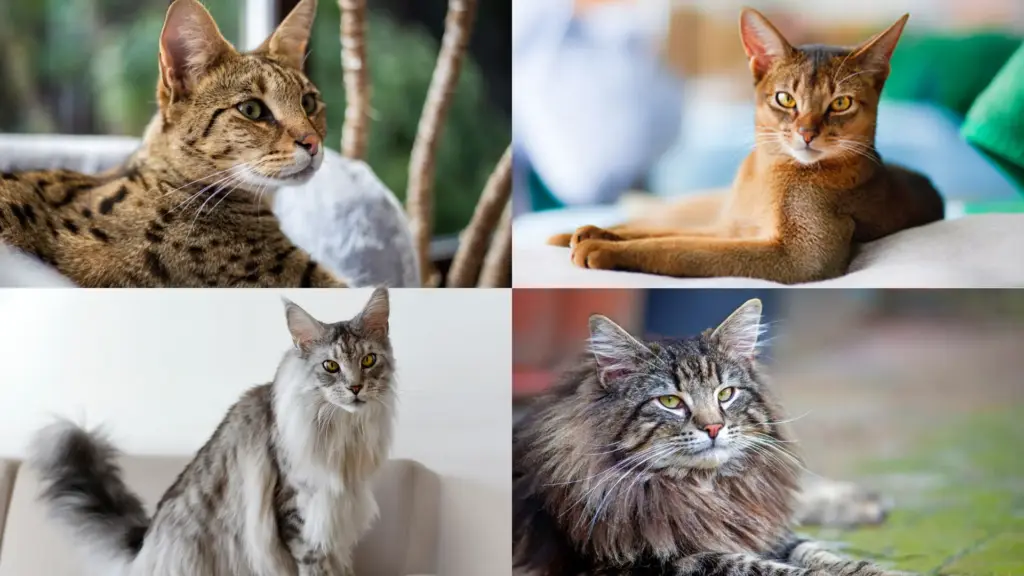
A cat jumps onto the table, not a tiny kitten, but a powerful, wild-looking feline with long legs, bold markings, and a presence that turns heads instantly.
Moments like this make many pet lovers wonder what it would be like to live with a cat that looks straight out of the jungle.
That curiosity often leads people to large cat breeds exotic in appearance and personality.
These cats combine the beauty of wild felines with the companionship of domestic pets.
Their striking coats, muscular builds, and intelligent behavior make them fascinating animals to share a home with. Yet choosing one is not only about their dramatic look.
For anyone drawn to cats that feel extraordinary, knowing the world of large exotic breeds can open the door to a truly unforgettable pet experience.
What are Large Exotic Cat Breeds?
Large exotic cat breeds are domestic cats known for their impressive size and wild-looking appearance, while still being suitable as household pets.
Unlike true wild big cats such as lions or tigers, these breeds are fully domesticated and can live comfortably with people.
A cat is usually considered large when it has a bigger body frame, greater height, and a weight that often ranges between 15 and 25 pounds or even more.
Many of these breeds have muscular builds, long bodies, and striking features that resemble wild felines.
The exotic look is one reason many pet owners are drawn to them.
Some large breeds also have hybrid origins, meaning they were developed by crossing domestic cats with wild species.
Hybrid and Truly Exotic Large Cat Breeds
These breeds often have wild ancestry or were developed to resemble wild cats. They usually have striking coats, long legs, and very active personalities.
1. Savannah Cat
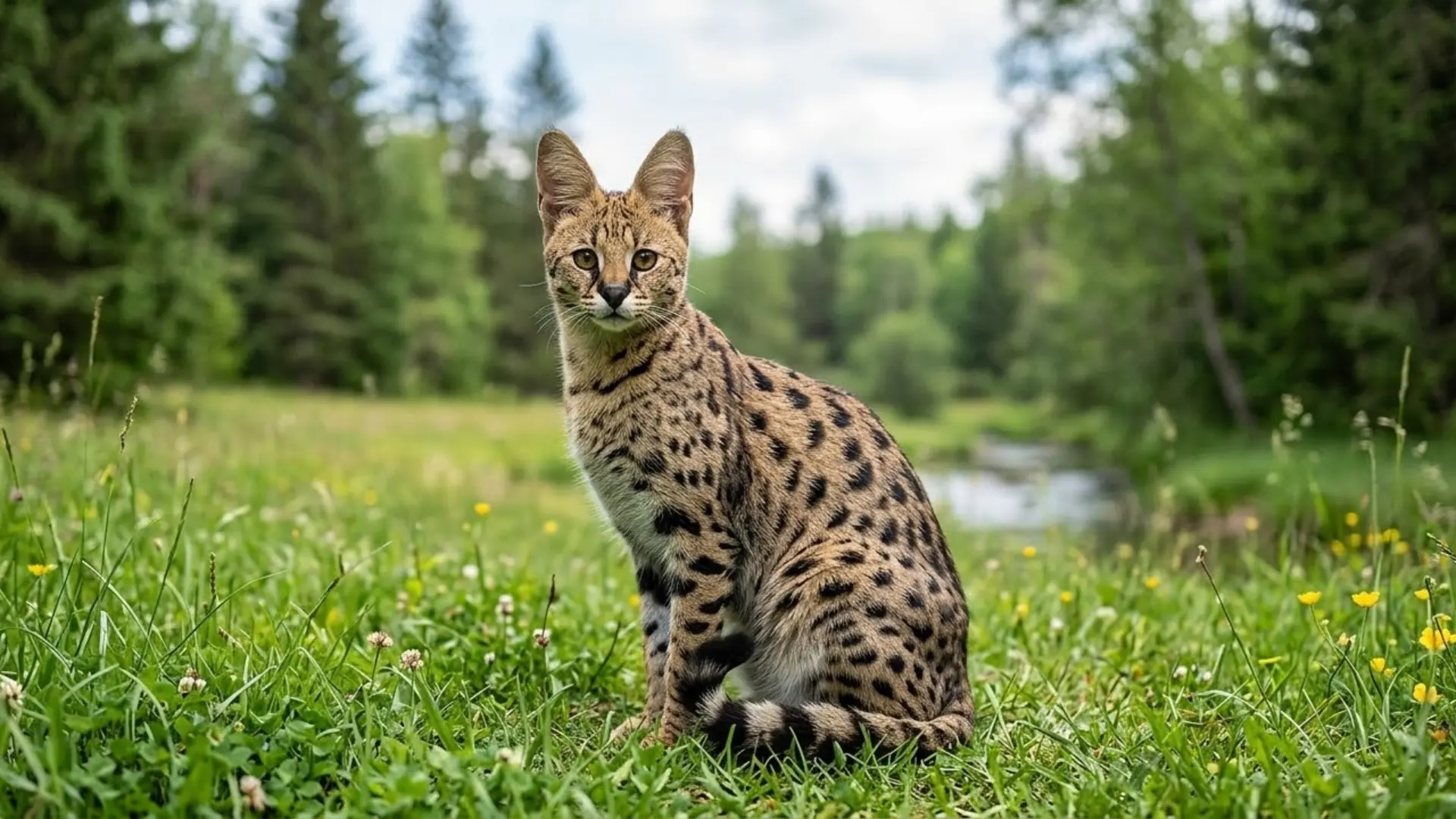
The Savannah Cat originated in the United States during the 1980s from a cross between a domestic cat and the African serval.
This breed is known for its tall frame, striking spotted coat, and energetic personality.
Savannahs are highly intelligent and often display dog-like behavior, enjoying play and interaction with owners.
Their long legs, large ears, and lean, muscular bodies give them a wild appearance, making them one of the most recognized large, exotic-looking domestic cats.
- Weight: 12 to 25 pounds
- Height: 14 to 17 inches
- Lifespan: 12 to 20 years
2. Bengal Cat
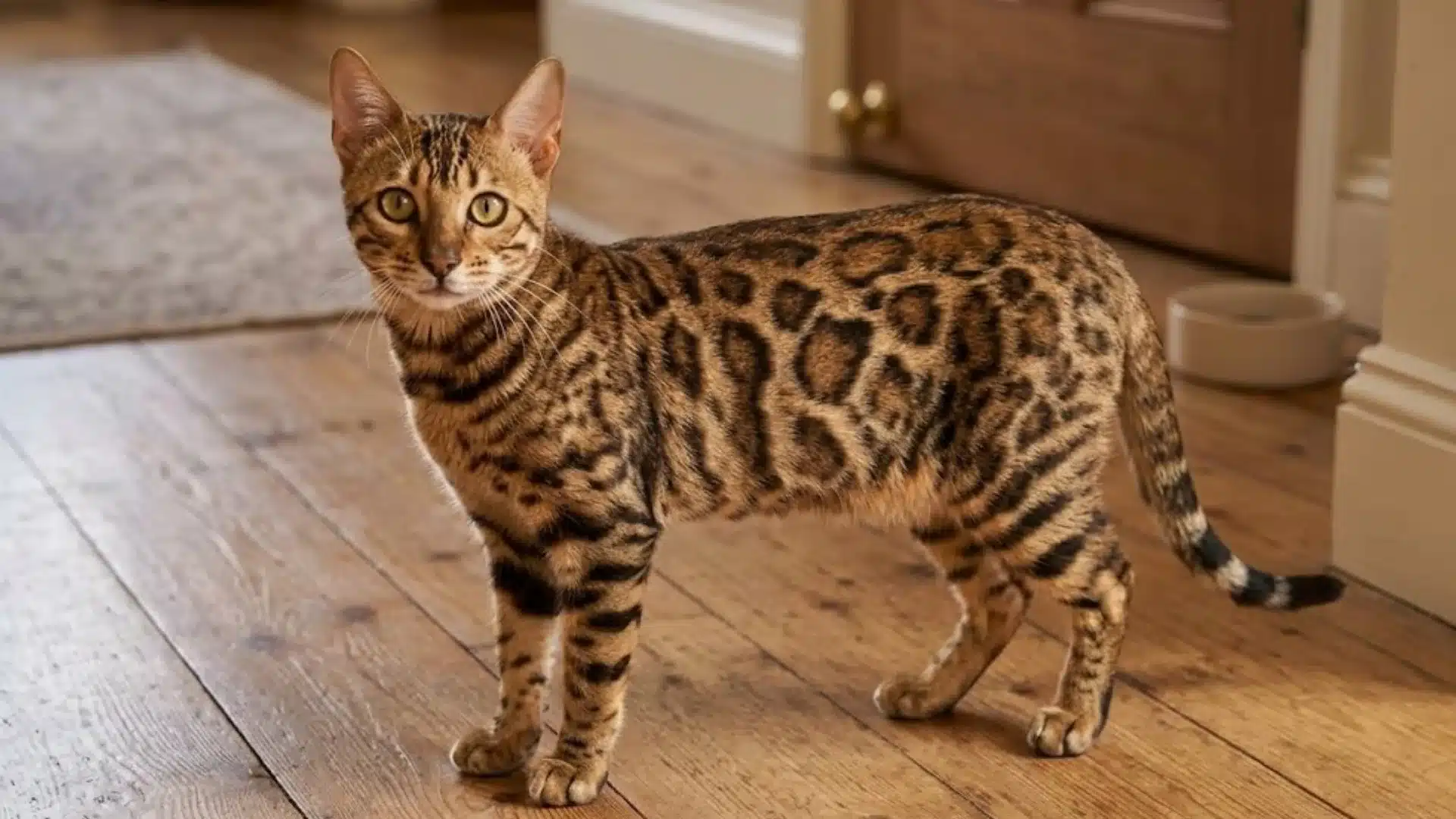
The Bengal Cat originated in the United States through the selective breeding of domestic cats with the Asian leopard cat.
This breed is well known among large cat breeds, exotic for its striking leopard-like coat and energetic personality.
Bengals are intelligent, playful, and highly active, often enjoying climbing and interactive games with owners.
Their sleek, muscular body, bold rosetted patterns, and bright eyes create a wild appearance while maintaining a friendly domestic temperament.
- Weight: 8 to 15 pounds
- Height: 13 to 16 inches
- Lifespan: 12 to 16 years
3. Chausie
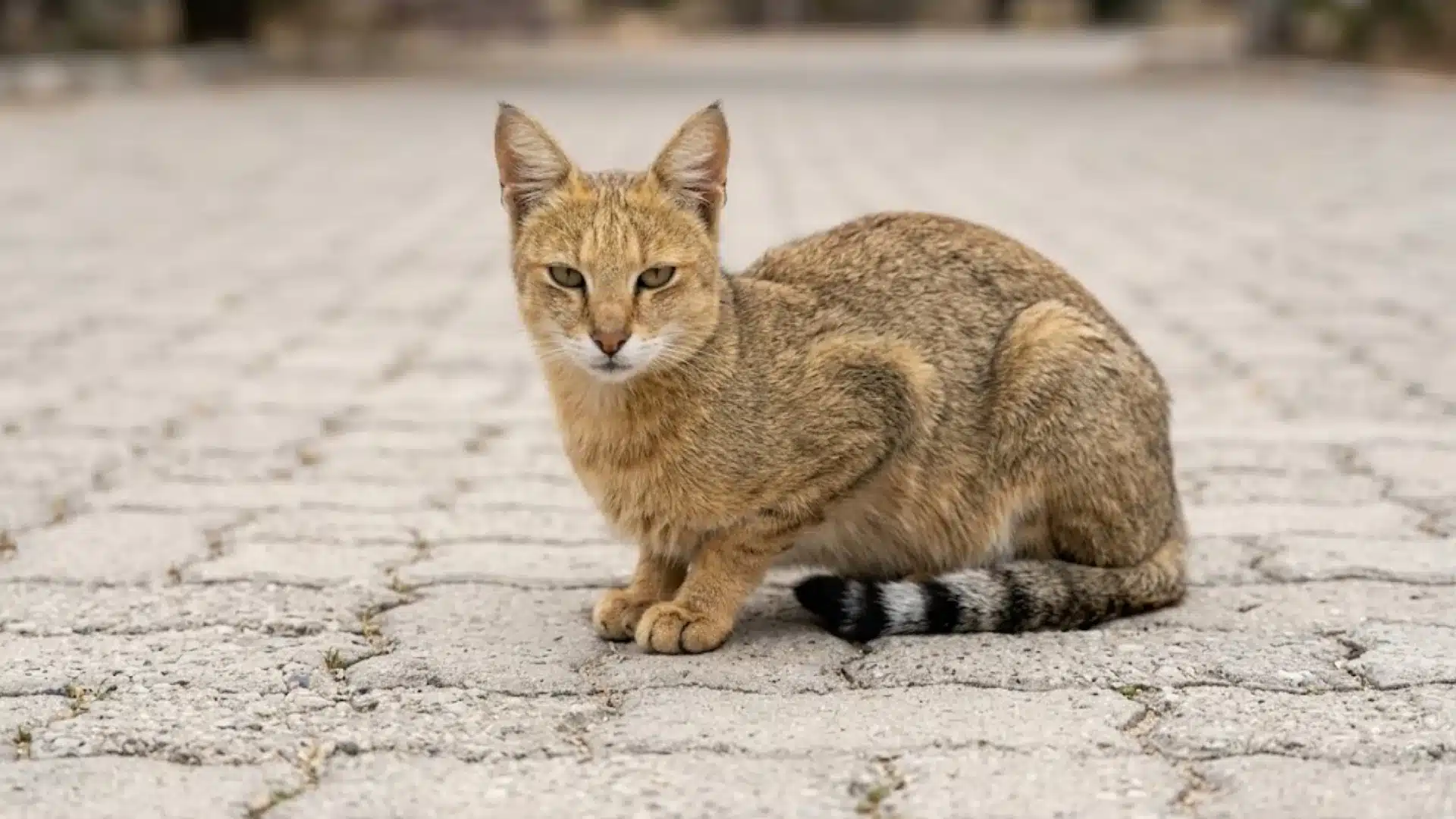
The Chausie originated from breeding domestic cats with the jungle cat, a wild feline native to parts of Asia and the Middle East.
This breed is recognized among large cat breeds as exotic for its tall build and athletic nature.
Chausies are known for high intelligence, curiosity, and strong energy levels. They enjoy active play and interaction with owners.
Their lean, muscular body, long legs, large ears, and short coats give them a striking wild appearance.
- Weight: 15 to 25 pounds
- Height: 14 to 18 inches
- Lifespan: 12 to 15 years
4. Caracat
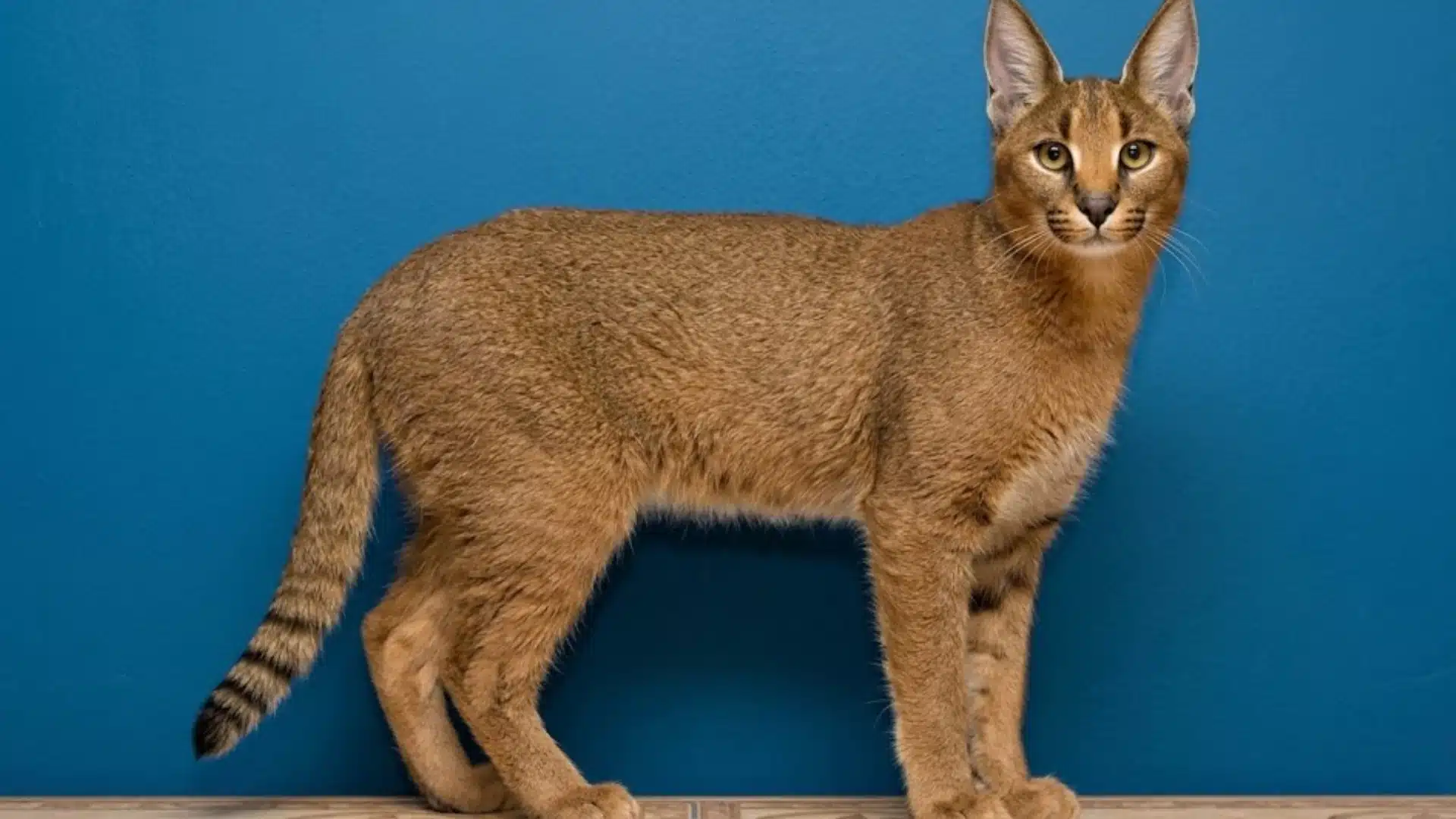
The Caracat is a rare hybrid developed by crossing a domestic cat with the wild caracal, a feline native to Africa and parts of Asia.
It is known among large cat breeds as exotic for its striking wild look and powerful build. Caracats are intelligent, alert, and very active.
They form strong bonds with owners but require experienced handling.
Their tall body, long legs, tufted ears, and sleek coats closely resemble those of the wild caracal.
- Weight: 20 to 35 pounds
- Height: 16 to 20 inches
- Lifespan: 12 to 15 years
5. Safari Cat
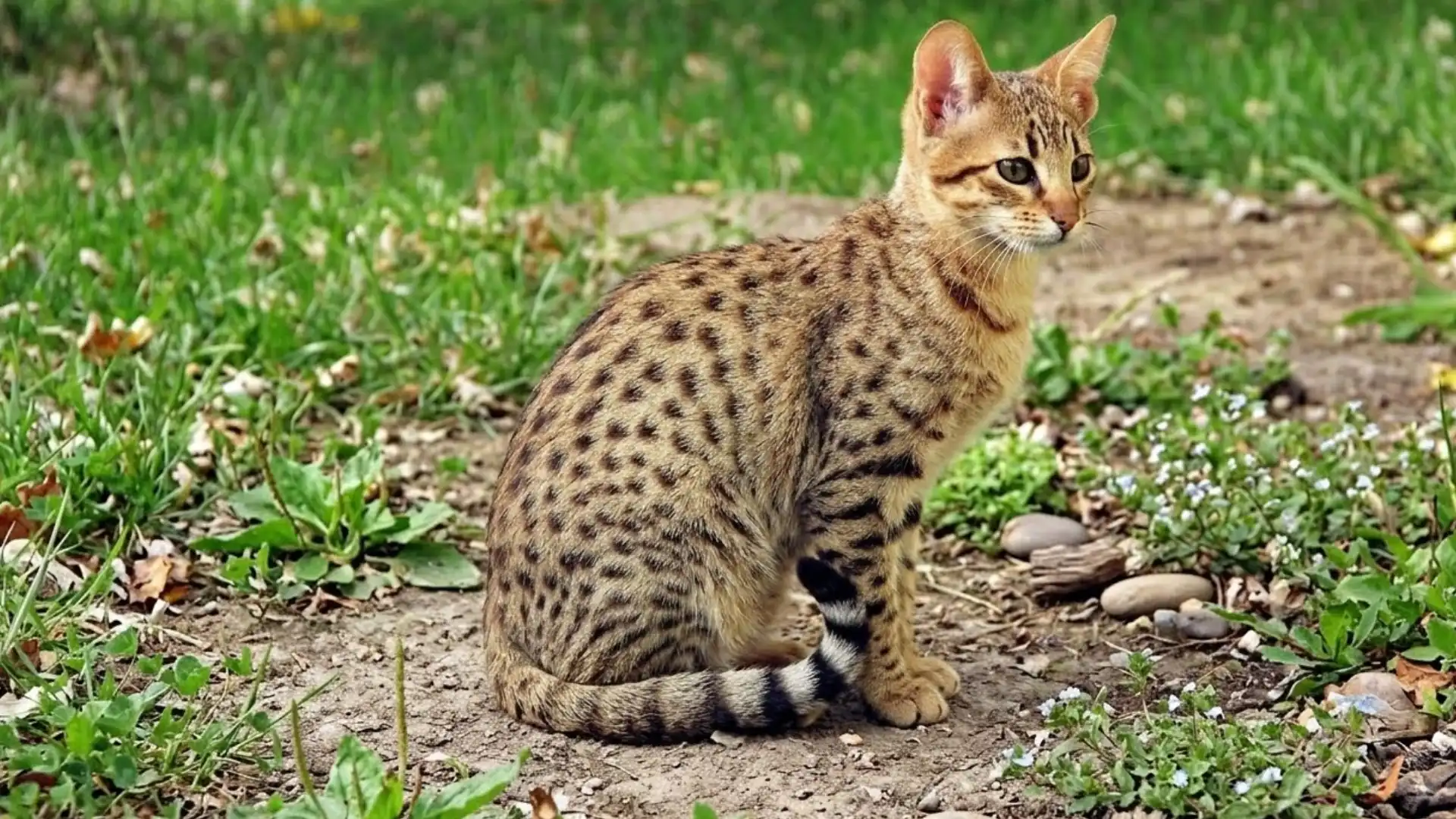
The Safari Cat was developed in the United States by crossing domestic cats with the wild Geoffroy’s cat from South America.
It is known among large cat breeds as exotic for its tall frame, strong build, and distinctive spotted coat.
Safari Cats are intelligent, confident, and active, often forming strong bonds with owners.
Their long legs, muscular bodies, and bold leopard-like markings create a striking wild appearance while maintaining domestic cat behavior.
- Weight: 15 to 25 pounds
- Height: 14 to 18 inches
- Lifespan: 12 to 15 years
6. Serengeti Cat
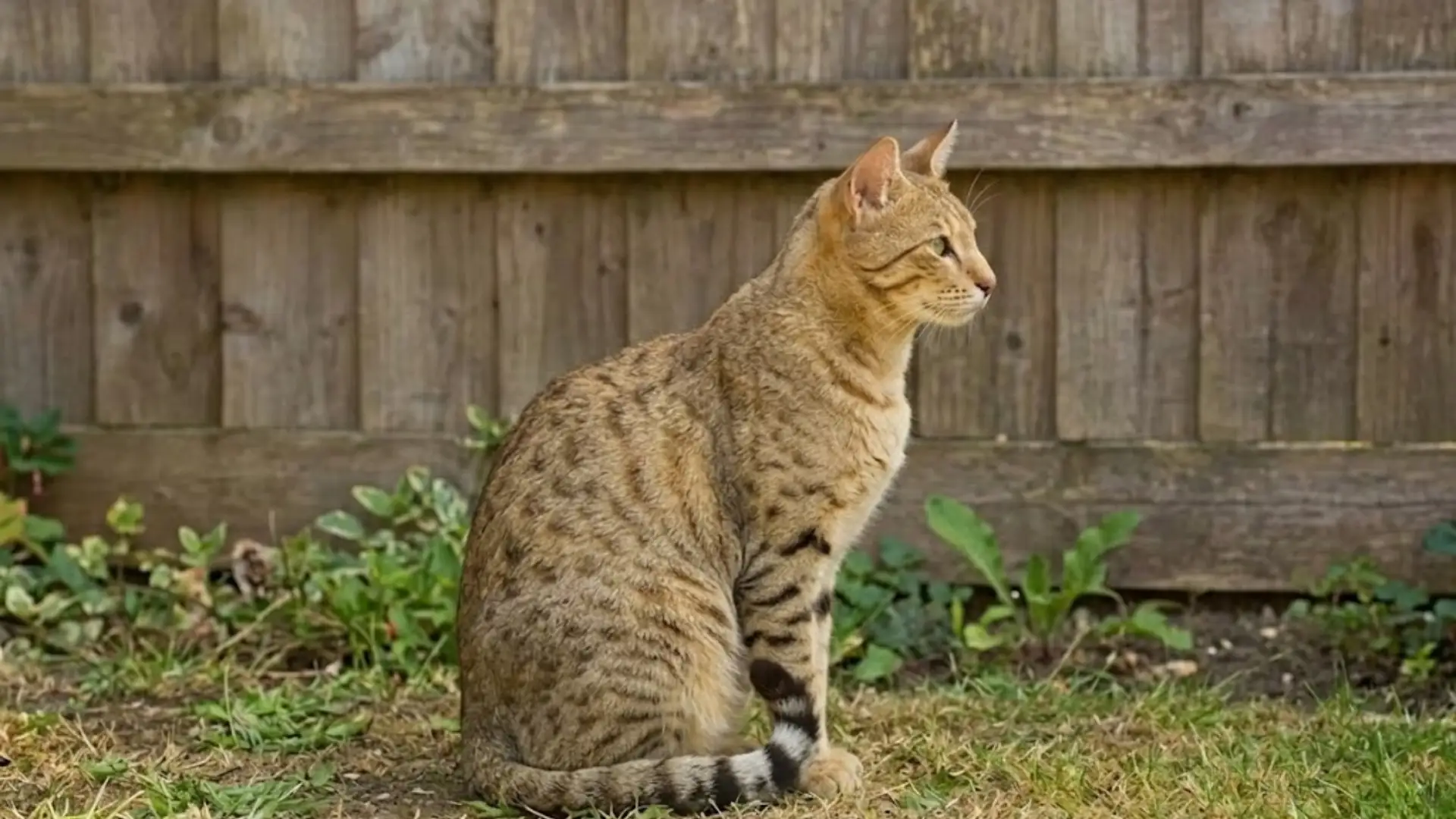
The Serengeti Cat was developed in the United States in the 1990s by breeding Bengal cats with Oriental Shorthairs.
The breed is known for its elegant build, long legs, and wild-looking spotted coat.
Serengeti cats are active, curious, and highly social, often enjoying climbing and interactive play.
Their tall body, large upright ears, and sleek short coat create a striking appearance that resembles African wild cats while maintaining a friendly domestic temperament.
- Weight: 8 to 15 pounds
- Height: 10 to 12 inches
- Lifespan: 12 to 15 years
7. Cheetoh Cat
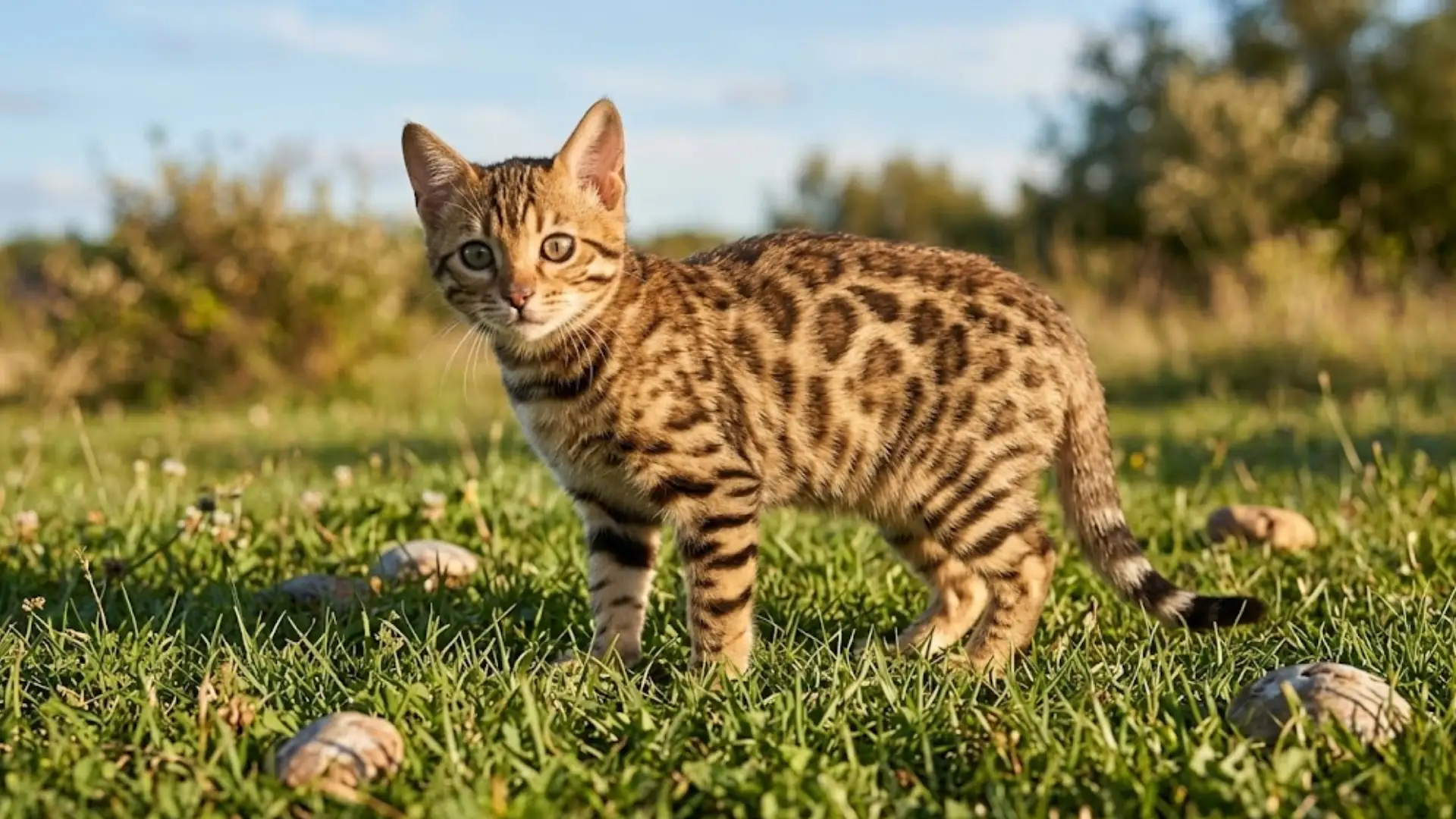
The Cheetoh Cat was developed in the United States by crossing Bengal cats with Ocicats to create a large domestic cat with a wild appearance.
This breed is known for its friendly personality, intelligence, and playful nature.
Cheetoh cats are very social and enjoy interacting with people and other pets.
Their muscular body, bold spotted coat, and strong build give them a cheetah-like look while maintaining a gentle and affectionate temperament.
- Weight: 15 to 23 pounds
- Height: 12 to 14 inches
- Lifespan: 12 to 15 years
8. Toyger
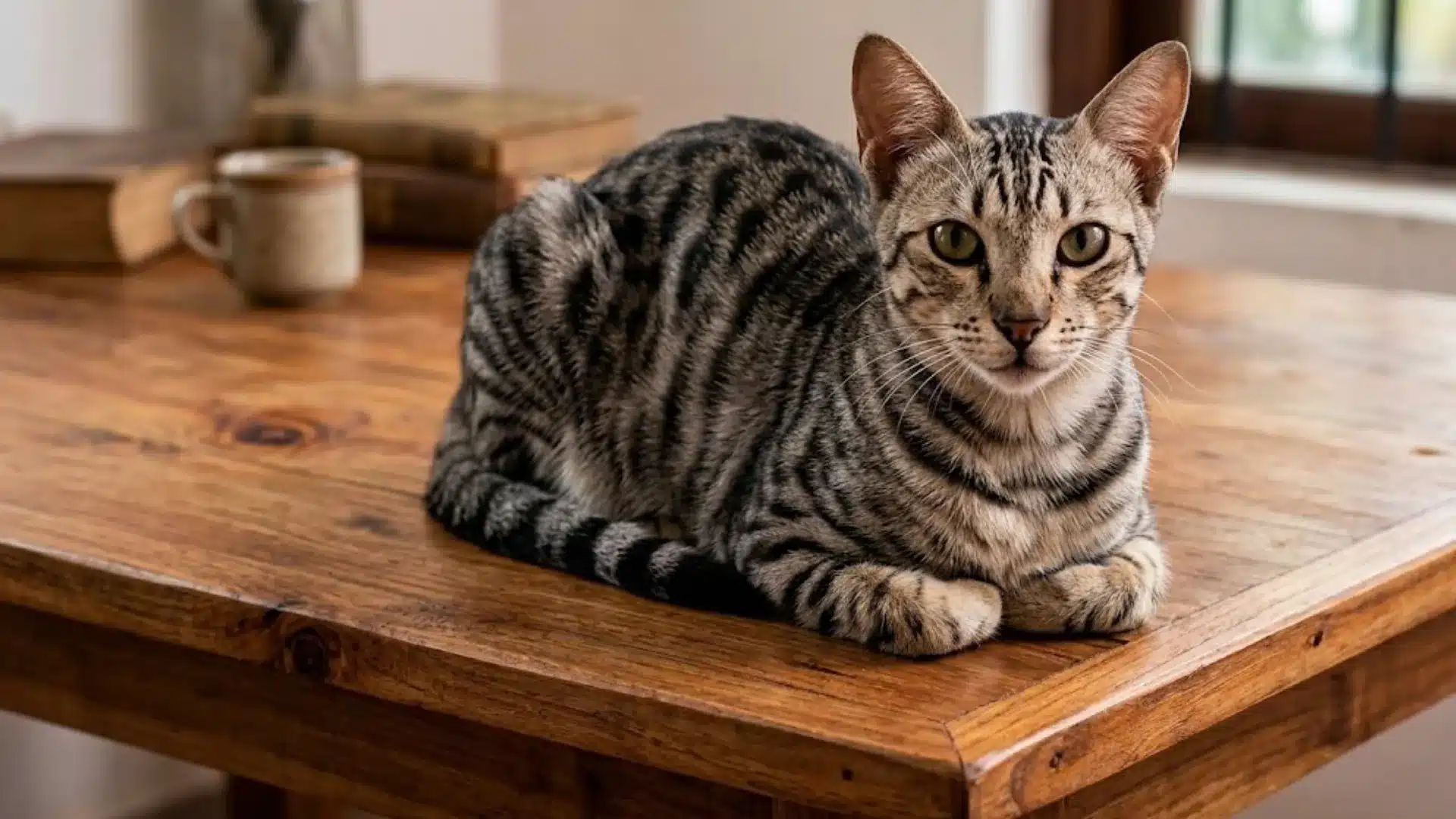
The Toyger was developed in the United States in the late 1980s through selective breeding of domestic cats, mainly Bengal lines, to resemble a miniature tiger.
The breed is known for its bold striped coat and friendly temperament.
Toygers are intelligent, playful, and social cats that enjoy interaction with people and regular activity.
Their muscular body, bright orange coat, and dark tiger-like stripes create a striking wild-inspired appearance while maintaining a calm domestic personality.
- Weight: 7 to 15 pounds
- Height: 9 to 13 inches
- Lifespan: 12 to 15 years
9. Highlander Cat
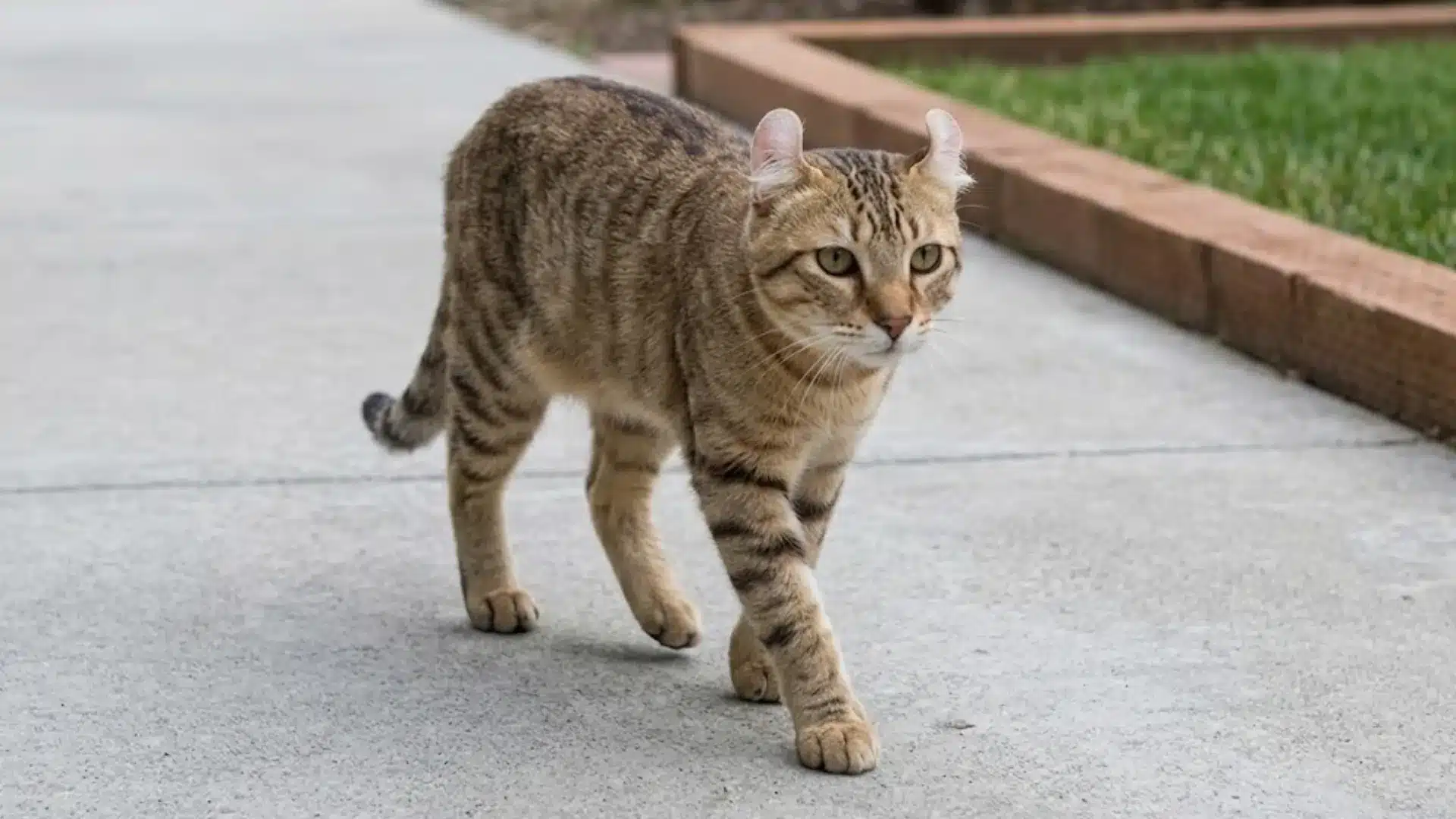
The Highlander Cat was developed in the United States in the early 2000s by breeding Desert Lynx and Jungle Curl lines.
This breed is known for its playful personality, strong build, and distinctive curled ears.
Highlander cats are energetic, social, and enjoy interactive play with their owners.
Their muscular body, short or long coat, naturally bobbed tail, and expressive eyes give them a wild lynx-like appearance while keeping a friendly and affectionate temperament.
- Weight: 10 to 20 pounds
- Height: 10 to 16 inches
- Lifespan: 10 to 15 years
Large Domestic Cat Breeds With Exotic Appearance
These breeds are fully domestic but are known for their large size, muscular bodies, and impressive coats that give them a wild look similar to their untamed feline relatives.
10. Maine Coon
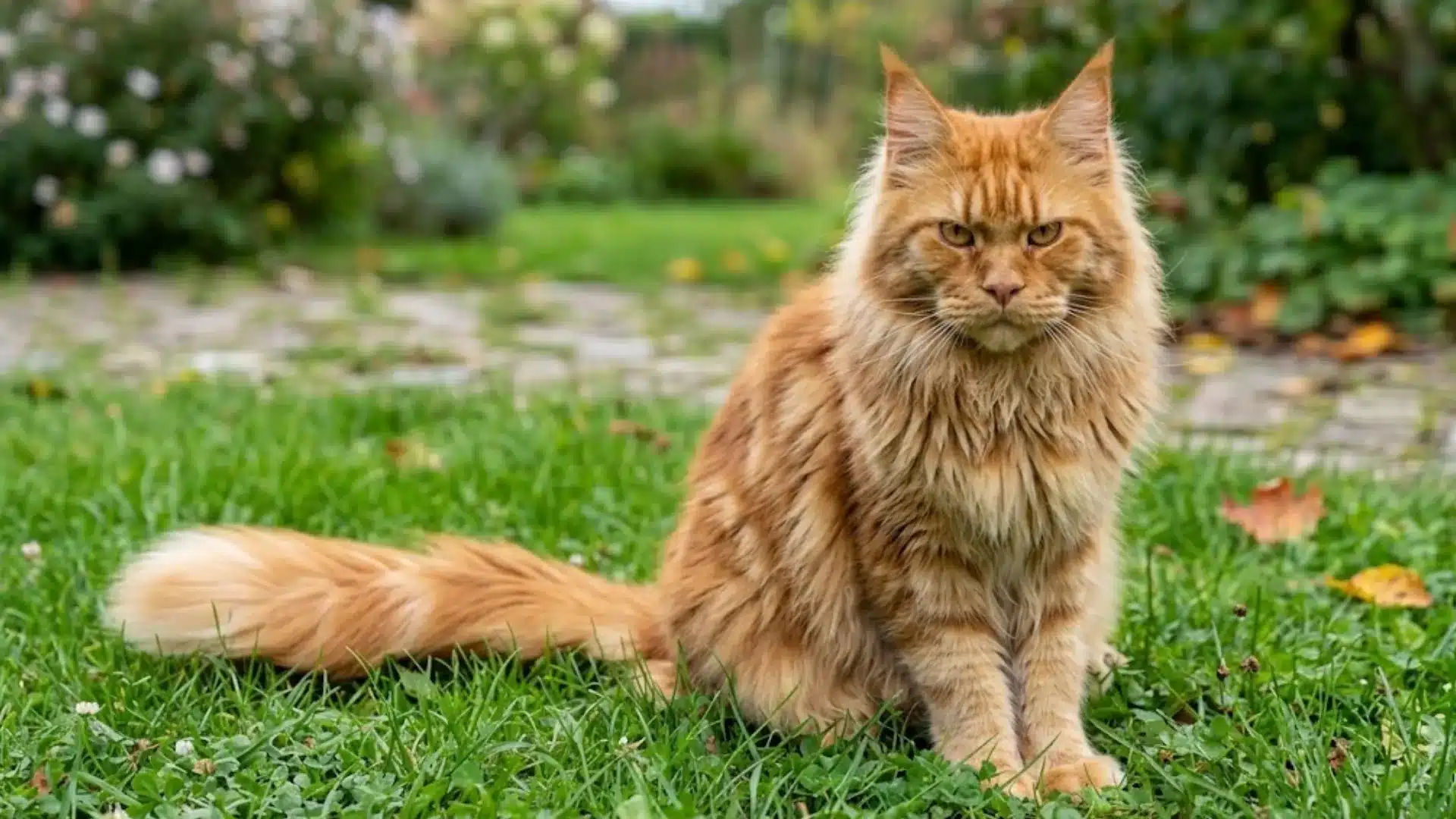
The Maine Coon originated in the United States and is one of the oldest natural cat breeds from the state of Maine.
This breed is known for its large size, gentle temperament, and strong companionship with families.
Maine Coons are intelligent, friendly, and often described as gentle giants.
Their long, shaggy coat, bushy tail, tufted ears, and strong, muscular body give them a majestic appearance suited for colder climates.
- Weight: 12 to 25 pounds
- Height: 10 to 16 inches
- Lifespan: 12 to 15 years
11. Norwegian Forest Cat
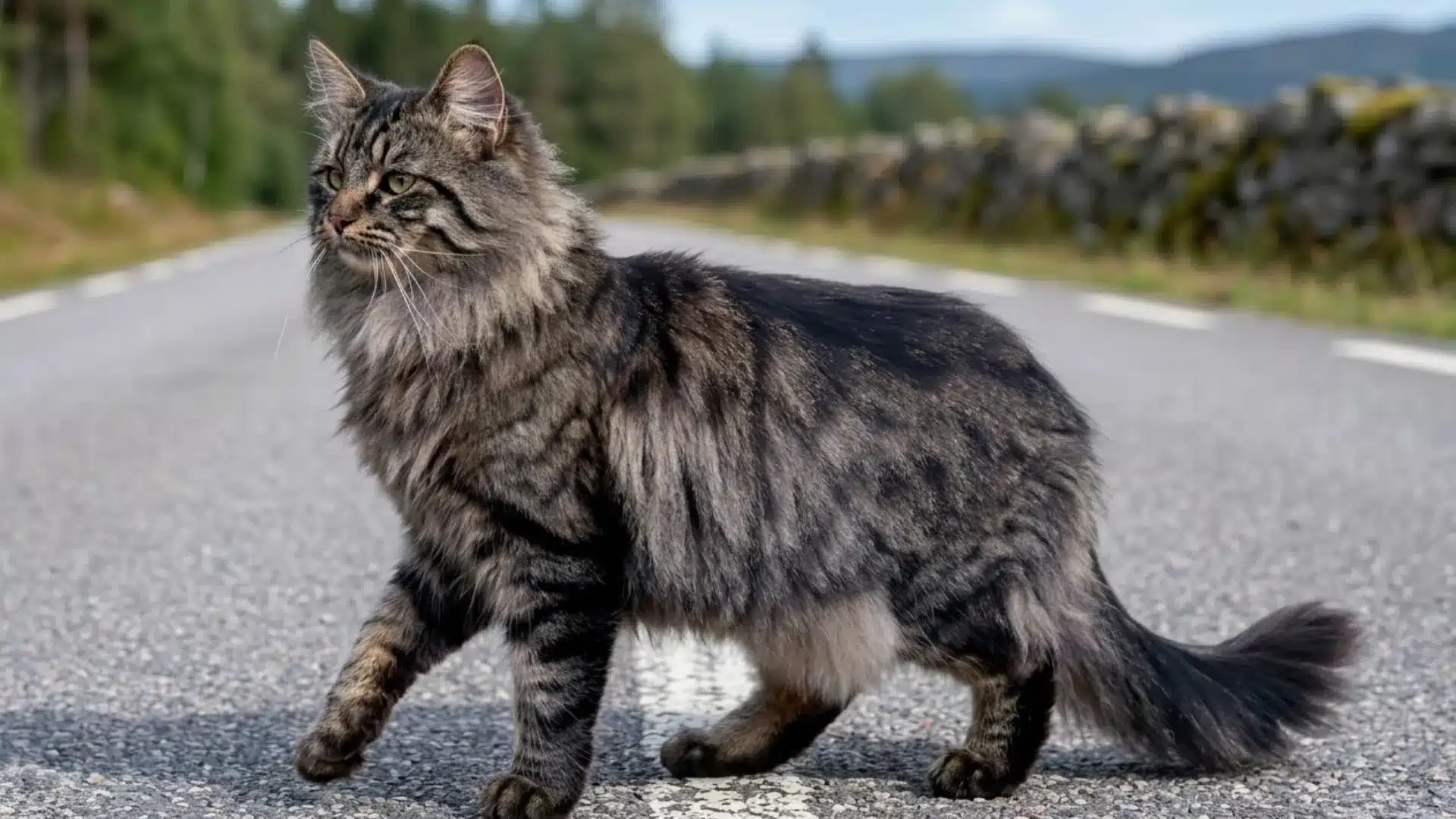
The Norwegian Forest Cat originated in Northern Europe, particularly Norway, where it adapted to cold climates.
This breed is known for its strong build, calm personality, and excellent climbing ability. Norwegian Forest Cats are intelligent, independent, and affectionate with their families.
Their large, muscular body, triangular faces, and tufted ears give them a rugged look.
The breed features a thick double coat with long, water-resistant fur and a bushy tail, designed to protect against harsh weather.
- Weight: 12 to 20 pounds
- Height: 9 to 12 inches
- Lifespan: 14 to 16 years
12. Siberian Cat
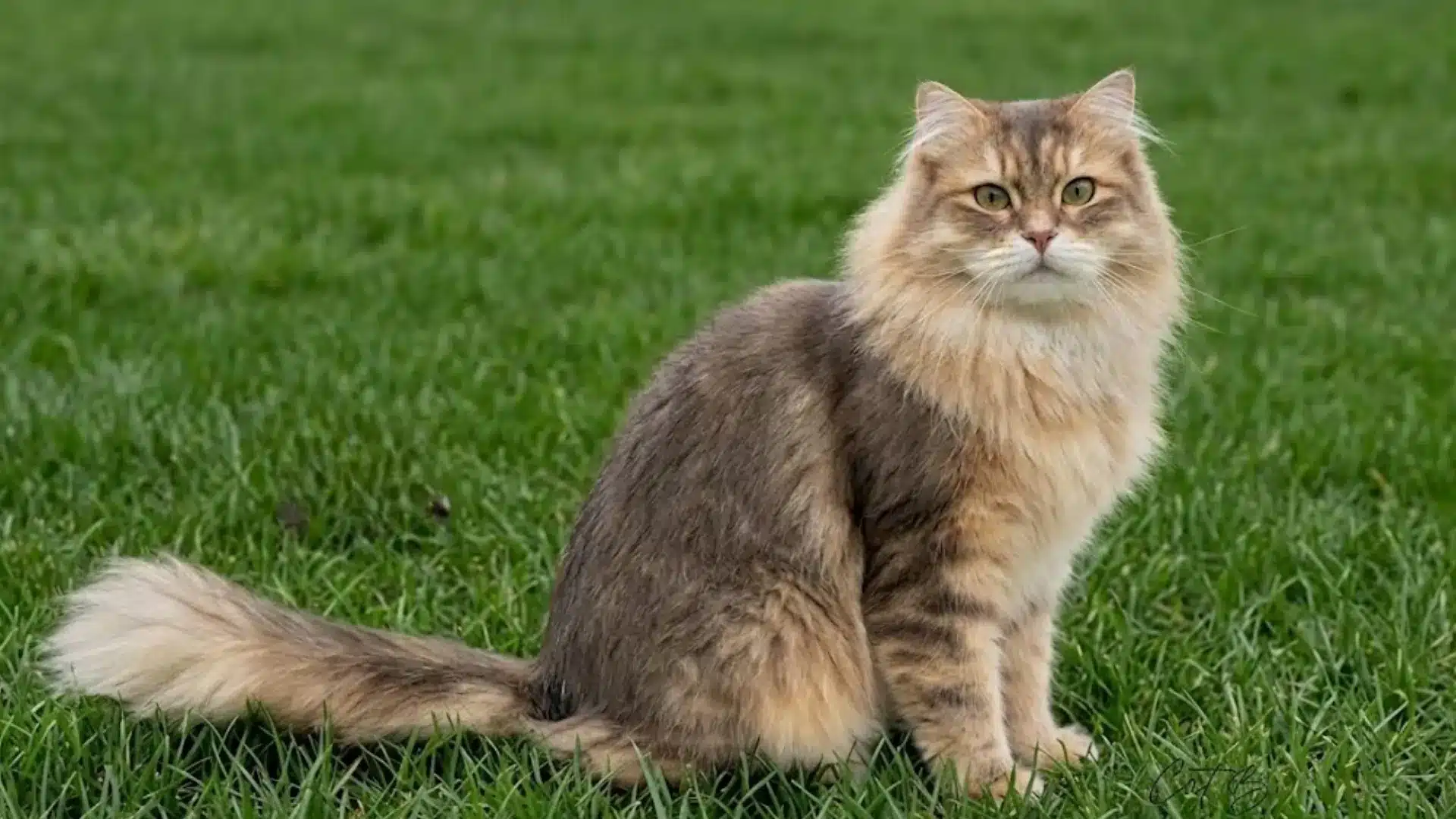
The Siberian Cat originated in Russia and is one of the country’s oldest natural cat breeds.
This breed is known for its strong physique, playful nature, and affectionate personality with families. Siberian cats are intelligent, agile, and enjoy climbing and interactive play.
Their large, muscular body, rounded faces, and strong legs give them a powerful appearance.
The breed has a dense triple coat with medium to long fur that is thick, water-resistant, and suited for cold climates.
- Weight: 10 to 20 pounds
- Height: 9 to 11 inches
- Lifespan: 12 to 15 years
13. Turkish Van
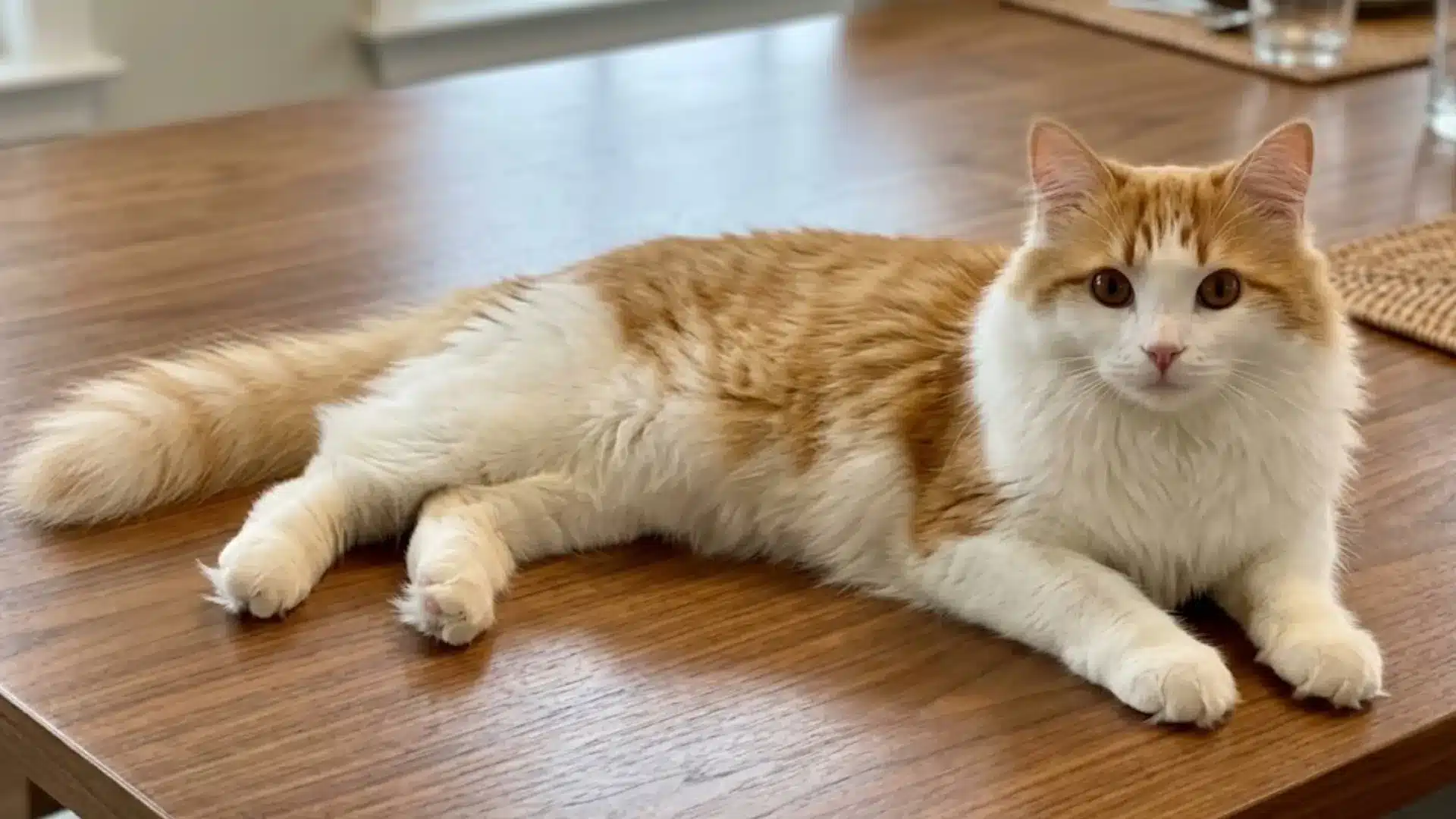
The Turkish Van originated in the Lake Van region of Turkey and is known for its strong build and playful personality.
This breed is famous for its love of water and active nature. Turkish Van cats are intelligent, energetic, and enjoy interacting with their owners.
They have a muscular body, a broad chest, and expressive eyes that give them a confident look.
The breed features a semi-long silky coat with the classic Van pattern, typically white with colored markings on the head and tail.
- Weight: 10 to 20 pounds
- Height: 10 to 14 inches
- Lifespan: 12 to 17 years
14. Ragdoll
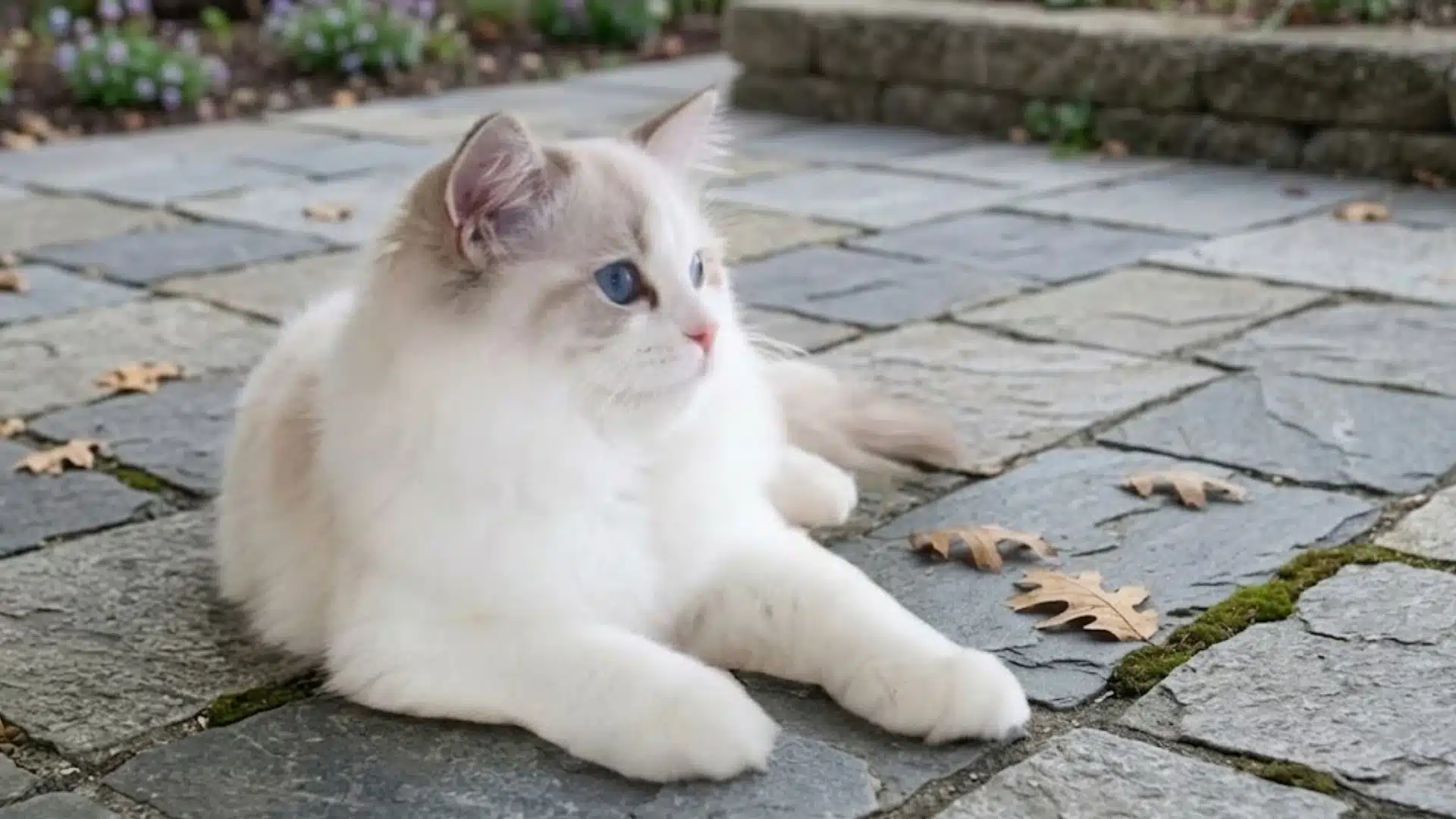
The Ragdoll originated in the United States in the 1960s through selective breeding focused on calm temperament and large size.
This breed is known for its gentle personality, strong attachment to owners, and relaxed behavior when held.
Ragdolls are affectionate, quiet, and often enjoy following their owners around the home. Their large frame, blue eyes, and soft expression create a striking look.
The breed has a long, silky coat with colorpoint patterns such as seal, blue, chocolate, and lilac.
- Weight: 10 to 20 pounds
- Height: 9 to 11 inches
- Lifespan: 12 to 17 years
15. Ragamuffin
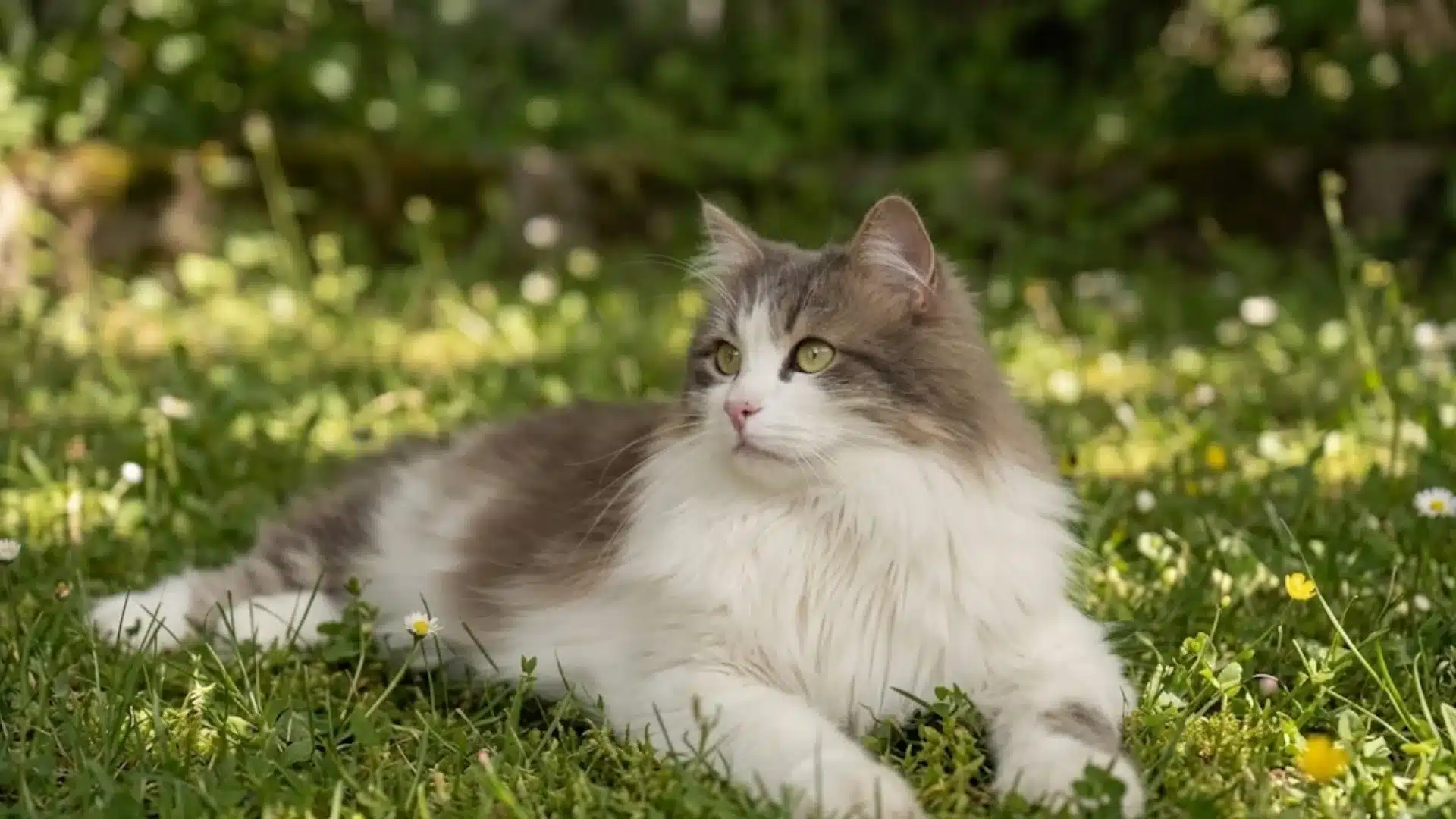
The Ragamuffin originated in the United States and was developed from Ragdoll breeding lines to create a large, affectionate companion cat.
This breed is known for its calm nature, friendly personality, and strong attachment to families. Ragamuffins are gentle, social, and adapt well to indoor living.
Their broad chest, large expressive eyes, and sturdy body give them a plush appearance.
The breed features a thick, medium to long silky coat that comes in many colors and patterns.
- Weight: 10 to 20 pounds
- Height: 10 to 15 inches
- Lifespan: 12 to 16 years
16. Pixie Bob
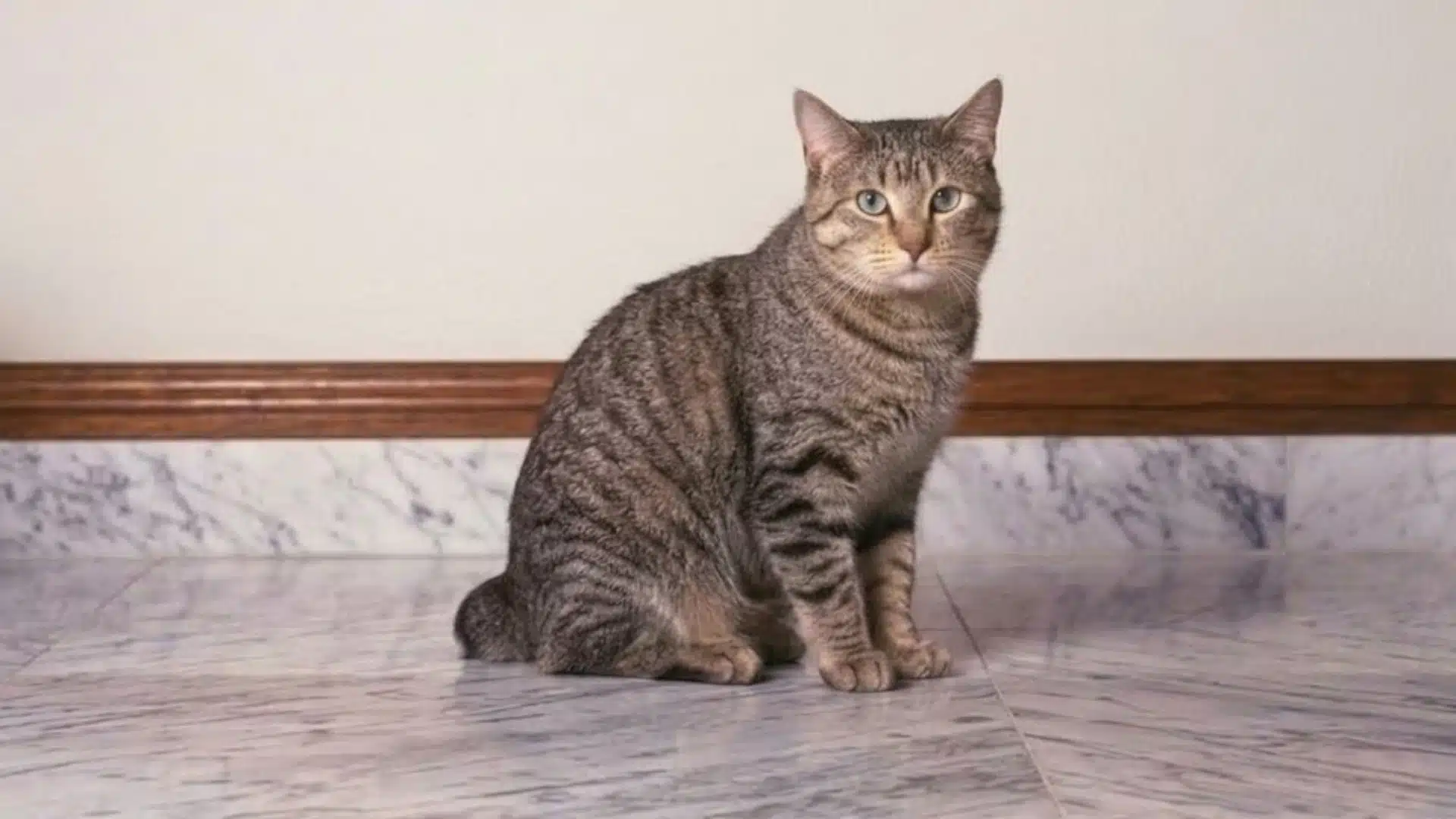
The Pixie Bob originated in the United States during the 1980s and was selectively bred to resemble the wild North American bobcat.
This breed is known for its loyal temperament and dog-like personality.
Pixie Bobs are intelligent, calm, and often form strong bonds with their owners. Their sturdy body, broad face, and naturally short bobbed tail give them a rugged appearance.
The breed has a thick double coat that can be short or medium length with spotted tabby patterns.
- Weight: 8 to 17 pounds
- Height: 9 to 13 inches
- Lifespan: 13 to 15 years
17. American Bobtail
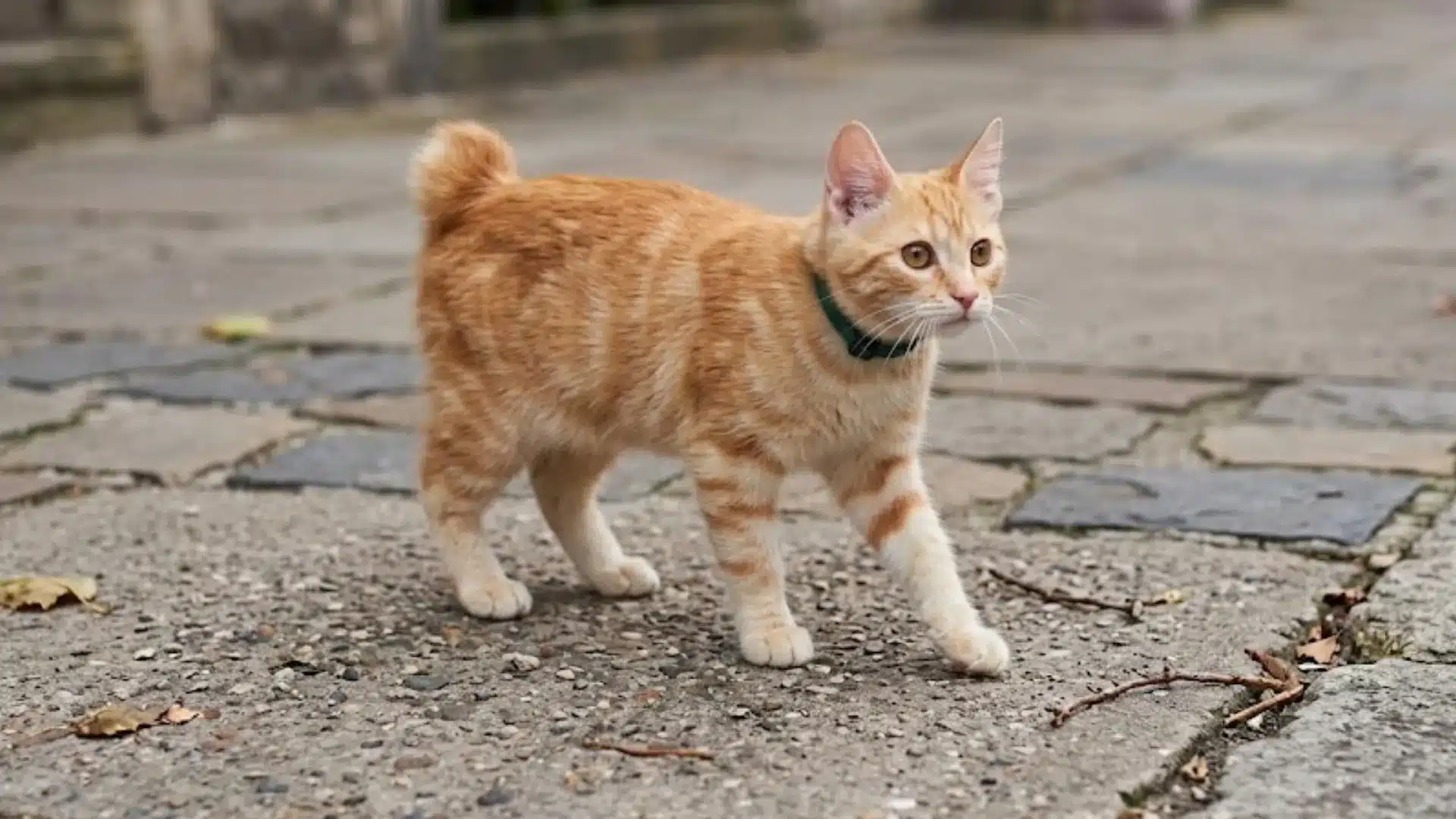
The American Bobtail originated in the United States during the 1960s and was developed from naturally short-tailed domestic cats.
This breed is known for its friendly temperament, intelligence, and strong adaptability to family life. American Bobtails are social, playful, and often bond closely with their owners.
Their sturdy body, broad head, and naturally short tail create a distinctive appearance.
The breed has a dense double coat that may be short or medium length with tabby or mixed color patterns.
- Weight: 7 to 16 pounds
- Height: 9 to 10 inches
- Lifespan: 13 to 15 years
Things to Consider Before Choosing a Large Cat Breed
Choosing a large cat breed such as the Maine Coon, Ragdoll, or Savannah requires careful planning.
Lifestyle also matters because large cats often need daily interaction and regular grooming due to heavy shedding.
Health is another factor to consider, as some breeds are prone to conditions like hypertrophic cardiomyopathy.
Legal rules are especially important when considering exotic hybrids.
In the United States, the Big Cat Public Safety Act limits private ownership of certain big cats and requires federal registration in specific cases.
State laws can also differ, and some locations restrict or regulate hybrid breeds such as Savannah cats.
Checking local and federal guidelines through official wildlife authorities helps ensure responsible and lawful pet ownership.
Are Exotic Cat Breeds Good Pets?
Large cat breeds can make wonderful pets for the right household. Many of these cats form strong bonds with their owners and enjoy spending time around people.
Their size often comes with confident and friendly personalities, which can make them feel more like companions than quiet pets.
Many large breeds are also intelligent and interactive, meaning they enjoy playing games, learning tricks, and staying involved in daily household activities.
However, their size and energy also bring a few challenges. Large cats usually need more space to move, climb, and stay active.
They often require regular playtime and mental stimulation to stay happy.
Without enough engagement, they may become bored. For owners who can provide attention, room to explore, and daily interaction, large cat breeds can be affectionate and rewarding pets.
Conclusion
Large cat breeds offer a unique mix of impressive size, striking looks, and engaging personalities.
From hybrid breeds with wild-inspired patterns to large domestic cats with thick coats and strong builds, each breed brings its own traits and care needs.
Some thrive in active homes, while others fit well in calm indoor environments.
Choosing the right one depends on available space, activity level, grooming commitment, and the type of companionship a household prefers.
Every breed listed has qualities that can make it a rewarding companion when cared for properly.
Have you owned or interacted with any of these large exotic cat breeds? Share your experience or favorite breed in the comments.
Frequently Asked Questions
What Annoys Cats The Most?
Loud noises, sudden movements, strong, unfamiliar scents, and forced handling often irritate cats. Changes in routine, dirty litter boxes, and lack of personal space can also create stress.
What Smell is Toxic To Cats?
Several strong scents can be harmful to cats, including essential oils like tea tree, eucalyptus, peppermint, and citrus oils. These substances may cause breathing problems and skin irritation.
Which States Allow Big Cat Ownership?
States such as Nevada, Oklahoma, and Wisconsin allow certain forms of private ownership under specific conditions.